February, 2025
Our second day in Iceland and after a great breakfast buffet at last night’s accommodation we were off on today’s adventure. Our first stop afforded the opportunity for an interactive learning experience about Iceland’s volcanic activity, frequent earthquakes, and evolution. Not exactly as if we were outdoors watching mother nature’s fury, but the videos, explosive sounds, and accompanying tremors beneath our feet gave us a sense of the enormous power of the earth’s intensity. What could be a more appropriate name for this exhibition than LAVA?

All right – let’s get this out of the way. The Icelandic language is difficult at best, not just because the arrangement of letters make tongue twisters, but also because of the diacritic marks that go along with some letters at some time. For example there’s a volcano whose name includes 16 letters and 3 diacritic marks, the first letter of which is an E – so difficult to pronounce even the Icelanders call it E15. We’re proud we actually learned an Icelandic word…foss. It means waterfall.
Gljufrabuifoss, our first waterfall for today, is a about 40 meters tall, and is difficult to reach as the pathway is undeveloped and also involves crossing a shallow stream without a bridge.
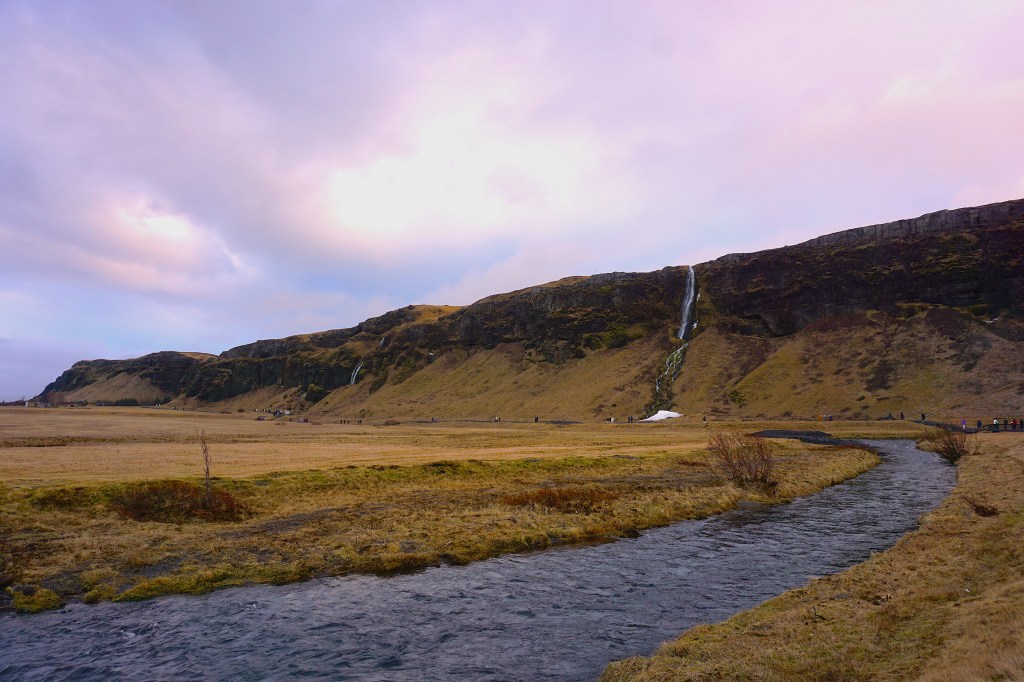
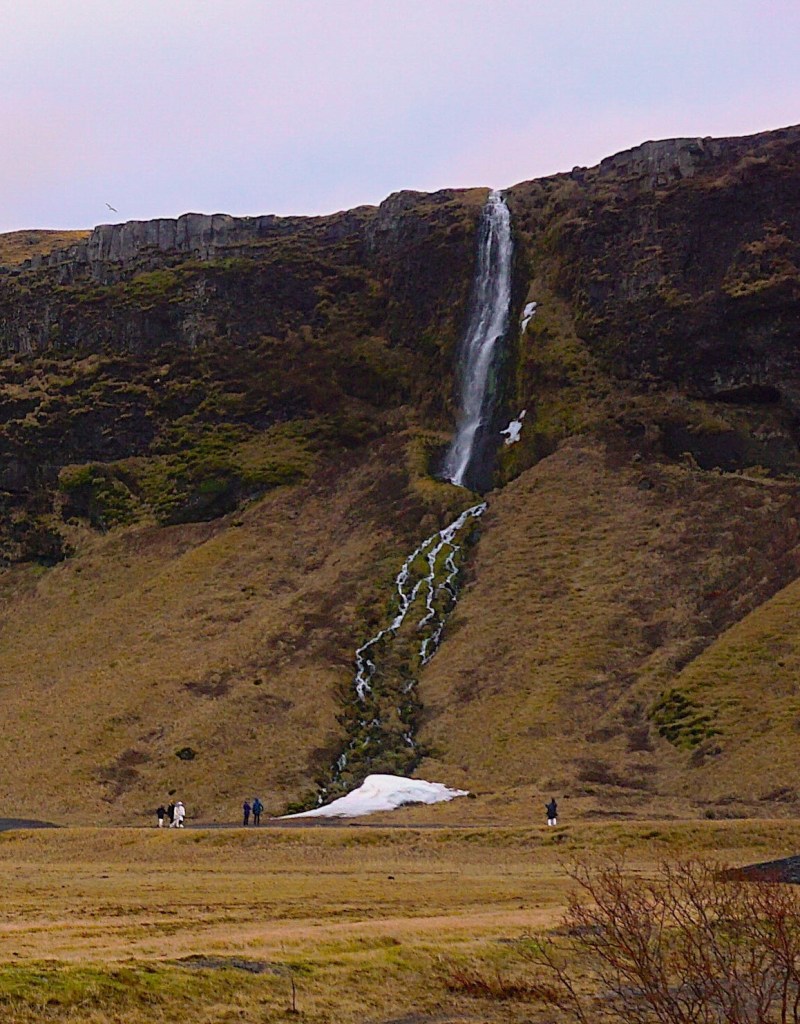
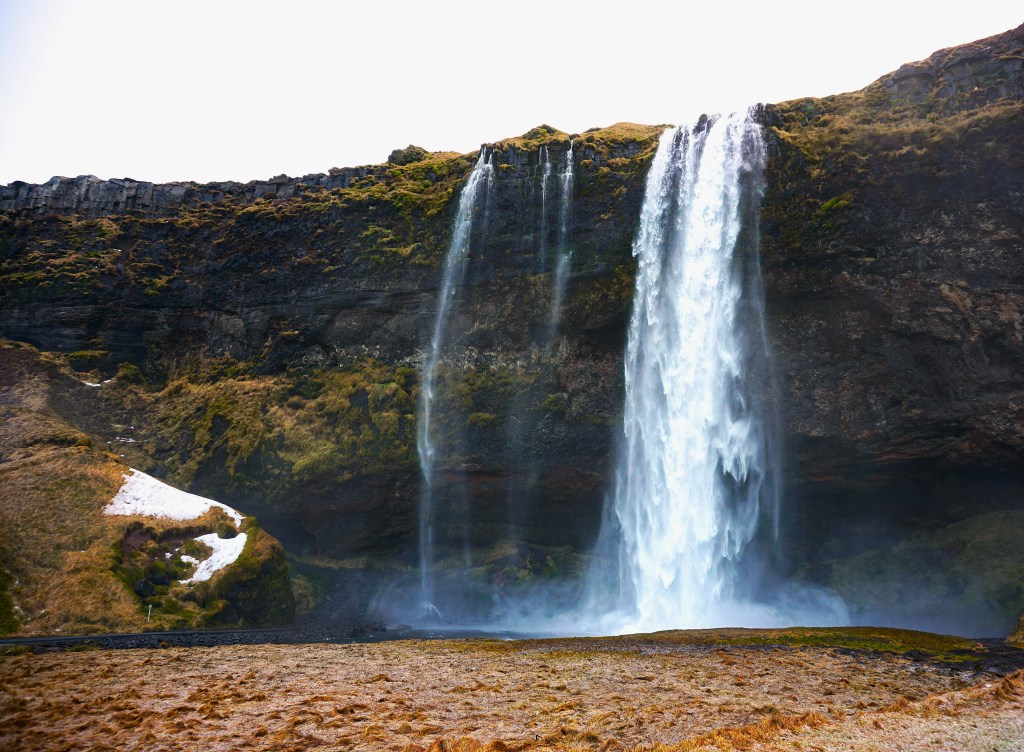
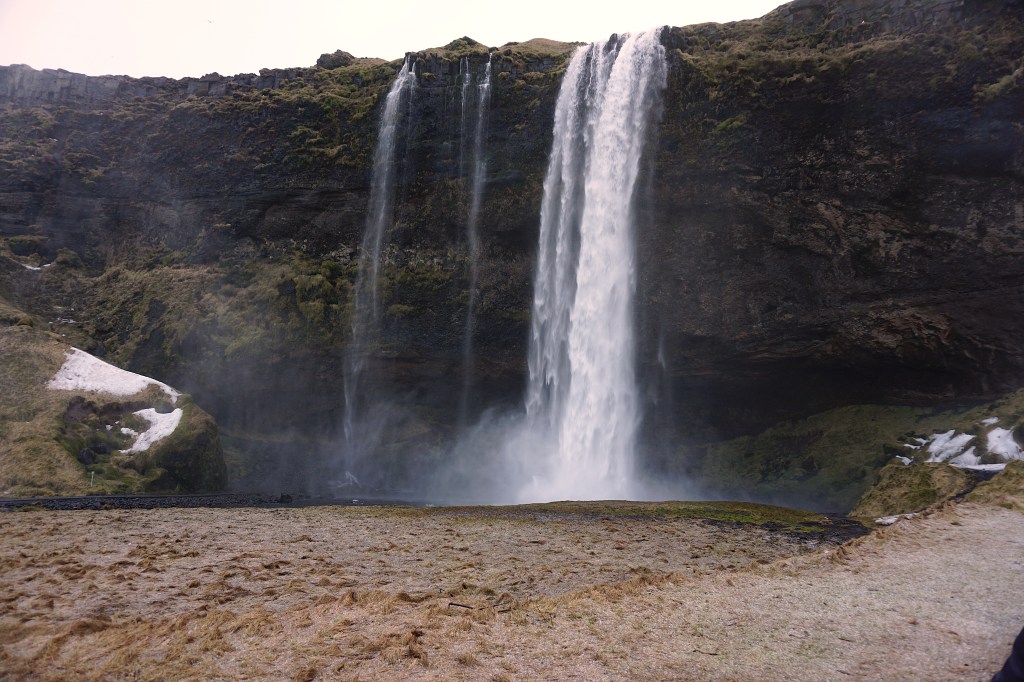
Seljalandsfoss is considered one of the world’s 10 most beautiful waterfalls, as the Seljalandsa river plummets 20 meters over the cliff face. It is unique amongst Iceland’s waterfalls as the shape of the cliff over which it falls allows visitors to walk at the base of the falls and behind the chute. Access to the walkway is weather dependent, and unfortunately winter is not a good time for the experience. Beautiful, nonetheless.



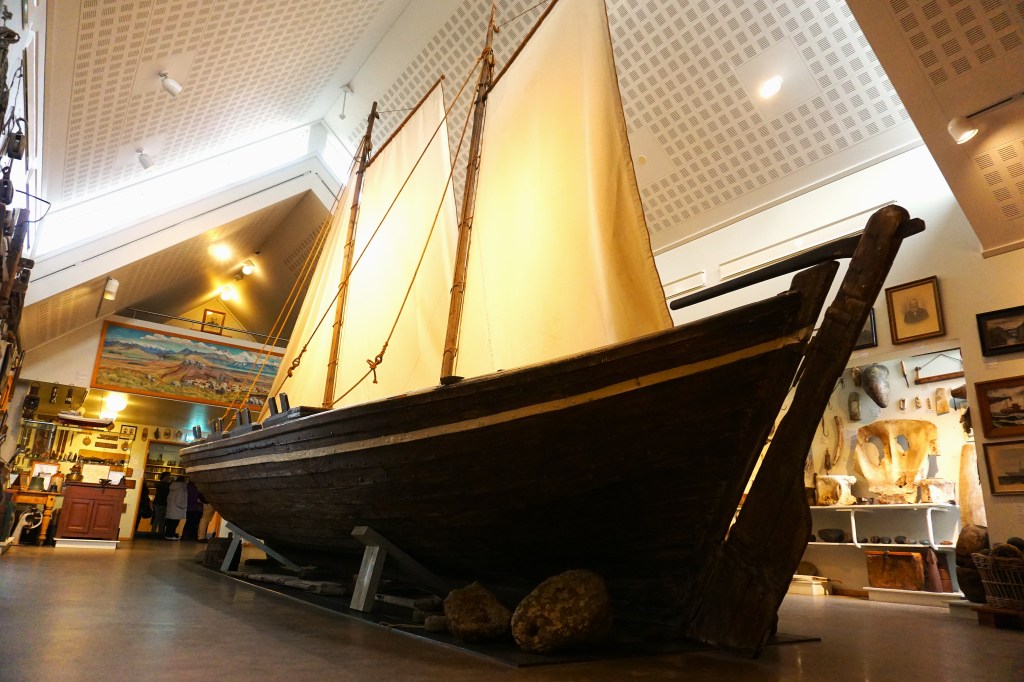
The Skogar Folk Museum is loaded with historical artifacts, like the eight-oared fishing boat Petursey donated to the museum in1952…
…or preserved turf dwellings built around 1840 that were moved intact to this site…

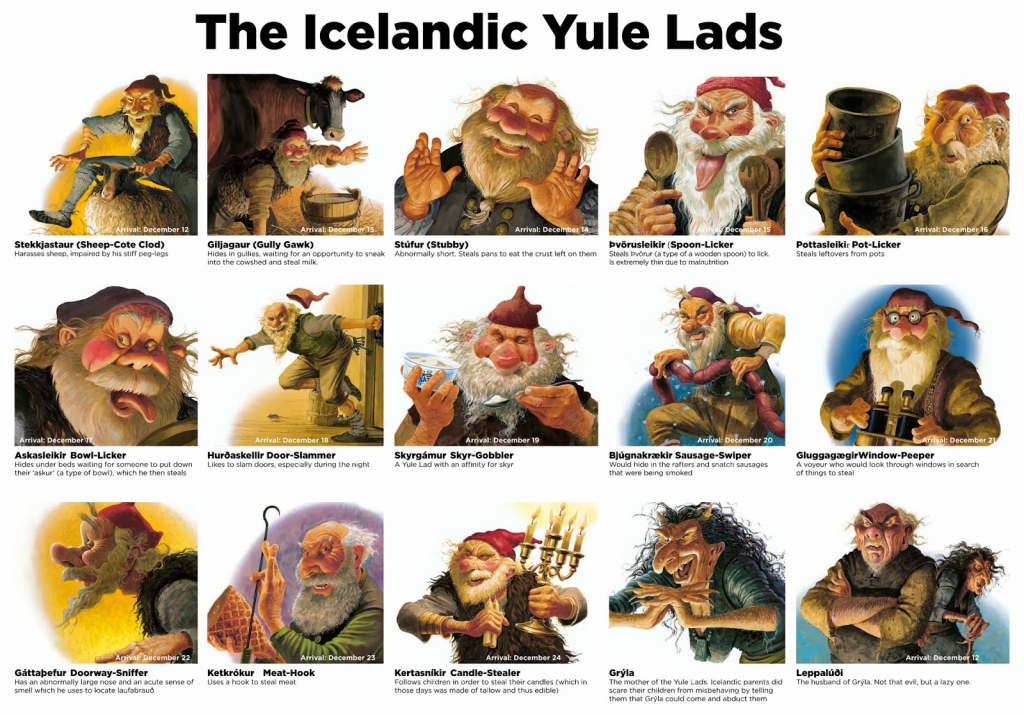
…but as soon as folklore, trolls and Iceland’s Yule traditions became the focus of our museum tour nothing else mattered. Folklore is integral to the Iceland culture. Trolls are not small creatures to Icelanders. They live in the hills or may be part of the invisible people walking alongside citizens in everyday life or may have been caught out in the seas at sunrise and turned into sea stacks. They may be malevolent or mischievous or bearers of good fortune.
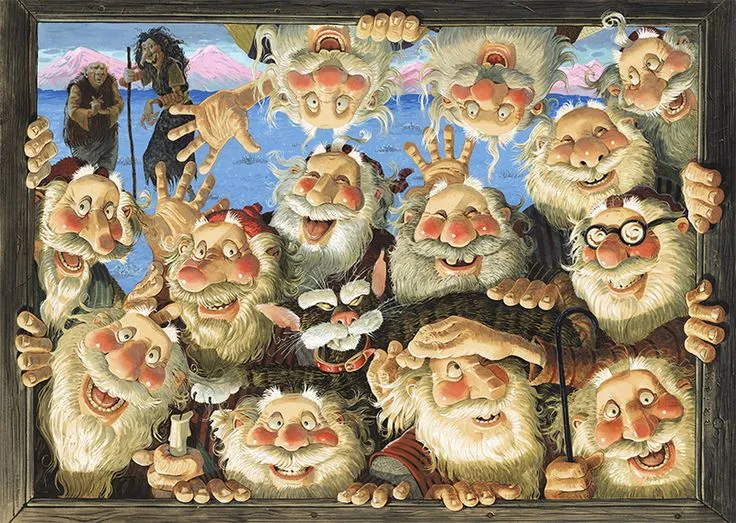
Iceland does not celebrate the Yule with traditional Christmas activities. Their traditions involve our favorite trolls – the Yule Lads. According to lore there are 13 Yule Lads born of Gryla, a woman who married 3 times, and gave birth to 88 children. Gryla ate her first two husbands following their death and reportedly ate 75 of her 88 children. The 13 Yule Lads are mischievous rascals making households a bit more interesting during the Yule season. Each spends a staggered 13 days over the Country’s 26 days roaming about the villages, cities and homes of Icelanders before heading back home to the hills. The Yule Lads include: Stubby, Sheep-Cote Clod (pegged-legged, harassing sheep and drinking their milk); Gully Hawk (hides out in ditches or gullies and waits for an opportune moment to run into the cow shed and lick the foam off the milk in the milking buckets); Spoon-Licker, Pot-Licker, Bowl-Licker, Door Slammer, Skyr-Gobbler (yogurt), Sausage-Swiper, Window-Peeper, Door-Sniffer, Candle-Stealer, and Meat-Hook (steals meat).
Not sure how Stubby makes life more difficult but just imagine a visit from any of the others while trying to survive the Icelandic winter. Bad enough? Nah. There’s also specific attention focused on children during the Yule season. Icelandic children leave a single shoe “out” overnight and tradition has it that the Yule Lads will either leave a treat in the shoe of “good” children or a rotten potato in the shoe of “bad” children. Since this is Yule the folklore regarding the identification of good and bad children leads to up whether or not a child receives clothing as their Yule gift. No new clothing and the child will be visited by Jólakötturinn, or the child-eating Yule Cat. Jólakötturinn is a black cat the size of a house that roams the Icelandic countryside, attacking and eating children who fail to wear at least one new piece of clothing. Is the moral of the story that old “be good for goodness sake” or something more malevolent? Isn’t folklore interesting?


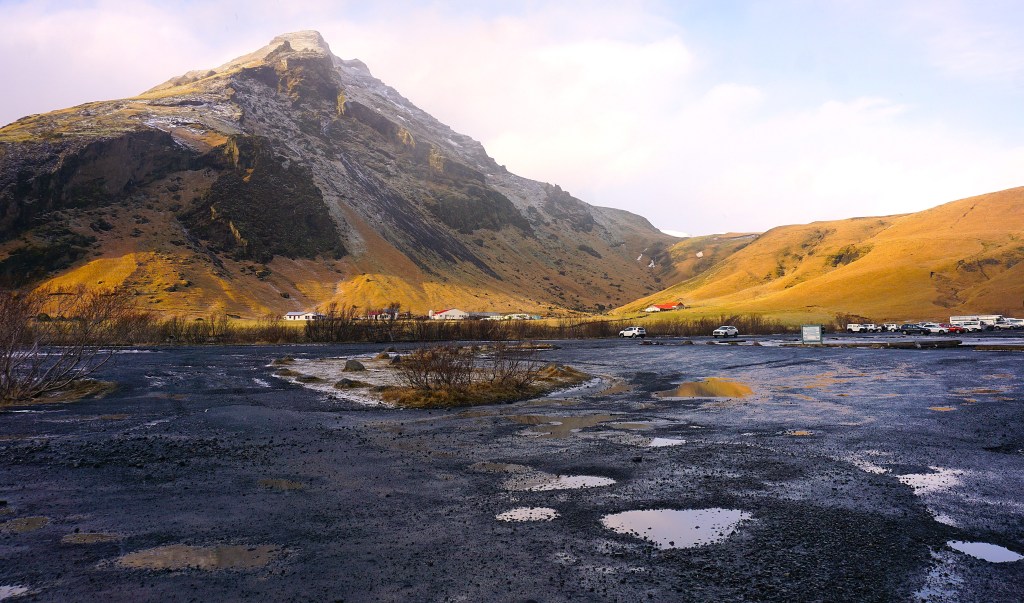
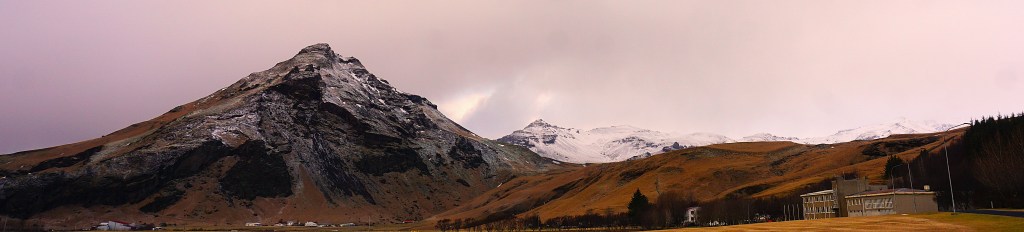
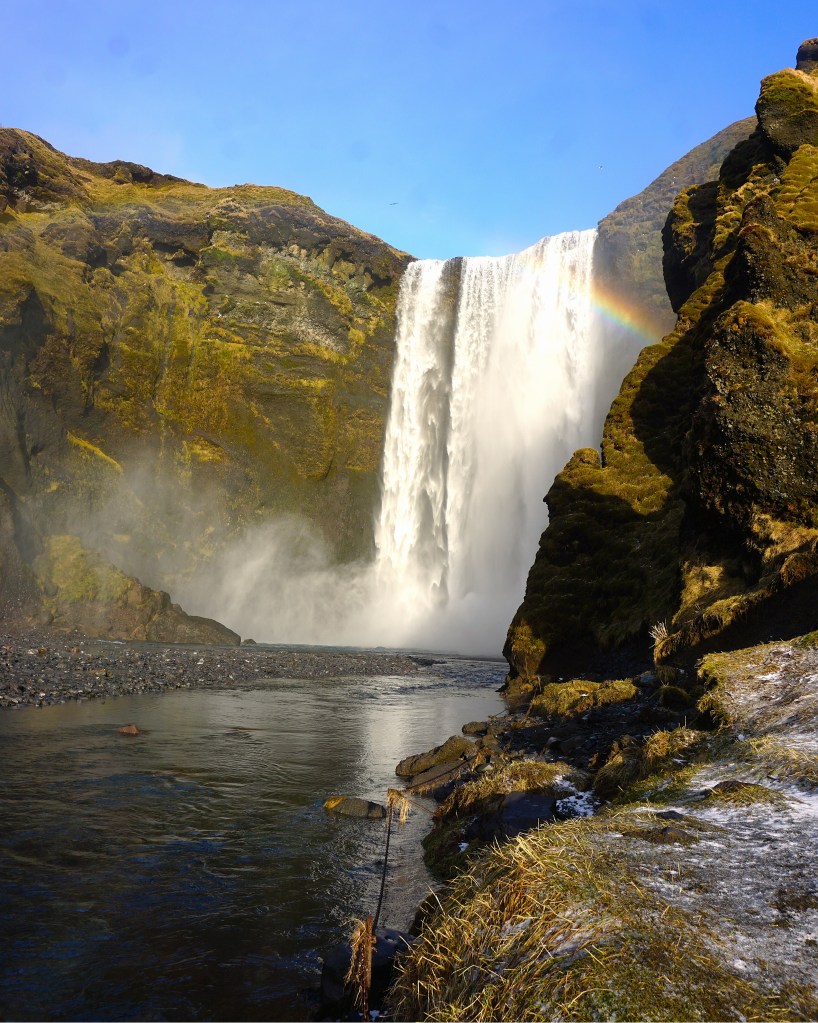
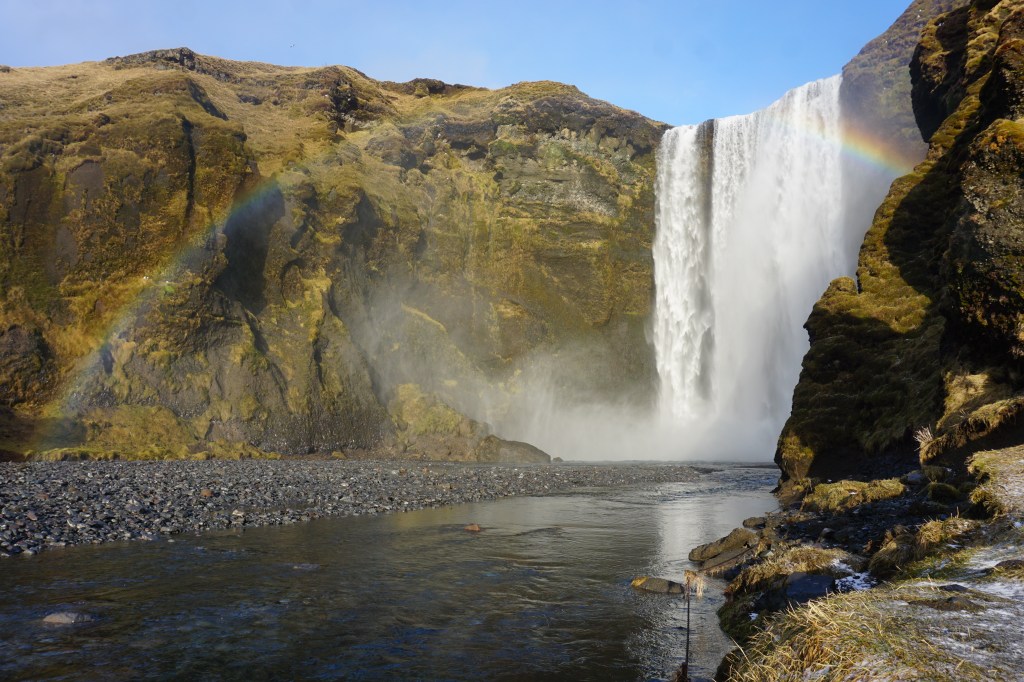
A short walking distance from The Skogar Folk Museum is Skogafoss, another waterfall that has been called one of the world’s 10 most beautiful. Skogafoss is 60 meters high, and according to folklore, the first Viking settlers in the area hid a treasure in the cave behind the cascade. The treasure has never been found, and since the land has been inhabited since the late 9th and early 10th Century CE, that treasure is well hidden.




Walk on a beach in Iceland and you’re walking on black sand that was once lava. The hot lava flowed across the land, towards and into the sea. When it hit the cold water the lava cooled and formed solidified chunks of basalt that slowly began eroding and breaking down into small pieces of volcanic rock. Over the centuries, these small pieces became even smaller, until they’d been weathered into tiny pebbles of sediment that make up the black sand we recognize today.
Reynisfjara is said to be the most famous beach in all of Iceland. Black sand, monster waves and unrelenting and powerful winds, the basalt Reynisdranger Sea Stacks that according to folklore are petrified trolls, the Halsanefshellir Sea Cave and Gardar Cliff, and the Dyrholaey Cliff jutting out into the Atlantic Ocean make for spectacular views. It is quite a challenge to walk the shore or even keep your feet as it’s been known that rouge waves have taken their toll.
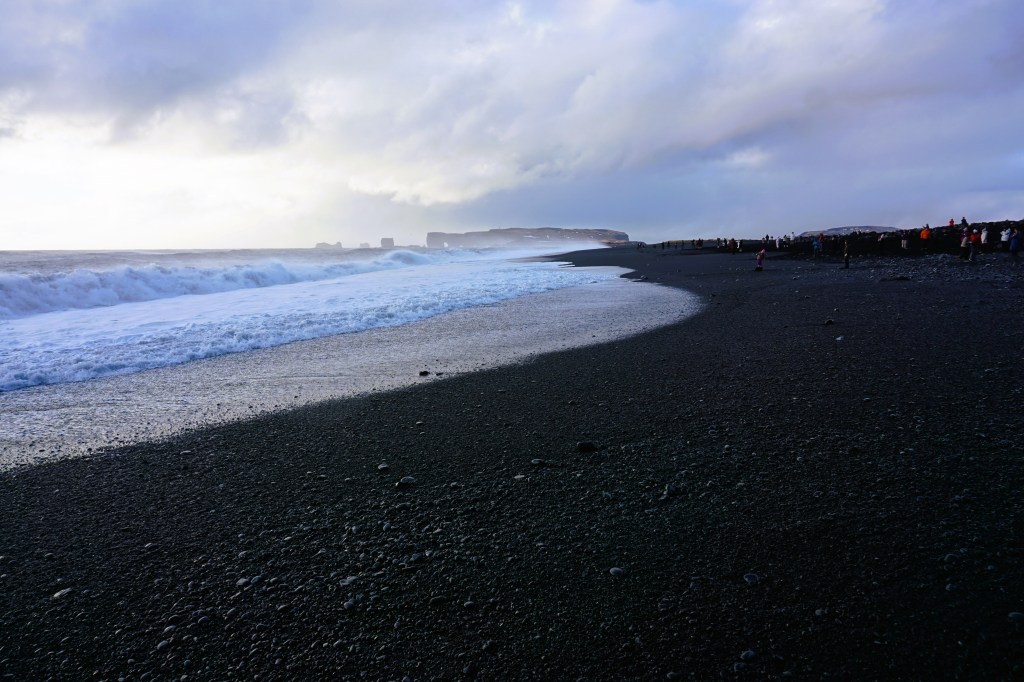
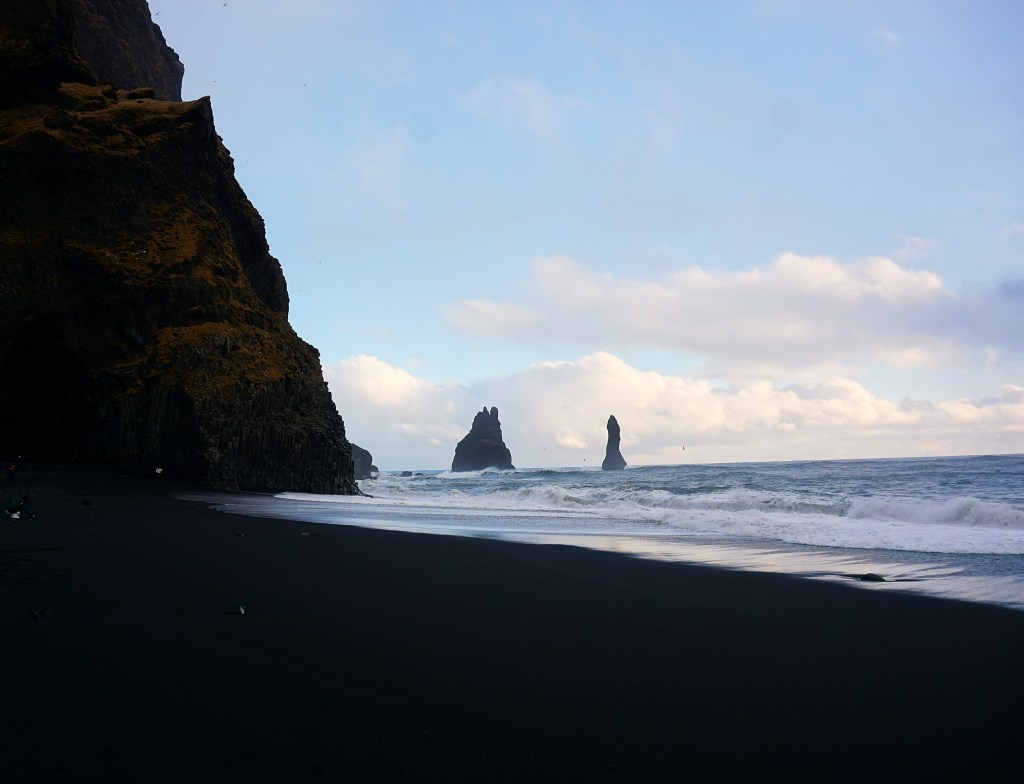
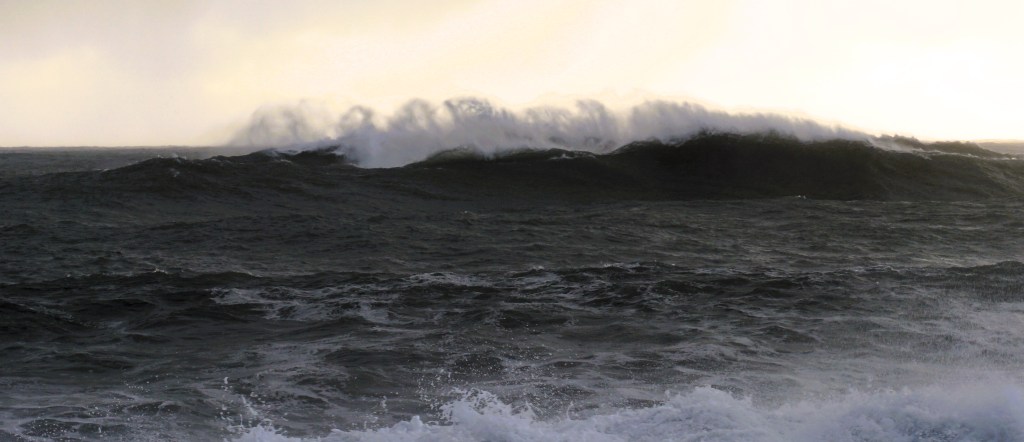
The unrelenting winds push the waves to shore. As the waves crest they are adorned with an astonishing, misty top created by Mother Nature’s fury. It’s a mesmerizing spectacle, where power and elegance coexist.


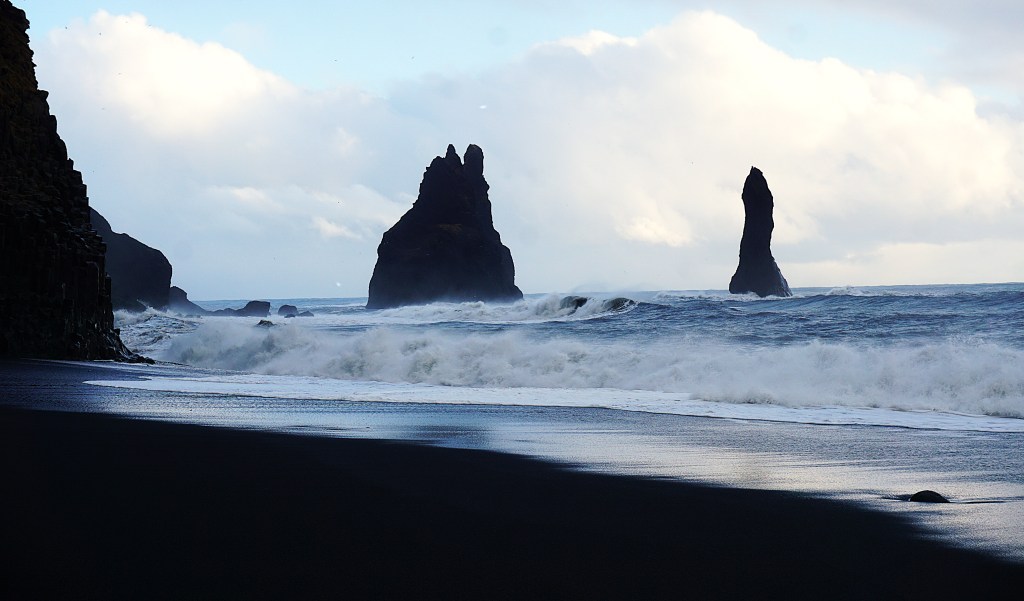
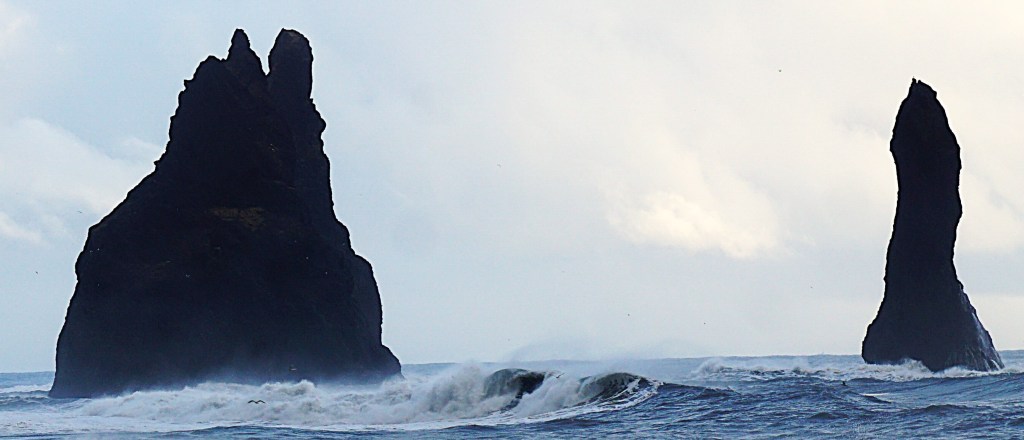

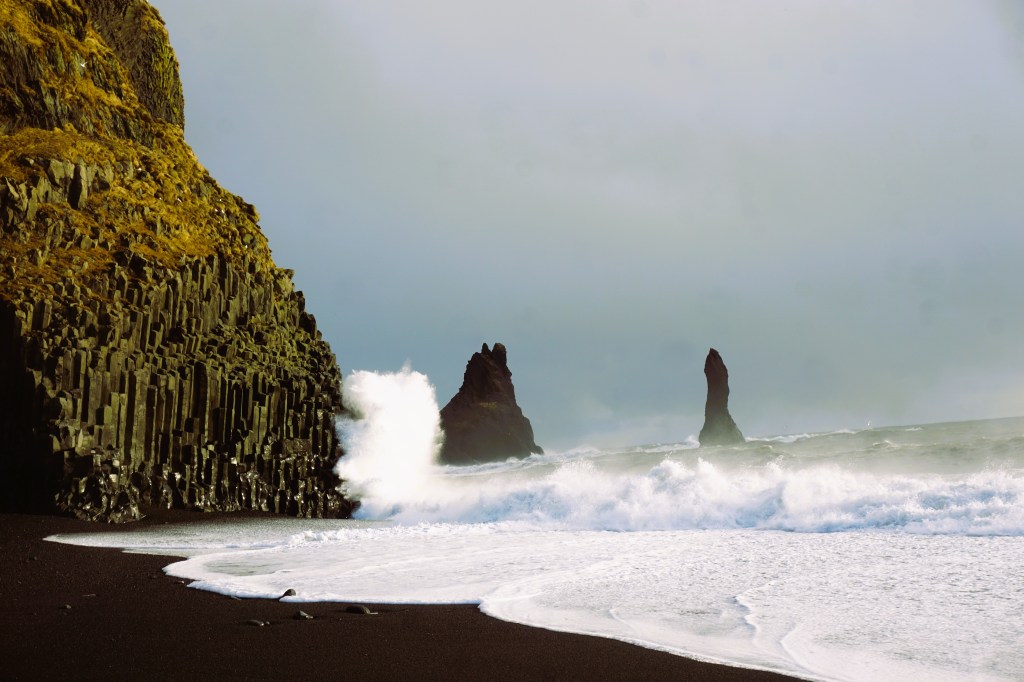
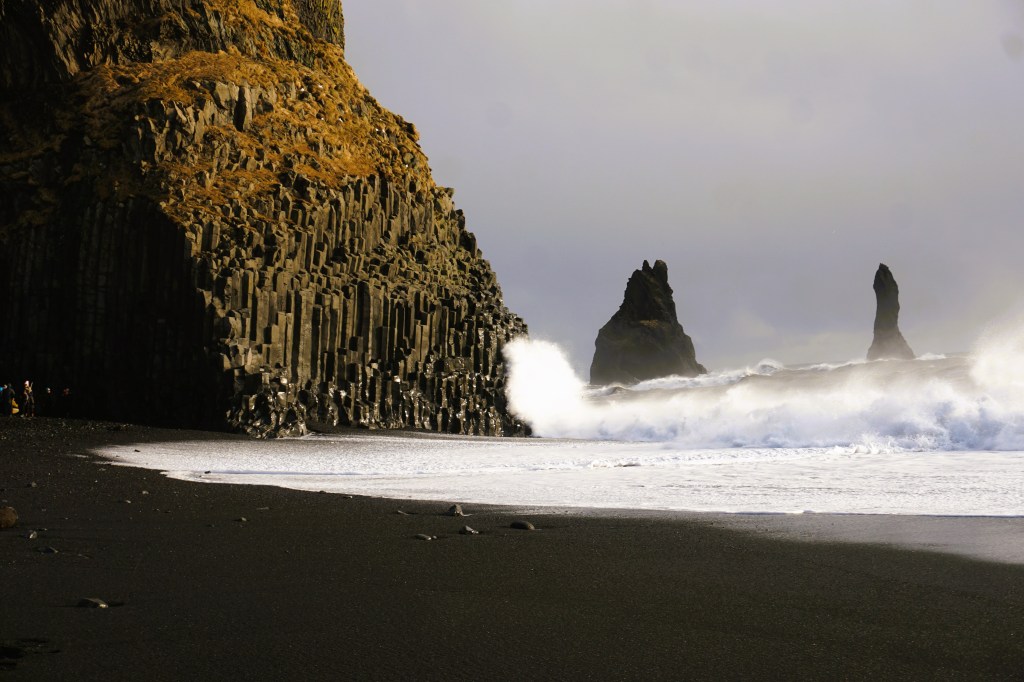
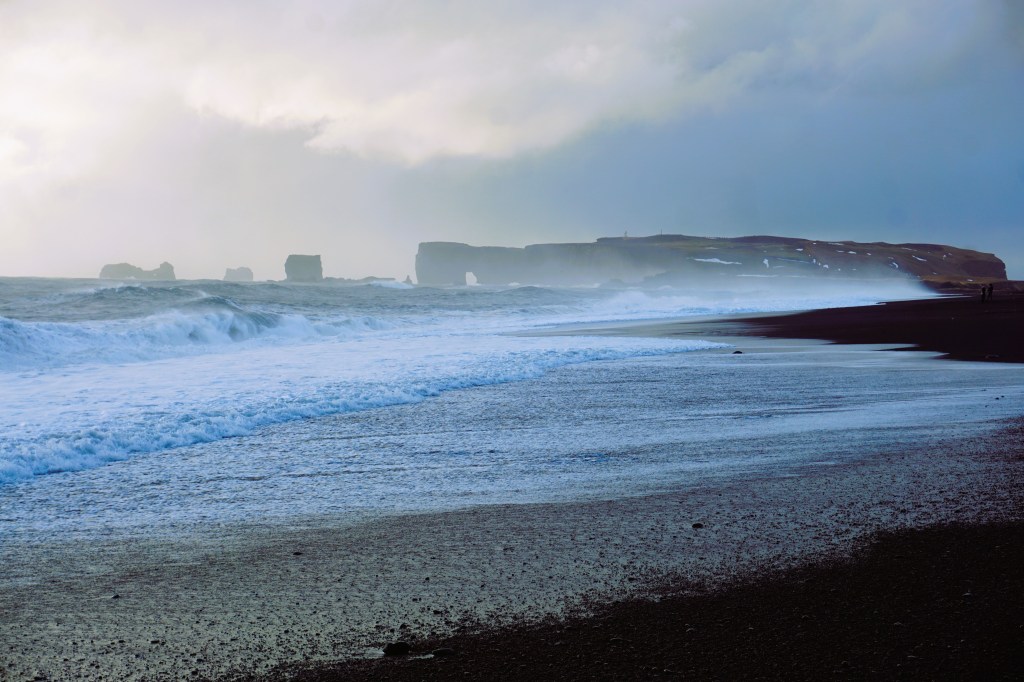
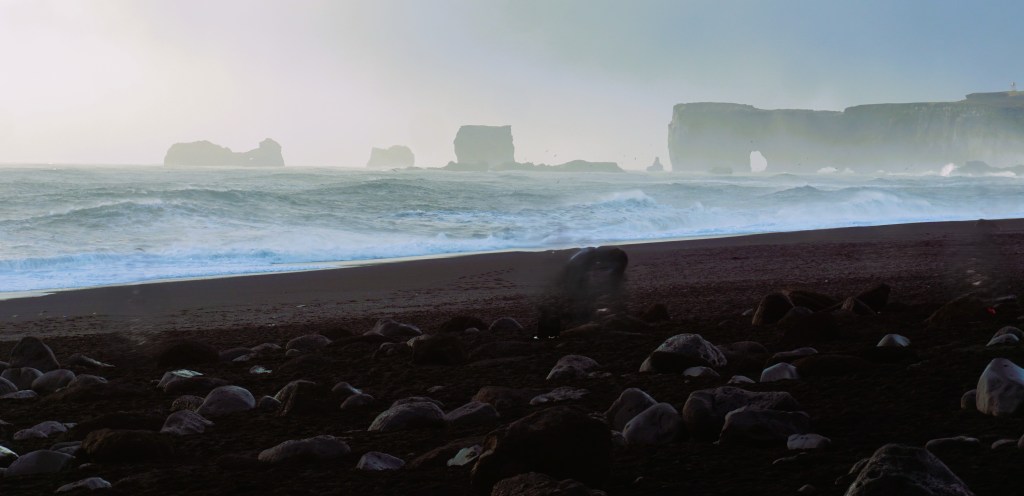
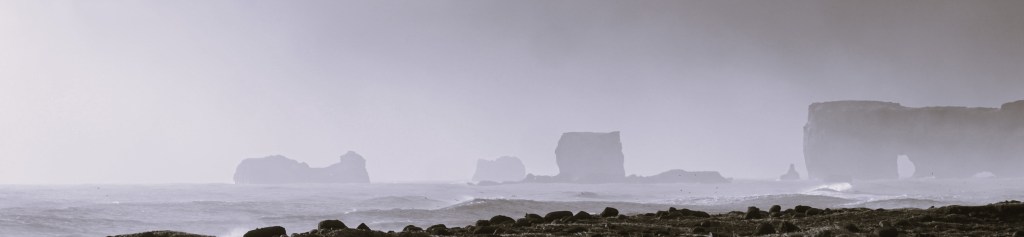
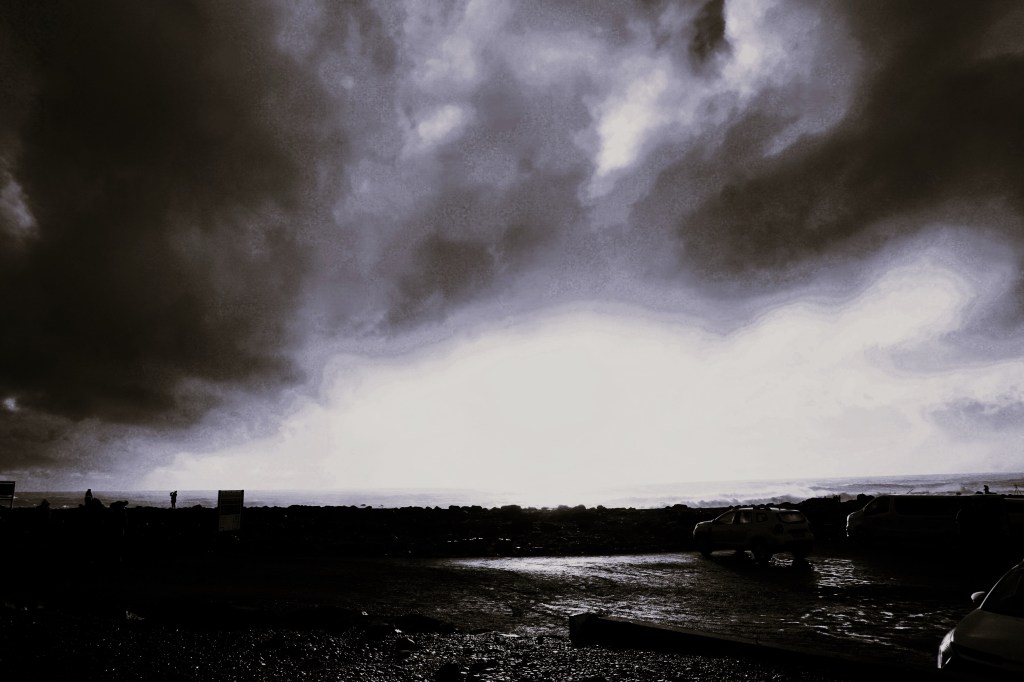

From the far side of Gardar Cliff is Vikurfjara and another view of the trolls caught out at sunrise!


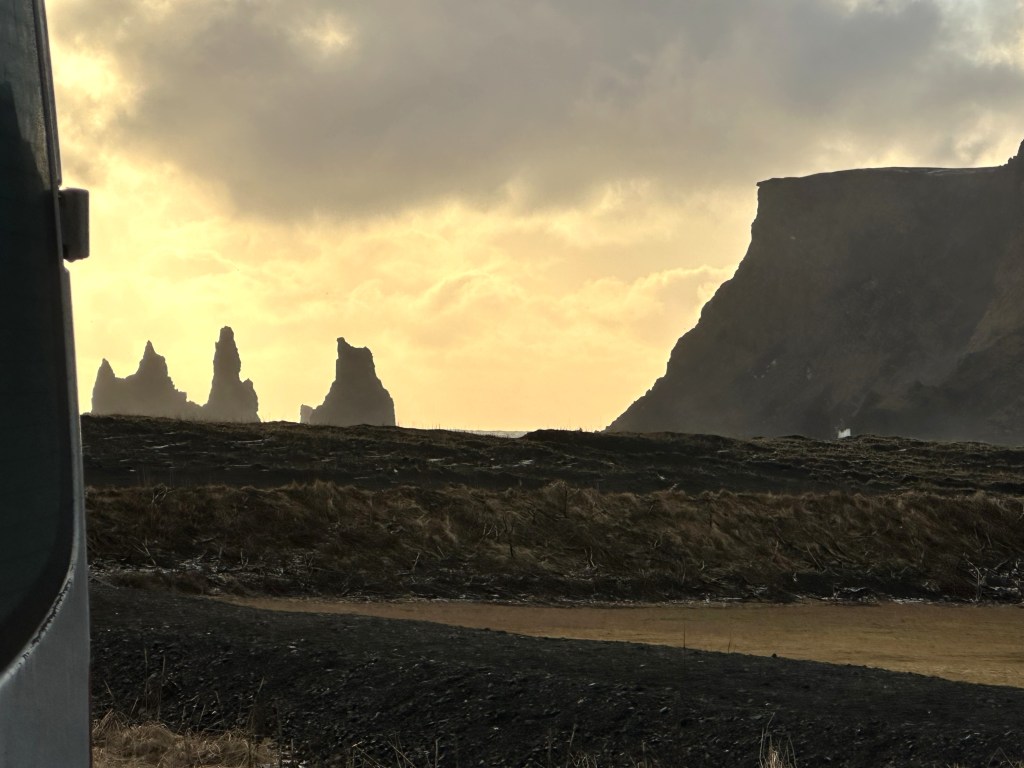
A full day left us a bit weary, but at dinner with our traveling companions we talked excitedly about the sites we had experienced today. Taking from that discussion we all had come to believe that Iceland is more than a destination. It is a living, breathing experience that engages all of your senses and leaves an indelible mark. It invites travelers not merely to observe its breathtaking landscapes but to immerse themselves fully in adventures undertaken.
Wonder what tomorrow will bring? All we know is that it’ll build on the story of our time in the Land of Fire and Ice.
Barbara and Brian
“It’s not what you look at that matters, it’s what you see.“ – Henry David Thoreau

 Aimless Wanderings