February, 2025
Reykjavik, in the southwestern region of the country, is the capital of Iceland, and the northernmost capital city in the world. The city and surrounding suburbs are home to more than two-thirds of the country’s 389,444 citizen’s; most of the remaining population resides along the Ring Road. Reykjavík is believed to be the location of the first permanent settlement in Iceland, which was established in 874 CE. The city was officially founded in 1786 as a trading town and grew steadily over the following decades, as it transformed into a regional and later national center of commerce, population, and governmental activities. Long a protectorate of Denmark, and while Iceland’s constitution was ratified in 1874, the country didn’t gain its independence as a sovereign state until 1918.
Metropolitan by design with the charming feel of a small-town, Reykjavik has something for everyone. Check out Atlas Obscura and you’ll be directed to, amongst others, the Icelandic Phallological Museum, the Elf School, Iceland Punk Museum, monument to the unknown bureaucrat, and the baejarins beztu pylsur stand serving Icelanders’ preferred snack, lamb hot dogs. Not to be missed are the Sun Voyager sculpture, Harpa Concert Hall, Hallgrimskirkja Lutheran Church and its Cathedral Bells, the Einar Jónsson sculpture garden, Rainbow Street, and if you take a look around, the street art is abundant. For the more adventuresome eaters, head to Cafe Loki where you can try what some call the national food of Iceland, Hakarl or fermented shark. If you want to keep to simpler tastes, enjoy lamb, cod, artic char, hearty rye bread, some of the best pastries you’ll find most anywhere and licorice flavored ice cream. For your sweet tooth head to a local market and indulge yourself with a variety of licorice products – the Icelanders love their licorice!
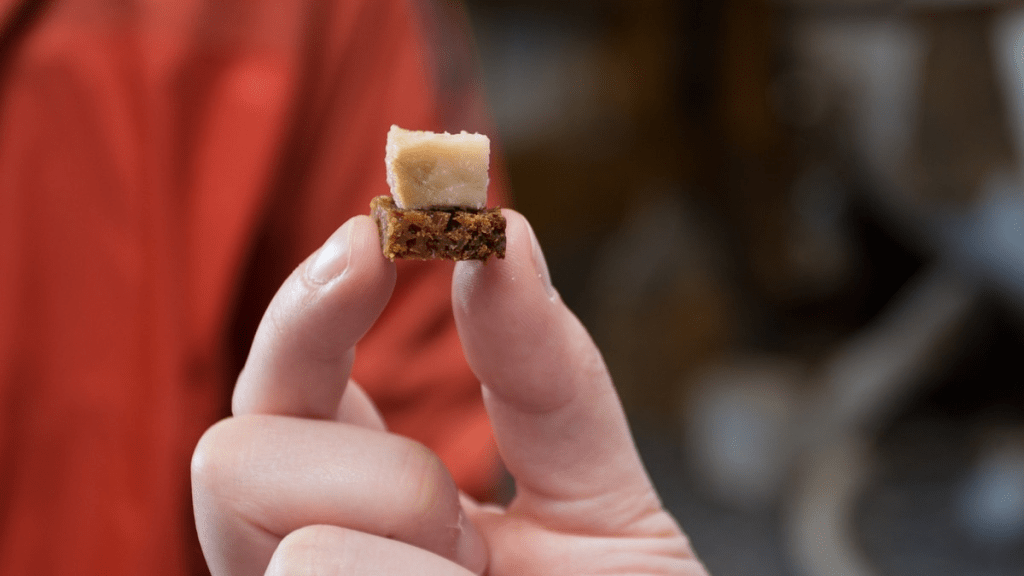
By the way I asked Icelander’s time and again whether or not they enjoyed fermented shark. There’s a resounding: “never tried it-never will!” or “it’s an old person’s tradition” or just a “to what are you referring?” What’s anti-yum?
After Boga dropped us off at our hotel and we had the chance to make our good-byes, we set out on foot, on a very windy day (did I mention the wind never stops in Iceland? It’s just a matter of how strong it is at any given moment) to walk a significant portion of the harbor shoreline.


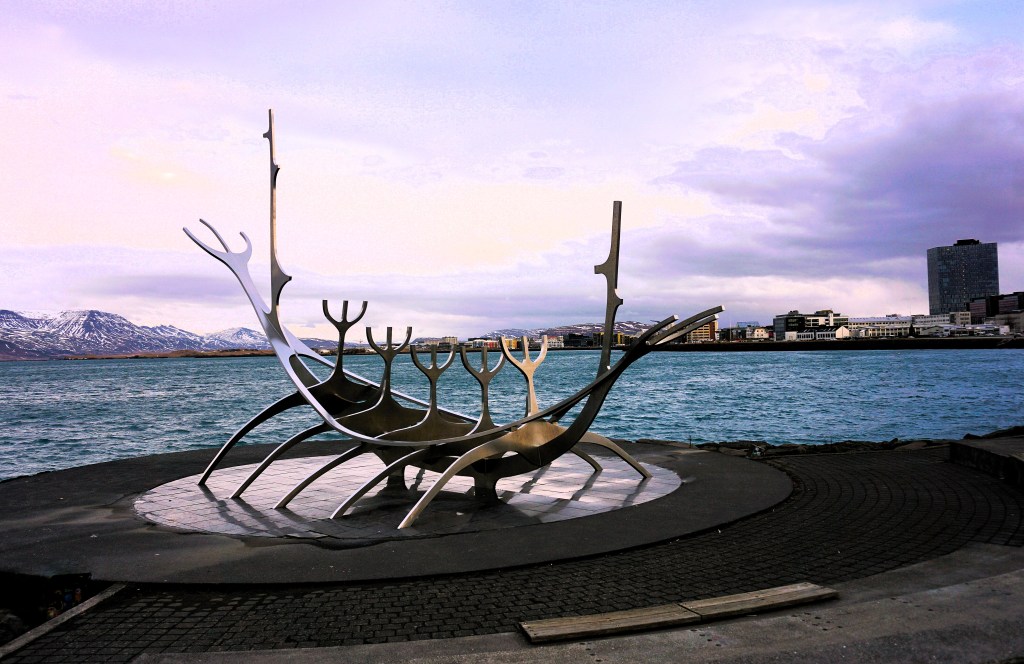
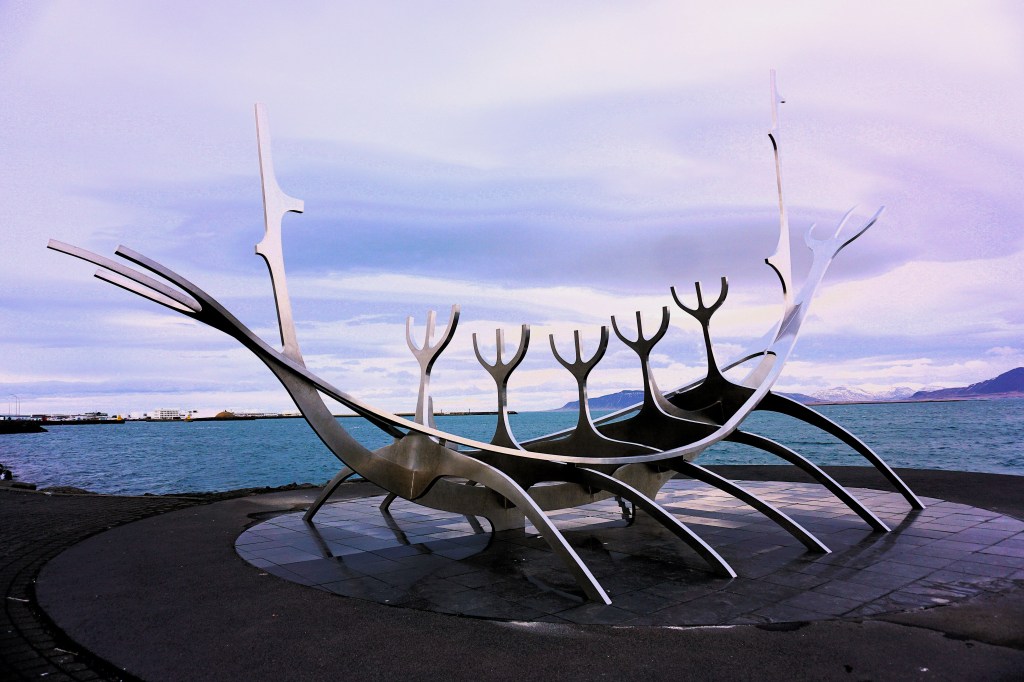

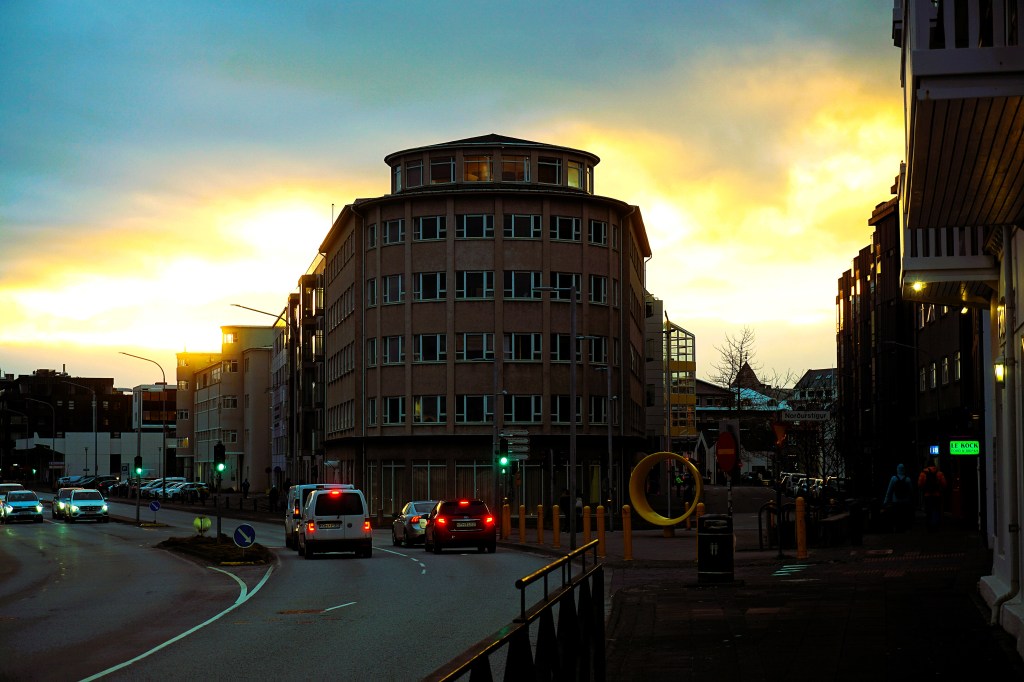
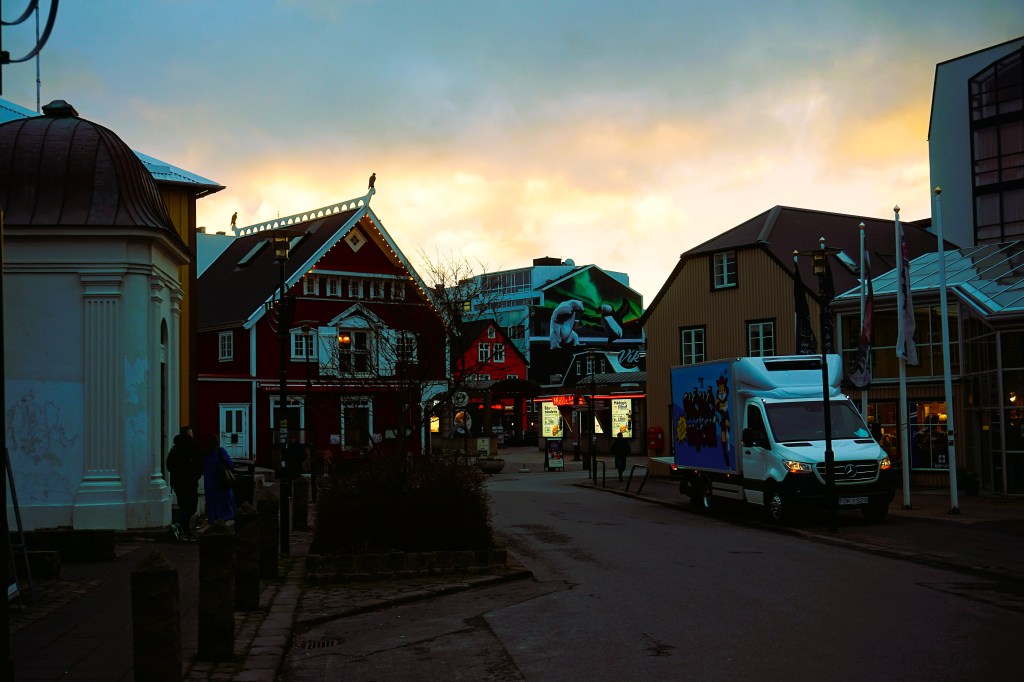
The next morning we had time to roam downtown Reykjavik before our – “Funky History Walking Tour in Reykjavik – With Local Storyteller” Lalli began. Check out the sites…
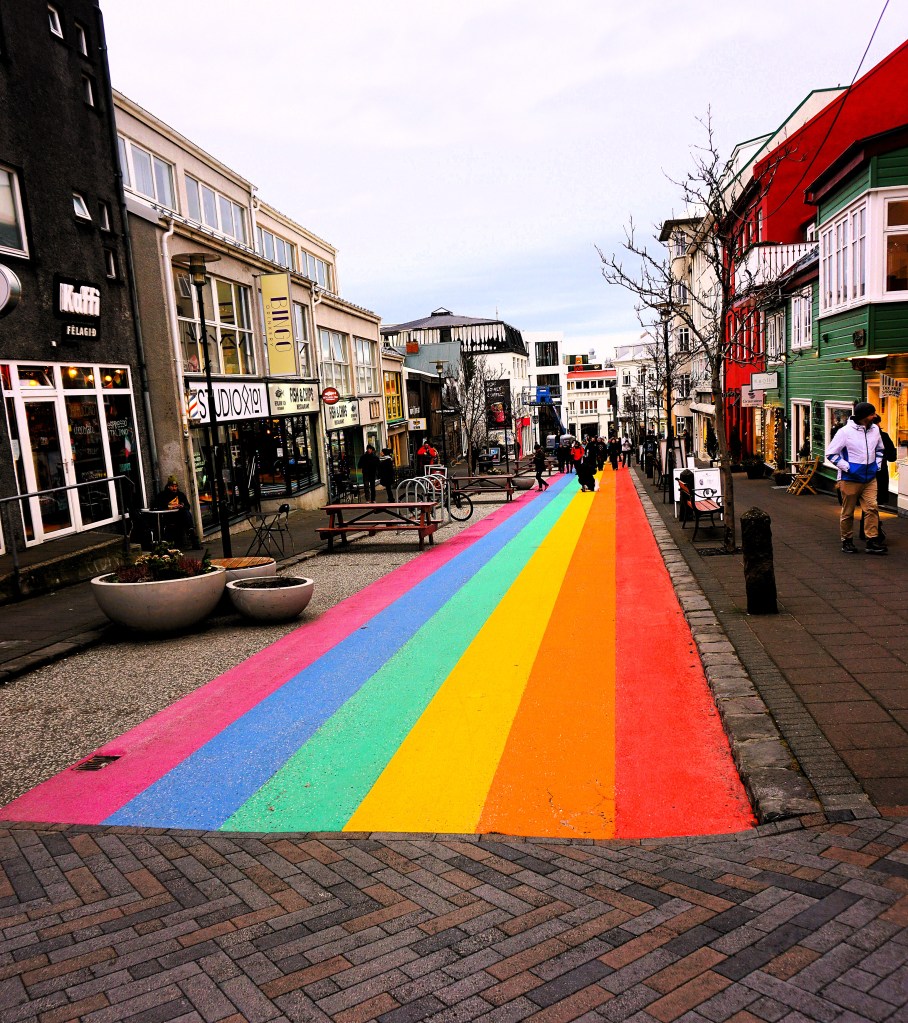
The Rainbow Street is a vibrant and colorful street located in the heart of Reykjavik. The street runs from the famous Hallgrímskirkja Church down to the main shopping street, Laugavegur. The Rainbow Street is also a cultural hub of the city, and home to several annual festivals and events, such as the Reykjavik Pride Parade, which celebrates LGBTQ+ rights and diversity.
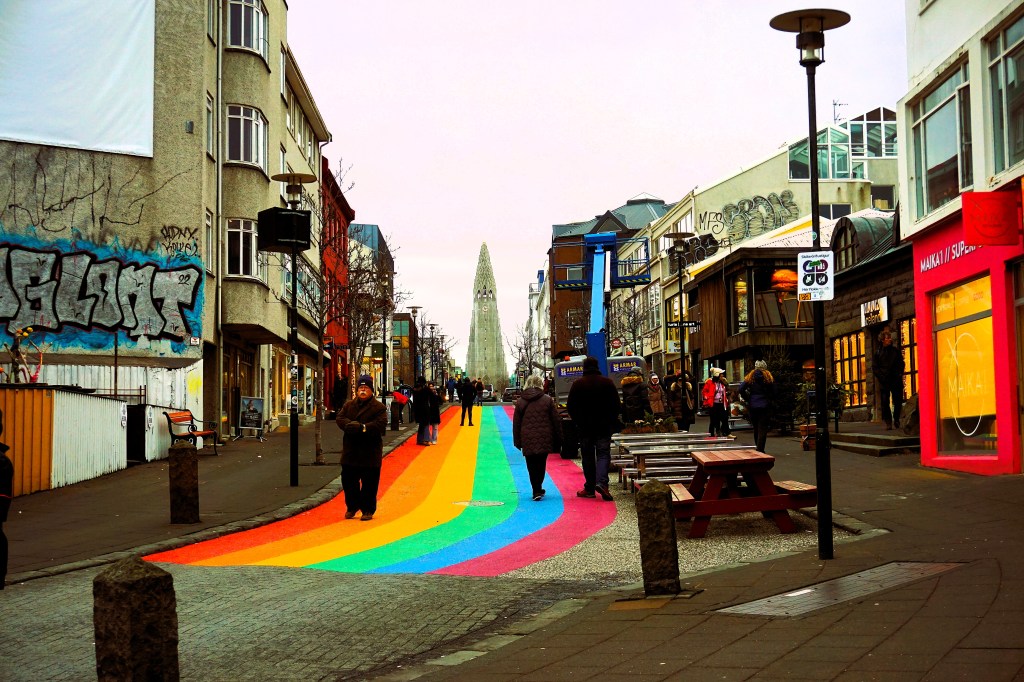


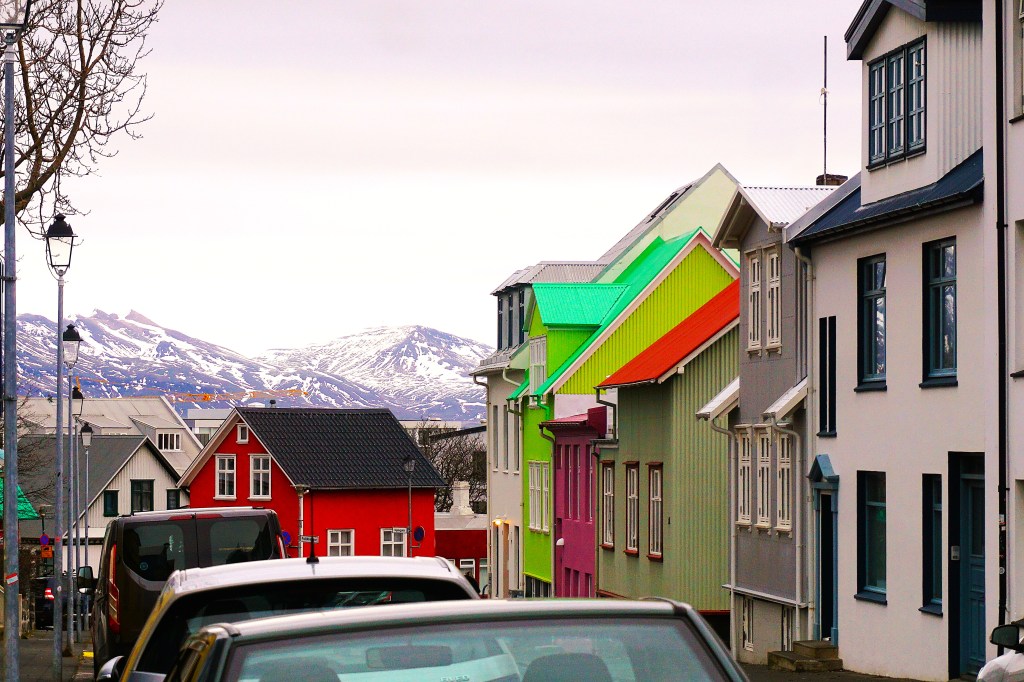
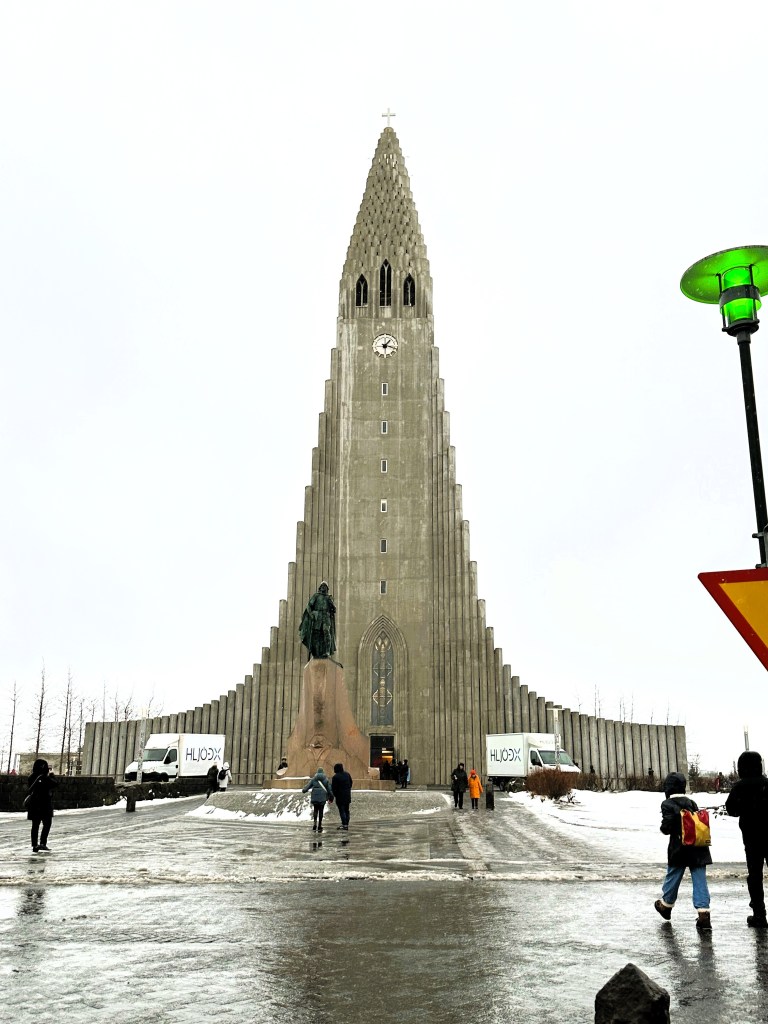
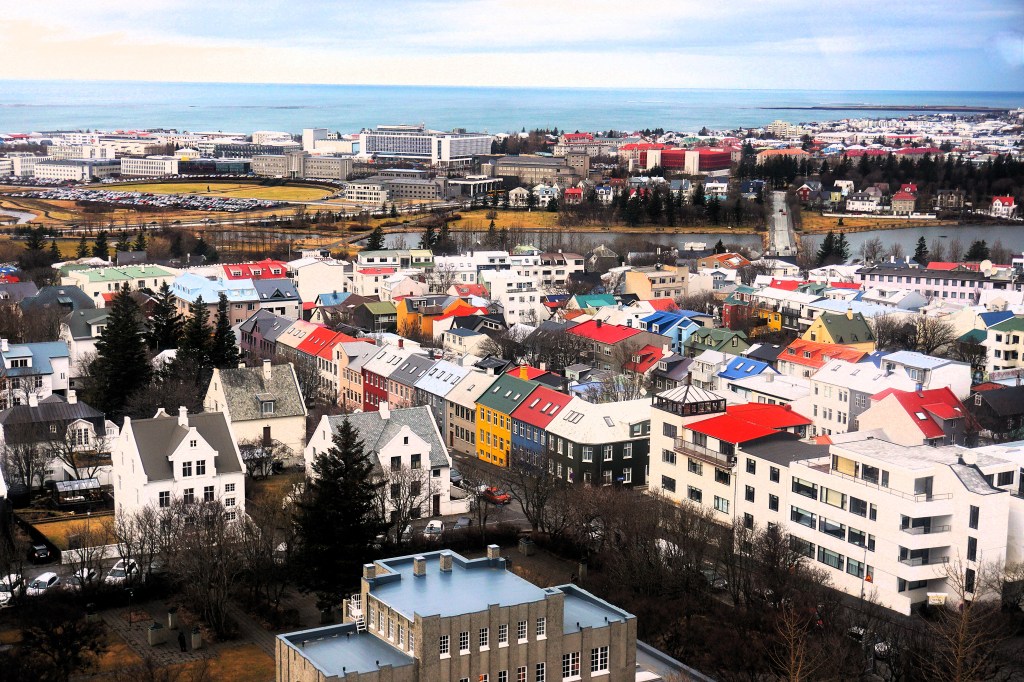
Situated on the hilltop Skólavörðuholt near the center of Reykjavík, Hallgrímskirkja Church is one of the city’s best-known landmarks and is visible throughout the city. It is a Protestant Lutheran Church of Iceland parish church commissioned in 1945 and completed 41 years later in1986. At 244 feet tall, it is the largest church in Iceland and among the tallest structures in the country. Architecturally, Hallgrímskirkja Church consists of four parts: the tower with its carillon bells which ring every 15 minutes; the distinctly curved side wings which house service facilities; a nave in more traditional architecture, and a sanctuary at the other end of the nave, whose cylindrical shape has been described as evoking Viking war helmets.




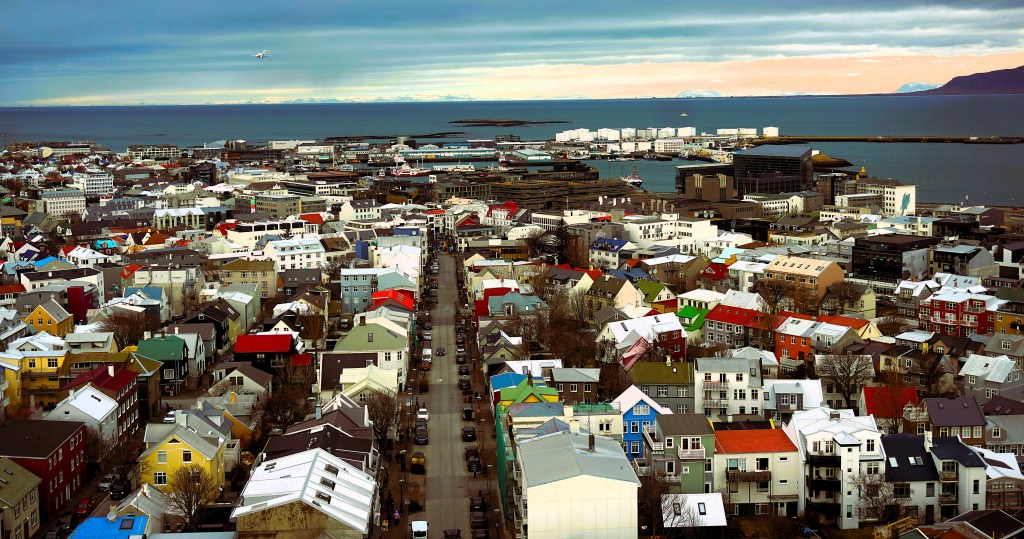


Our Funky History Walking Tour was fabulous, and one of those activities we can highly recommend – not to be missed when in the neighborhood. Our tour guide, Lalli, who founded the company with his best friend, is also a head nurse at the city hospital. Nursing pays the bills; the tour company is a labor of love.
A native Icelander, born, bred, raised and educated in Iceland’s history and sagas Lalli is proud to be Icelandic, but not so foolish as to not realistically portray the good and the bad about the country. During our two-hour tour walking about Reykjavik’s “old town” neighborhoods we learned of the country’s founding, the heinous Viking Eric the Red and his beloved son, Leif Eiriksson, the founding of a true functioning democratic Parliament and the impactful protests of the citizens, and the conversion (sorta, kinda) to Christianity. We visited a most powerful sculpture garden and were treated to a pylsur.
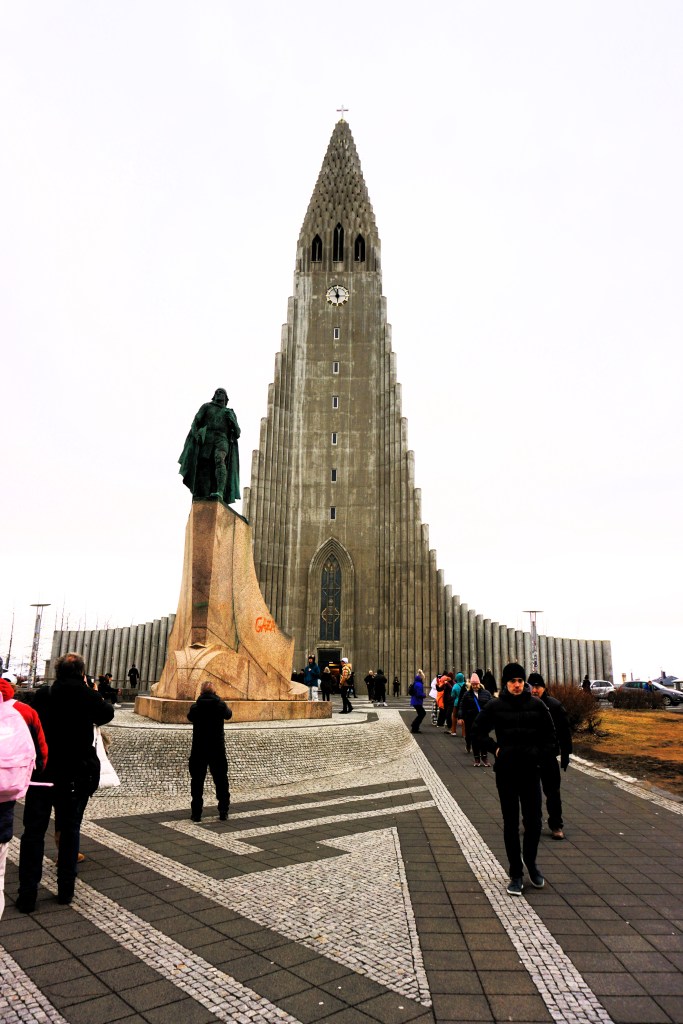
Given To Iceland By The United States In Honor Of The 1,000 Anniversary Of Iceland’s Parliament

Highlighting the “Funky Walking Tour” was a far too brief stop at The Einar Jonsson Sculpture Garden. Einar Jonsson is considered Iceland´s first sculptor. He attended the Royal Danish Academy of Fine Arts in Copenhagen from 1896 to 1899 and spent two years studying in Rome before striking out with his own vision of sculpting using Icelandic folklore, mystical and religious motifs. There are 26 bronze casts of Einar Josson’s work to view in the garden.

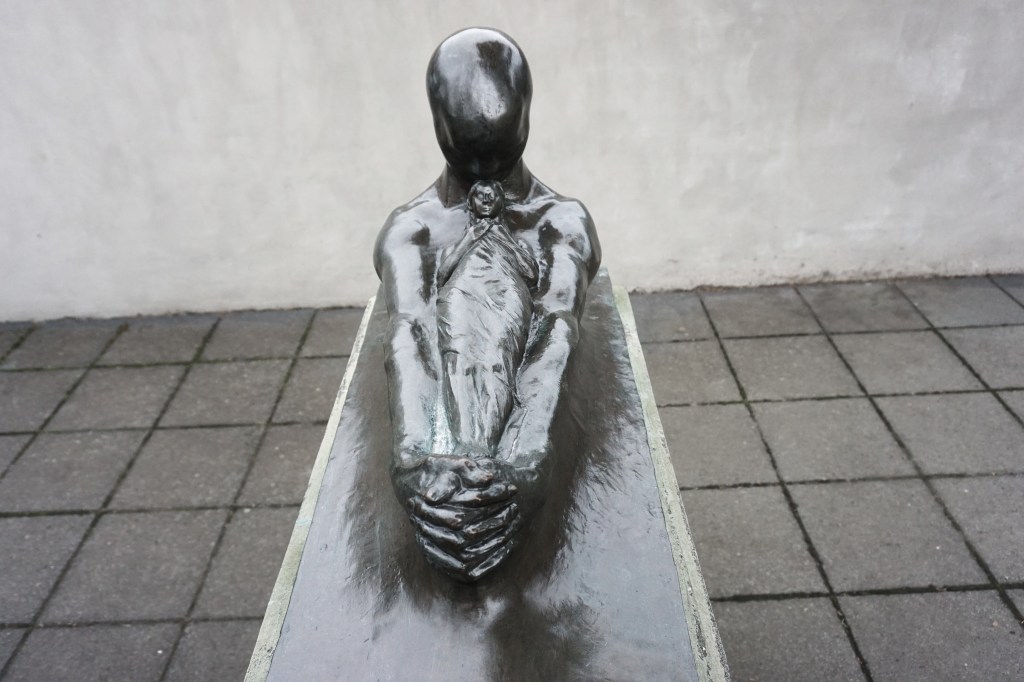
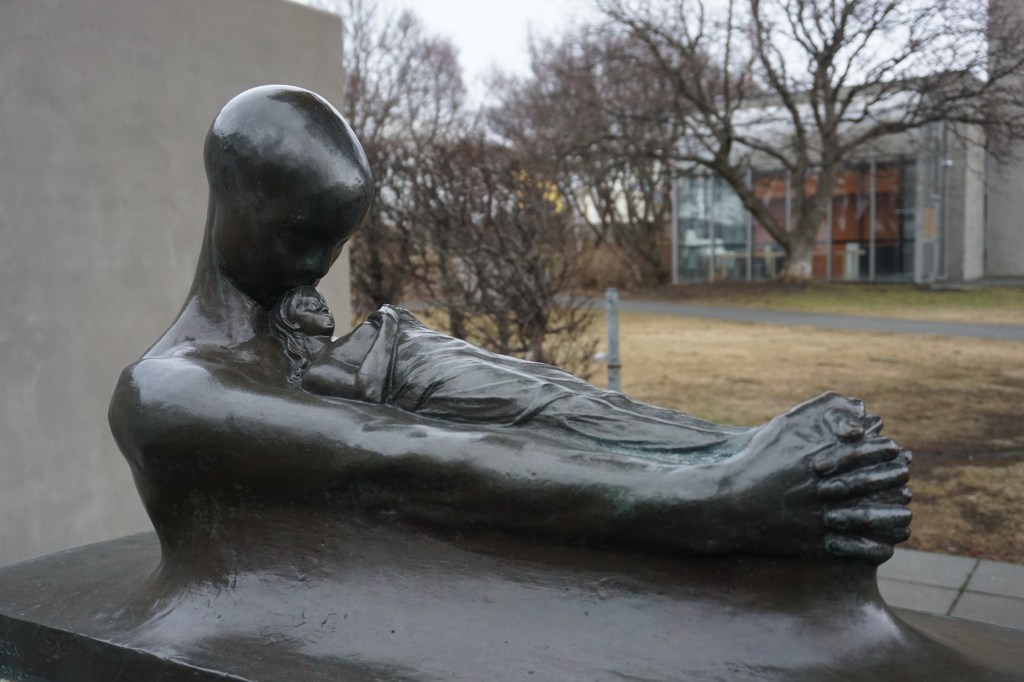
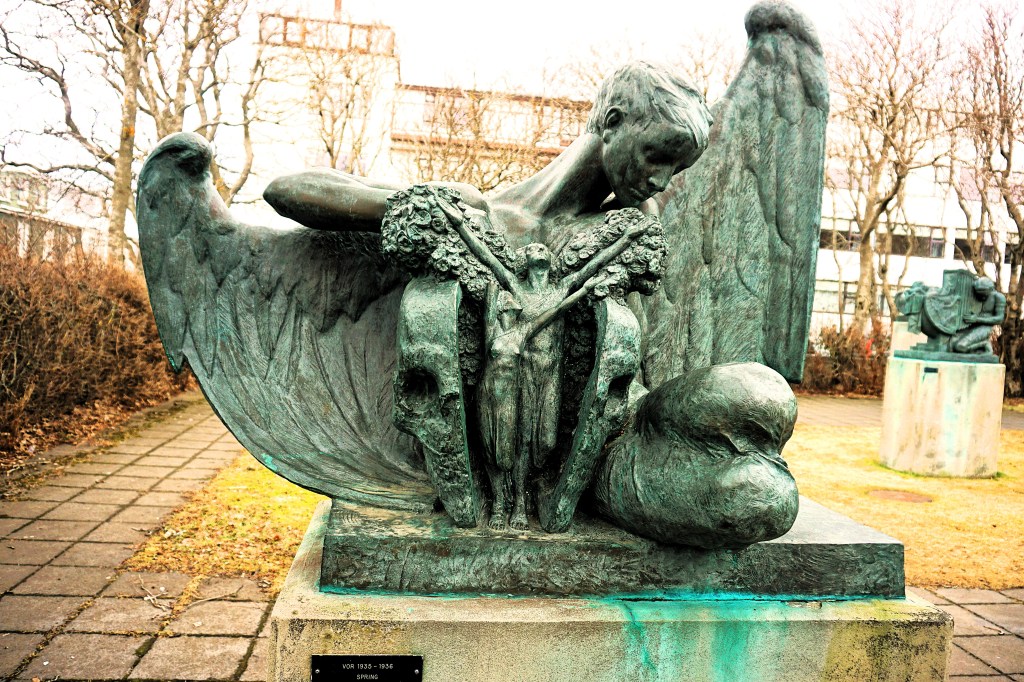
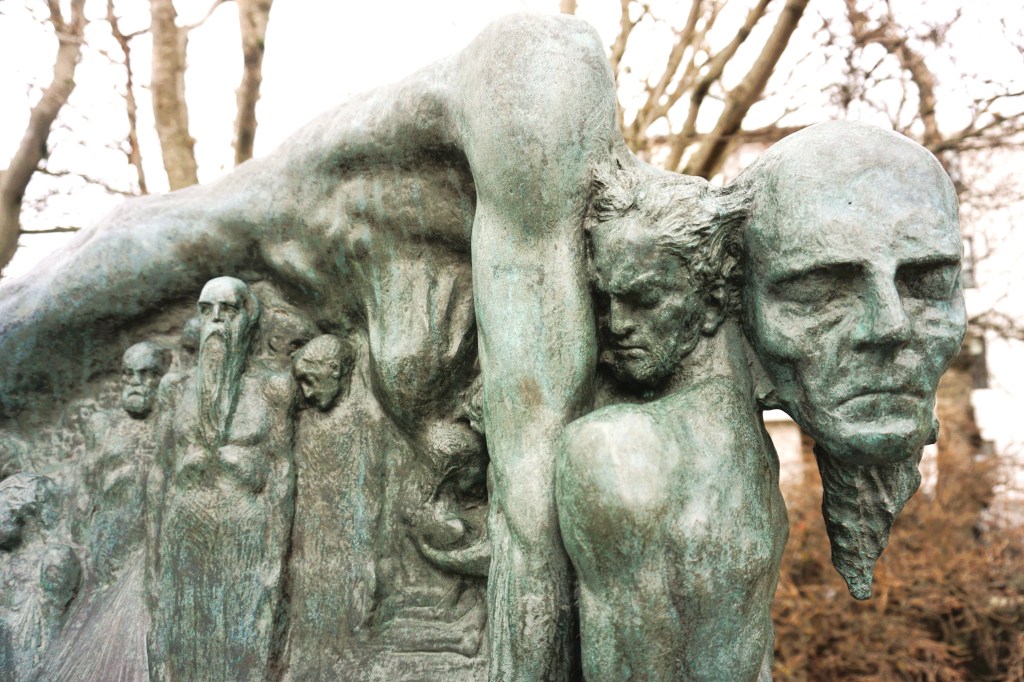


Icelandic governmental traditions of listening to the people date back to more than 1,000 years ago. We weren’t sure if this government of the people, for the people and pledged to listen to the people has been successful for so long because most Icelanders are related to most other Icelanders or for other reasons…but it works. Even when disagreement between the government and the people occurs, and the people prevail, the “state” is willing to commemorate the people’s will.

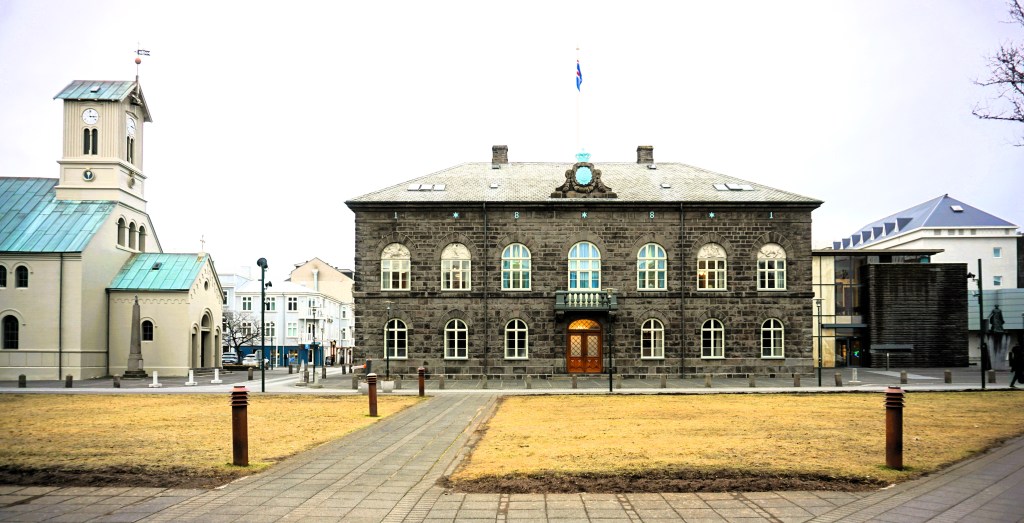
A huge piece of rock sits in front of the parliament building with a black cone of a noticeable size calmly stuck atop it, cracking it in half. It bears a plaque that contains a quote from the Declaration of the Rights of Man and of the Citizen: “When the government violates the rights of the people, insurrection is for the people and for each portion of the people the most sacred of rights and the most indispensable of duties.” The sculpture commemorates protests that took place between 2009 and 2011 in the wake of the Icelandic financial crisis and the government’s poor handling of the situation. Considered the largest-scale protest in Icelandic history, thousands of people gathered before the parliament and demanded changes to the old system. And change came – over the following 10 years or so Iceland dug its way out of financial ruin as it committed itself to the tourism industry.

A pylsur is, quite simply, a hot dog. Made of lamb, but seasoned to taste like any other similar sausage it is not served with the usual toppings. No, no chili or coney sauce. No, no mustard, sauerkraut and caramelized onions. No, no poppy seed bun, yellow mustard, emerald green sweet pickle relish, chopped onion, pickle spear, tomato slices, sport peppers and celery salt. A pylsur is served on a hot dog bun with ketchup, non-vinegary mustard, raw chopped onion and crispy fried onions. Don’t pass up this snack…it’s delicious!

…And, Yes That’s Barbara With A Chunk Of Pylsur In Her Cheek!
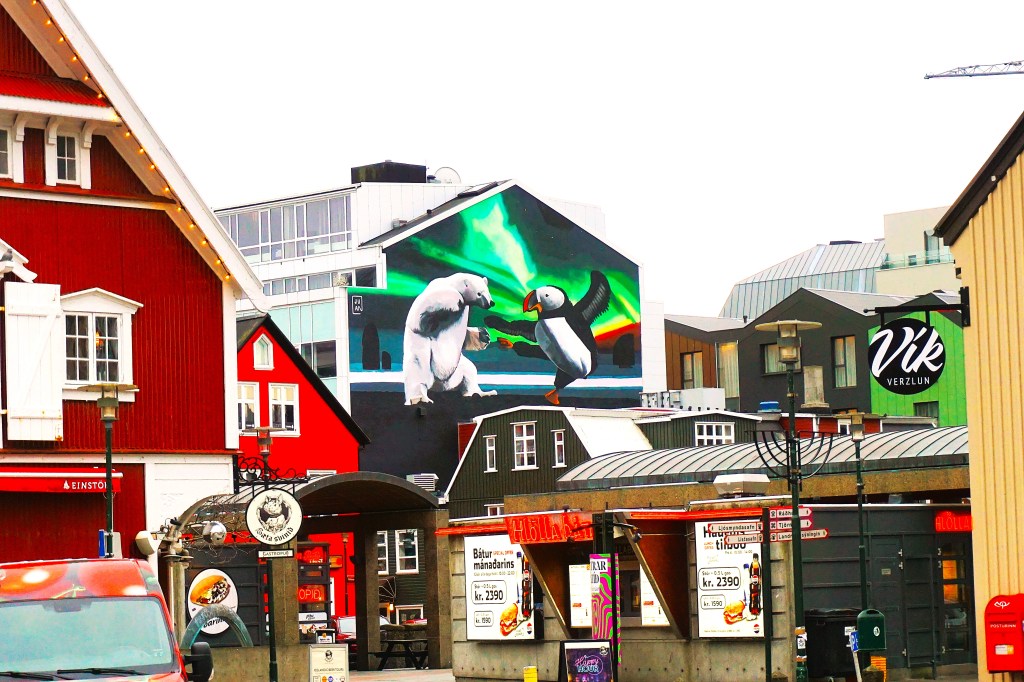
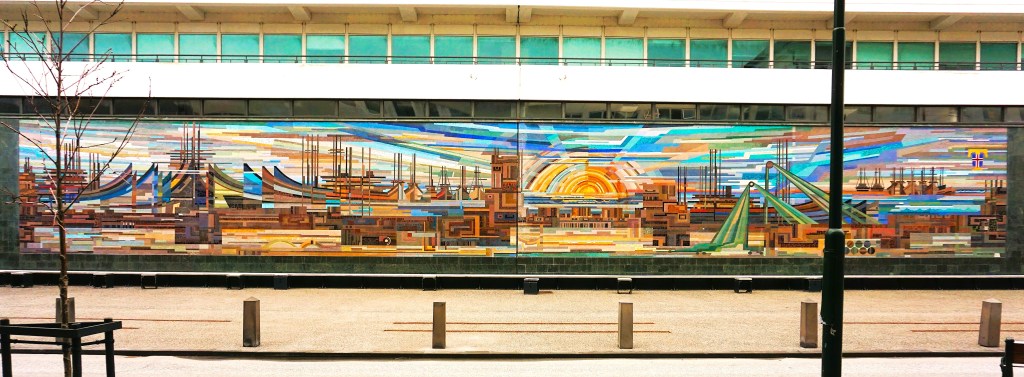
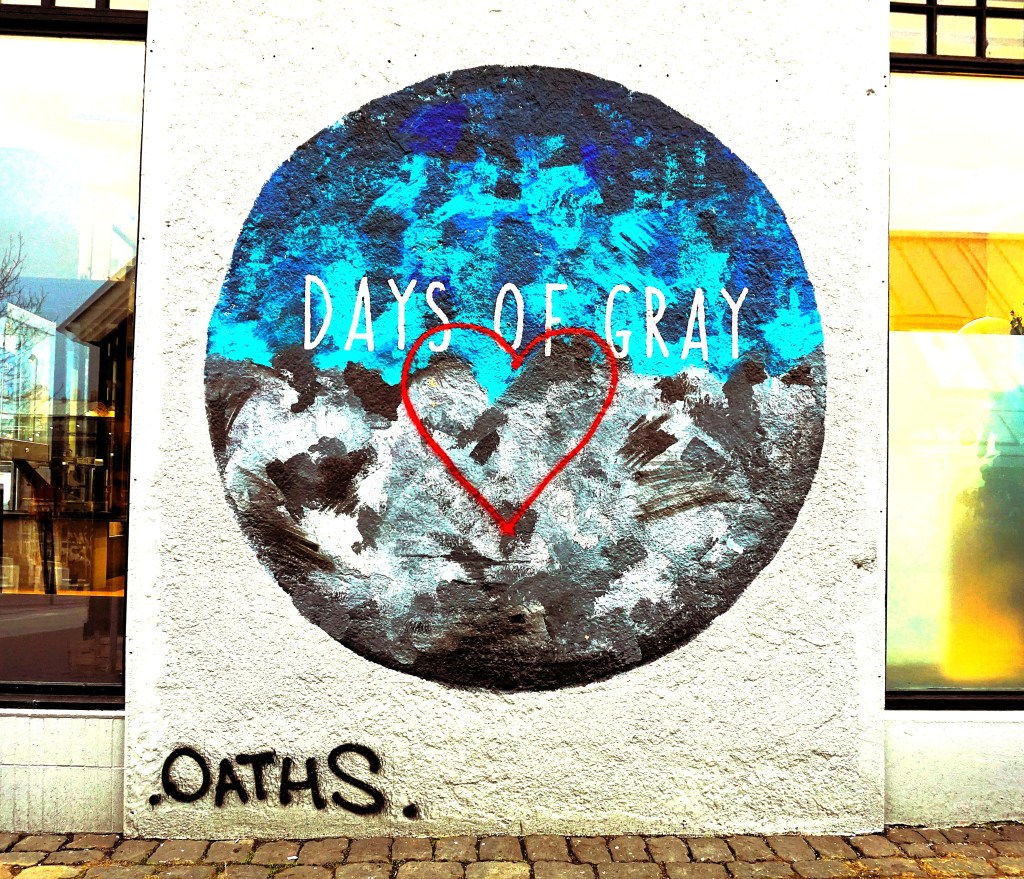
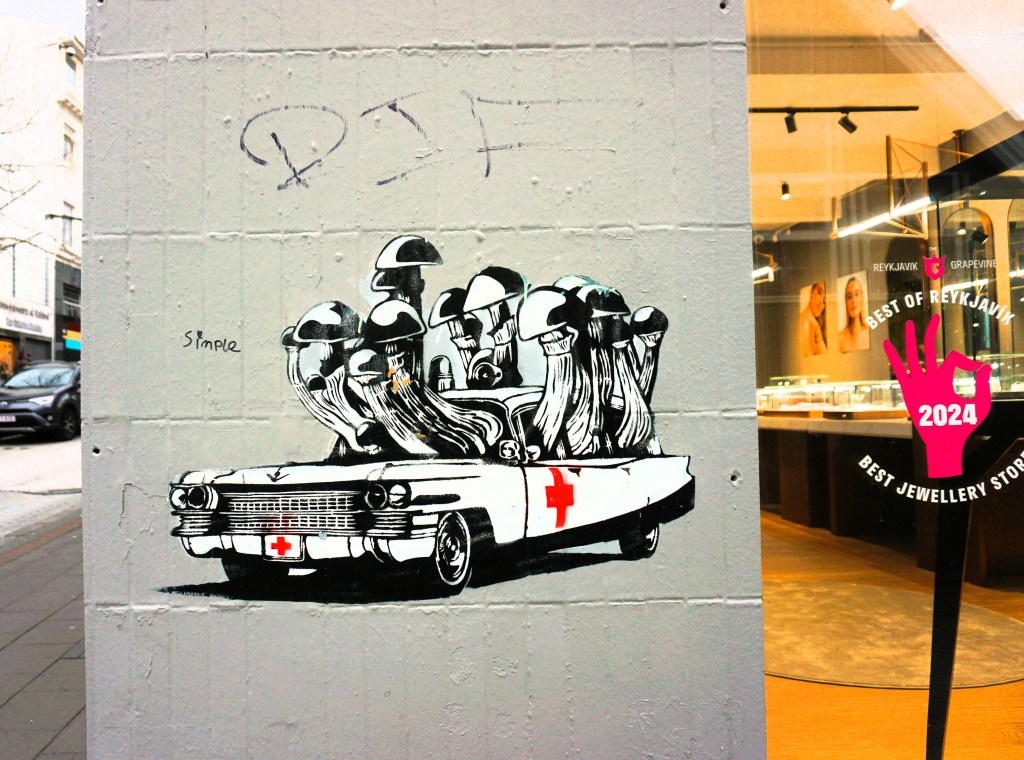
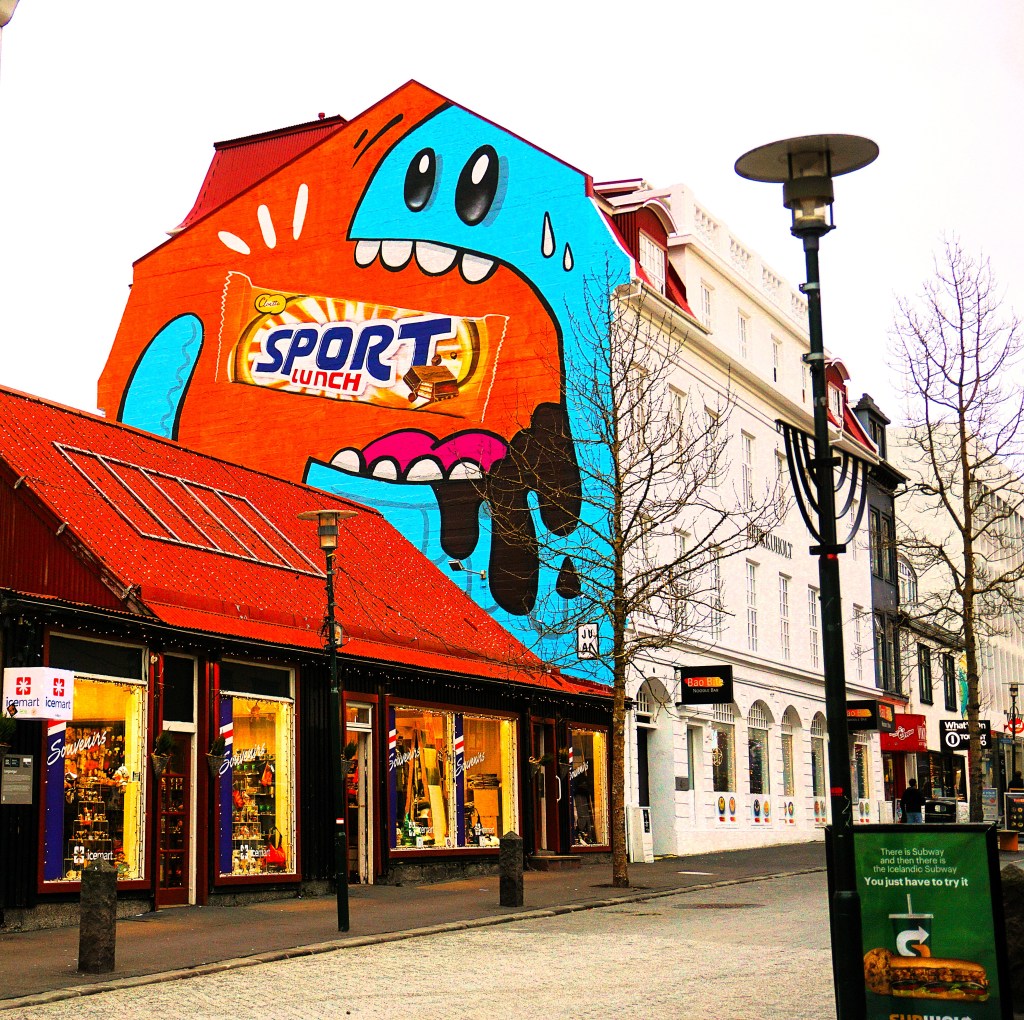
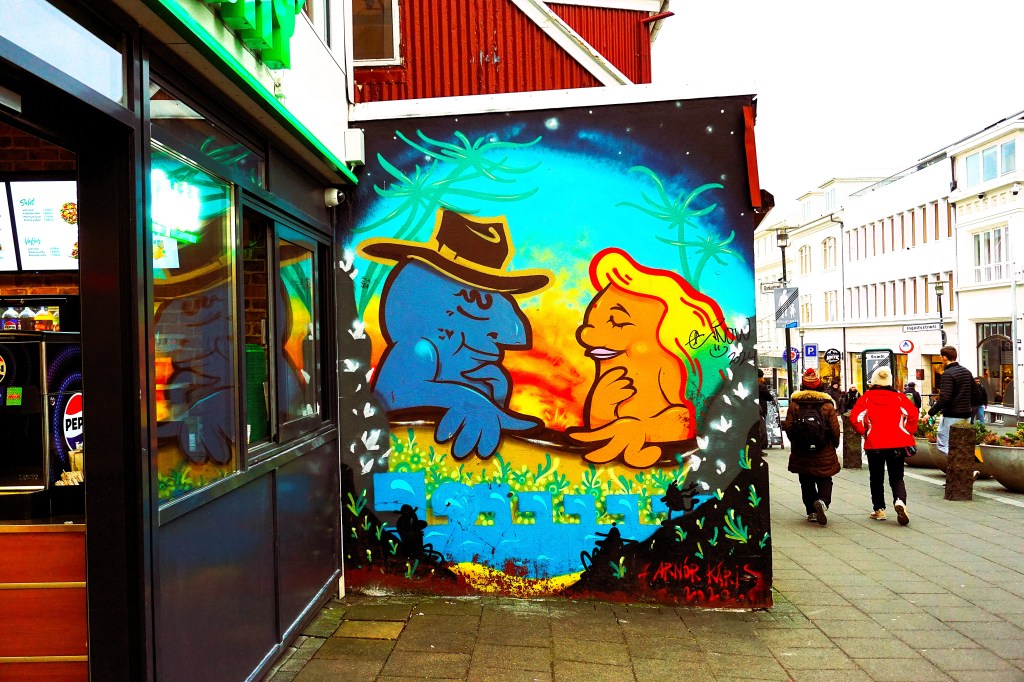
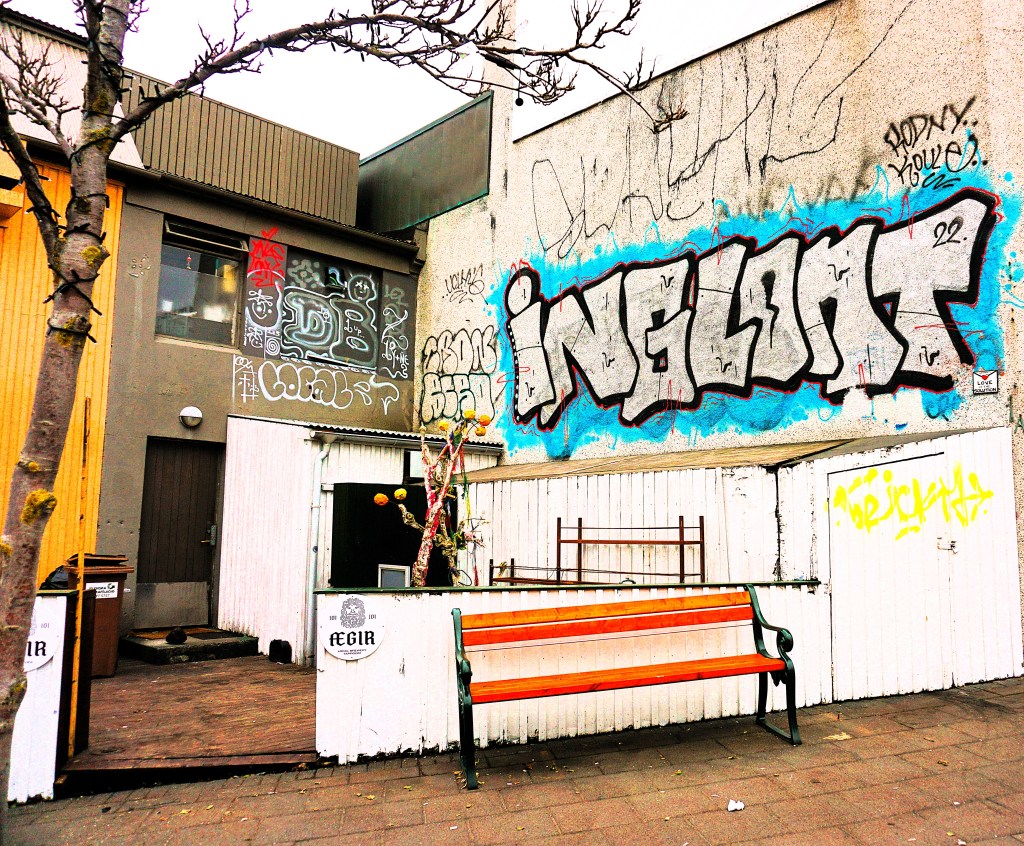
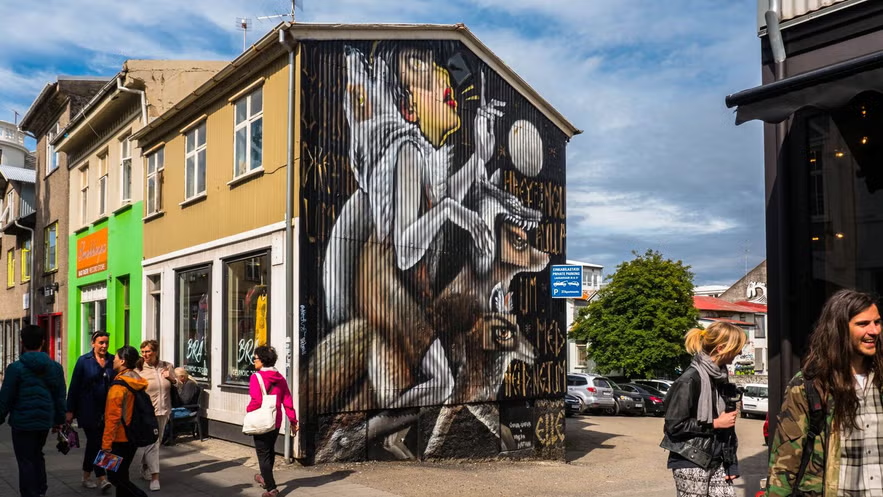
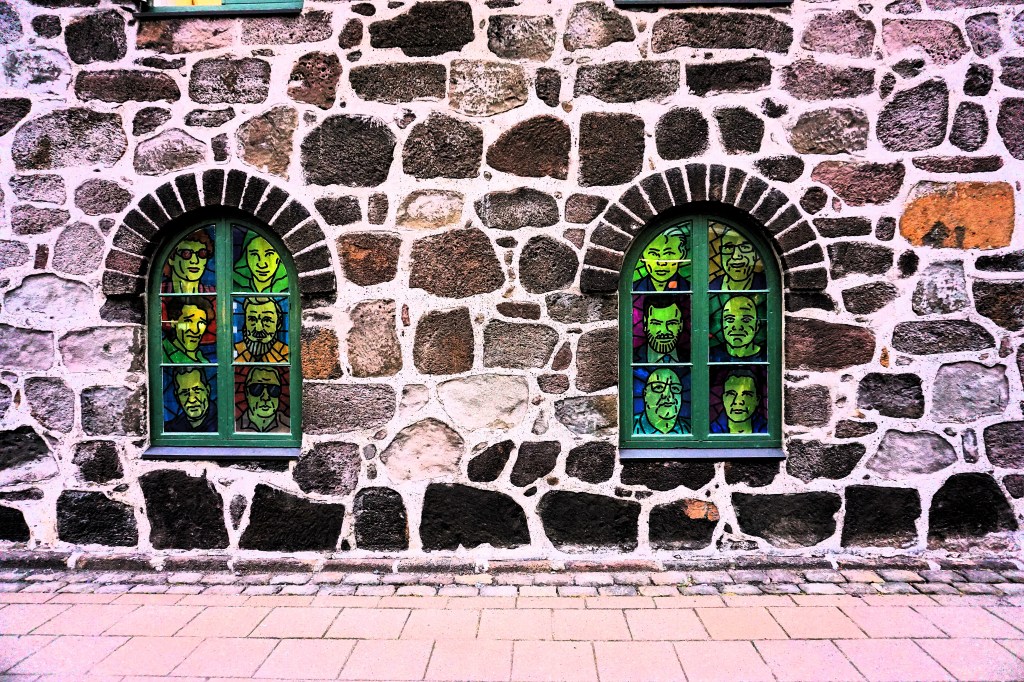
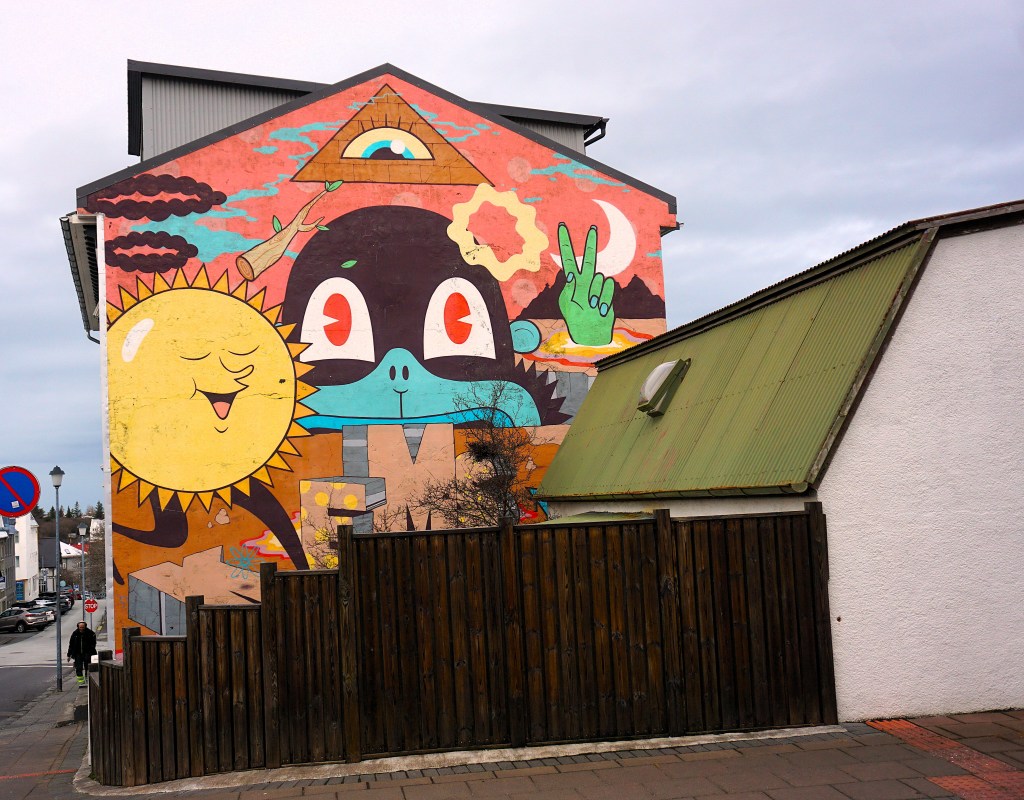
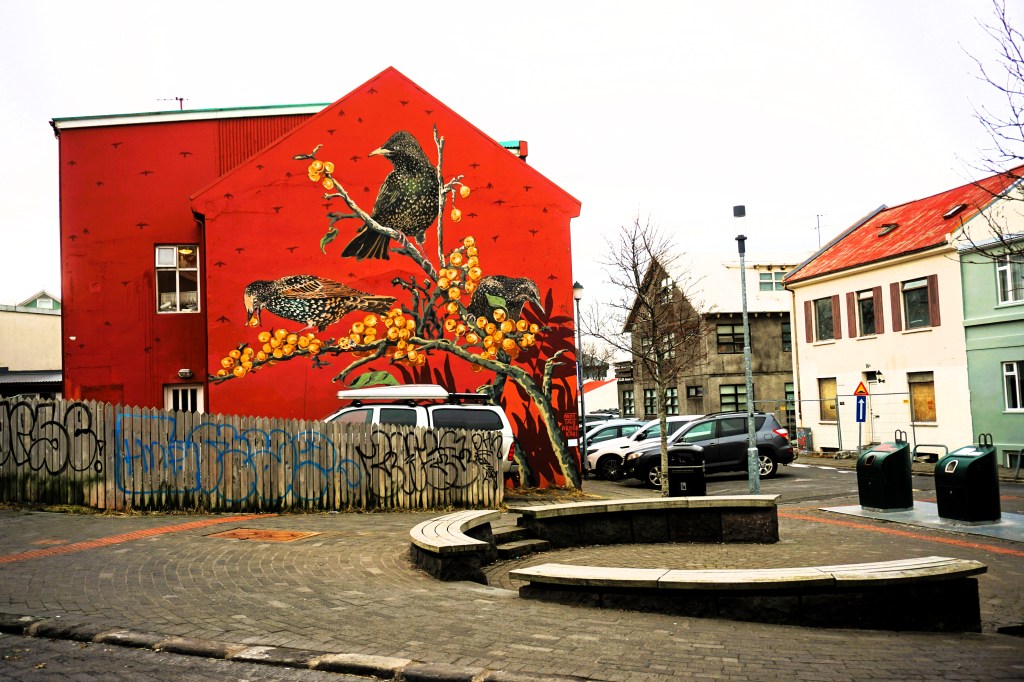
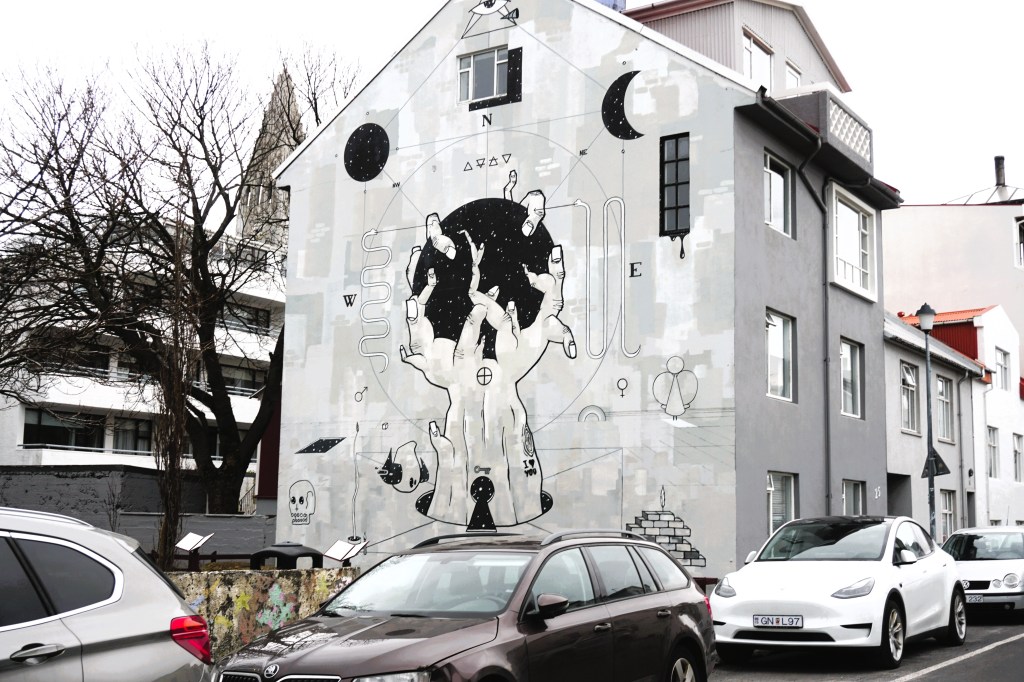
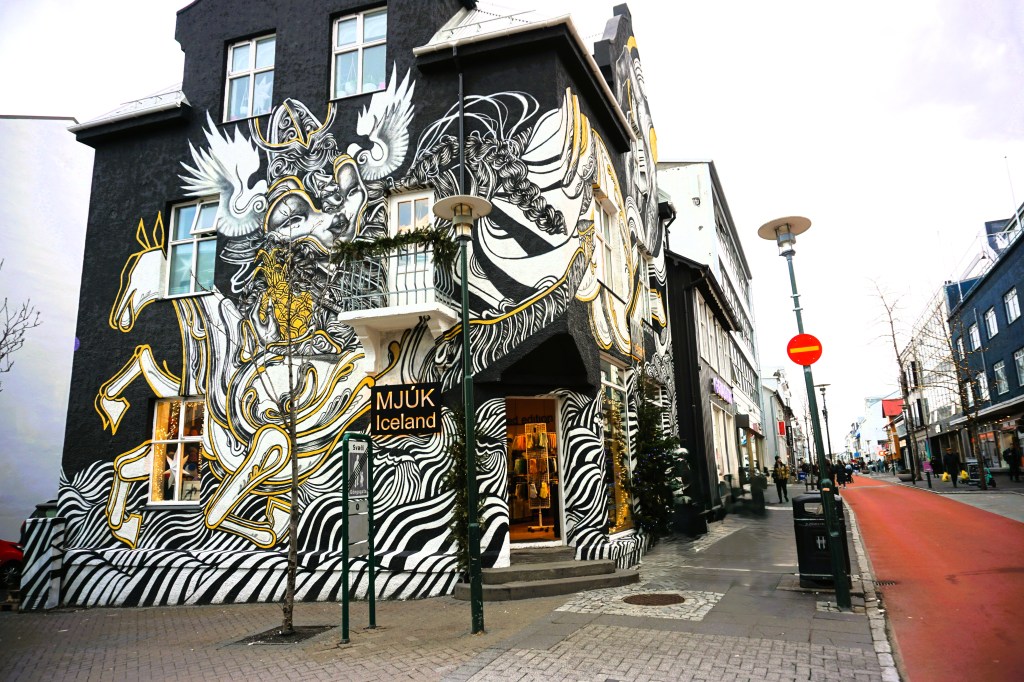
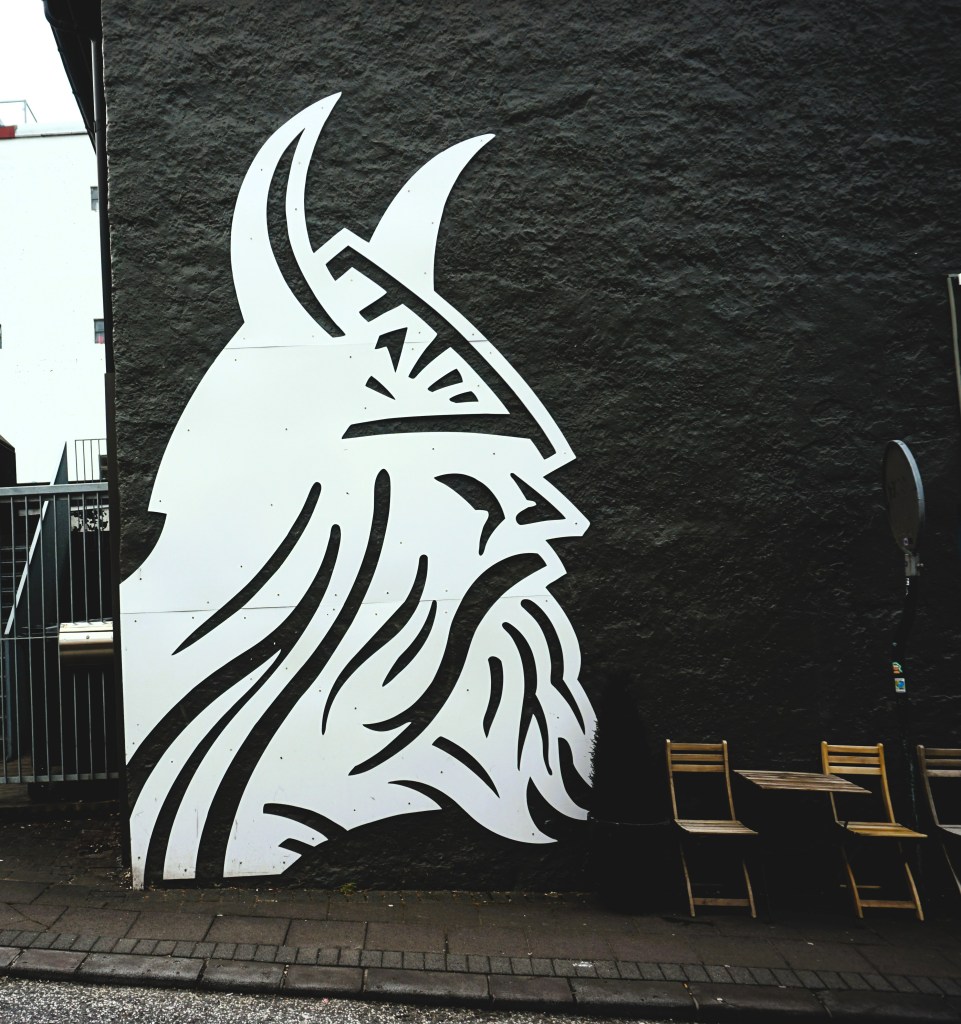
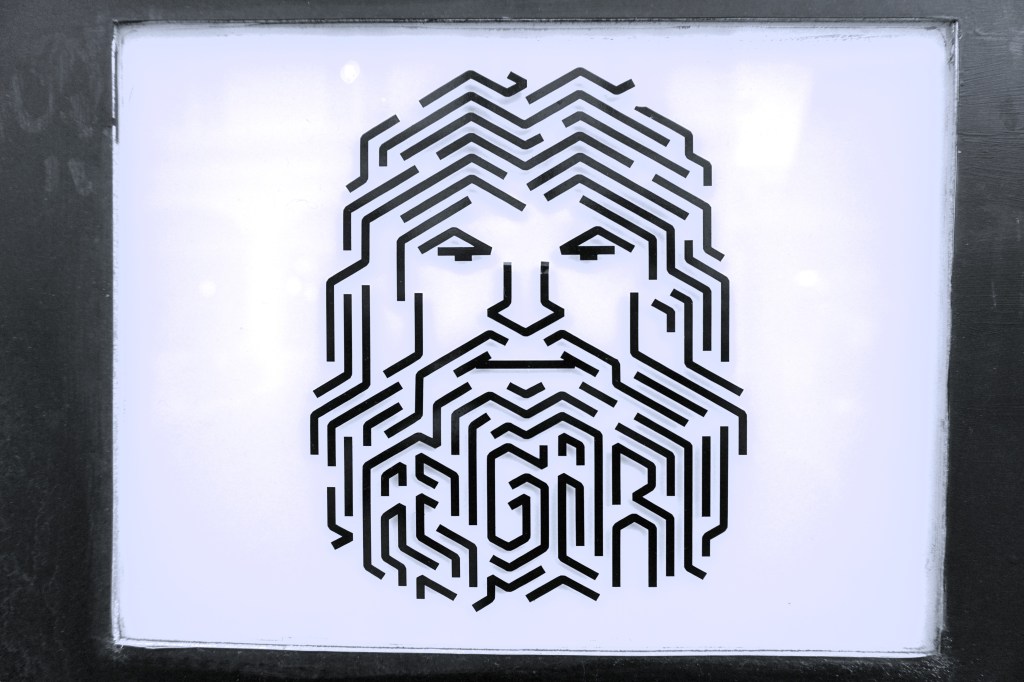
No walk about would be complete without a view of street art…







Created by artist Guss W. Fussel, this bronze sculpture of a bear is the heraldic symbol of the city of Berlin. We had seen this statue somewhere else on our journeys. Oh yeah – we found the statue in San Antonio, Texas. It was a gift from West Berlin to commemorate the 1968 World’s Fair, HemisFair ’68. Guess Reykjavik was another City to be so honored. It’s a small world afterall!




Because of our delayed flight into Iceland we missed our visit to the Blue Lagoon on the front end, and it was booked solid during our day in Reykjavik and the next day as well. We had hoped to soak in the Blue Lagoon on the way to the airport. As an alternative, Nordic Visitor booked us for a spa treatment and geothermal soak at the newly opened Sky Lagoon. In addition to the geothermal pool there were six different stations, should you choose to experience each, that made up the spa. From the geothermal pool, guests are invited to a polar plunge followed by a sit down in their very, very warm sauna. Once you get your “schvitz on,” it’s time for a leisurely stroll through a cool water rain, and now that your pores don’t know what is going on it’s time for an herbal scrub – black sand, of course. Rinse off in your own private (well, built to share!) shower, and it’s time for a healthy snack and chilled cloudberry juice. Cloudberry is said to taste like “a combination of raspberry and red currants, slightly bitter with notes of grapefruit or rich dark chocolate, and a subtle floral aroma.” Oh yeah? My palate says it tastes perfectly juicy and delicious – particularly after our journey in the spa. Back into the geothermal pool, taking a long look at the Icelandic landscape one more time before changing back into our street clothes and making our way to the airport.

Describing Iceland properly might take a lifetime. This land, rich with history, sagas, and folklore, captivates the imagination with its foreboding landscapes, smoldering volcanoes, and powerful waterfalls. The subtle rumbling of the earth beneath your feet adds to the island’s mystique, as if the ground itself whispers ancient stories.
Iceland’s black beaches, glaciers, and icebergs stand majestically against the relentless winds, bearing testimony to the resilience of Mother Nature’s creations. These natural wonders seem almost otherworldly, each one a monument to the raw, untamed beauty of this captivating island.
The citizens of Iceland, creative, bold, and proud descendants of Vikings and Danes, have found a way to thrive in this rugged environment. Their spirit of adventure and resilience echoes through the generations, and they extend an invitation to the world: “Come visit our fascinating land, stay if you dare!”
The beauty of the Northern Lights was undeniable – after all it was the reason we came to Iceland. But it was the country itself that captured us. The raw and rugged landscapes, the serenity of the wilderness, our traveling companions and tour guides, and the warmth of the Icelandic people all combined to create for us a profound sense of belonging. The Northern Lights may have been the catalyst, but the country’s embrace captivated us.
We returned home with more than just photographs of a natural wonder; we carried with us the essence of a land.
Barbara and Brian
“It’s not what you look at that matters, it’s what you see.“ – Henry David Thoreau

 Aimless Wanderings
testing, testing … 123
LikeLike
WEIRD! Now it works! RIGHT, so … what I had wanted to say was:
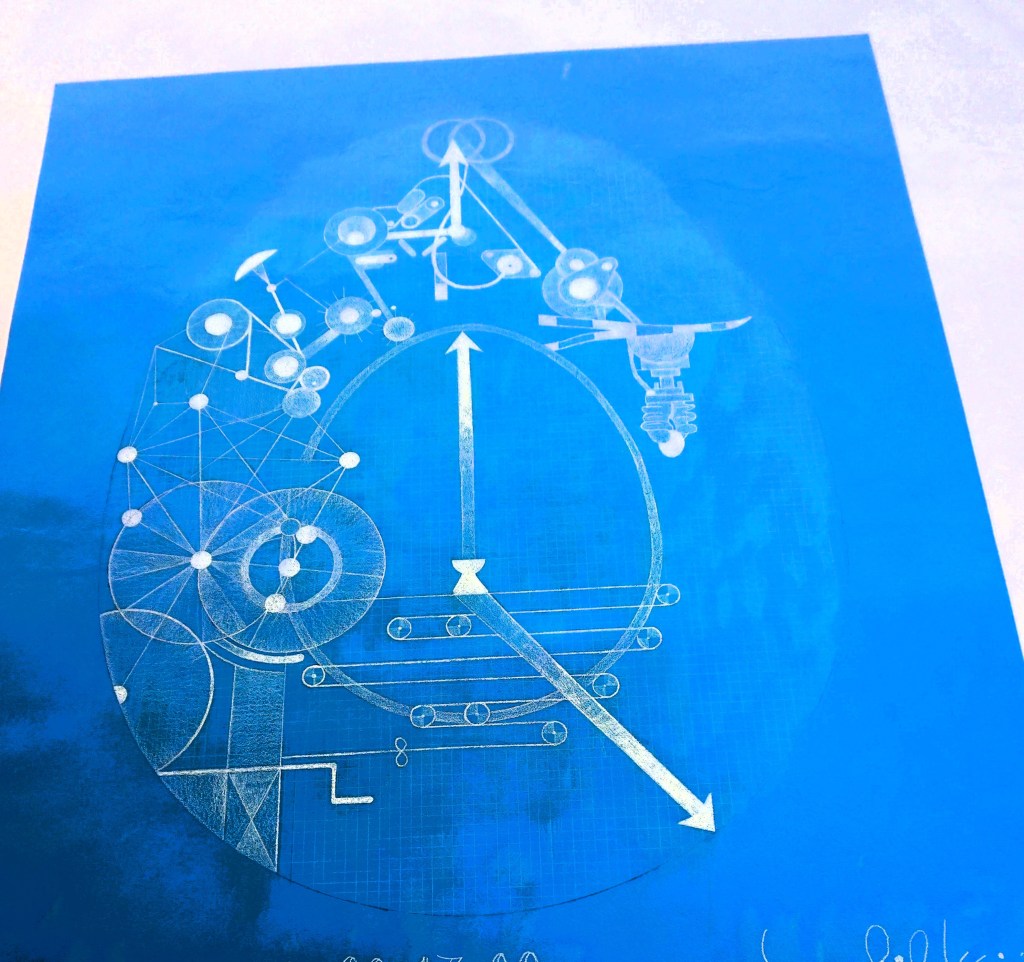
I LOVED THIS ENTRY in particular. While I love all the photographs of vistas, ice, waterfalls, Northern Lights, stories of Yule Lads … I *love* art and architecture, so this one hit especially for me! In particular, the blue clock mural reminds me of an interactive clock mural a few blocks from us on South Street. Also, Rik wanted me to tell you that HE is planning a trip to see the Northern Lights, although his plan is to go to Northern Canada in March, I believe. (Most recently, he was in Brazil!)
LikeLike