OLD CITY JERUSALEM

June, 2023

“If I forget thee Oh Jerusalem, let my right hand wither, let my tongue stick to my palate if I do not remember you, if I do not set Jerusalem above my greatest joy” …Psalm 137

We’re sure that Christians and Muslims as well as Jews hold the Holy City, Old City Jerusalem, in the highest most sacred regard. However…

Jerusalem has been the Central City of Judaism since the year 1000 B.C.E., when King David conquered a small, remote Canaanite town and made it the capital of his kingdom. Following the death of King David, and with the building of the First Temple by King Solomon, the City took on even more importance in Judaism as it became the destination for the three pilgrimages – a yatra – commanded by God. For generations Jews have traveled to the Holy City in order to celebrate the festivals of Passover (celebrating the Israelites escape from slavery in Egypt and a prayer for freedom for all peoples), Shavuot (celebrating God’s gift of giving the Torah to the Jewish people) and Sukkot (celebrating the gathering of the harvest and commemorating the miraculous protection God provided for the children of Israel when they left Egypt). 

Jerusalem is a major focus of biblical literature and the likely venue where much of this literature was written and preserved. The kings of Judah lived and died there; prophets were based in Jerusalem, interpreting the Torah and establishing the great moral and ethical standards of Judaism.  The destruction of the First Temple and the rebuilding of the Second Temple (60 years later) are stories of lamentation and redemption of Jerusalem. The Second Temple period added 500 more years of memories, as recorded in many of Apocryphal books, such as the books of the Maccabees, relating the events leading to and following the revolt against the Greeks in the second century B.C.E. (commemorated during the Hanukkah festival).

The city of Jerusalem grew and underwent a major facelift by Herod, the Roman appointed Jewish king who conquered Jerusalem with a Roman army in the year 37 B.C.E. Rabbinic literature records hundreds of events, stories, and descriptions of life in Jerusalem.

After the destruction of the Second Temple, and as Rabbinic Judaism was ushered in as the primary mode of Jewish learning and spiritual centrism, the memory of the City was taught to embody the hopes and aspirations of the Jewish people. Jerusalem became an ideal that represented redemption, perfection, and wholeness that Jews would study about, pray for, and try to spiritually experience throughout the diaspora.

A series of rituals, prayers, and special days developed in Jewish antiquity were designed to keep the memory of Jerusalem alive from generation to generation. Jerusalem is a central theme in Jewish liturgy and religious poetry. For example, one of the 19 blessings of the Amidah (silent prayer central to all Jewish prayer services) reads: “Return to Your City Jerusalem in mercy and establish Yourself there as you promised…Blessed are you Lord, builder of Jerusalem.” Synagogues traditionally face toward Jerusalem. And, at the end of the Passover seder and at the conclusion of Yom Kippur, Jews exclaim “L’shanah haba’ah b’Yerushalayim— “Next Year in Jerusalem.” 

The origin of many contemporary Jewish practices, customs, and beliefs can be traced to Jerusalem, providing a constant “meta-message” of the primacy of Jerusalem for anyone who practices Judaism, even in the slightest. For example, the order of synagogue service is modeled after the daily Temple service in Jerusalem. The weekly reading of the Torah was established in Jerusalem after the return from the first exile (587 BCE). The seder meal on Passover is a consistent replication of the seders held by generations of Jewish pilgrims in Jerusalem. 

We had decided that our time in the Holy Land would be first and foremost a Jewish experience – connecting with those that had come before us. Old City Jerusalem would certainly provide for us an essential part of the experience we were seeking…

We met our tour guide, Roni, outside the City gates. He is an Austrian Jew, brought to Israel as a young boy by his mother, who is a citizen of Israel, and had a career in the IDF retiring some 5 years ago at which time he started his tour company. He is a published author with a second book due out in the near future. We found Roni to be forthcoming, extremely knowledgeable, opinionated, and engaging.

First View Of The City Walls – Old City Jerusalem
Check Out That Sky!!

We entered the Old City through the Jaffa Gate, one of the 8 gates built into the walls of the City. A gate was built for entry and exit; however, it was important for defense of the City as well. The gate is a pinch point – only so many soldiers could enter due to the width of the opening. Past the arch of the outer door is a foyer that would hold only so many, and then a 90-degree turn was necessary to pass through a second set of doors that, like the exterior doors, can be closed and secured. The City was accessed once through the second set of doors. Not insurmountable, but certainly a strategic defensive strongpoint.
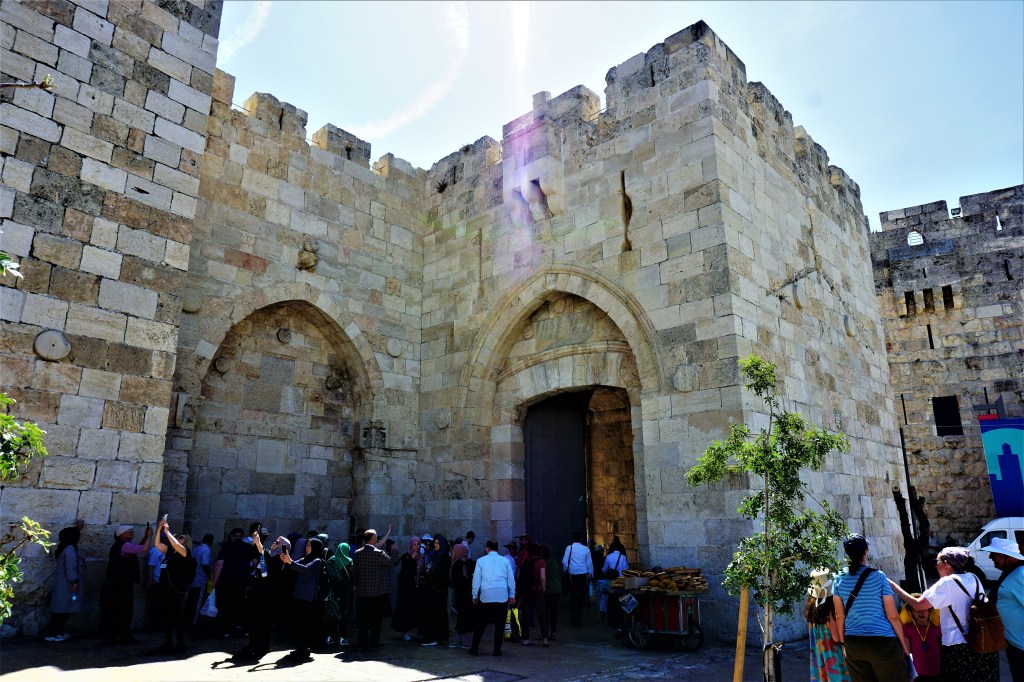
Jaffa Gate – Old City Jerusalem

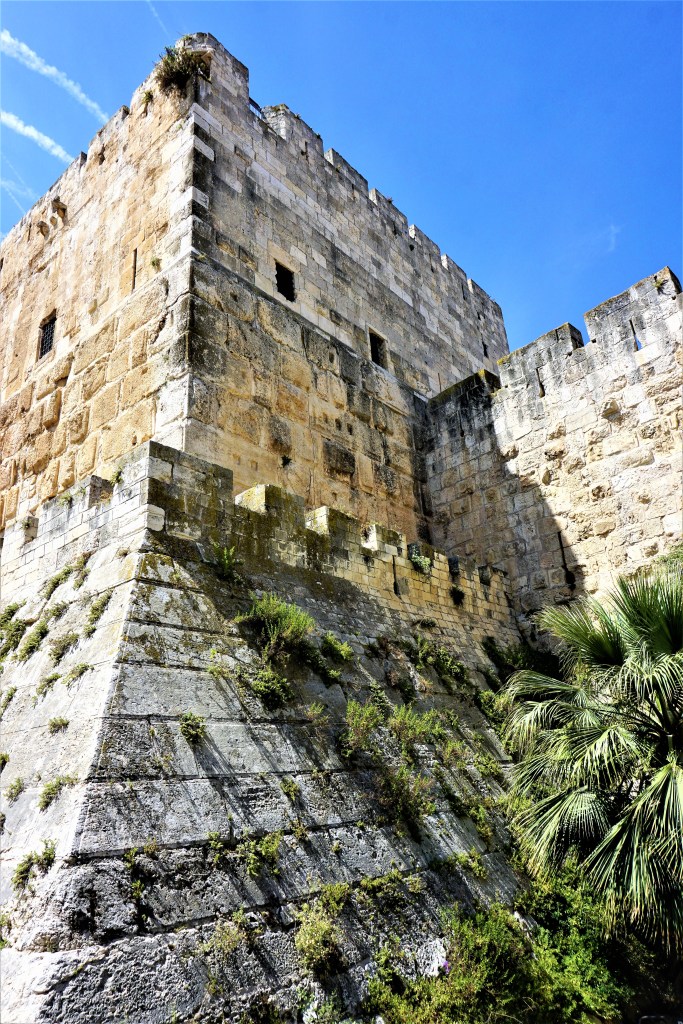
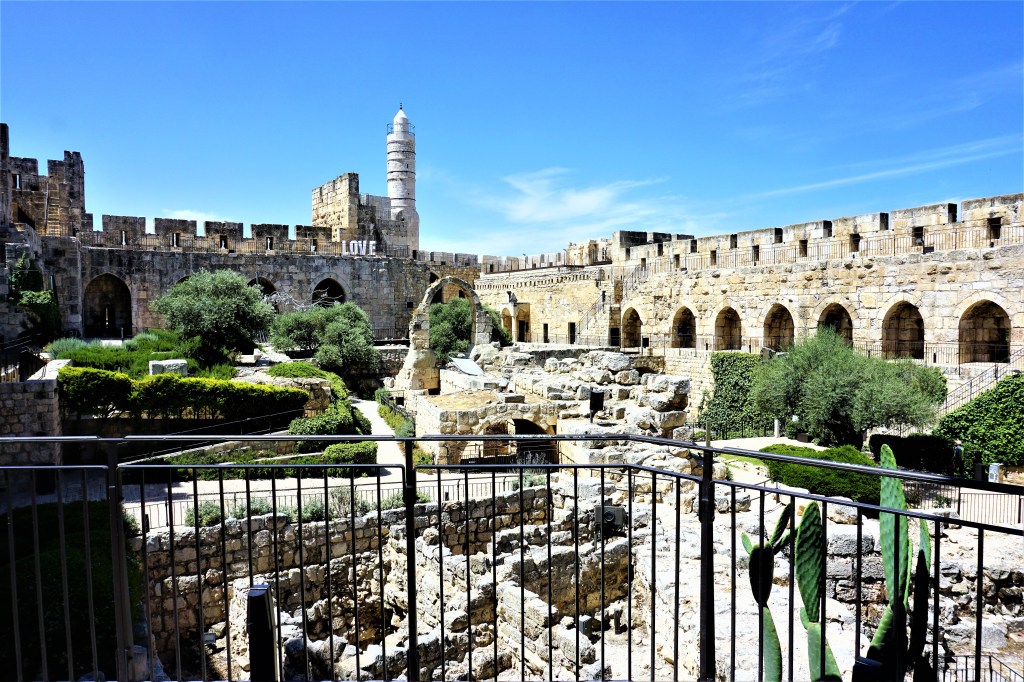
We had wanted to walk the Ramparts, but were told that the view from the Tower of David was equally as wonderful, and, since the walls of the City have been reconfigured several times over the generations, the Tower of David was more significant to the history of Judaism in the Holy City. The Tower of David was Jerusalem’s citadel – a fortress sitting on high ground protecting the City. For thousands of years the City’s rulers resided there, and the archaeological excavations in and around the Tower of David revealed much of the City’s evolution across 3,000 years. Today it stands as one of Israel’s prominent cultural institutions and Jerusalem’s official museum.

Courtyard Across From The Tower Of David
Looking On The Entrance To The Tower Of David
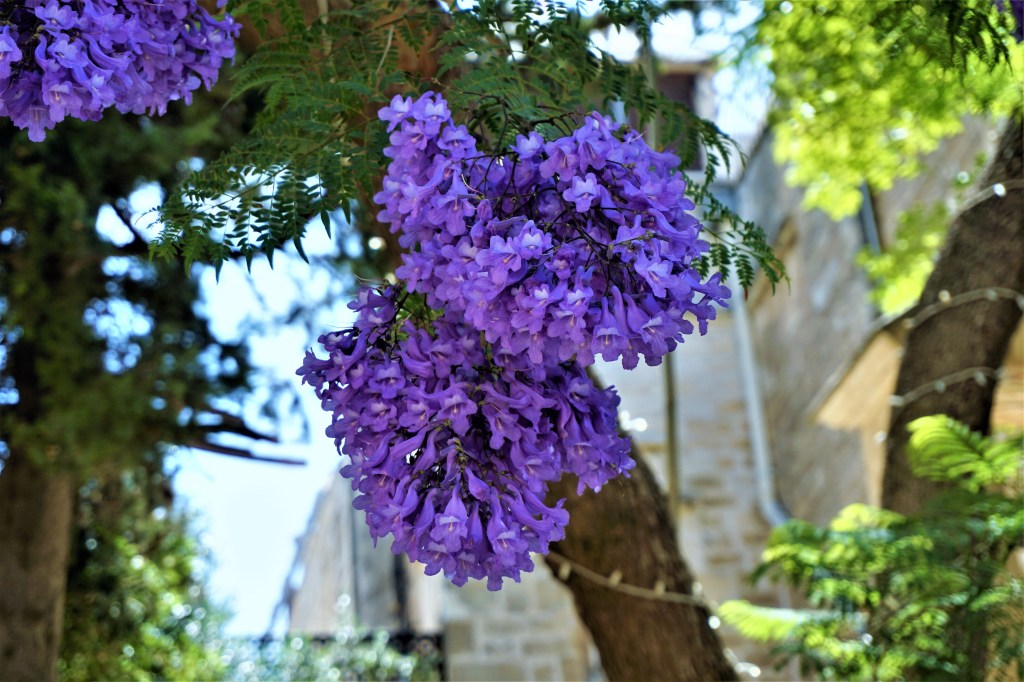
Jacaranda

The Citadel – The Tower of David…

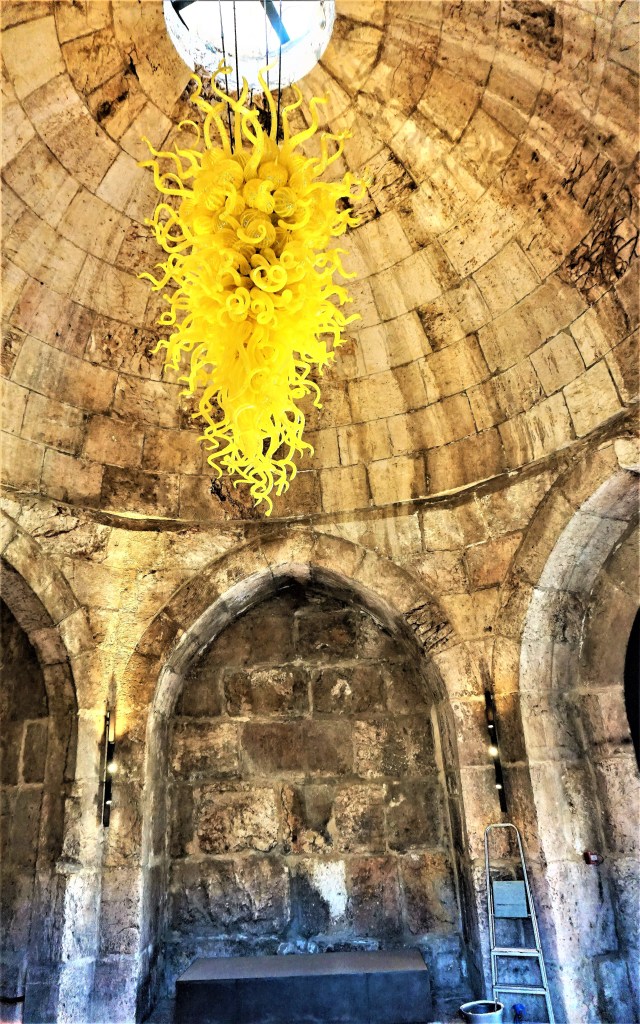
Chihuly Glass In The Tower Of David
Courtyard – Tower Of David

The views from the top of the Tower of David were breathtaking and seeing the breadth and extent of the Old City brought tears to Barbara’s eyes – setting her eyes on the physical presence of the Old City so strongly connected her to Israel and being a Jew.

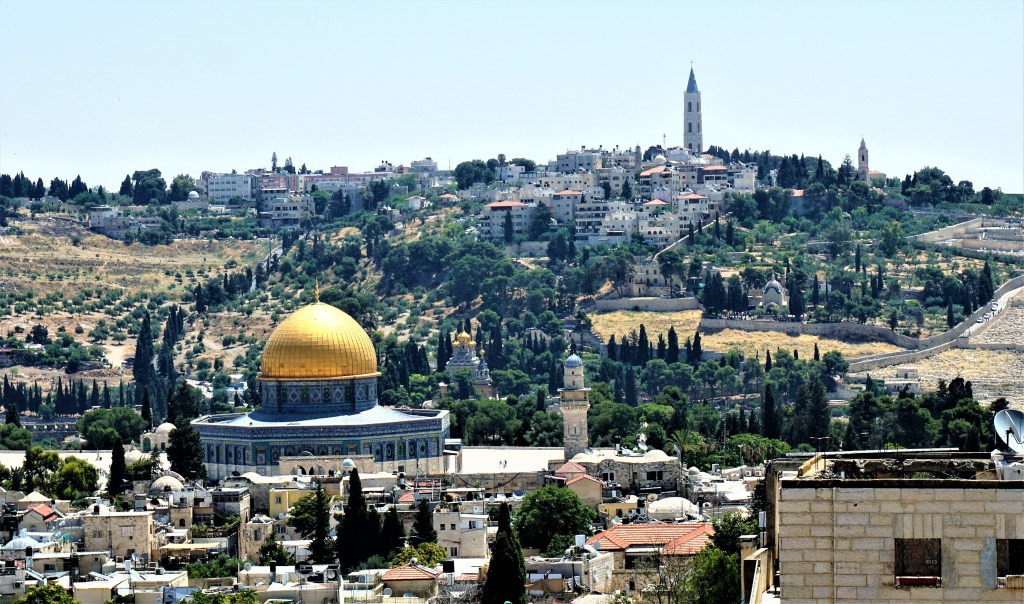
Notice the clock tower similar to that in Jaffa built during the Ottoman Period, the mosques with their minaret towers, and the churches and synagogues with their rounded domes. The Mount of Olives is in the far ground.

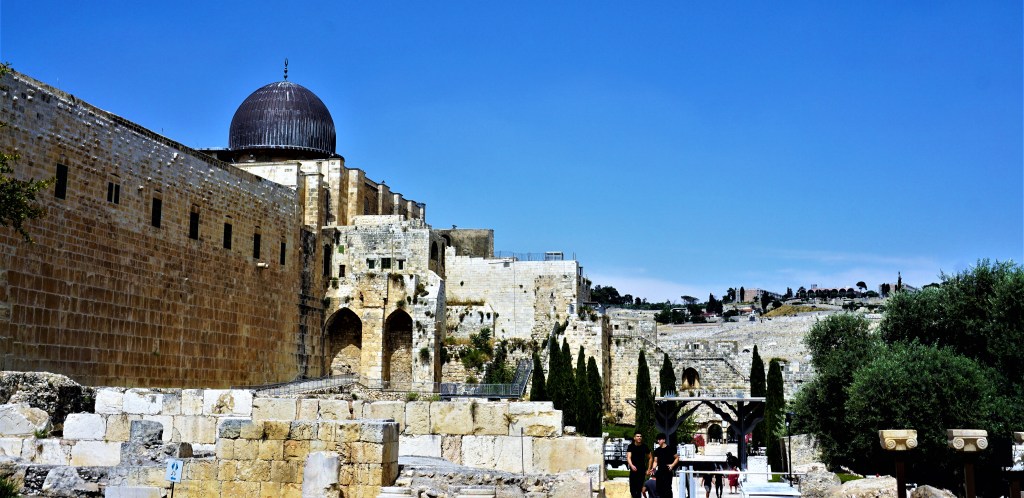
The Gold Domed Building Is The Temple Mount
The Temple Mount
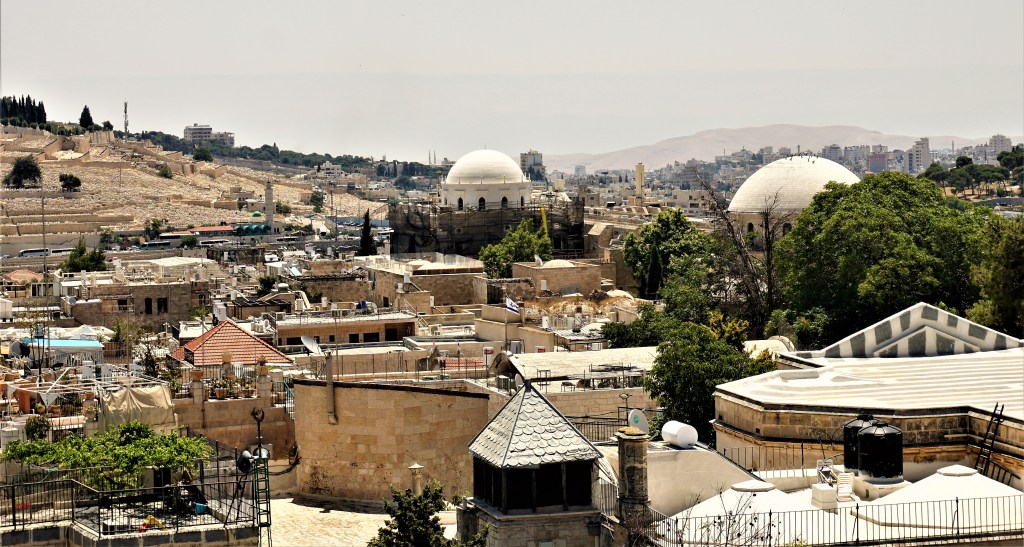
Domed Buildings Are Synagogues

Leaving the Tower of David we found ourselves walking the streets of the Old City on our way to The Church of the Holy Sepulcher, the most sacred place in Christianity. Roni made it a point to tell us that each religion found enjoyment in annoying the other. Take a look at the sign in the courtyard of the Mosque of Omar…
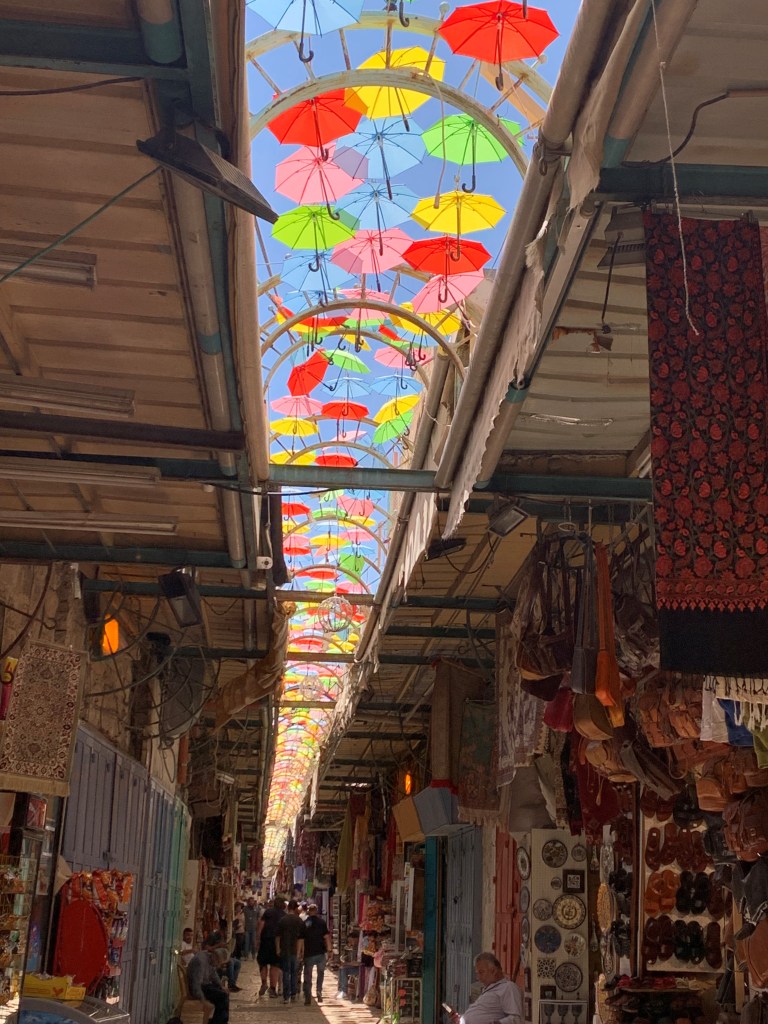
These Stones Were Uncovered And Thought To Be From The Time Jesus Walked These Very Streets
Let’s Just Take A Guess – Do We Believe Jesus Would Have Said That?

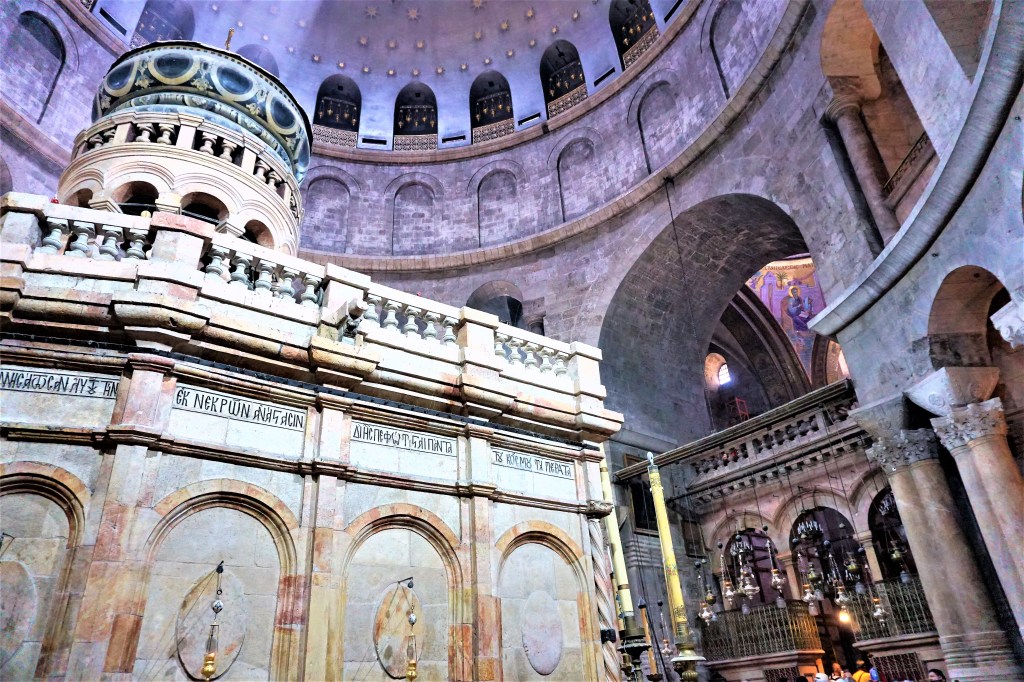
The Church of the Holy Sepulcher is believed to be the site where Jesus was crucified, buried and resurrected – his tomb found empty.

Notice The Ladder That Goes Nowhere – This Is An Atlas Obscure Listing
Love The Way The Skylight Has Been Built Into The Roof – Sunshine Illuminates The Tomb So Very Perfectly

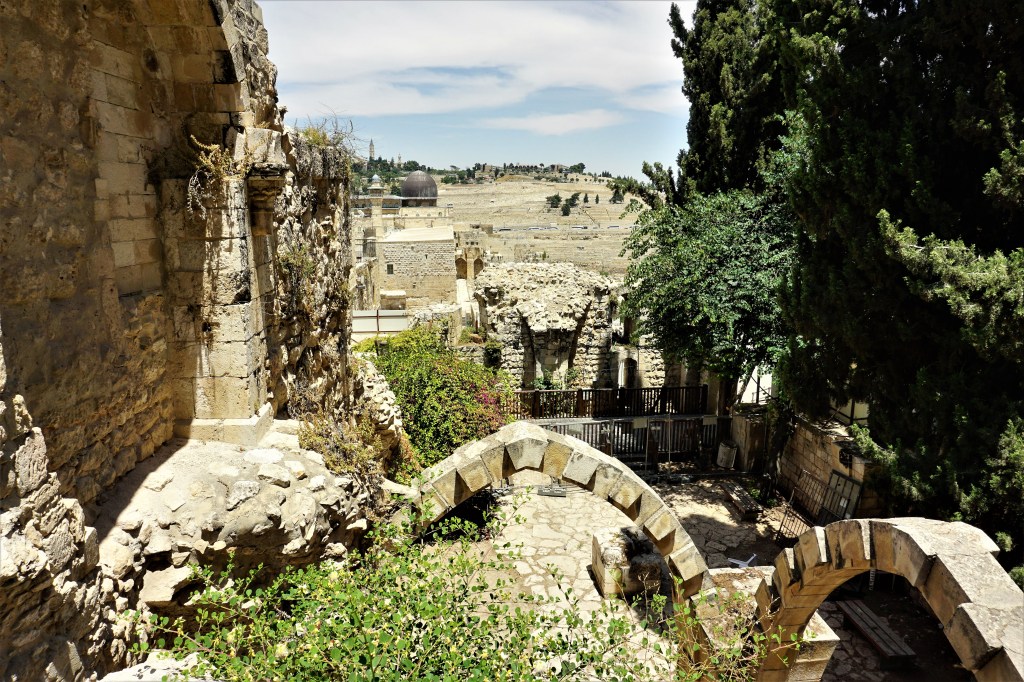
We are now headed from the Christian Quarter into the Jewish Quarter, and on our way, with a stop for lunch, to the City of David. The City of David is an active archeological dig. Along with finding priceless artifacts of early Jewish settlement of the Holy City, evidence of Roman architecture has been uncovered. There are many, many tunnels under the Old City. The tunnel we were about to walk through was built during the time of King Herod; the time of the Second Temple, of which the Wailing Wall and its foundation are all that remains.
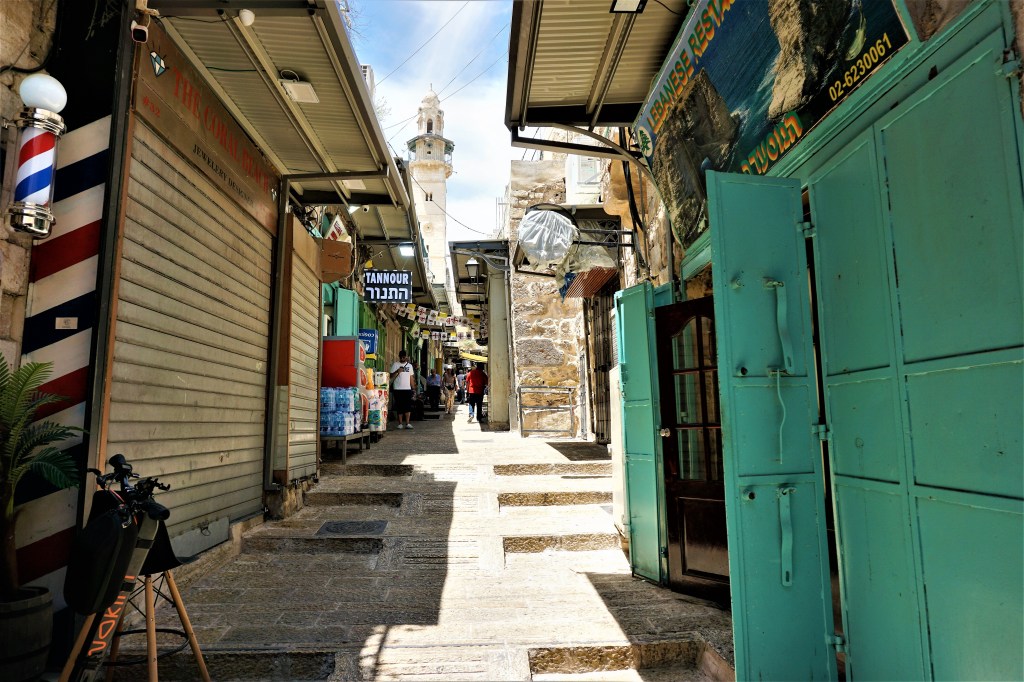
Roman Pillars In The Cardo – Probably Held Up A Roof Of Some Sort

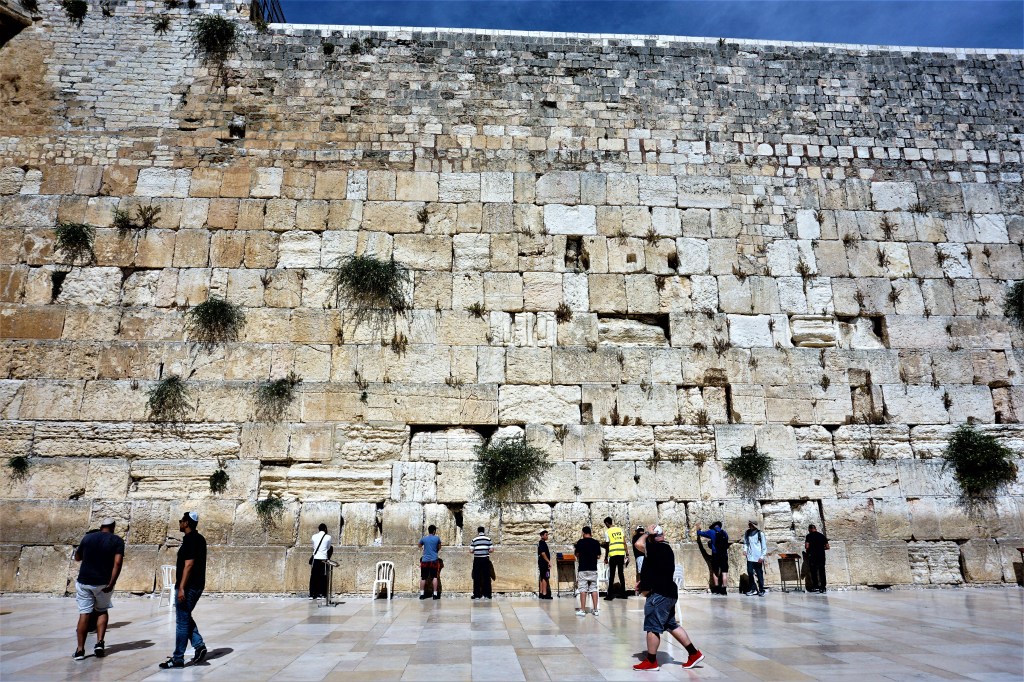
We stood in awe seeing the Wailing Wall for the first time…

View Of The Courtyard And The Wailing Wall – The Gold Domed Temple Mount Sits Just Beyond The Wailing Wall

Walking over a bridge to the City of David we stopped as Roni told us about the site and the marvels that have been uncovered. Overhearing our discussion 2 Australian tourists, Michele and Emma, asked if they might join us – how could we say no to making new delightful friends. By the way – there’s something familiar in Brian and Roni’s gene pool!

From The Left – Paul, Roni, Brian, Michele, Barbara, And Emma

The City of David – the original core settlement of Jerusalem built during the bronze and iron ages, approximately 1,000 B.C.E.
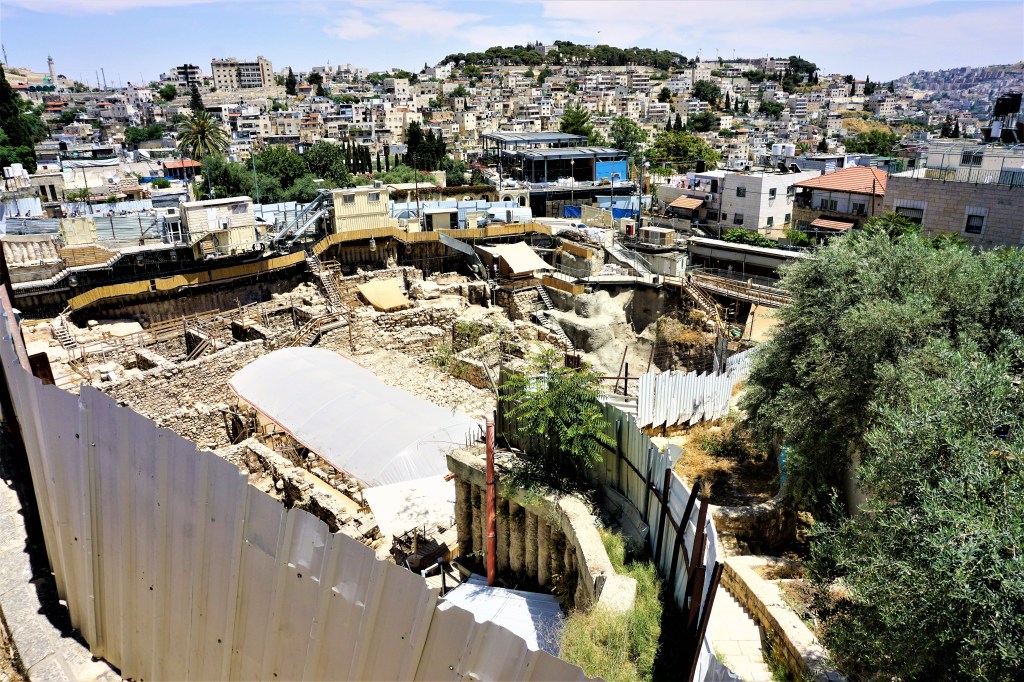
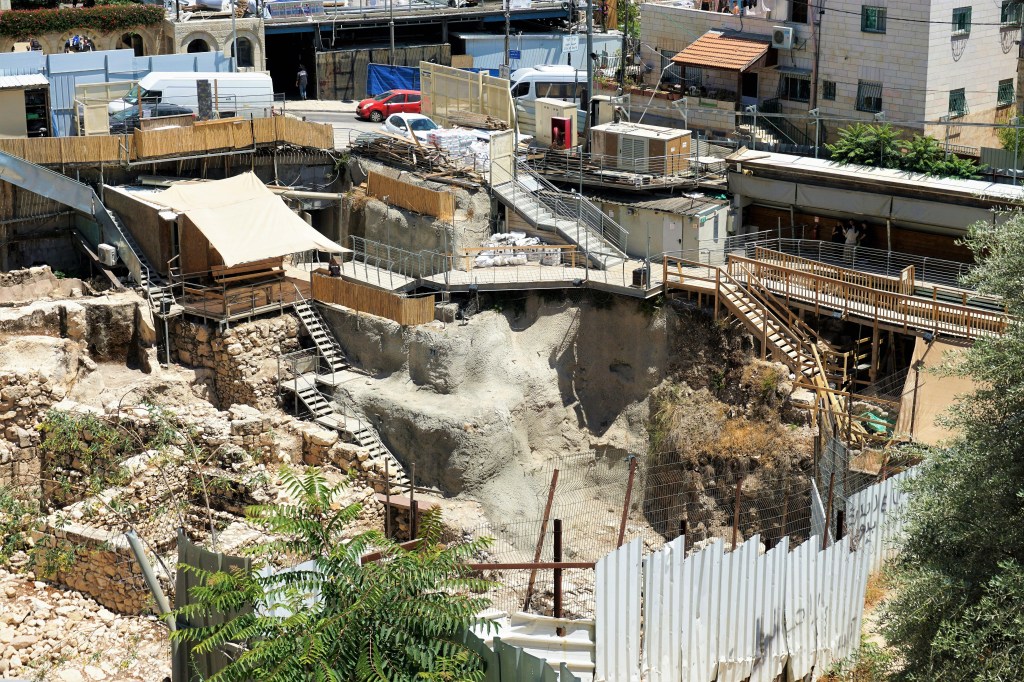
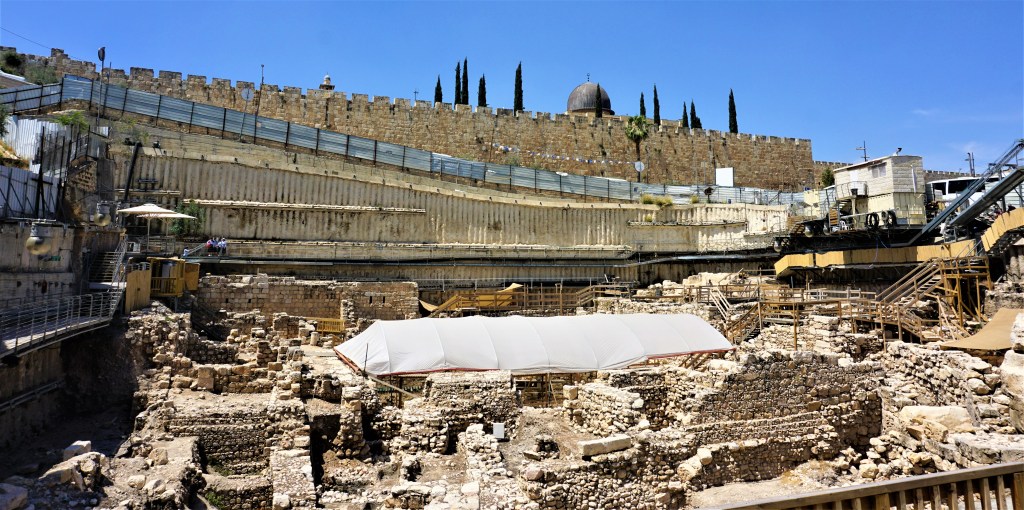
First View – City Of David Excavation
Tunnel To The Wailing Wall

While in the tunnel we passed stones cut to provide the foundation for the Second Temple built under the direction of King Herod. These so-called Herodian stones are also found under the Damascus Gate and at the Temple Mount. The Second Temple was built in 516 B.C.E. and stood until 70 C.E. when destroyed by the Romans – these foundation stones and the Wailing Wall are all that remain. It was a wonder to think that these stones are part of the Wailing Wall!

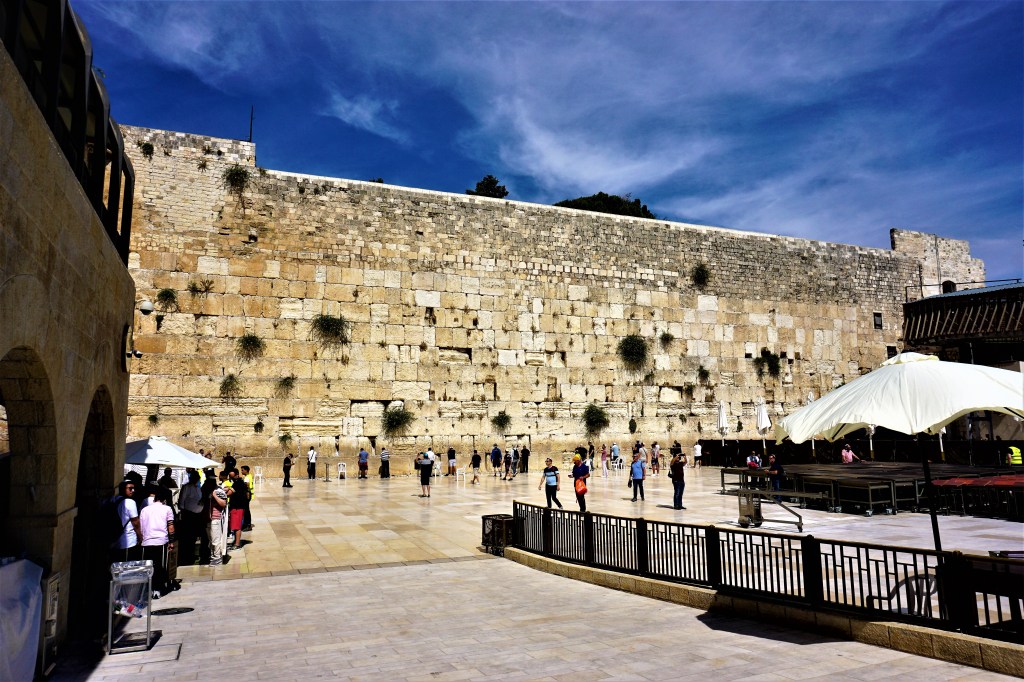
It is commonly believed that this site provides a direct channel to God, and in order to ask for God’s blessing written prayers are placed in the cracks in the wall. These written prayers are considered sacred, are collected during High Holy Days, and not disposed of, but ritually buried.

Note Written Prayers Inserted Into The Wall

Orthodox Judaism commands that the genders be separated for ritual prayer outside of the home. It is believed that women are a distraction to the piety of men’s prayer (although we certainly don’t agree with this practice). We were told there was an entrance for intergender couples to be able to pray together at the Wailing Wall, but it certainly wasn’t readily in view.

The Temple Mount is considered to be the most sacred site in the Jewish faith – the Holy of Holies. However entry is forbidden.
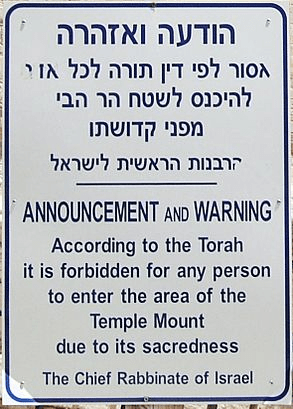
The Temple Mount lies just beyond the Wailing Wall making the Wall the holiest place where Jews are permitted to pray. Brian wore the tallit purchased as a gift for him in Jerusalem by Cliff and Fran Grobstein and covered his head during prayer. Both of us continued to wear kippah, which we had donned once entering the Holy City.

There are not absolutely prescribed prayers to be recited at the Wailing Wall; prayers said are very personal. For us saying the Shehechiyanu, Shema, Chatzi Kaddish, Aleinu and Mourners Kaddish was a beginning to our prayers. We asked God’s blessing for healing (Mi Sheberach), God’s blessing for our children, children’s children and children’s children’s child, friends, those we hold dear, in honor of those that have come before us, for the 6 million slaughtered, and for the heroes of Israel. For Brian the depth of his prayers, and thanking God for Barbara and all the blessings he has had during his life left him emotionally exhausted.

One does not turn their back to the Wailing Wall. So while facing the wall and backing away, we each individually had to find a place sit and center ourselves before rejoining the group.
On Quick Glance This Hasadim Reminded Brian Of His Father’s Father

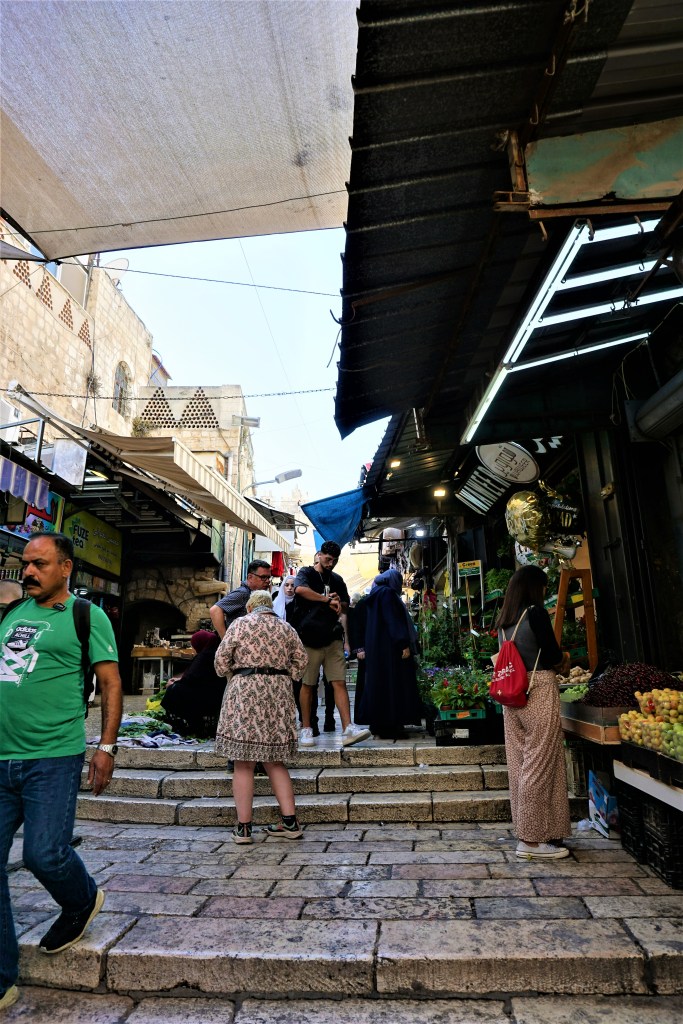
Continuing our walk of the streets of the Old City…

Opened in 1863 the Austrian Pilgrim Hospice is the oldest Christian guesthouse in the Old City. Its cool lobby and shaded courtyard made for a nice mid-afternoon respite during the warm afternoon. We were told that the views of the City from the roof rivaled those of the Tower of David. Brian just had to check it out.
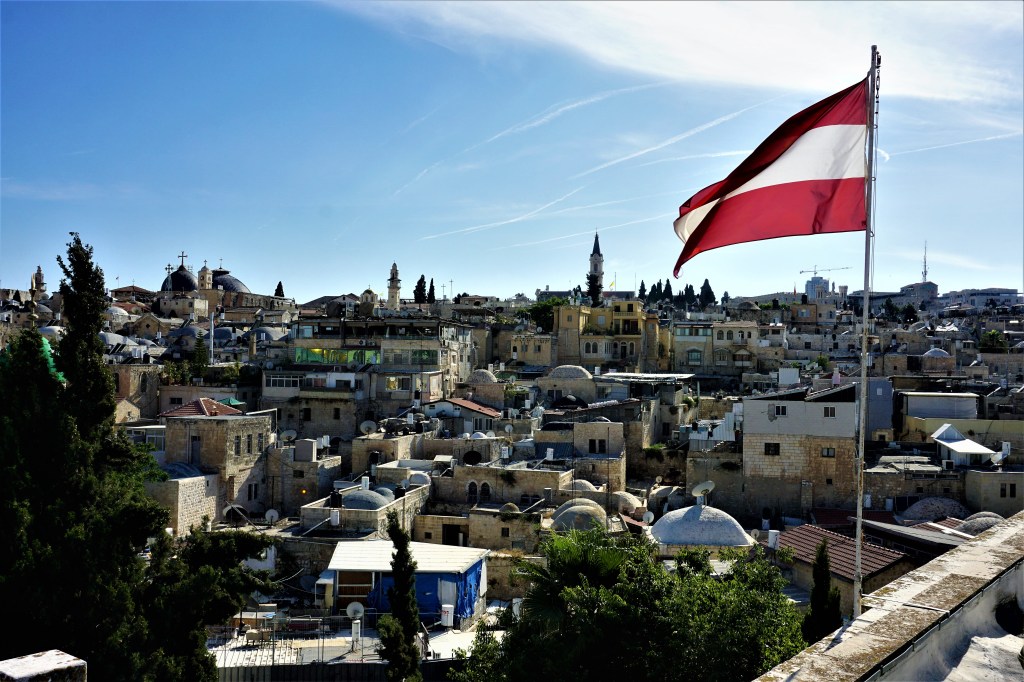
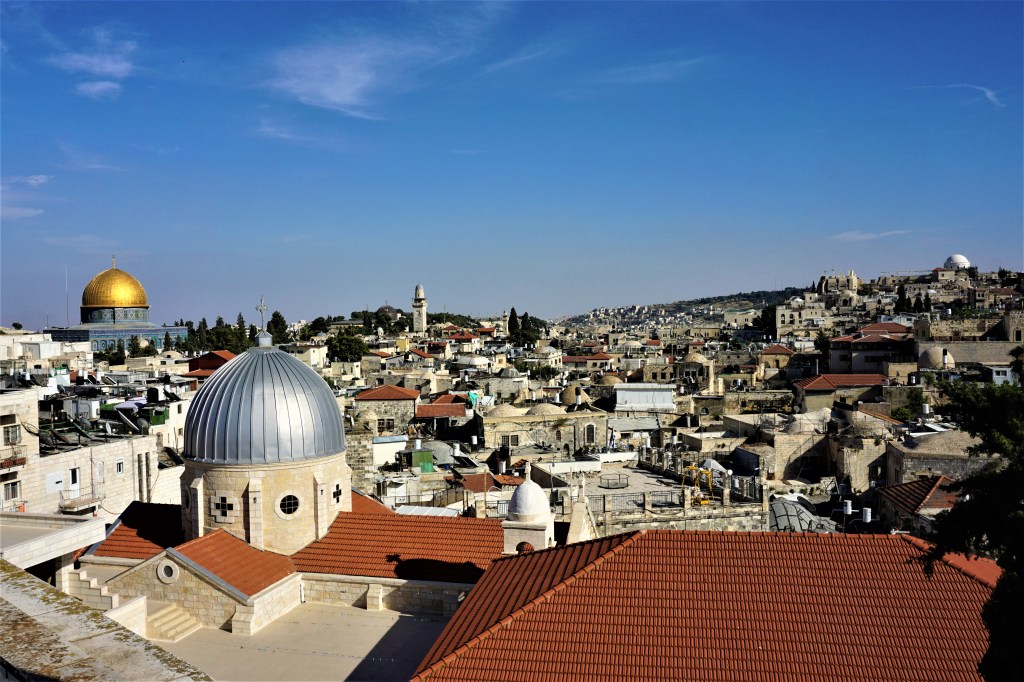
Catholic Church, Mosque, Synagogue In The Distance, And The Gold Domed Temple Mount

Our last 2 stops in the Old City found us visiting a tahini factory, and pottery shop. We bid goodbye to Roni before entering the tahini factory. His expertise and leadership during our 8-hour tour of Old City Jerusalem was invaluable to feeling that a first visit was all it could be.

Tahini is ground sesame paste – well it’s a little bit thinner than what is traditionally thought of as a paste. It is a primary ingredient along with ground chickpeas in hummus, along with roasted eggplant in baba ghanoush, and is pressed into loaves, flavored and sweetened, to make the confectionery halva.

Ironic story – We bought tahini to bring back as a treat/gift for family. Brian made the mistake of not wanting the jar of tahini in the luggage (might spill), and Barbara placed it in her carry-on. We made it through Israeli customs and airport security, and onto the plane. We had to change planes in Frankfurt, Germany and once again go through security. The Germans were not as lenient as the Israelis and confiscated this, to them unknown, peanut butter like paste (try this with a german accent: tahini-what is this tahini?)
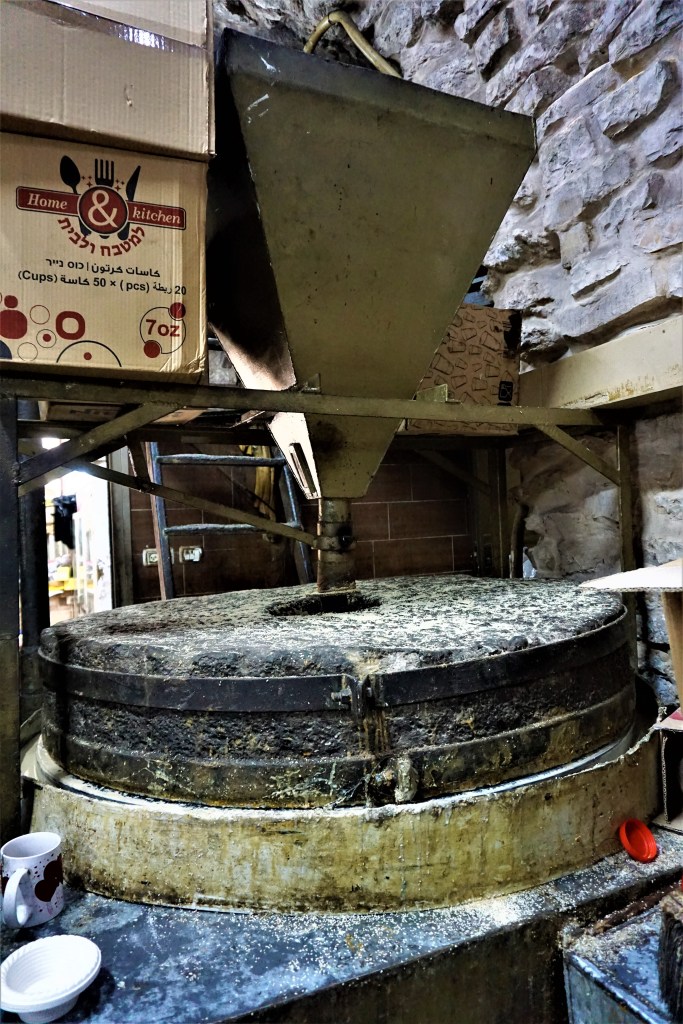
Grinding Wheel
Sesame Seeds Drying In Preparation For Grinding

Kea had bought Barbara a couple of beautiful tiles created by the artisans of Jerusalem Pottery – a stop was a must before leaving The Old City.

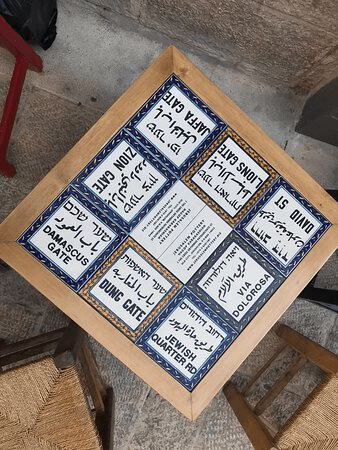
In 1919 a group of ceramic artists was invited by the British to renovate the ceramic tiles of the Dome of the Rock (Islamic shrine on the Temple Mount). In 1922 two of those ceramic artists opened Jerusalem Pottery and began producing Armenian hand painted pottery and tiles. In 1965 the Jordanian government commissioned Jerusalem Pottery to make street name tiles for Old City Jerusalem in Aramaic and English, and in 1967 the Israelis commissioned them to make tiles of street names in Hebrew, which were added to the top.

To this date the exquisite designs and incredible fine detailed work is respected throughout the world. And yeah, we made a few purchases.

3rd Generation Owner Hagop Karakashian And His Wife
Tiles In Replication Of Israeli, Aramaic, and English Street Signs Poster Throughout The Old City

Leaving The Old City of Jerusalem…

Damascus Gate

As we were leaving Old City Jerusalem we heard fairly modern music playing LOUD. A “spin class” had been organized just outside the City Gates.

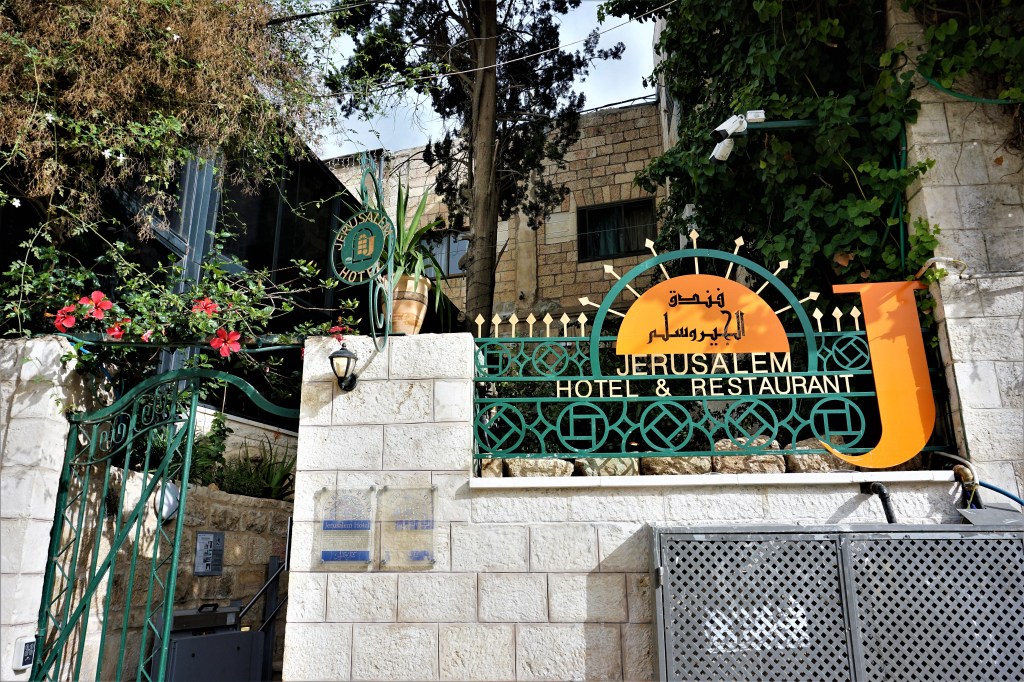
We were headed into the Negev tomorrow and stayed overnight at The Jerusalem Hotel. The hotel is located in East Jerusalem and just outside the Damascus Gate. Of note is the fact that East Jerusalem was annexed from Jordan by Israel following 1967’s Six-Day War, and while the West Bank and The Golan control of the area may be Israeli, there is always an undercurrent of Palestinian unrest.

The Jerusalem Hotel is family run and situated in an old Arab mansion originally built over 120 years ago on the remains of a 4th century Byzantine Church by a feudal lord. The Jerusalem Hotel has been carefully renovated to accentuate its 19th century Arab character and refurbished with Arabesque furniture. The thick stone walls, cut from unique creamy Jerusalem stone have been exposed and pointed with a traditional Arabic plaster.
After our long day in Old City Jerusalem we had a great meal at the Notre Dame Guest House, which was a short walk from our hotel. Views of the Old City at night were pretty spectacular.

Notre Dame Guest House

Our day in Old City Jerusalem connected us to being a Jew more than could ever have been imagined. Having a full day (!) with our tour guide gave us a focused start at understanding the allure of Jerusalem for the Jewish peoples. We appreciated walking the streets and alleys and imagining what it was like in centuries past, and we couldn’t help but consider the influence of conquering armies and the contribution of their culture to the City. Interacting with modern Israelis continues to be a joy of this trip, and visiting places in Old City Jerusalem so central to Judaism renewed our passion for our religion and left us awestruck.

Barbara and Brian

“It’s not what you look at that matters, it’s what you see.“ – Henry David Thoreau
ISRAEL

June, 2023

Imagine it’s sometime in the 1980s. Imagine he begins the conversation with: “We loved our vacation in Italy, should Israel be next?” Imagine she came back to him after doing some research and thinking and ended that conversation with: “If we can’t pray together at the Wailing Wall I don’t want to go,” or at least he thought he heard her say that…maybe she said that…in his mind she was pretty clear…in his mind…hmmm.

Fast forward to 2020 (yeah that’s just about 40 years since that conversation in the timeline of the journey started so very long ago), and we receive some pretty exciting news. Son-in-law, Paul has been selected for a 3-year diplomatic billet in Israel. The family, Kea and our grandsons Ben and Dan, will accompany him. Quite an adventure can be expected, and wouldn’t we like to visit (hint! hint! nudge! nudge!).

Grandson Ben will complete high school while the family is billeted in Israel, and his graduation ceremony is scheduled for early June, 2023. Barbara thought we should look into being there to celebrate his accomplishment, and to visit with Kea and family whom we haven’t seen in person for 4 years or so (hint! hint! nudge! nudge!) – and oh by the way, LET’S VISIT ISRAEL!

Flight tickets were purchased, and without much planning we booked for 12 days – 2 days in transit back and forth, and 10 days on the ground.

Now all we had to do was figure out what we wanted to do for 10 days in a land with thousands of years of history and so, so many places and landmarks and holy sites, cities, kibbutzim and the Country’s regions to explore and experience, that is the center of the world’s 3 great religions, that could be dangerous (or at least a few of our friends thought so), and is a melting pot for Jews and Muslims and Christians, native Israelis, Palestinians and immigrants, one of those places in the world that blends ancient cultures and modernity, and welcomes young and old alike. As Barbara has said since we have returned: Israel is for everyone. But what about us?

We were advised that the first step in figuring out what to see and do during a first visit to the Holy Land centers on what we felt to be most important to us. We guessed that we couldn’t see it all, but wondered what would make for a truly great first visit?

עֲלִיָּה American Jews, whether one identifies as Orthodox, Conservative or Reform accept as a commandment aliyah – עֲלִיָּה. Zionists would define aliyah as Jewish immigration from the diaspora (back) to the “Land of Israel” and “going up” (thought of as towards the Holy City of Jerusalem). Brian was taught as an Amercian Jew that aliyah meant journeying to the Holy Land and honoring one’s Jewish heritage. Barbara was totally in agreement – our time in the Holy Land would first and foremost be a Jewish experience and then add on agreed upon essential places to visit and things to do. A wish list was developed.

Paul and Kea kindly took our rather long wish list, added in a few musts (seeing Ben graduate!), made some “wouldn’t you like to” suggestions, and under the guise of the Duckenfield Israel Tour Company (DITC) set up our agenda. They were our companions, chauffeurs, and tour guides. They hired a fabulous tour guide for a full day in Old City Jerusalem, made hotel arrangements, booked a night for us at a Bedouin camp, took care of tickets and meals, made sure we didn’t float away in the Dead Sea, and made arrangements for a kibbutz tour in the Negev. We toured Masada, visited Ben Gurion’s grave, stood on the banks of the Sea of Galilee, saw mosaic tiles in a synagogue from the 4th Century CE, experienced the Dead Sea Scrolls, and paid respect to the 6 million during a visit to Yad Vashem. We ate Israeli meals with the 8-12 small vegetable plates as appetizers to an entree, couldn’t get enough of freshly baked pita, and hummus far beyond the quality available in America, and enjoyed the flavors of shakshuka, shawarma, kabobs and frozen coffee. DITC gets a 5 out of 5-star rating; our appreciation for their love and attentiveness is without bound.

The Duckenfield Israel Tour Company

Living here in Michigan, the best roundtrip airfare to Israel including the additional expenses of transportation to and from the airport and parking our car for 11 days, was by a very, very large margin found by flying from JFK, Washington DC, or Chicago O’Hare. However, that also meant getting to any one of those airports – Chicago was doable – a 4-hour drive without (!) traffic.

So we were all set. Flights had been booked and parking arrangements for our car had been made, an agenda had been agreed upon by The DITC, Barbara and Brian, passports were found, cash was obtained, bags were packed and our in-flight bag was assembled.

Time to skedaddle to the airport. Traffic was anything but cooperative (surprise?); however, we had left enough time to make sure it would not be an obstacle. Finding the hotel at which to park the car and then the shuttle to the airport was easy (thank you Best Western O’Hare), and the line through the TSA checkpoint was not busy and efficiently handled by agents on hand. We did have more than a bit of time until our flight, but cribbage, a great rueben sandwich (Barbara’s favorite), being seasoned travelers and excited for our journey helped the time go quickly. When it was time to go to our gate, we had one more security checkpoint and personal inspection to hurdle. The gate area was alive with a cross cultural, multi-generational melting pot of travelers heading home, as well as first time and returning visitors to the Holy Land.

By the way, United Airlines was wonderful…snacks and beverages in the gate area, rapid and orderly boarding, and first-class service in coach for the entire 12-hour non-stop flight from O’Hare to Tel Aviv.

Dinner Meal Option
Complimentary Alcohol and Beverages, 2 Additional Hearty Snacks and Breakfast On-Board

Upon arriving in Tel Aviv, and after a good “stretch your legs” walk passing by a view of the central concourse waiting area, we had to queue-up to have our passport electronically scanned and our passport picture matched with an on-the-spot photo in order to receive an entry pass to Israel. Brian forgot that US passport pictures were taken without corrective eyeglasses and had to repeat the procedure several times until he remembered to remove his eyeglasses. A quick verbal examination at Israeli customs, a few minutes wait for both pieces of luggage (well done baggage handlers!), and there was Paul waiting to greet us so very warmly (thanks for the UofM yarmulke) to transport us to the Duckenfield Estate Middle East!

Central Concourse Waiting Area
Passport Scanner And Identification Verification

The Duckenfield Estate Middle East is located in Herzliya, Israel. The town was named in honor of Theodore Hertzl, an Austro-Hungarian Jewish journalist, activist and the father of modern political Zionism, who stands a somewhat stern guard over his namesake city.

Looking At The Front Door And Entry – Duckenfield Estate Middle East
Looking Out The Front Door – Duckenfield Estate Middle East

Following the long flight to Israel we expected to suffer from the dreaded and renowned jet lag; however, we honestly did not experience any ill effects. Perhaps it was simply the excitement of spending time with the Duckenfields and the fact that we had begun our Aliyah? We’ll go with that for now, because, as we were to discover after our flight back home, jet lag is a real thing – but more about that later.

Saturday – We landed in Israel early evening Friday. The Jewish sabbath, Shabbat, begins at sundown on Friday and lasts until sundown Saturday, and since Israel is a Jewish State most everything comes to a standstill for Shabbat at noon on Friday…most everything means that any business not owned by Jews may stay open, and this means restaurants. Curiously though most museums are open on the Sabbath.

The Steinhardt Museum Of Natural History
Tel Aviv University

The first stop on our first day in Israel was a visit to ANU – The Museum of the Jewish People. For over four decades and located in Tel Aviv ANU has been “playing an integral role in strengthening Jewish identity and perpetuating Jewish heritage worldwide.” The museum celebrates the multiculturalism of Jewish diversity and identity, and adopts an inclusive, pluralistic approach to answer the question of: “Who Is A Jew?”

ANU – Museum Of The Jewish People
Plaza Outside Of The Museum

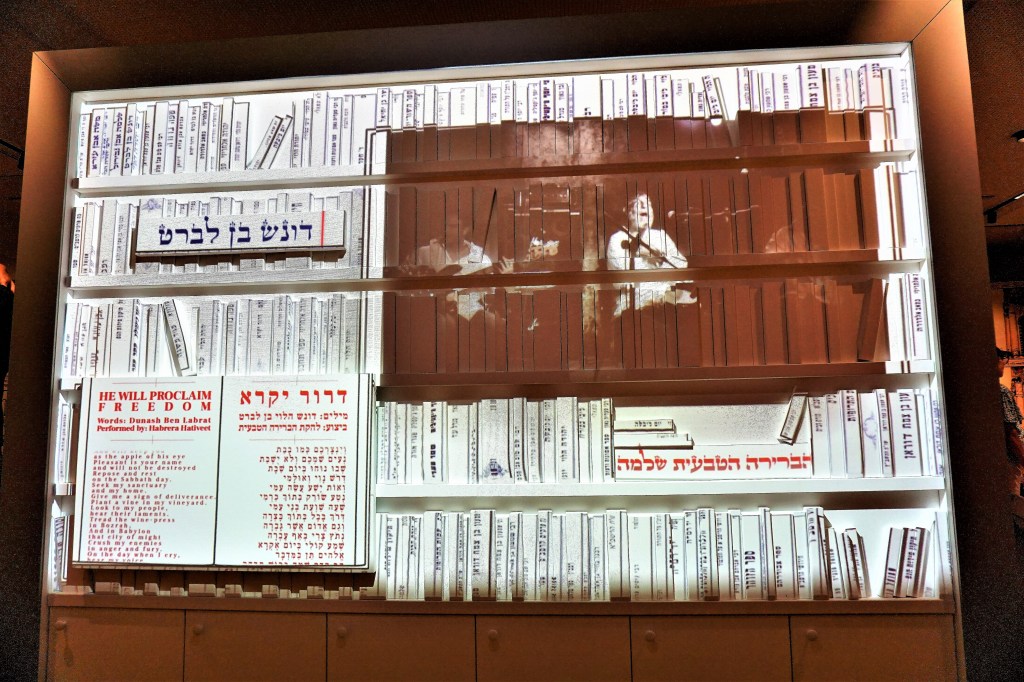
ANU has 3 floors to explore. Half a floor was dedicated to interactive holograms of native and immigrant Jews from all parts of the diaspora describing their decision to be Israeli, and what life is like for them. Israel is notoriously orthodox, and Haredi Jews (ultra-orthodox) consistently vie for power within the government advocating a position for stricter interpretation of Jewish law in everyday life; their philosophy would not recognize Reform Jews as Jews – would not recognize same gender couples, people of the LGBTQIA+ community, people who have tattooed their body, are committed to an interfaith relationship, or raising a child out of wedlock as Jews. Listening to the Jews embodied in the holograms, hearing from such a wide variety of Jews living comfortably and thriving in Israel answered Brian’s major question about living in the Holy Land – what is it like for Reform Jews to be citizens?

Other displays were purely historical and clearly focused on significant events throughout recorded time that were and continue to be important to the Jewish people, some honored Jewish contributions to mankind, some made the point that throughout history Jews came from and impacted all walks of life, and some enjoyable displays showed the contributions of Jews to all facets of the entertainment industry.

The Invisible Part of the Children of Israel “raises our consciousness and illustrates the significance of Asenath, Orah, Na’amah, Zelapoint, Mahlah, and all the unnamed others in Jewish history. It fills a sacred obligation by sanctioning their presence and, when possible, acknowledging their attendance.” …Carol Hamoy

…Jews came from all walks of life throughout recorded history…

Statue Of Liberty Menorah

George Washinton in 1790 wrote: “the Government of the United States (…) gives to bigotry no sanction (…). May the Children of the Stock of Abraham, who dwell in this land, continue to merit and enjoy the good will of the other inhabitants.”.

Walking back to our car we couldn’t help but notice, to us, unknown flowers…

Mockingbird

Following our visit to ANU Museum of the Jewish People we were off to Carmel Market, the largest market – or shuk – in Tel Aviv. When not the Sabbath, the traders of this thriving market sell everything from clothing and electronics, to fruit, spices fresh bread and pastries, meat and fish.

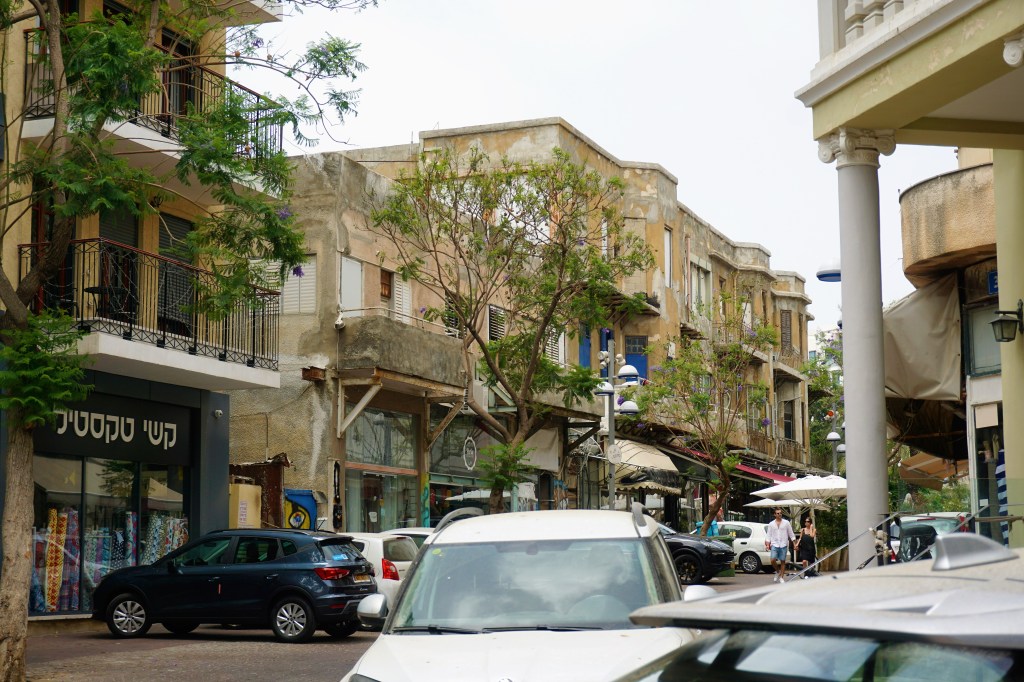
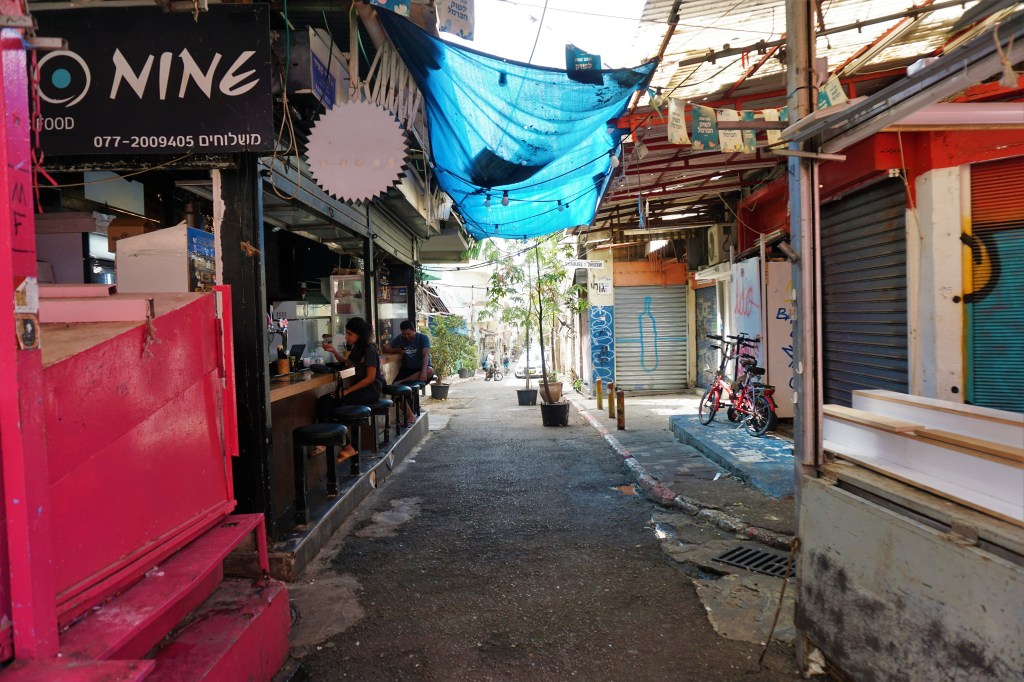
Street Scene Near Shuk HaCarmel – Tel Aviv
Shuk HaCarmel – Empty On The Sabbath

We were fortunate to find an open restaurant in Shuk HaCarmel. On the menu was shakshuka – a middle eastern dish made in a cast iron pan of a thickened spicy tomato sauce flavored with paprika, cumin, cayenne and garlic in which eggs are poached, the dish is topped with cilantro and served with challah for dipping. A moroccan sandwich was also featured. The sandwich which adds fried eggplant to the traditional falafel preparation of fried spiced ground chickpeas, hummus, tomato, onion, harissa, and tzatziki served in a pita sounded wonderfully tasty. Shakshuka for Barbara and the moroccan sandwich for Brian…

Sunday – Jaffa is an ancient port city founded by the Canaanites (2nd millennium BCE!). Sitting atop a naturally elevated outcrop on the Mediterranean coastline, its strategic location has been bitterly fought over repeatedly in Middle Eastern history. Control of the city was contested during the Crusades with many battles fought between Richard the Lionhearted and Saladin before a truce was negotiated, Napoleon sacked the town, and in the First World War the British took the city in 1917. 

Under Ottoman control during the 19th century Jaffa became known for its fruit orchards including its namesake, the Jaffa orange. It was the center for Palestinian journalistic activities in the early 20th century, where an Arabic-language newspaper, the Falastin, began as a weekly publication and evolved into one of the most influential dailies in the Ottoman empire and within Mandatory Palestine. (Just as a note: Mandatory Palestine was a geopolitical entity established in the region of Palestine under the terms of the League of Nations Mandate for Palestine – it existed from 1920 until the establishment of Israel as a sovereign entity in 1948.) 

After the 1948 Palestine War most of Jaffa’s Arab population fled or were expelled, and the city became part of the newly established state of Israel being annexed into Tel Aviv in 1950. Today, Jaffa’s population is mixed; approximately 1/3 Palestinian and 2/3 Israeli.

A couple of fun facts – biblical mythology states that the city was named for Yafet, one of the sons of Noah (yeah – the ark guy) who built the city after the flood. And, for Greek mythology fans, an outcropping of rocks near the harbor is reputed to have been the place where Andromeda was rescued by Perseus from the sea monster Cetus.

It’s hard to argue against the significant historical importance of Jaffa.

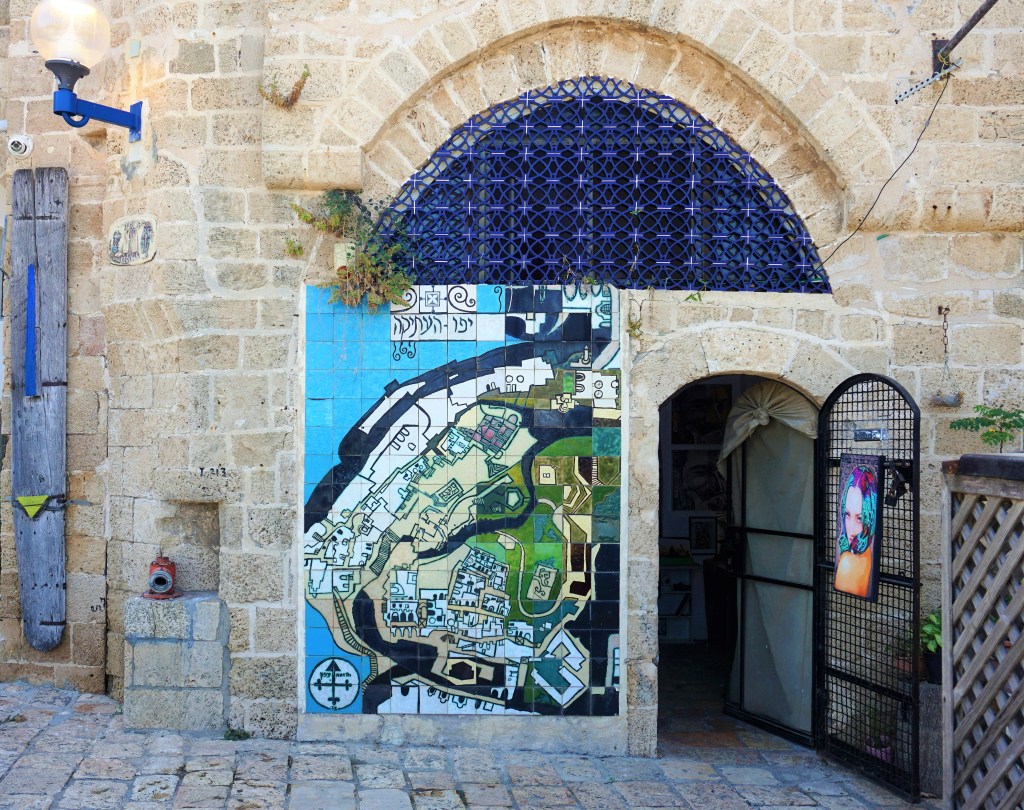
Map Of Jaffa In Mosaic Tile
Looking North To Downtown Tel Aviv
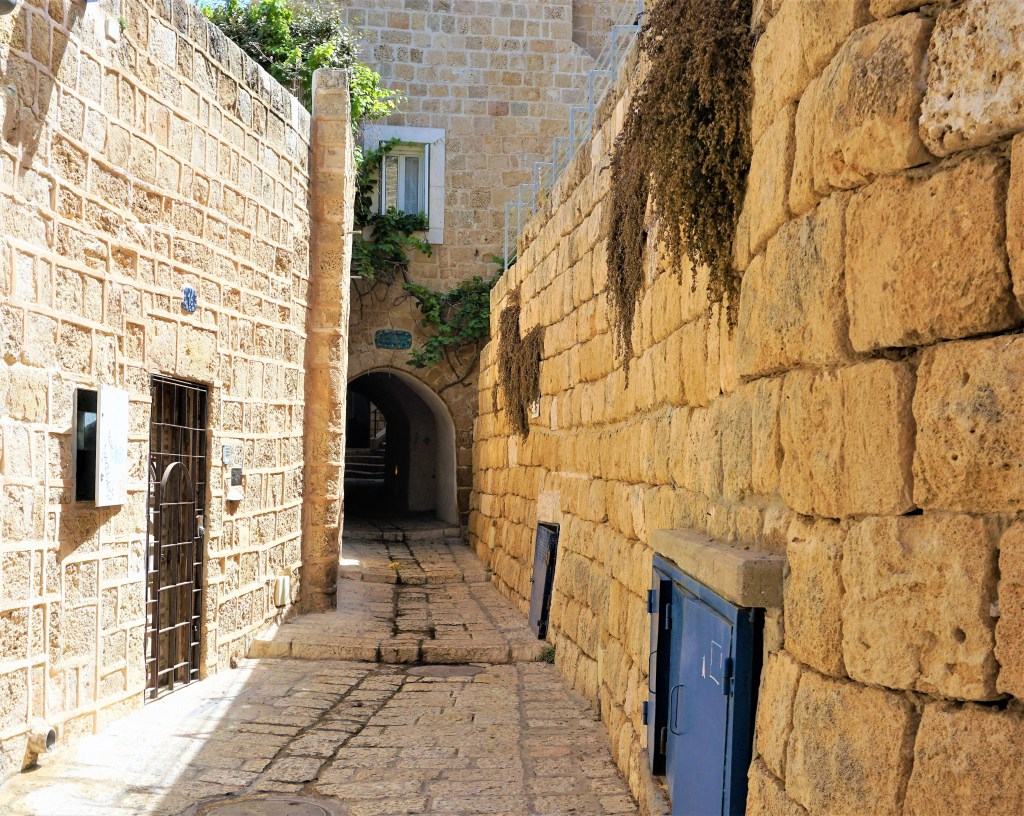
Amazing Narrow Passageways Throughout The Old City – Built Over 2,000 Years Ago

Simon the Tanner, is mentioned in the “Acts of the Apostles” book of the New Testament. He provided lodging for Saint Peter during the missionary activities of the early Christian faith.

The clock tower is one of 7 built during the Ottoman rule of Mandatory Palestine.

Fountain Representing Signs Of The Zodiac
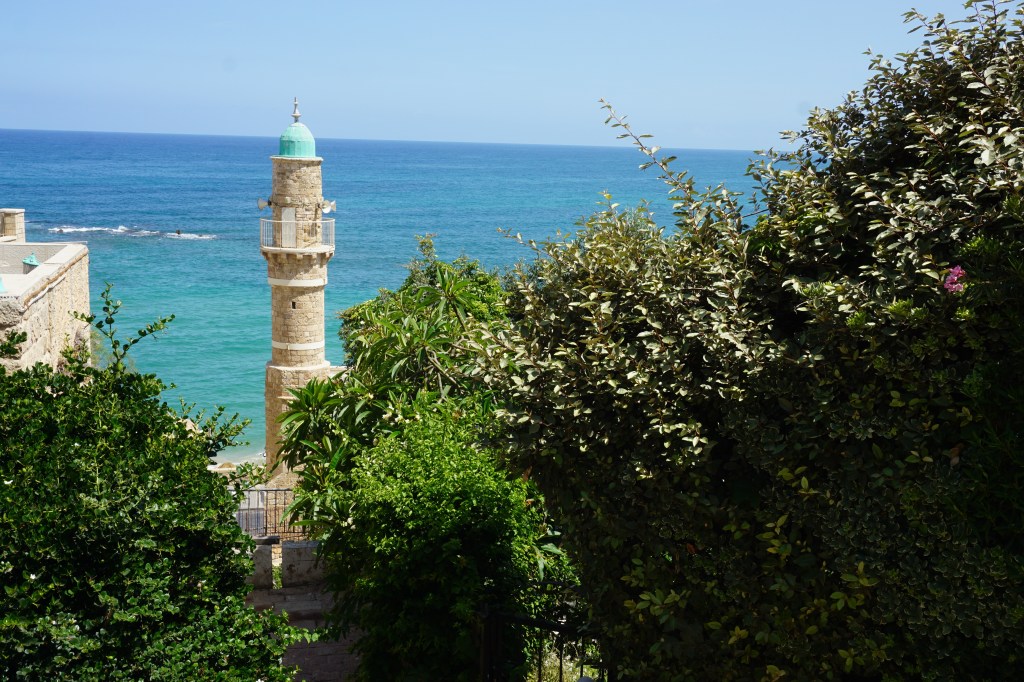
Mosque
Outcropping Of Andromeda/Perseus Mythology

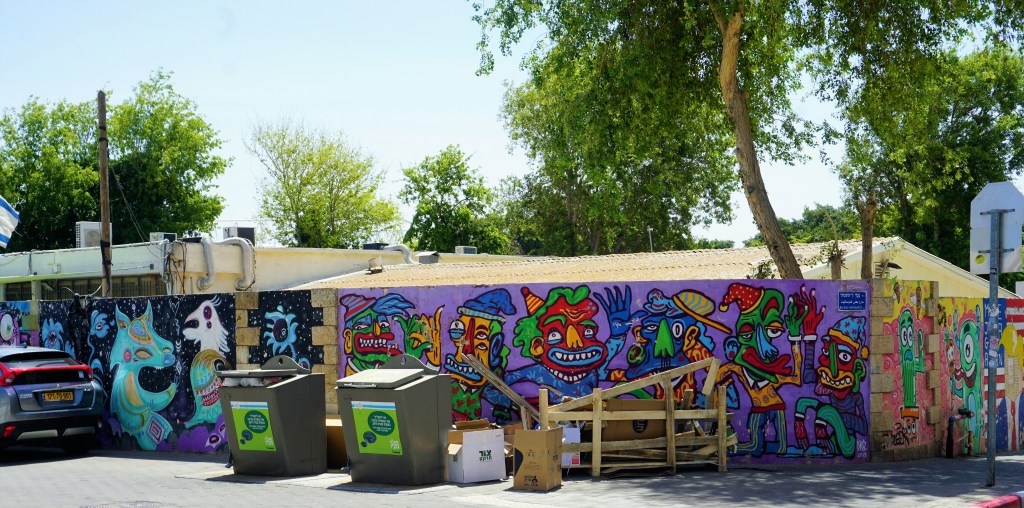
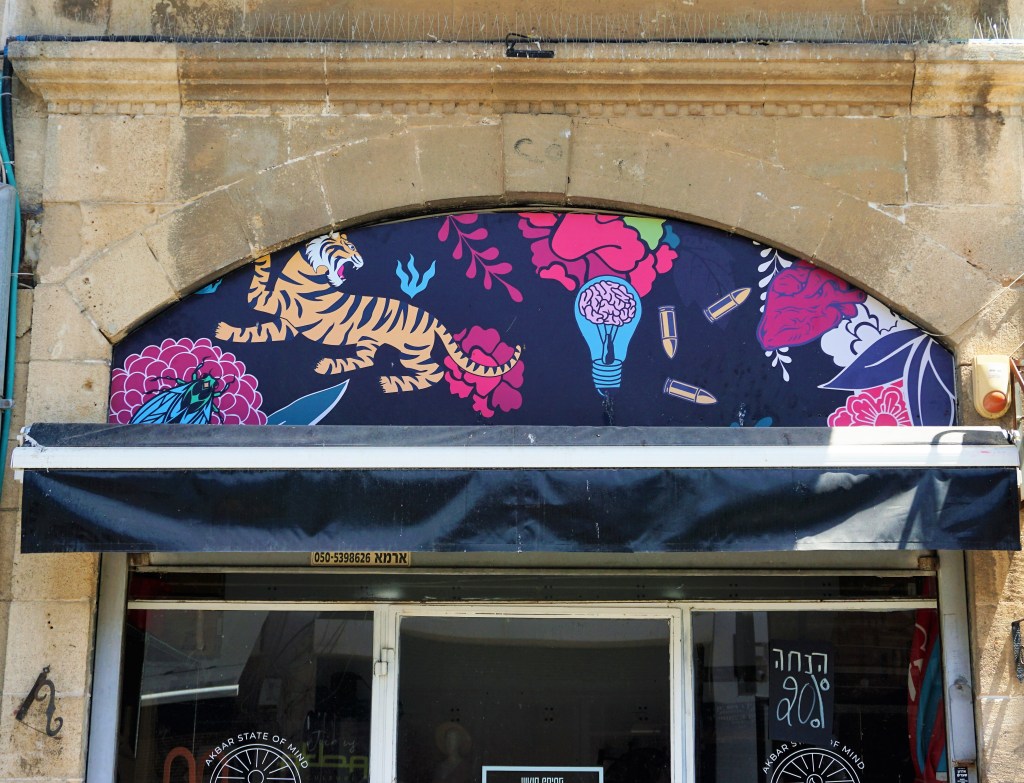
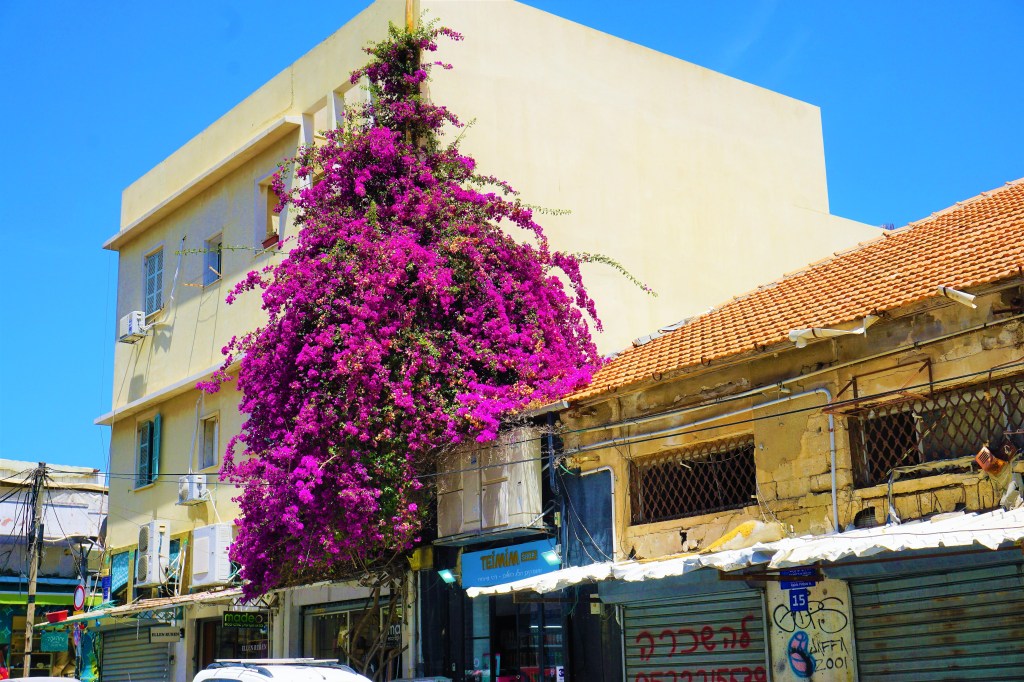
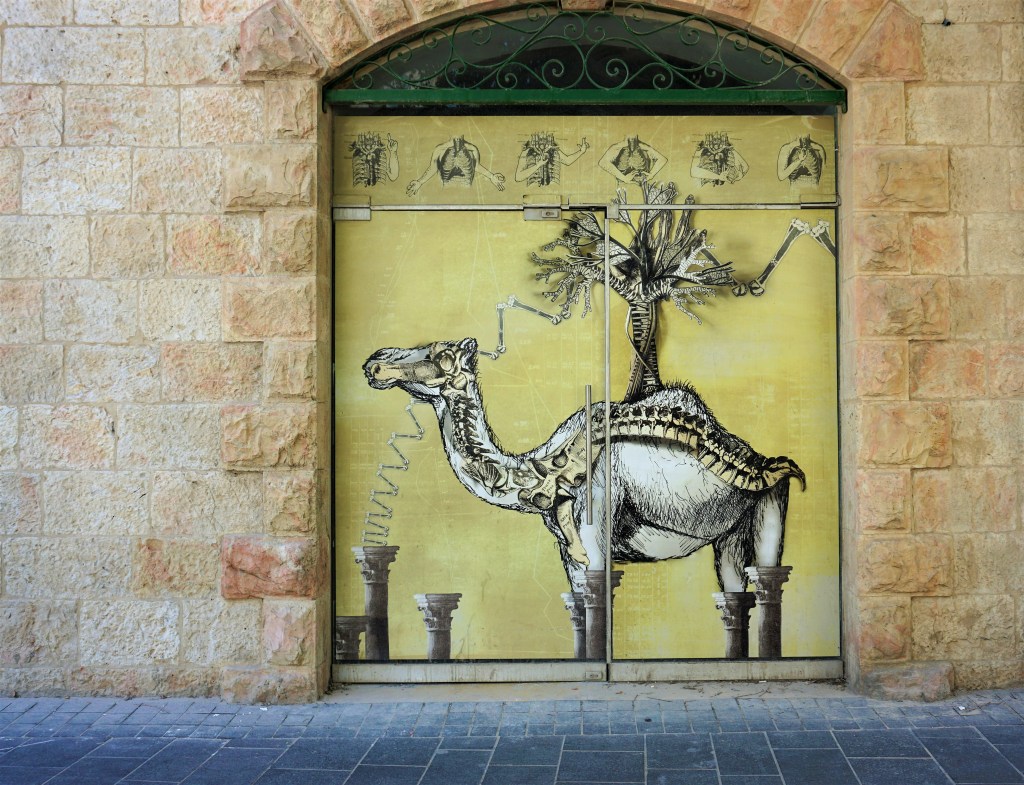
On our way to the Jaffa flea market, Brian couldn’t help taking a representative sampling of the City’s Street Art…

Barbara Loved This Bougainvillea
One Of The Alleys In The Jaffa Market District
City Of Jaffa Flag Left – Israeli Flag Right

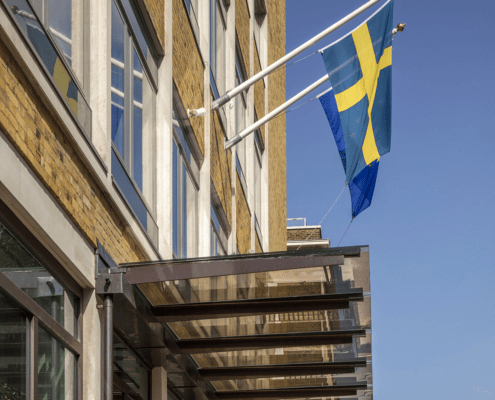
Our grandson is set to graduate from the Walworth Barbour American International School in Israel, and one of his classmates is the daughter of the Swedish Ambassador. The Ambassador and his wife hosted a graduation party and reception in honor of their daughter’s matriculation; fellow students and families were invited. Graciously these grandparents were included.

Monday – Today is the celebration of Ben graduating from high school, and completing our easing into our trip to Israel – a nice weekend with family. But we have to eat, and while overlooking the Mediterranean feasting on the renowned Israeli breakfast is a pretty nice way to start the day

Israeli Breakfast – juice, tea/coffee, 3 eggs, bread/butter and spreads, and no less than 8 small plates including feta, tuna, hummus, vegetable salad with olives, tomato salad, roasted eggplant, whipped cheese spread, and tabbouli. No chance to leave hungry!

On the recommendation of Atlas Obscura we went chasing after a drinking fountain built from the design of Friedensreich Hundertwasser, an architectural master, who famously loved spirals and abhorred straight lines. Unfortunately, the drinking fountain had fallen into ill repair and had been removed for restoration. But we did find this cool sorta abandoned (?) building with a ladder seemingly going nowhere. Quite perplexing…

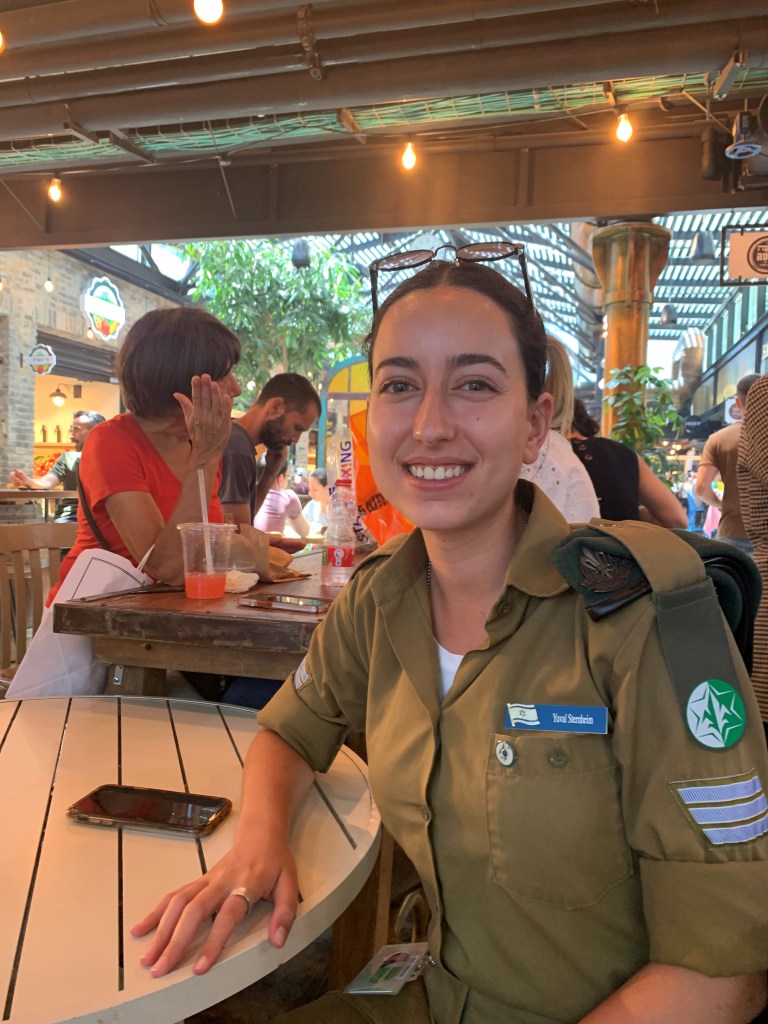
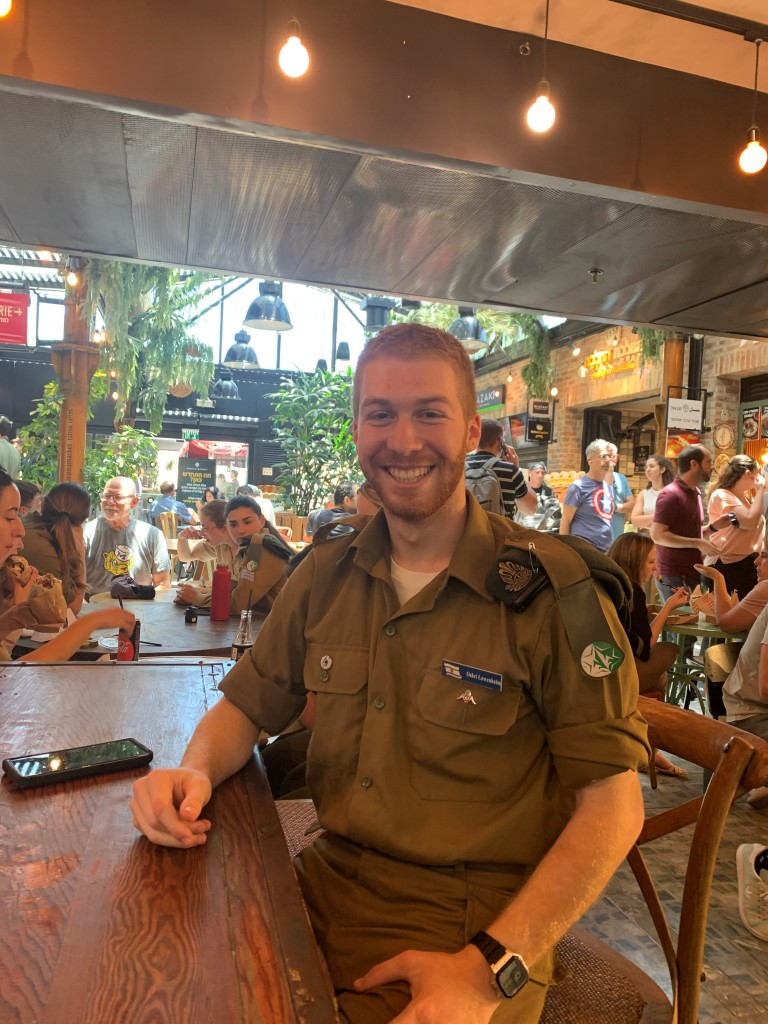
On behalf of the US Government son-in-law Paul is a diplomatic liaison in Israel and works in cooperation with a group of Israeli Defense Forces (IDF) soldiers. He was kind enough to arrange a time for all of us to meet, exchange thoughts and have a nice conversation during the soldiers’ lunch period. While walking to the meeting place we had the chance to see parts of the modern city of Tel Aviv, and to take in some street art as well.

For Brian, the chance to talk with these amazing intelligent, mature, thoughtful and welcoming young Israelis was an unexpected highlight of the trip. Finding out about the Israeli Jewish culture and experience was fascinating and part of the agenda visiting the Country.

Paul Jokes That The National Bird Of Israel Is The Crane!

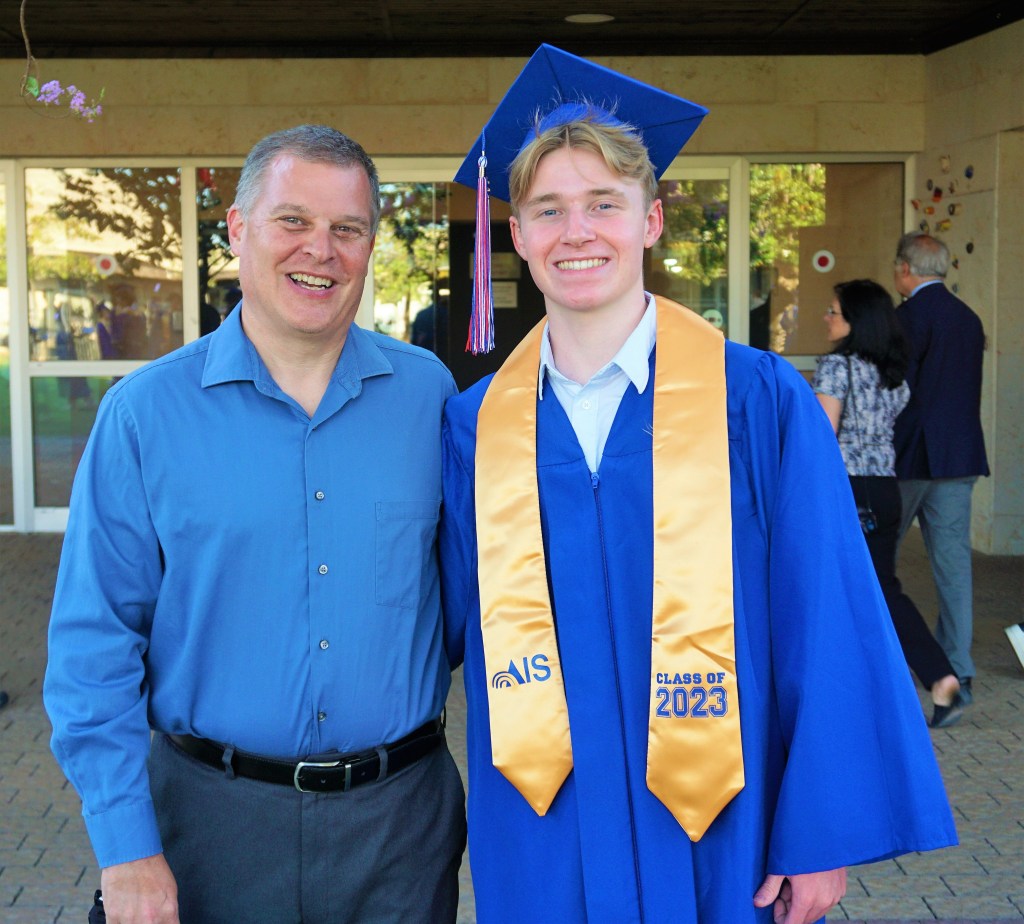
It was a warm but pleasant evening for Ben’s high school graduation from the Walworth Barbour American International School in Israel. He was one of 50 international students seated on the dais and walking as graduates. Fellow graduates will be attending universities across the globe, may take a year or two off to travel prior to attending university, may be conscripted into the military or may join the workforce postponing any further education indefinitely. Unlike most high school graduates in America, travel or a gap year(s) is often an option for many high school graduates from other countries.

Yup – That’s Ben!!

Tuesday – Ben is leaving this evening late for his summer job in South Carolina. He and Grammy Marty, who has been in Israel for his graduation are traveling companions. It’ll be a long trip for the 2 of them; a journey home for Marty and the beginning of his next adventure for Ben.

We took advantage of the “free” day to do some exploring on our own. Paul dropped us off at the train station, and we caught the train to Jerusalem. Our agenda for the day was to find our way to and from Jerusalem on the train and be back in time to say farewell to Ben and Marty, find our way from the train station to the Great Synagogue of Jerusalem followed by a walk through Mahane Yehuda Market and grab some lunch while there.

Jews use the phrase “going up to the Holy City” when talking about visiting Jerusalem. Why? Well, Tel Aviv is at sea level and the elevation of the dead sea is1400 feet below sea level (-437 meters). The highest elevations in the Country are found in both the north and south – in the (north) Galilee Mount Meron peaks at more than 3,900 feet above sea level and in the (south) Negev Mount Ramon peaks at a little more than 3,400 feet above sea level. Jerusalem’s elevation varies between 2,500 feet and 3,000 above sea level.

“Going up to the Holy City” was never more evident to us when departing the train and finding that there were 3 “multi-story” escalators necessary for us to make it up to street level!!

Escalator #1
Escalator #2
Escalator #3 – From The Top Down

Upon exiting Yitzhak Navon Railway Station we found ourselves in the crowd of commuters and locals, and perhaps a few tourists as well. While some preferred to walk on their way, we wanted to take what we thought would be a traditional American streetcar, but our mode of transportation disappointingly turned out to be light rail.

But which way to go to arrive at our first stop of the day – the Great Synagogue of Jerusalem? A delightful woman approached and offered to help; however, she had to grab the next light rail car that almost immediately arrived allowing passengers to board. Fortunately she did have a chance to tell us which way to go so we bought our tickets and were on our way! After departing the light rail car at the correct stop (!) we had a 10-15 minute walk to the synagogue. How wonderful it felt to be on the streets of Jerusalem!

Light Rail Stop
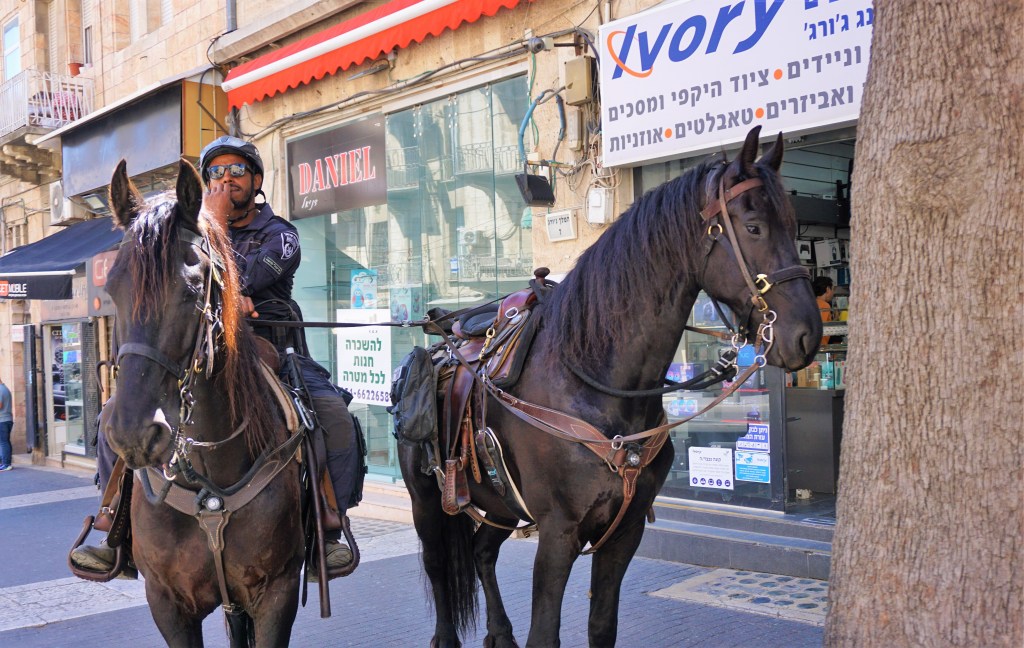
Jerusalem Mounted Police!
Yeshurun Central Synagogue Of Jerusalem – 94 Years Old And Founded By Russian Jews

As early as 1923 the Chief Rabbis of Israel began considering plans for a large central synagogue in Jerusalem. In 1958 Heichal Shlomo, the seat of the Israeli Rabbinate, was established, and a small synagogue consecrated within the building. It wasn’t long before the premises could not hold the number of worshipers attending and the Great Synagogue, with a sanctuary seating 850 men and a gallery for 550 women was built. As an Orthodox Shul only men occupy the sanctuary floor; women pray from the balcony and behind a wooden “screen” that prohibits the men from the distraction of their gender during worship services.

Plaza And Front Entry To The Great Synagogue

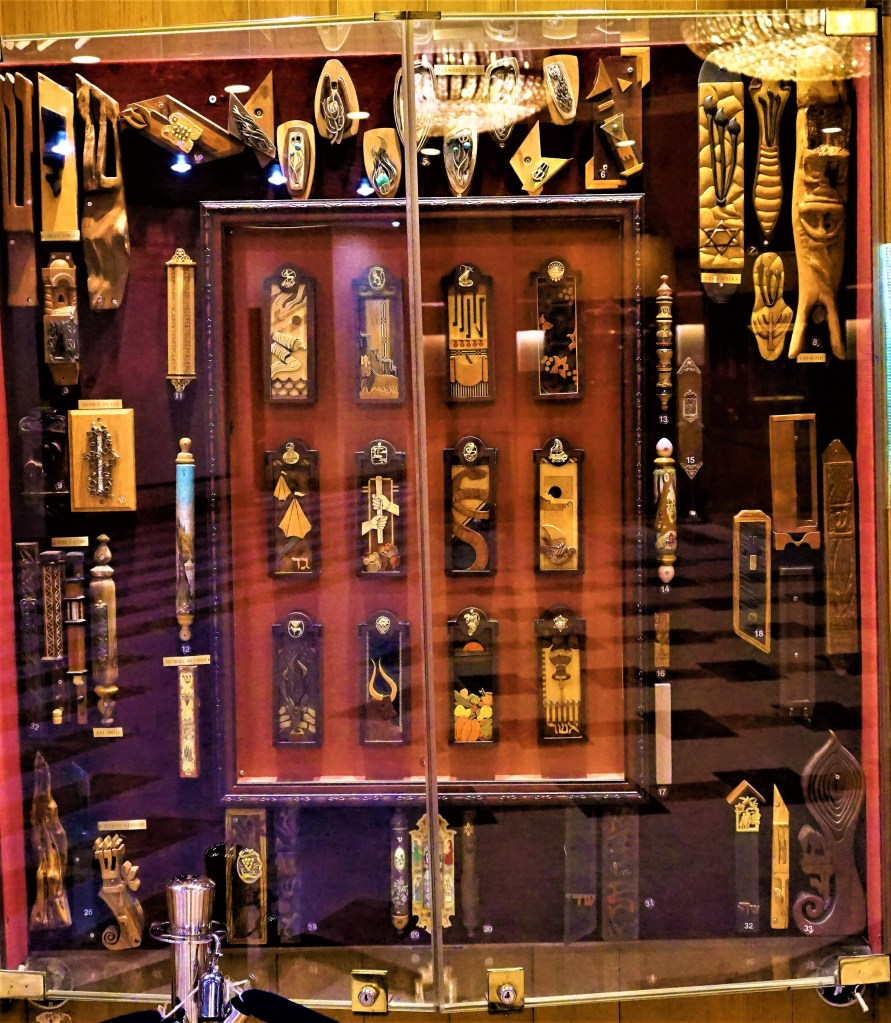
A comprehensive private collection of mezuzah cases is on show inside the lobby.

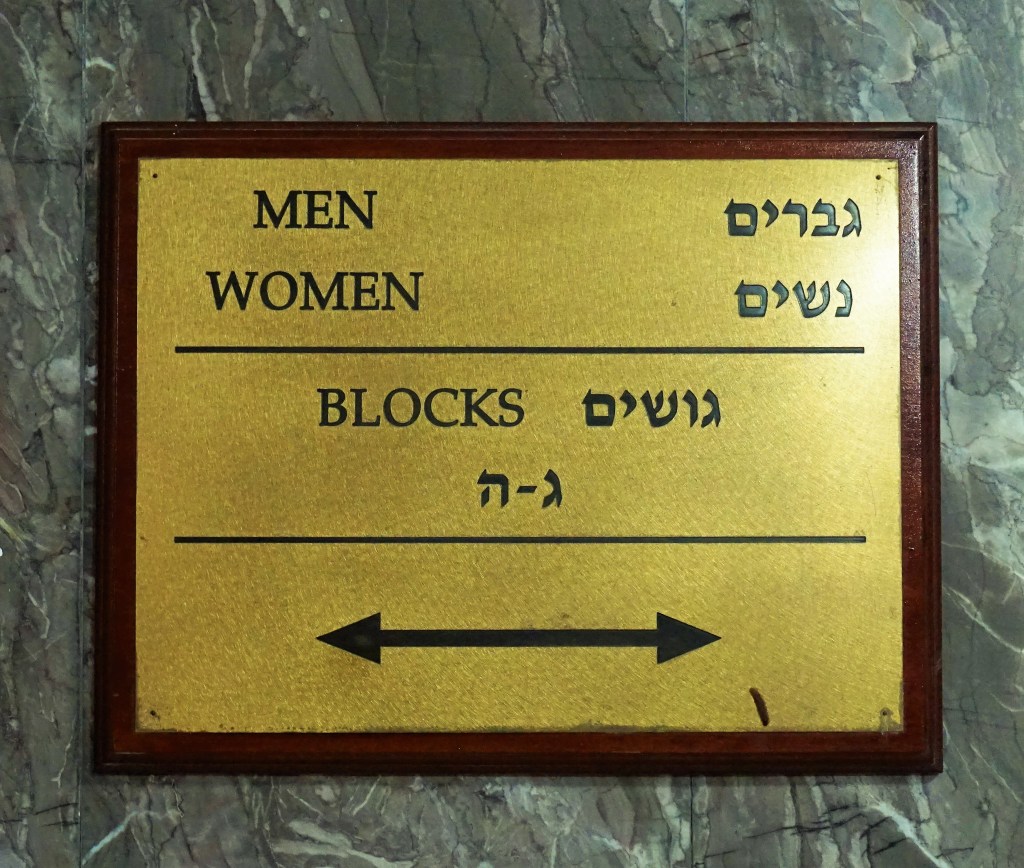
We Understood What Was Meant, But Thought It Amusing That Maybe The Blocks Would Have Their Own Section Of The Sanctuary!

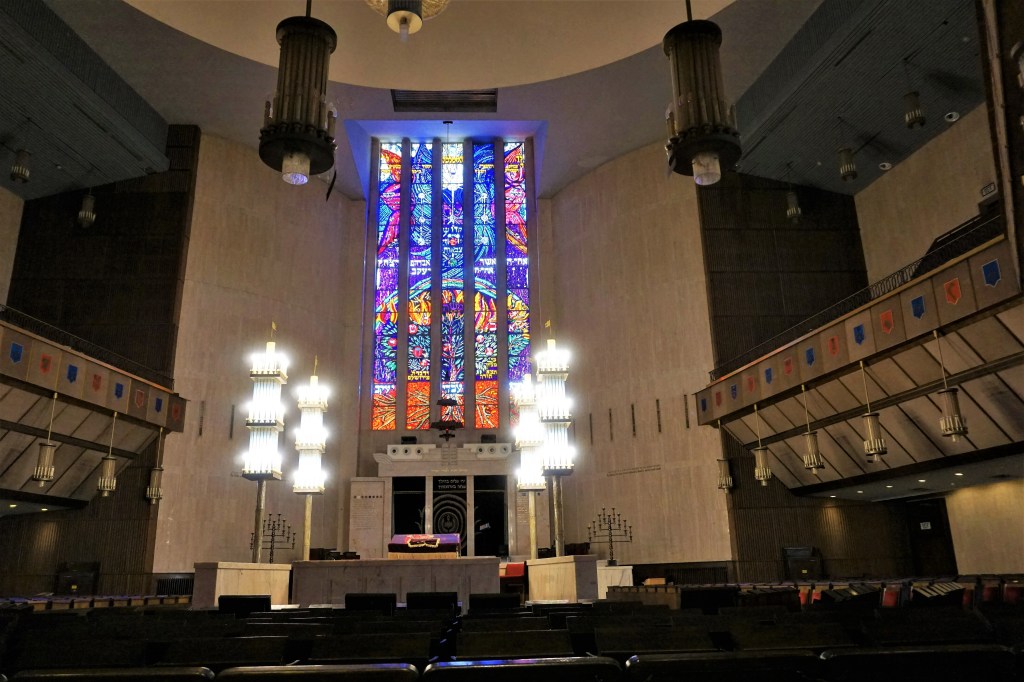
The sanctuary was build in the “Babylonian Style” – the Cantor leads the service from a mighdol (pulpit) in the center of the sanctuary; the mizbeah (alter) is used to read from the Torah.

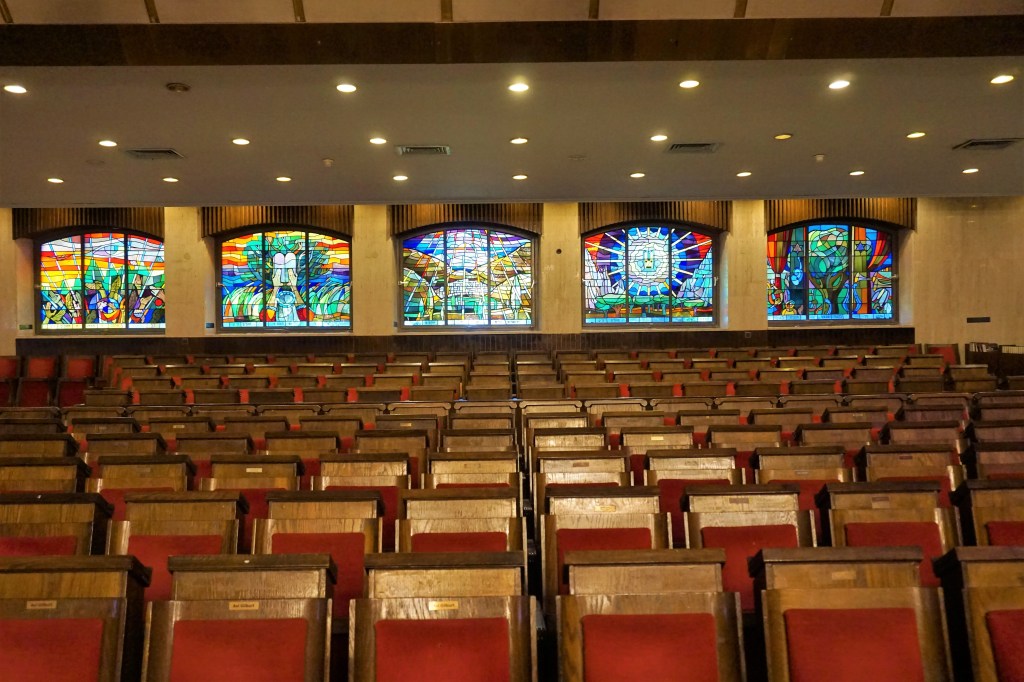
The Mighdol Is Surrounded By The Lights – The Mizbeah And Ark “Under” The Stained Glass
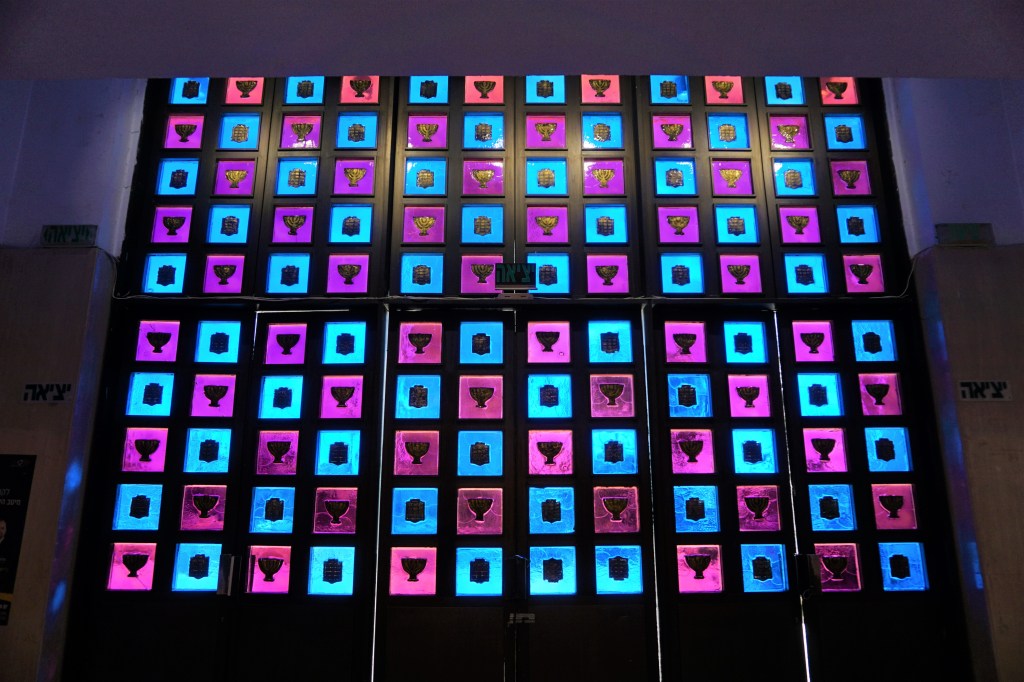
The Ark

The main floor of the sanctuary is surrouded by beautiful stained glass…

So Ummm – What’s That Woman Doing On The Sanctuary Floor?

While exploring the building we heard what we imagined to be an angry loud voice – Brian stuck his head into a room. He found a “leader” expressing some point to a group of older men sitting as students – a Rabbi conducting a Torah study group, and his students hadn’t done their homework? Or perhaps it was just the way (as we found out observing several interactions between Israelis) whatever point was needed to be made – of course in Hebrew. A short while later one of the “students” asked Brian if he read (Torah) and would like to join the group? He politely declined.

A Favorite Picture – The Gentleman On The Left Is Elderly And Blind. His Gentle And Loving Caretaker And Companion Is On The Right.

An annex to the Great Synagogue contained a display of “modern” Israeli art, which was not particularly appealing to us. But look around we did, and just as we were about to leave we walked by a gentleman seated behind what we thought was the reception desk. We greeted each other, and the fellow came out from behind his desk and placed a hand on Brian’s elbow to guide him to a plaque in the lobby. After a couple of minutes spent reading the plaque he pointed to our camera and wanted Brian to take a photo…

We were then guided into the sanctuary set aside for the relocated Renanim Synagogue of Padua, Italy. It was that small sanctuary used by the members of the Hechal Schlomo and their congregation beginning in 1955!

Our time came to an end at The Great Synagogue of Jerusalem – Time to walk to Mahane Yehuda Market. Street scenes on our way…

As we imagined, the market is aisles and aisles, both indoor and out, of merchants selling dry goods and supplies, fresh fruits and vegetables, tchotchkes, dried fruits and nuts, spices and coffee and pastries, and freshly butchered meats and fish. Quite overwhelming, but we made a few purchases, resisted the come-on from “clever” merchants, and had ourselves wonderfully delicious falafel and kabob sandwiches for lunch.

We found our way back to Yitzhak Navon Rail Station, purchased tickets, figured out on which track to catch the next train back to Tel Aviv, and made it back to the Duckenfield Estate Middle East in plenty of time to say farewell to Ben and his Grammy.

Our first several days in Israel were well spent with family, doing some light exploring, visiting an important museum, enjoying the ancient city of Jaffa and a little bit of Jerusalem, celebrating graduation from high school, having an earnest discussion with young members of the IDF, and discovering the belly-busting meal called an Israeli breakfast. Feeling centered and energized, we anxiously looked forward to tomorrow, and our visit to Old City Jerusalem.

Barbara and Brian

“It’s not what you look at that matters, it’s what you see.” – Henry David Thoreau

Urban myths about the bible/israelwonderful to meet and talk with israelis…Roni, Danella, Soldiers kaddish at the wailing wall, masada, friday services, holocaust museum

MORE STUFF TO DO IN OHIO

Afterall, A Buckeye Is Some Kind Of Nut

October, 2022

We’re off the road and living in Southeastern Michigan, we figure, until late fall, 2023. Our condo is far enough away from our grandchildren and children to not be intrusive and close enough to be intrusive if we so desire and can get away with it!

Sometime last summer we were talking with Elyssa about son-in-law Ben’s business, Bootleg Bagels, and she was wishing that she could be available to help him out by working the booth with him at Dayton, Ohio’s Jewish Festival. The problem was that she was having a hard time finding someone to watch her 2 children; our granddaughters. We reminded her that that was why we moved to Michigan, and to her “oh yeah” we ended up spending a lovely afternoon with Maggie and Penny.

So, when the request came to watch the granddaughters (or would the girls be watching us?) for just about a week while Elyssa and Ben spent some alone time in Martha’s Vineyard, Massachuettes we were ready, willing and able. Arriving on Friday night so that we could be at their place Saturday morning for their early departure was easy enough – remember we’re retired! Saturday was a breeze, capped off with a delightful dinner with Ben’s parents at their home. We found ourselves traveling to Columbus on Sunday and spent a great day at Legoland. Come Monday, the girls would be back in school so what were a couple of old folks like us to do during the school day? Obviously, we had to find the unusual, the strange, and the ofttimes not frequently visited places.

The hollow earth monument pays homage to the theories of John Cleves Symmes who believed that the earth is composed of a series of concentric rings, that it is hollow, that the center of the earth is habitable, and the earth is open at both poles (think of Jules Verne’s Journey to the Center of the Earth). The monument sits atop Symmes grave in Hamilton, Ohio’s Ludlow Park. It is the only grave remaining in what had once been a pioneer cemetery.

From An 1878 Book Illustrating The Hollow Earth Theory Of John Cleves Symmes.

Jungle Jim’s International Market is unique…where else is a visitor greeted by a menagerie of African animal statuary and sounds or entertained by animatronics throughout a cavernous warehouse of a supermarket? Where else can you find ground kangaroo, boneless rattlesnake “bites,” 73 hot sauces from who knows how many countries, 129 flavors of potato chips, 7 (!) different kinds of goat milk yogurt or simply tropicana orange juice and Chiquita bananas? If near Fairfield, Ohio and looking for that perhaps truly once-in-a-lifetime ingredient to make that “where in this world did you get that recipe and the protein/produce/spice to make it?” go ahead and stop in, but otherwise when the day is done, and after the novelty wears off it is just a fairly expensive supermarket.

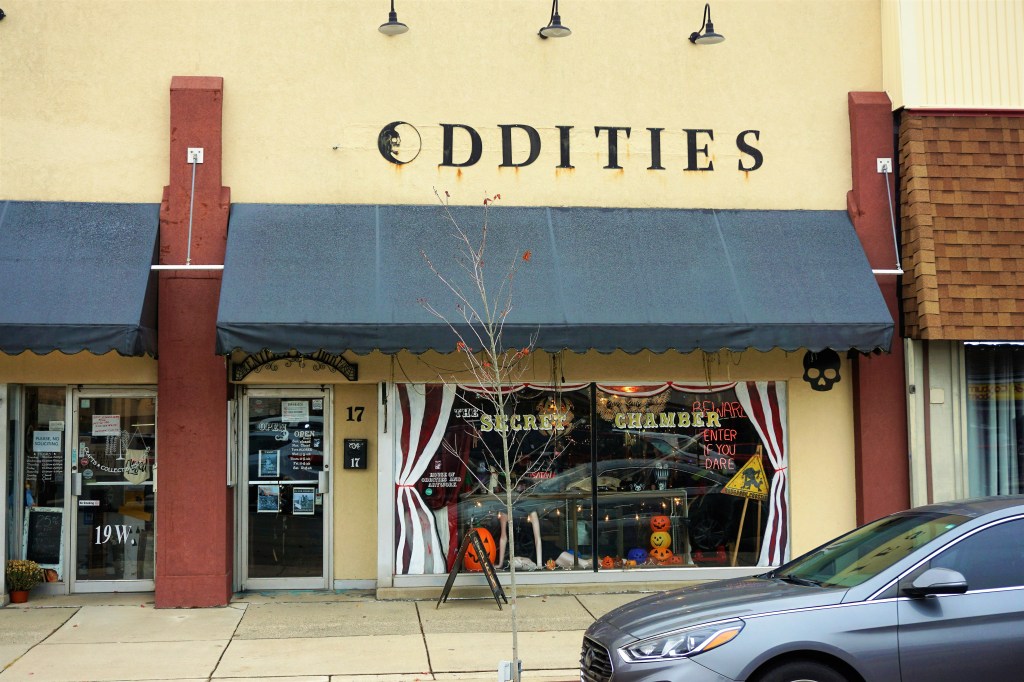
The Secret Chamber House of Oddities and Artwork is on Main Street, Fairborn, Ohio alongside oddity stores, Halloween shops open year ’round, comic and toy stores, and a couple of bar and grills. Its merchandise is a collection of macabre and unusual stuff dedicated to enthusiasts of horror. See anything you like?

…and now for something a little more mainstream…

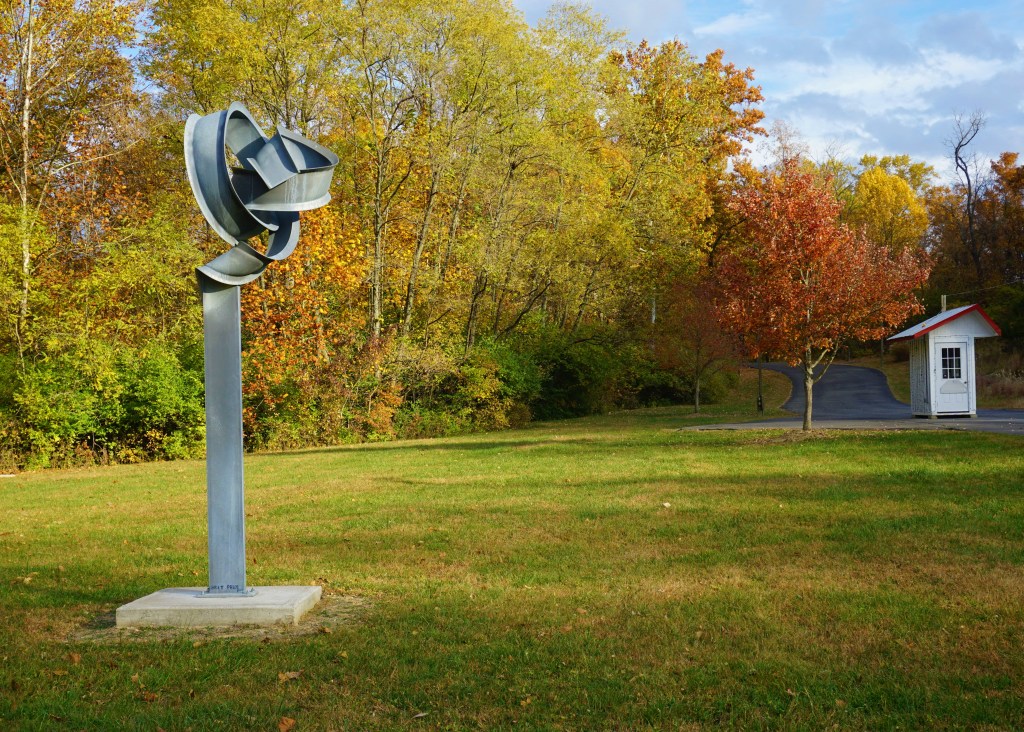
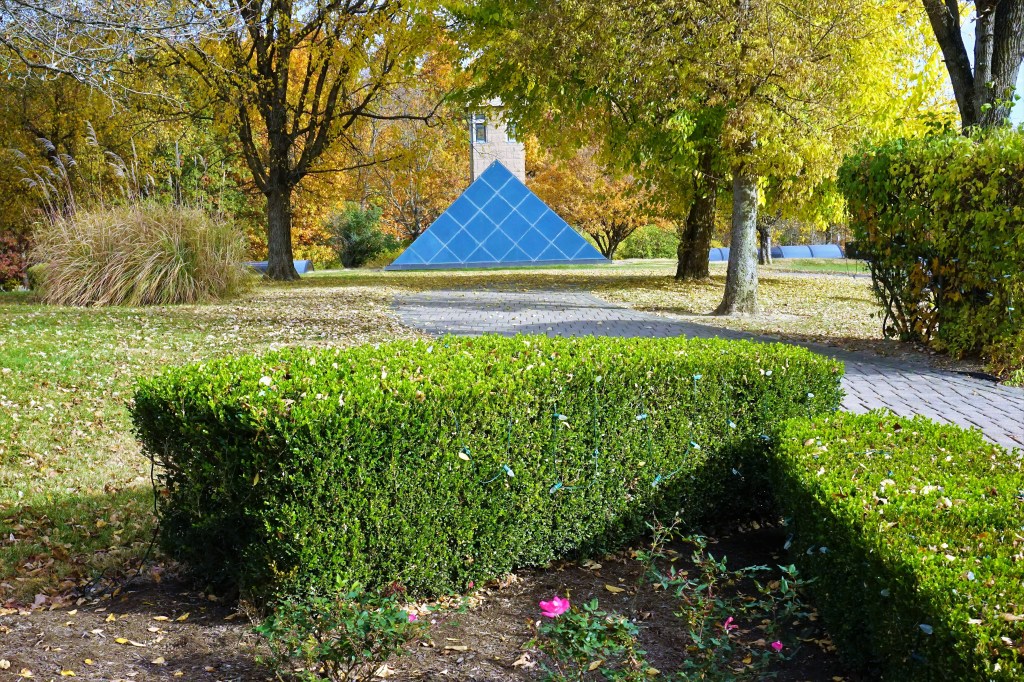
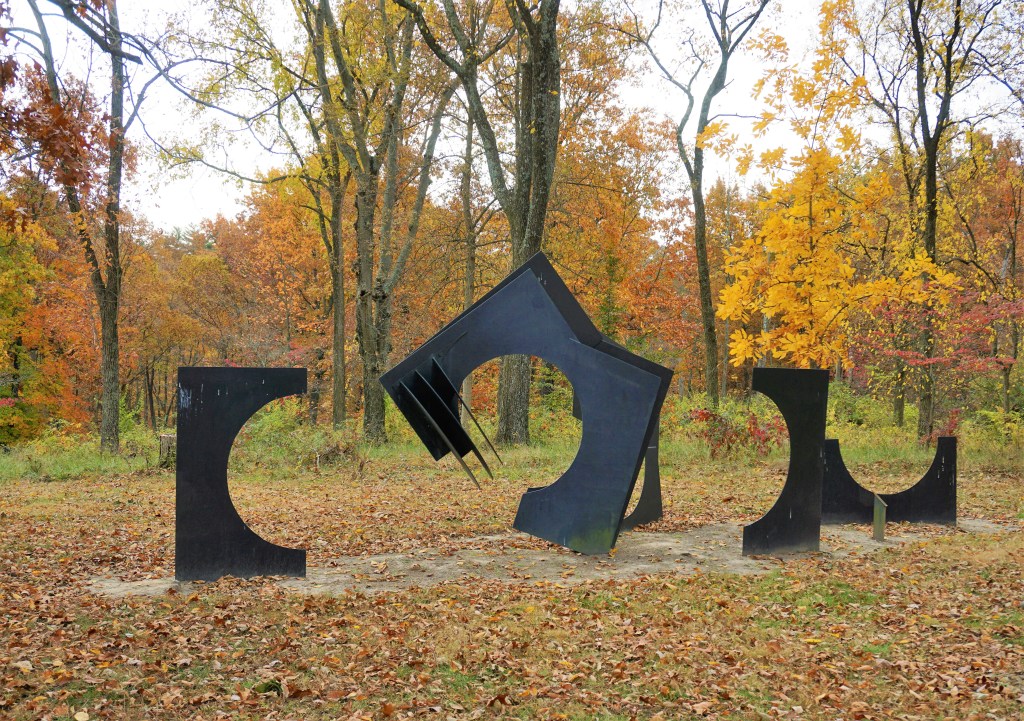
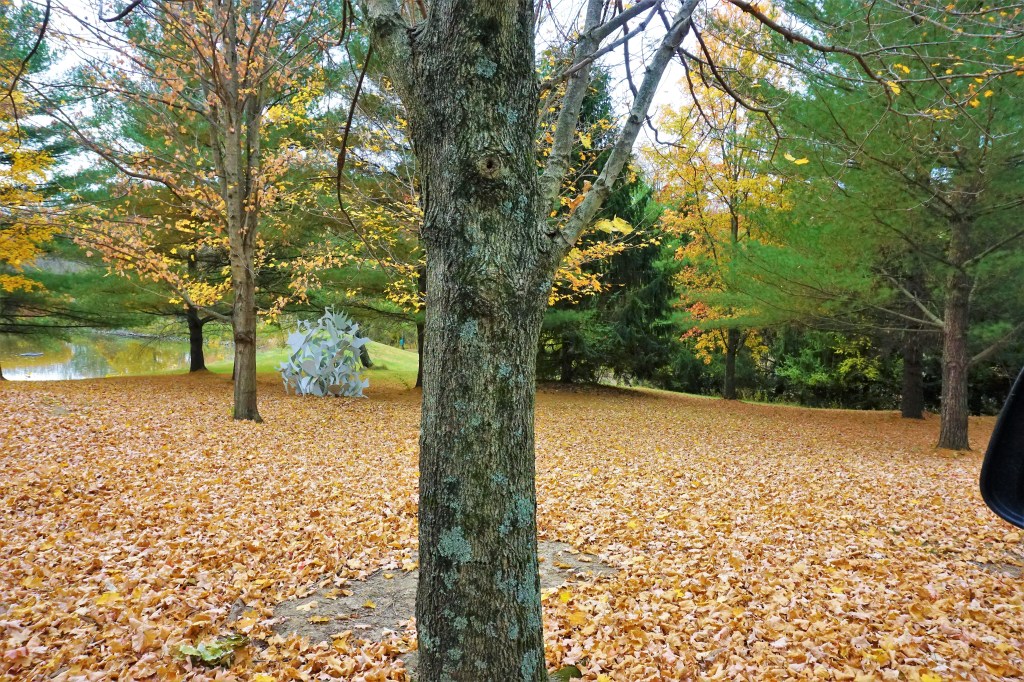
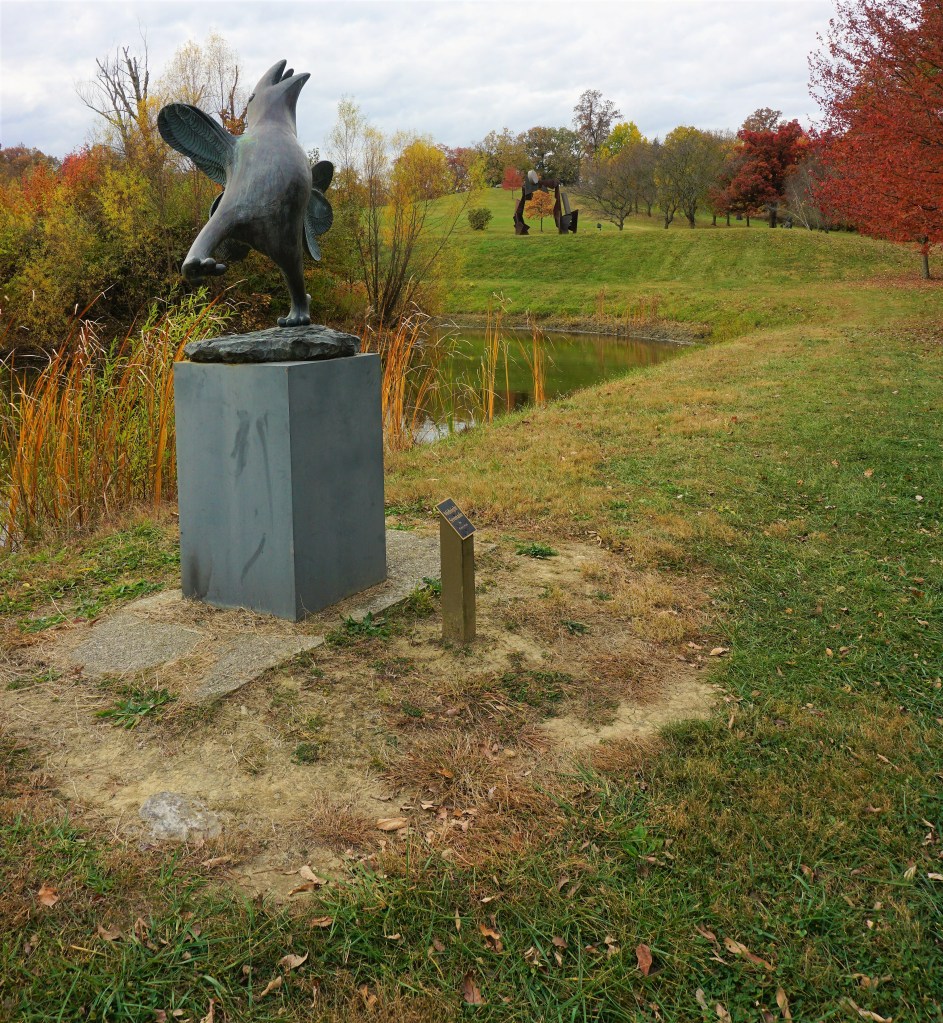
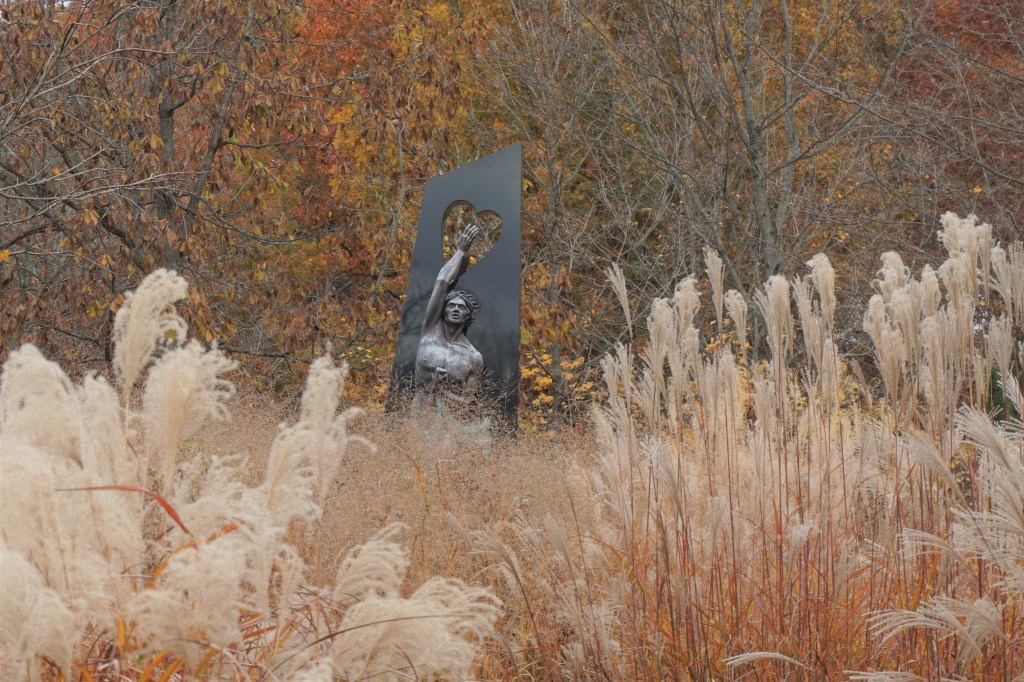
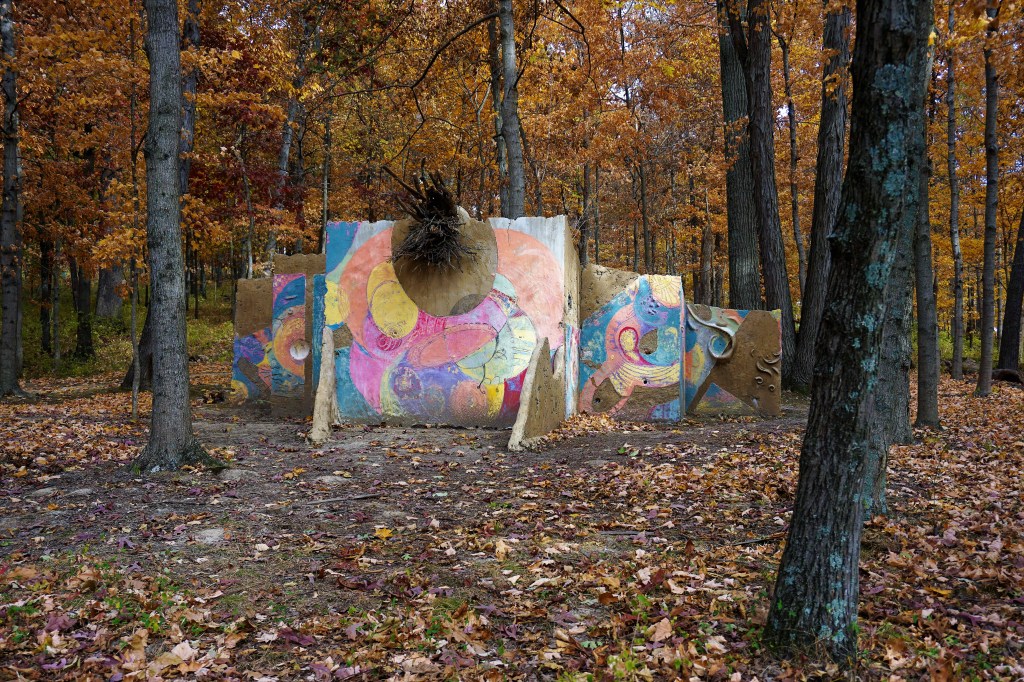
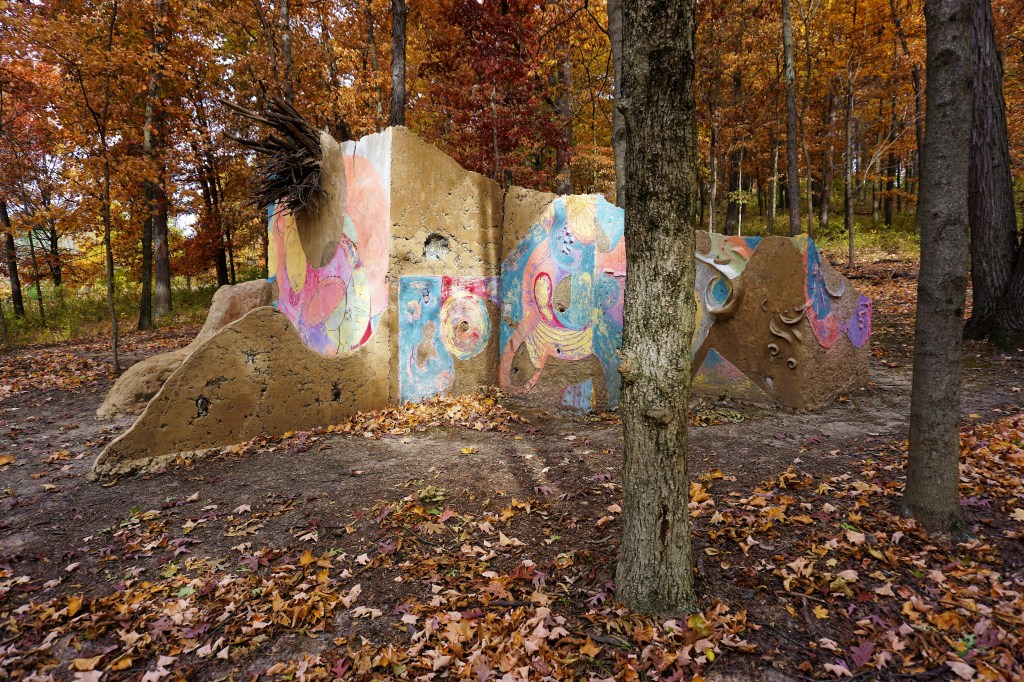
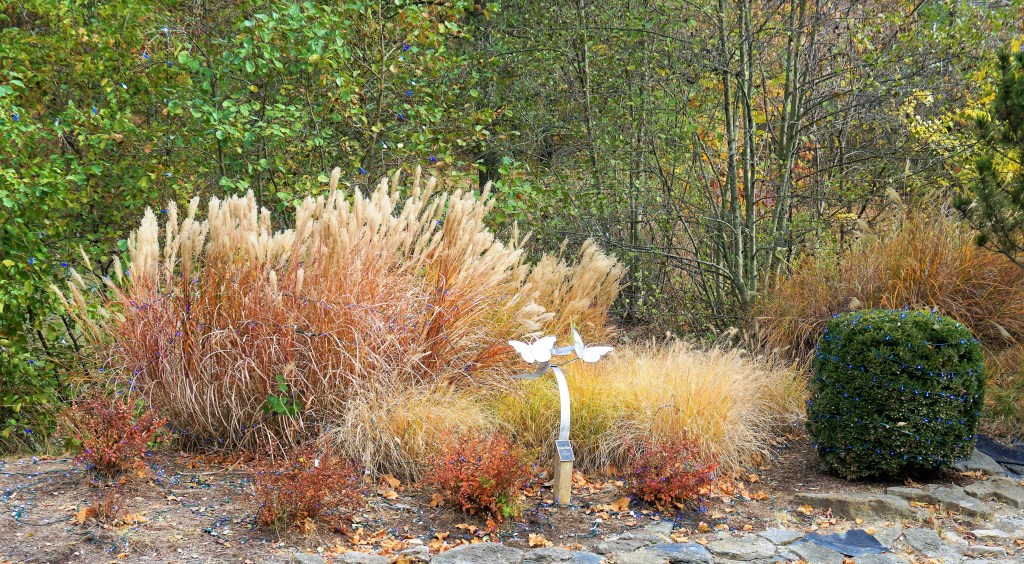
Celebrating its 25th anniversary Pyramid Hill Sculpture Park and Museum in Hamilton, Ohio has more than 80 “contemporary” sculptures that are integrated into the Park’s 300 acres of rolling forested hills, meadows, lakes and gardens. While there is a sense that some of the sculptures could use a bit of maintenance and care, we visited on a glorious fall day with the trees at the height of their colors – a pallet complimenting the work of each and every sculpture artist.

Here’s a sampling of the sculptures…

Passage By John Henry – At The Entrance To Pyramid Hill Sculpture Park and Museum

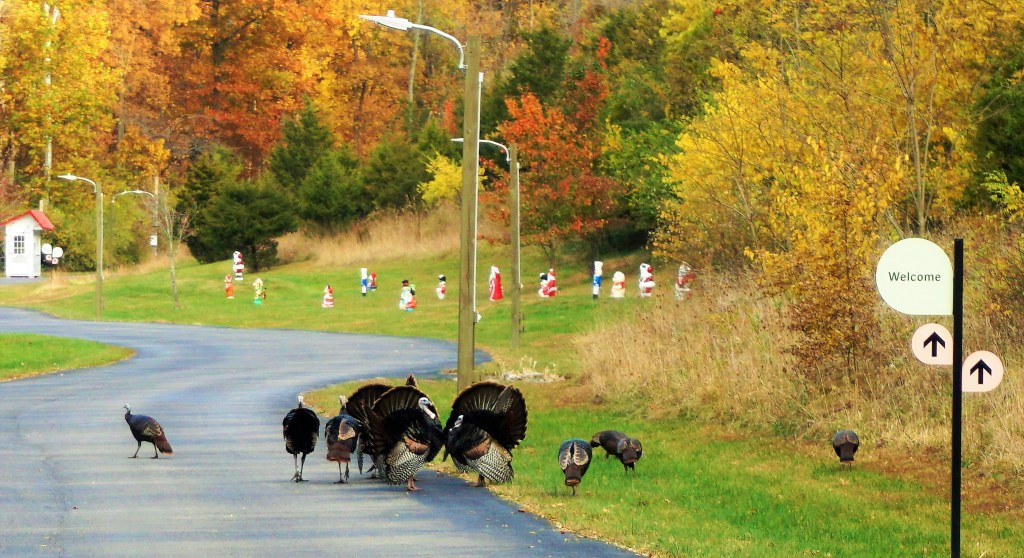
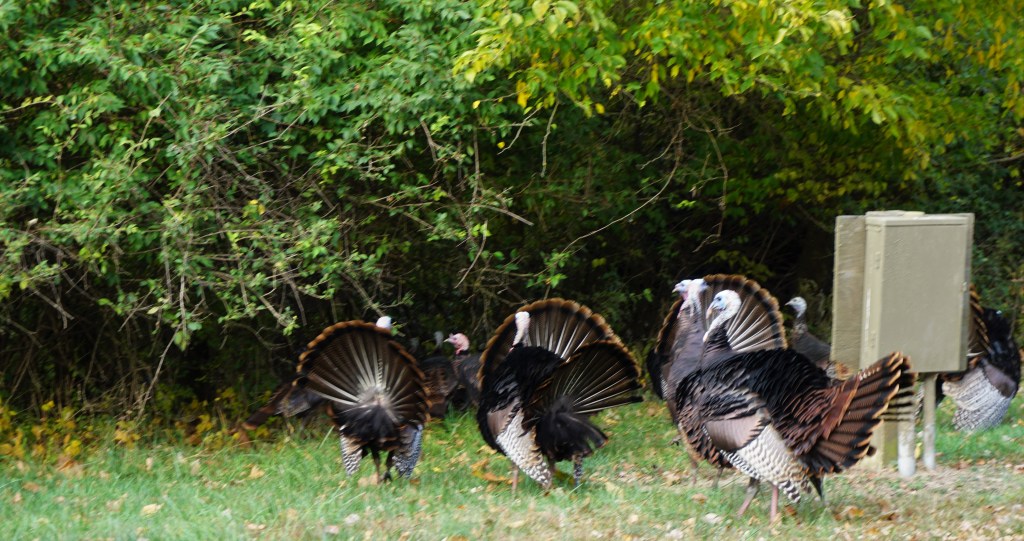
Unexpectedly a flock of wild turkeys greeted us as we entered the Park.

Oh Yeah By Bret Price
Life’s Twists And Turns By Greg Loring
Phase I By Harold Betz
Falline Flora By Don Creech
The Web By Brian Monaghen
Age Of Stone By Jon Isherwood
Soaring Forms In Red By Josefa Filkosky
The General – Artist Unknown
Take Out By Chakaia Booker
Pyramid House
Landing By Ken Valimaki
Laocoon By Alexander Lieberman
Tory’s Comet By Harry Gordon
Foreground: Midnight Serenade Pose 2 By Pokey Park Background: Pier Portal By Barry Tinsley
Abracadabra By Alexander Liberman
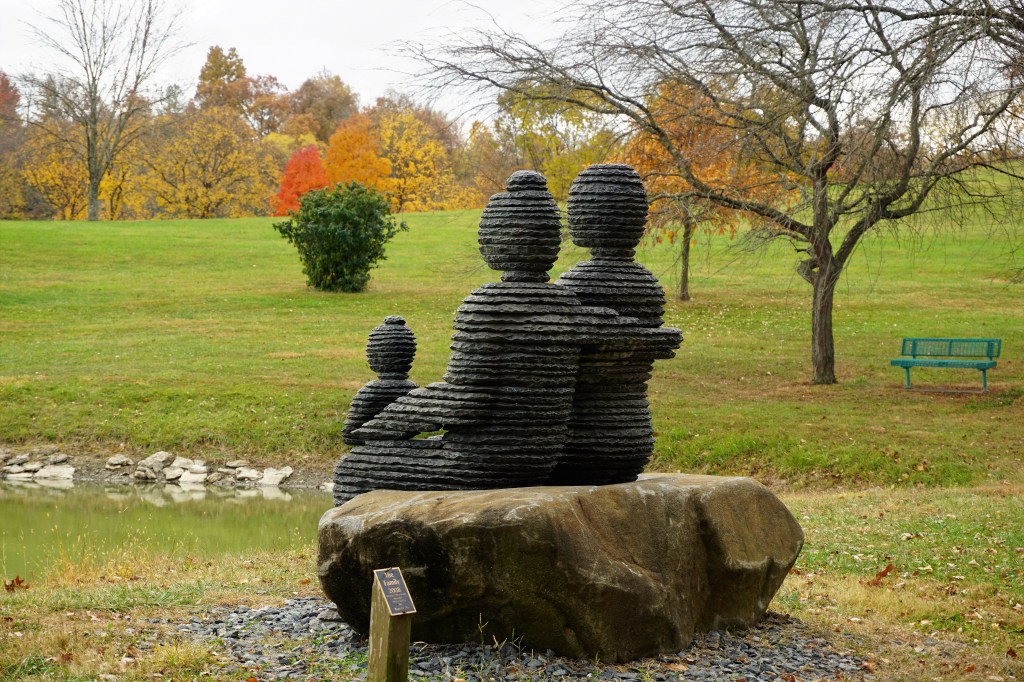
The Family By Boaz Vaadia
Long Wall By Joel Perlman
Wherefore Art Thou By Sam McKinney
Connections By Ron Fondaw
Butterflies By Stan Thomson

Spend time with grandkids – check. Find new and different places to visit – check.

It’s probably redundant for us to say, but there’s something new and/or unusual for everyone no matter where you might be or how long you might be there. How many life-long New Yorkers have never gone up to the top of the Empire State Building or had pastrami at the Carnegie Deli or ice skated at Rockefeller Plaza or taken a carriage ride through Central Park? How many folks living in LA have never had a donut at Randy’s or a hot dog at Pink’s or visited the La Brea Tar Pits? How many Chicagoites haven’t visited landmarks like the fire house/water pumping station that was the only building left standing after the great Chicago fire or seen the colored light show at Buckingham Fountain? And those are some pretty average things to do. So, ask yourself what’s in your neighborhood or close by or even some distance away. It’s not about money ’cause there are so many freebies out there. It’s not about using the excuse of avoiding tourist traps ’cause there are some pretty cool tourist traps. It’s not about being too far outside of your comfort zone ’cause that’s something you can control. It’s all about living; about being able to reflect back and say: “damn, look at what I’ve done and seen.” L’Chaim.

Barbara and Brian

It’s not what you look at that matters, it’s what you see.“ – Henry David Thoreau

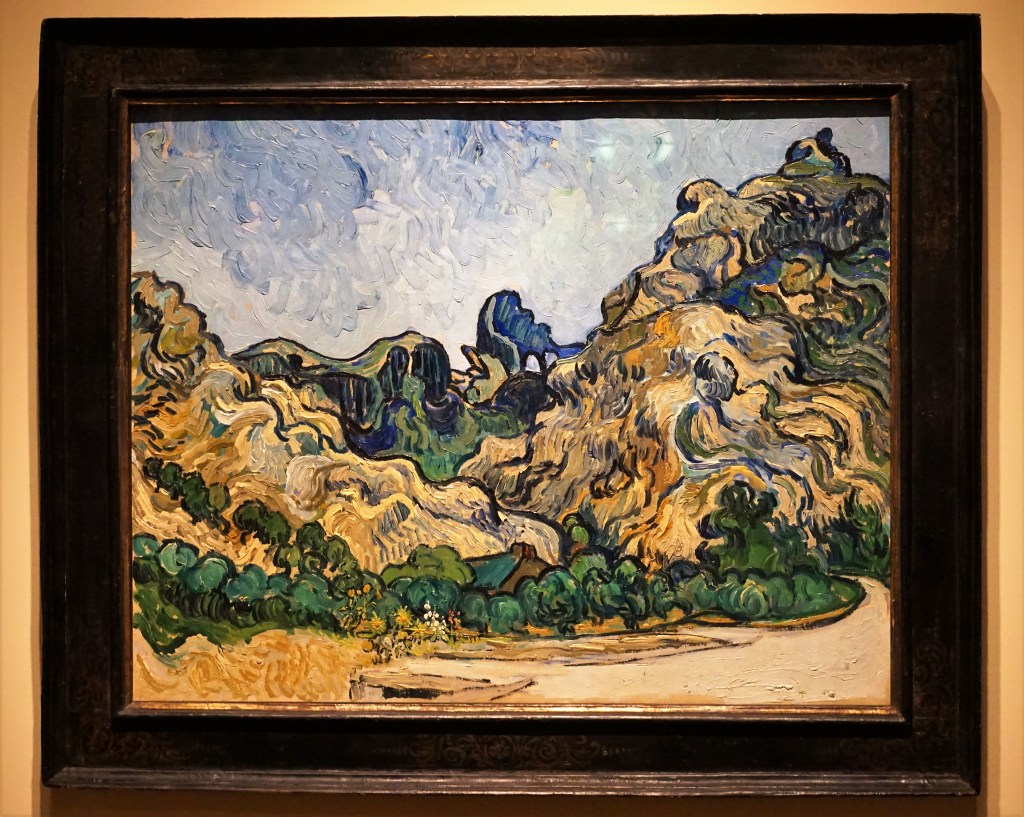
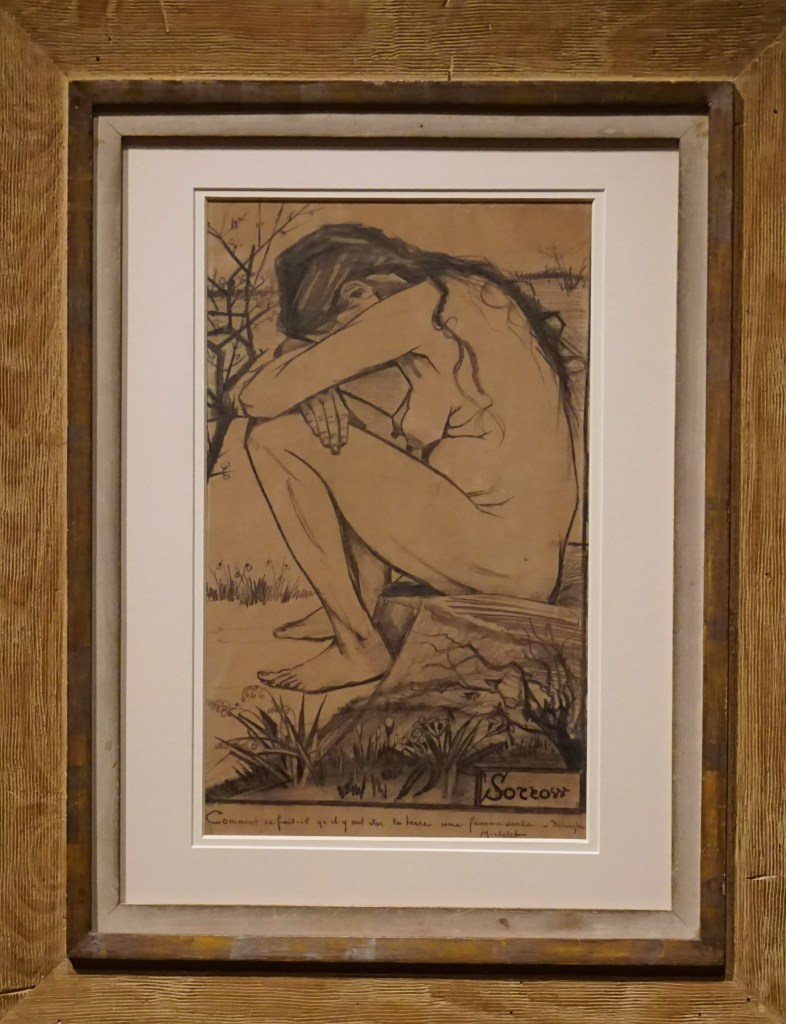
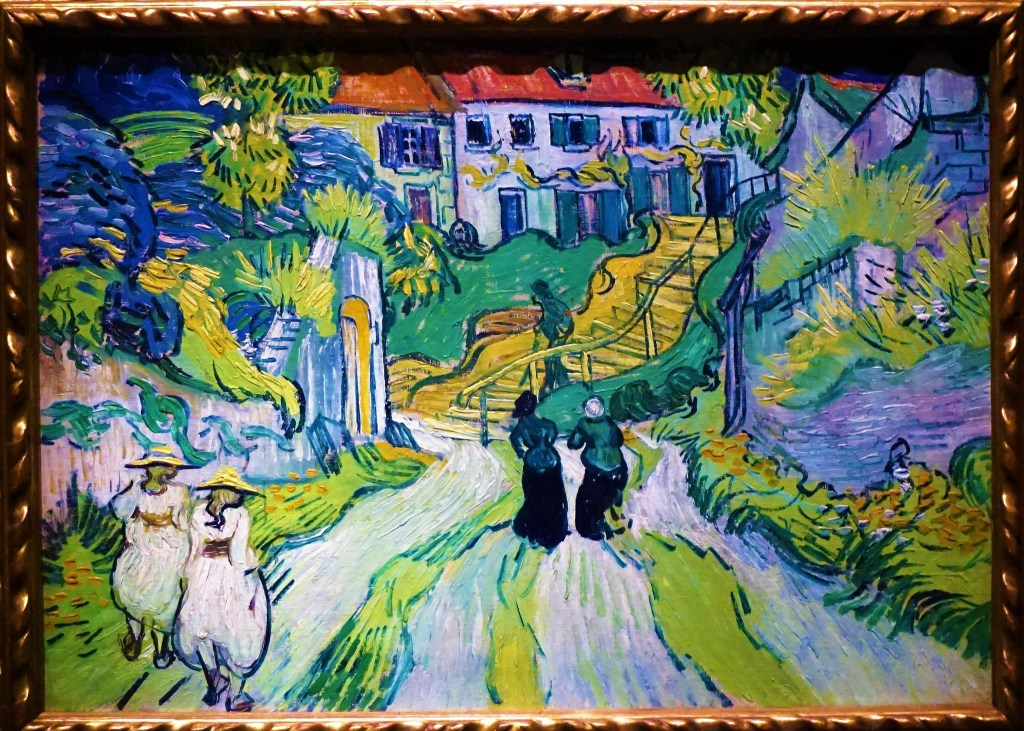
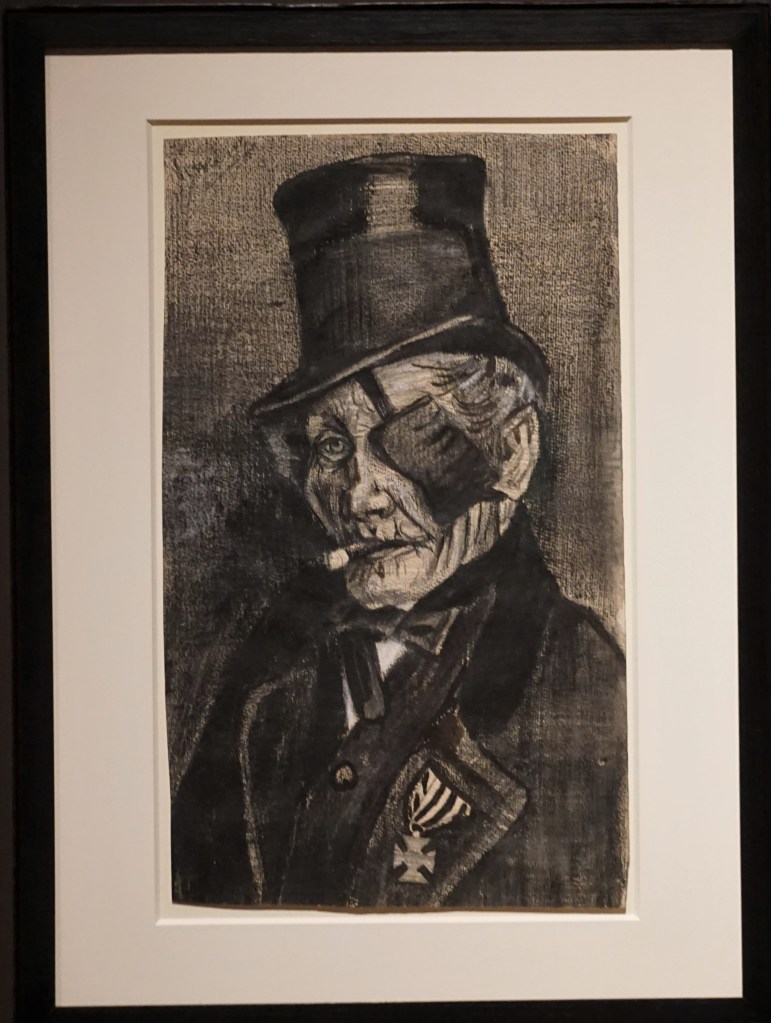
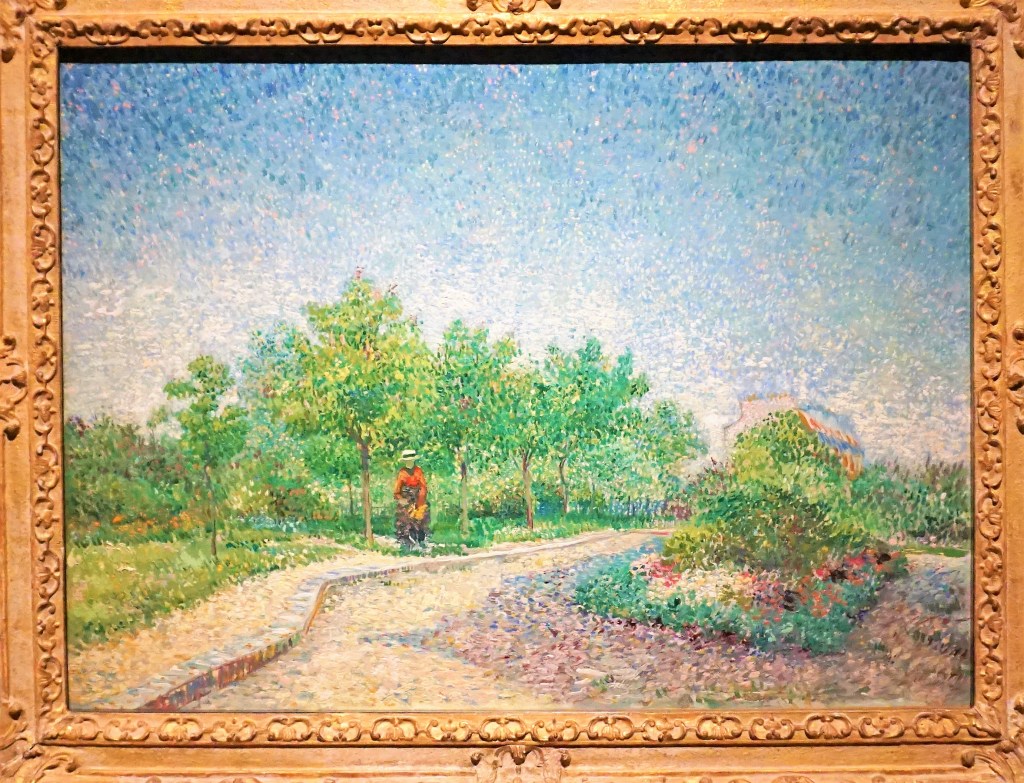
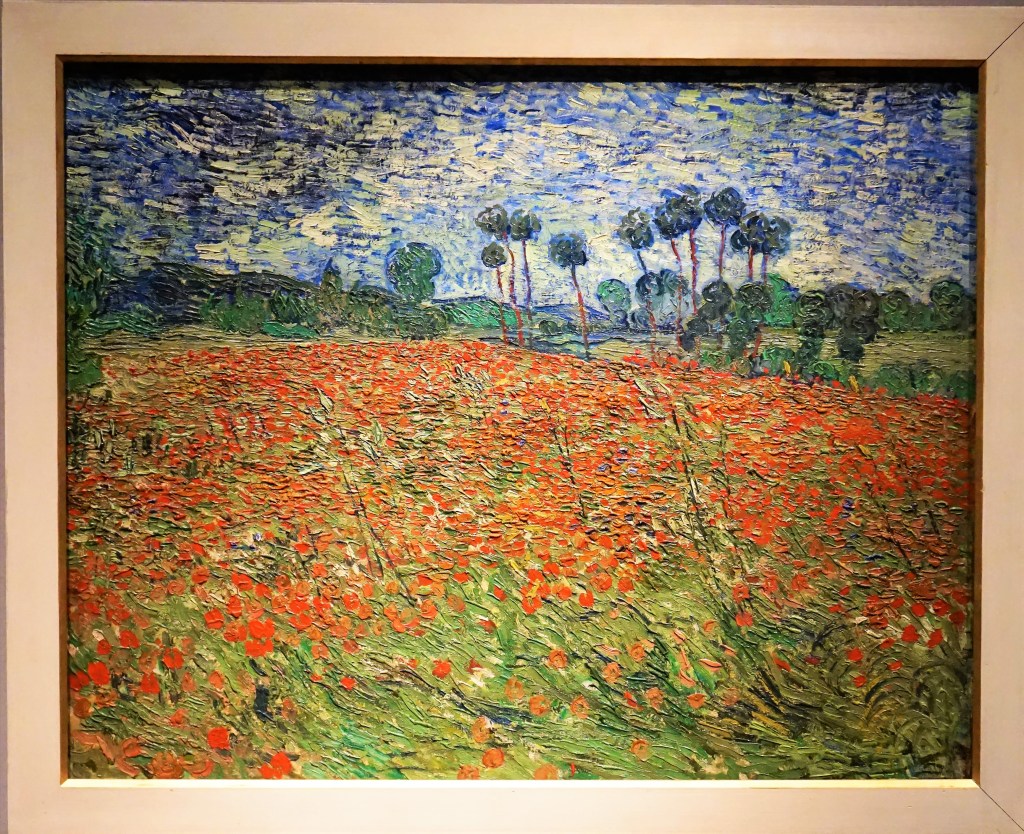
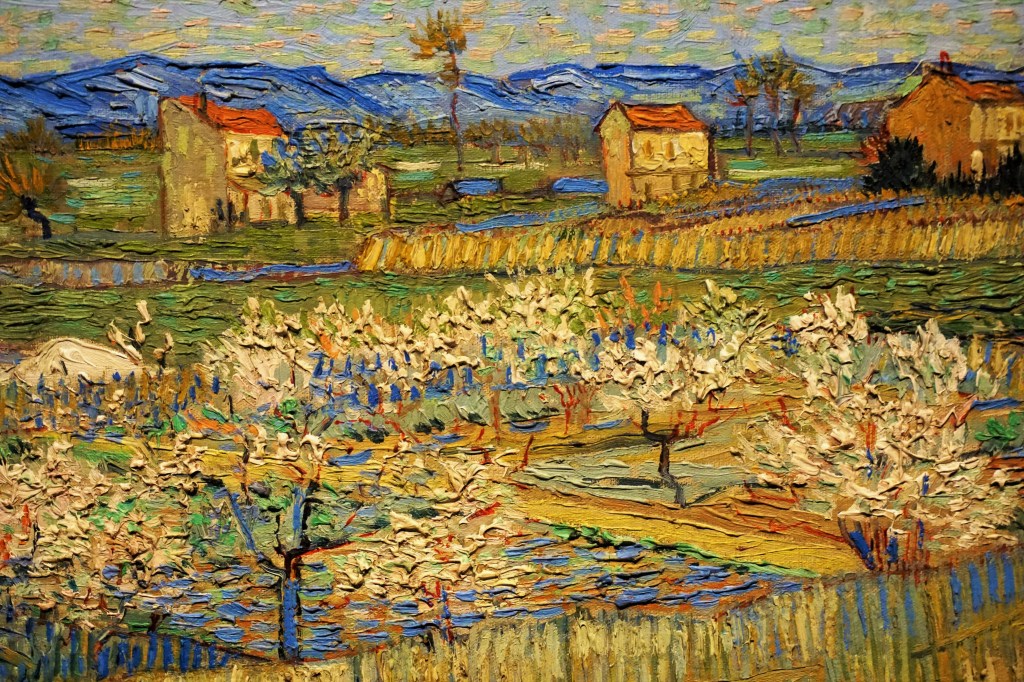
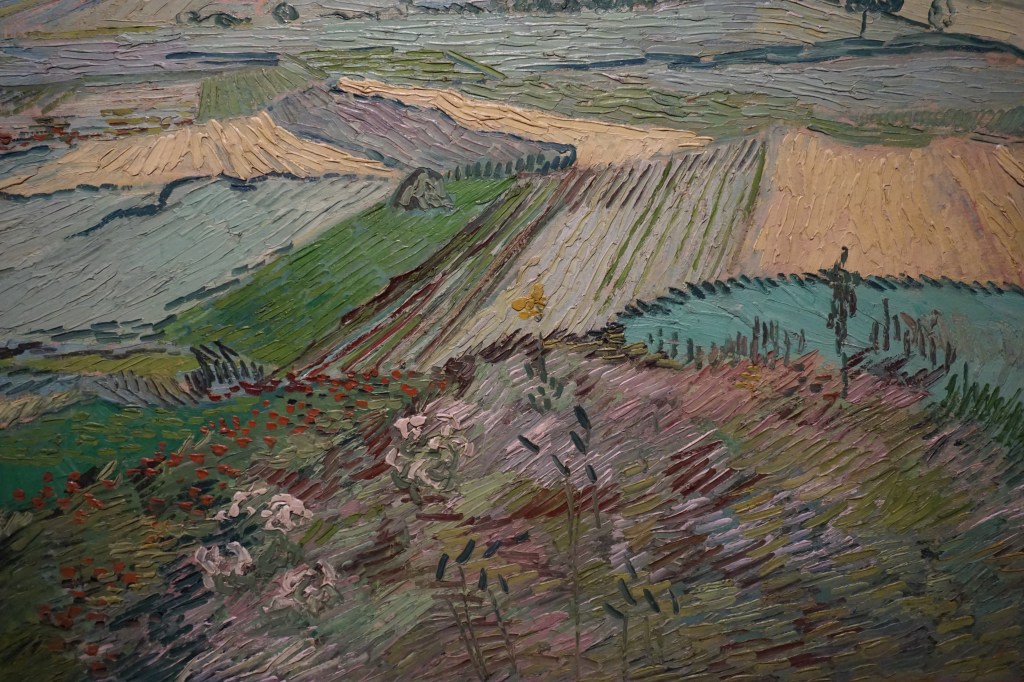
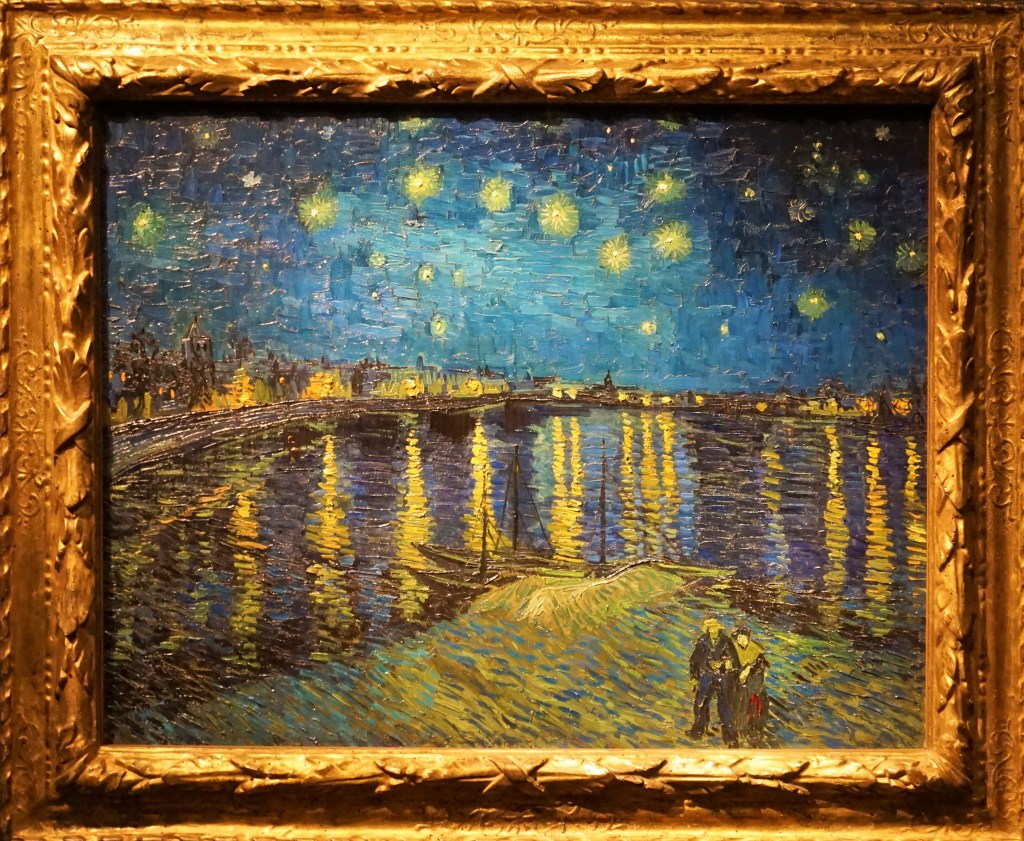
VAN GOGH OR NOT VAN GOGH? THAT IS THE QUESTION

November, 2022

The Uffizi Gallery, the Louvre, the Vatican Museums, the Peggy Guggenheim Museum, the Vatican, the Sistine Chapel, the Accademia Gallery, the Art Institute of Chicago, the Phoenix Art Museum, the Metropolitan Museum of Art, the Museum of Modern Art, the Guggenheim NYC, the Detroit Institute of Arts, the Barnes, the Rodin Museum, the Georgia O’Keefee Museum, the Philadelphia Museum of Art, the National Gallery, the Hirshhorn, Meijer Sculpture Gardens, and the University of Michigan Museum of Art (are there more?).We’ve been to art museums all over the world, and have had the good fortune to enjoy in-residence collections as well as special exhibitions dedicated to a single artist or movement/genre of art. We’ve been able to enjoy the latest, greatest craze of “immersive” art displays – to be surrounded by an ever-changing collage of an artist’s work through the eye of an ever-passing timeline.

Barbara has taught Brian so, so much about art and artists, and whether chasing after street art, rambling through outdoor sculpture gardens or spending a few hours in a museum it’s something we so enjoy together. Dig?

The Detroit Institute of Arts (DIA) holds the distinction of being the first public museum in the United States to purchase a painting by Vincent Van Gogh. It all started in 1922 when the museum purchased Self-Portrait, a painting that is still part of the museum’s permanent collection; therefore, it is only fitting that 100 years later DIA would produce a new exhibition showcasing 74 authentic Van Gogh. Van Gogh in America is “a retrospective of Van Gogh’s slow rise to fame in the United States and the incredible efforts by, first, the DIA, and then several other museums that would bring him to superstardom.”

It’s always curious to open up our mind to an artist’s metamorphosis – the impact of friends and the passage of time on their art, their innovation, and what happens when an artist steps away from their “style” and picks up another artist’s brush. Can we always tell who is the artist?

Following our thorough enjoyment of Van Gogh in America, we’ve decided to ask you, the reader of this blog: Van Gogh or Not Van Gogh? Please submit your answers on a 1×3 index card mailed to Jonathan “Hagrid” Swift, The Leaky Cauldron, 13 Diagon Alley, London, England, more simply through the blog’s comments section or any other damn way you want to contact us.

So don’t be shy…yeah you, over there in (fill in city or Country of choice) give it a shot. So what if you’re wrong…it’s not like there’s some trash talk blog for art to which we would attempt to humiliate you – right? Ah, you’re probably wrong more than half of the time anyway – so get on with it. Just no cheating.

#1
#2

Were Van Gogh and Gaugin lovers? Did he hang with Toulouse-Latrec at Moulin Rouge?

#3
#4
#5
#6
#7

Johnny Depp, Ronnie Wood, Tony Bennett, Lucy Lui, Joni Mitchell and Jim Carrey are incredibly talented painters who have sold paintings commercially.

#8
#9
#10

Confused yet?

#11
#12
#13

Dr. Seuss, Norman Rockwell, and Maxfield Parrish were famous illustrators who also painted.

#14
#15
(PS – Does The Signature “Vincent” In The Corner Help At All? PPS – Vincent Price Was A Renowned Artist)
#16
Pointillism?

Monet? Manet? Seurat? Van Gogh?

#17

Did you know that Ulysses S. Grant, Dwight Eisenhower, Jimmy Carter, and George W. Bush love(d) to paint?

#18
#19

Did you know Henri de Toulouse-Lautrec earned a living as a poster artist long before his paintings became famous? Robert Crumb is another famous poster artist. He is best known as a graphic cartoonist and musician.

#20
#21
#22
#23
#24
#25
#26

Barbara and Brian

It’s not what you look at that matters, it’s what you see.“ – Henry David Thoreau

ANN ARBOR

May – November, 2022

On May 23 we pulled into our campground in Grass Lake, Michigan. After many many years of ownership, Hideaway RV Park had recently been sold to a young couple, who have taken a pretty decent and beautiful campground and through some very thoughtful plans have made major improvements with even more improvements on the horizon. The price is right, and the location is perfect. Grass Lake is 20 miles or so from Ann Arbor, and a short 5 minutes from Interstate Highway 94. If planning to be camping in the neighborhood we highly recommend bypassing Kalamazoo, Battle Creek, and Jackson and spending some time here. Hideaway RV Park was a perfect place for us as we anxiously began the next part of this journey started so long ago.

We are in active pursuit of attaining our goals – spending as much time with our grandchildren as they and their parents can stand, and becoming part of the University of Michigan community. We are so very close…

So as we are traveling around the region looking at condominiums and figuring out where we want to live, visiting family in East Grand Rapids, Michigan and Yellow Springs, Ohio and Gettysburg, PA we just had to have a few more things to keep us busy.

Matthaei Botanical Gardens and Nichols Arboretum will forever be The Arb to students at the University of Michigan and to the Ann Arbor Community.

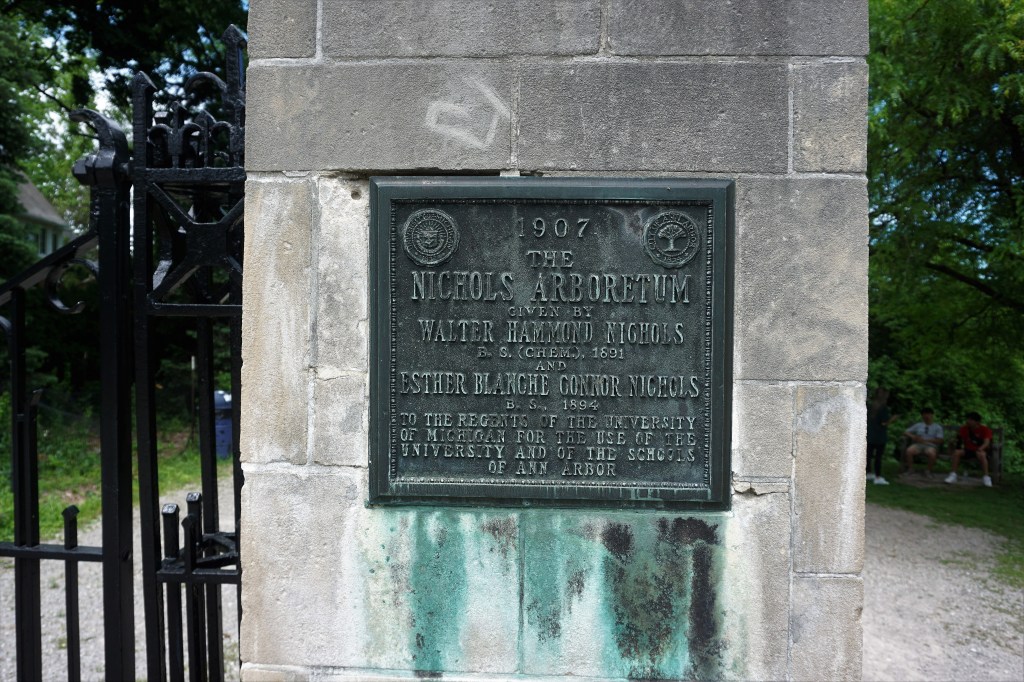
80 acres of property just a few blocks from the University of Michigan campus, between Geddes Road and the Huron River, was given to the University by Walter and Ester Nichols in 1907. The University established a botanical garden and arboretum on the property, which was named after the benefactors – The Nichols Arboretum. Today, more than 100 years later, The Arb has grown to more than 700 acres of gardens, research areas, hiking trails, green space(s), and natural preserves.

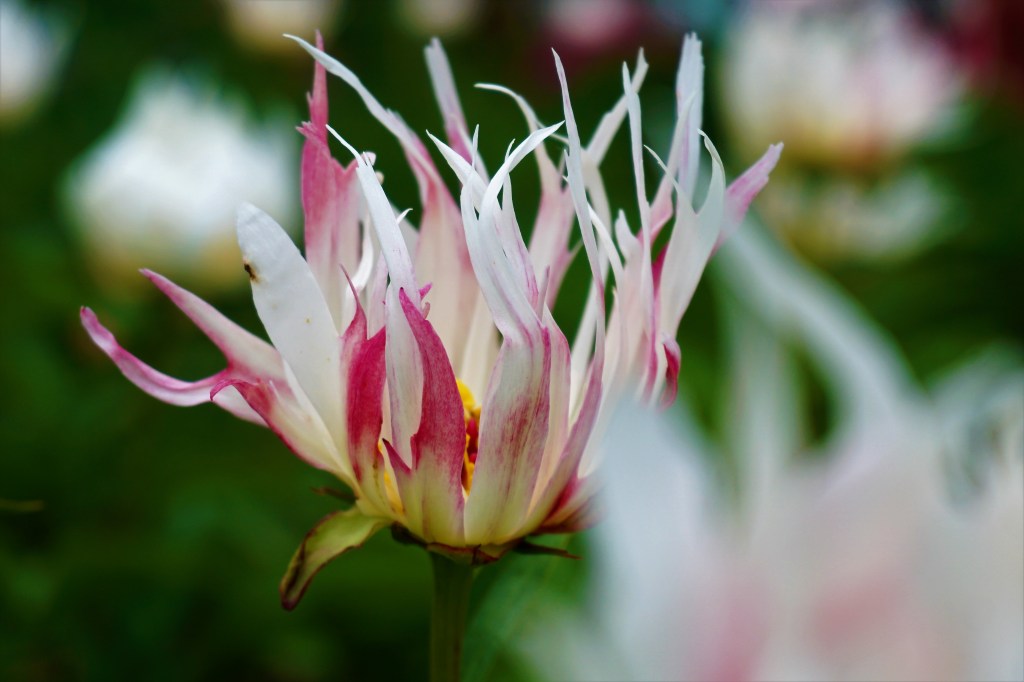
At over 800 species and over 10,000 flowers The Arb is home to one of the world’s largest herbaceous peony gardens. In 1922 Dr. W. E. Upjohn donated the first plants to the garden – 2022 marks the 100th year bloom! We couldn’t help but join the celebration. Pictures alone do not do justice to the magnificence of the blooms and the garden.

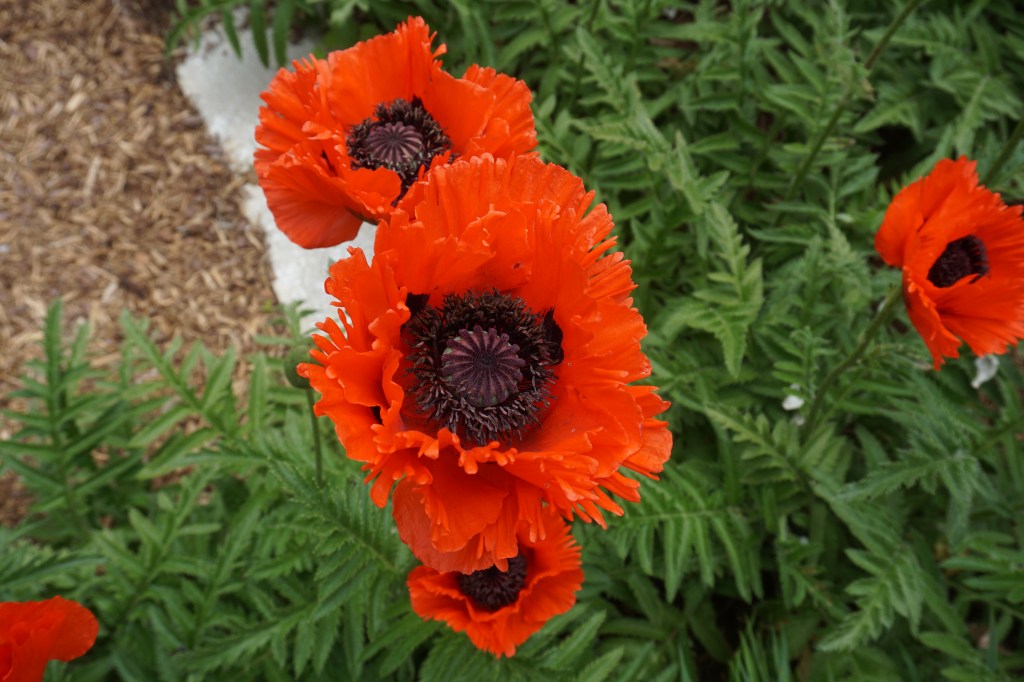
Great Scarlett Poppies
Clematis Hybrid
Rhododendron
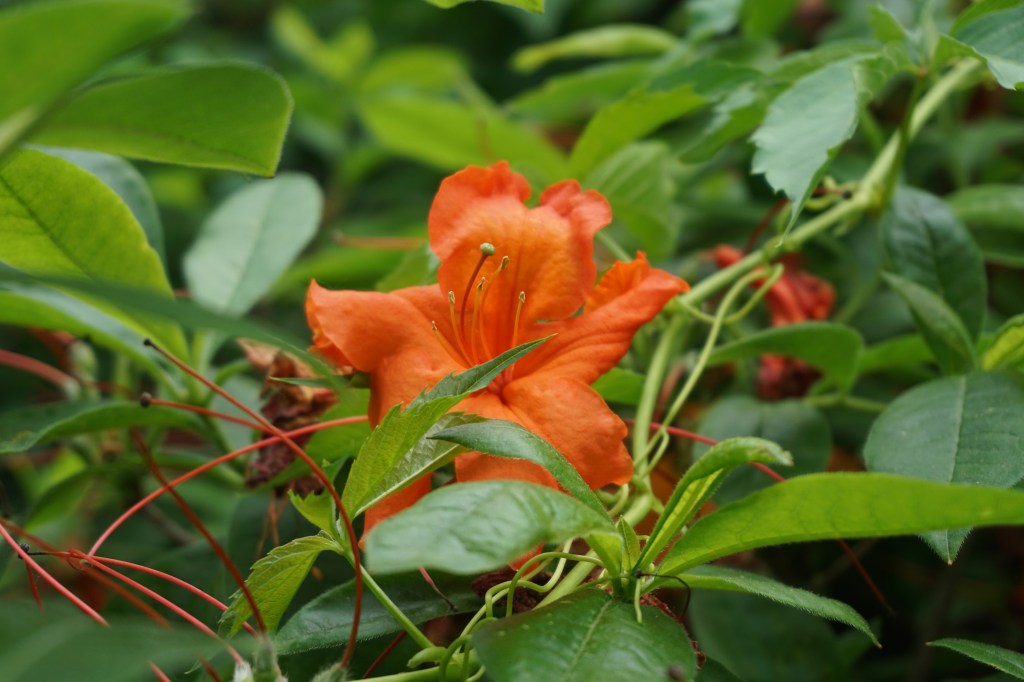
Rhododendron Flame Azalea
Mountain Camellia

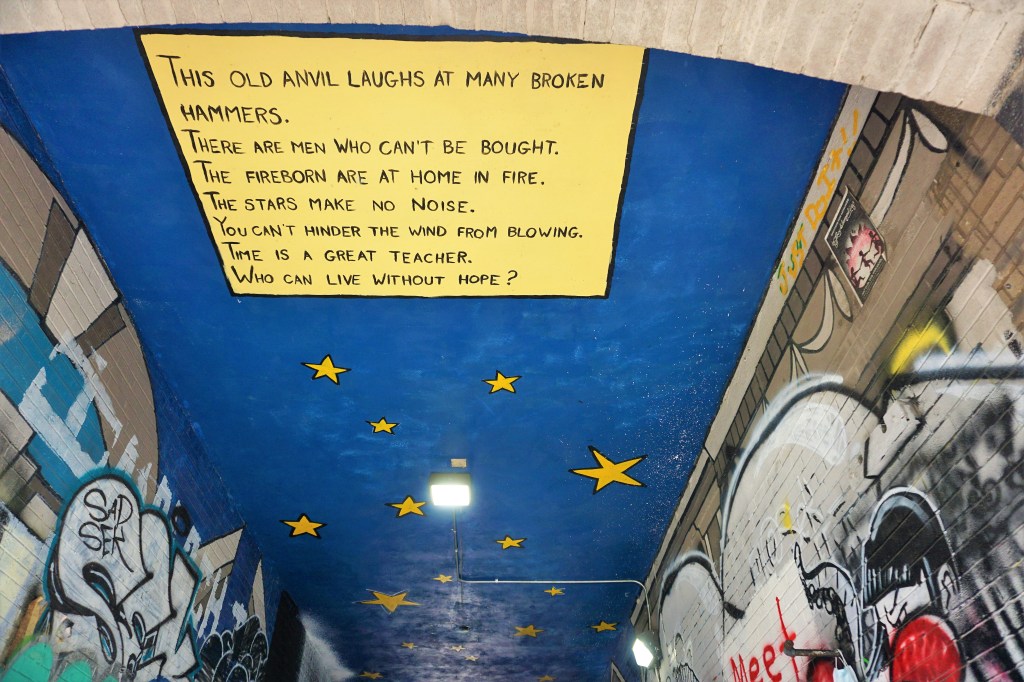
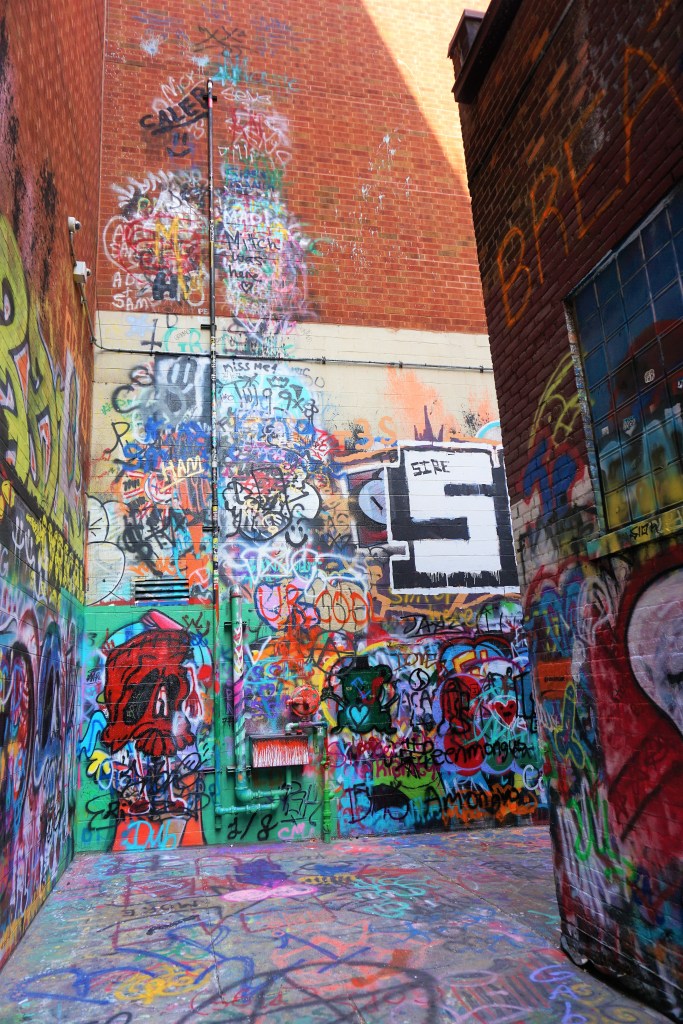
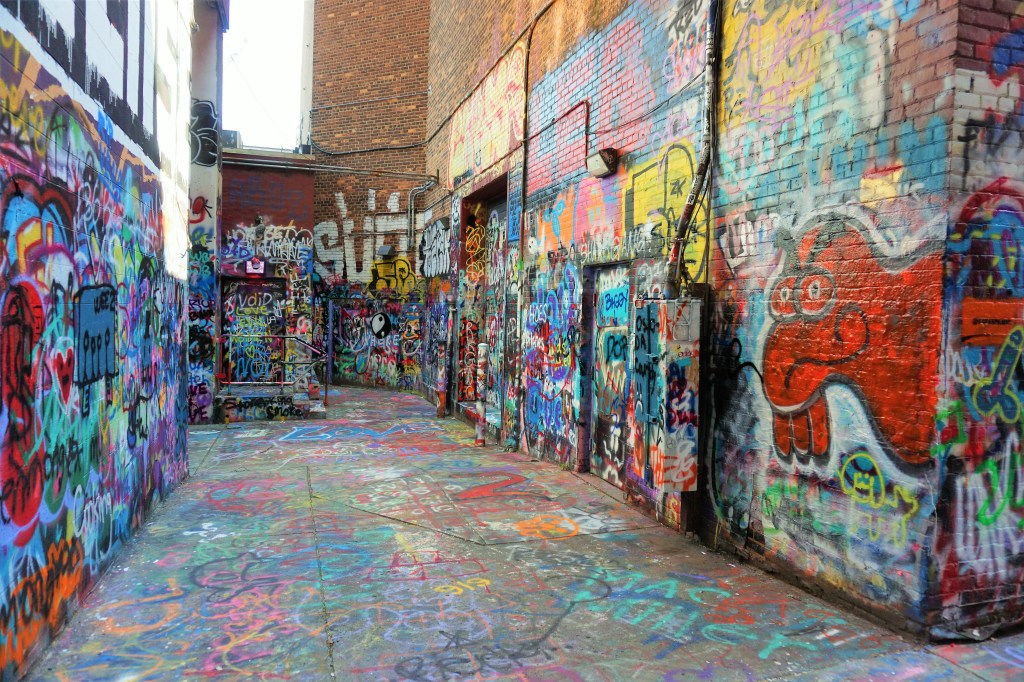
It’s pretty easy to walk right past an alley covered in graffiti, but take a few minutes and stroll through this amazing outdoor art exhibition tucked away off of East Liberty Street. In 1999 local artist Katherine Cost painted the alley – within a few weeks her original work was defaced by local graffiti artists and entirely painted over within a few months. Here we are more than 20 years later and the alley has become an ever-evolving place of graffiti art.

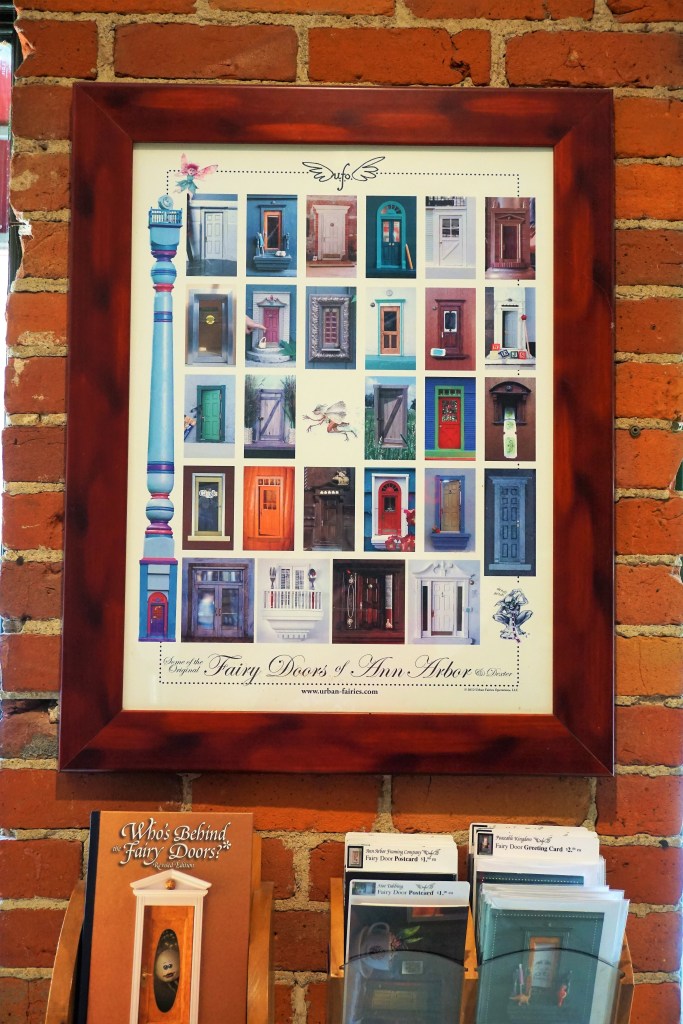
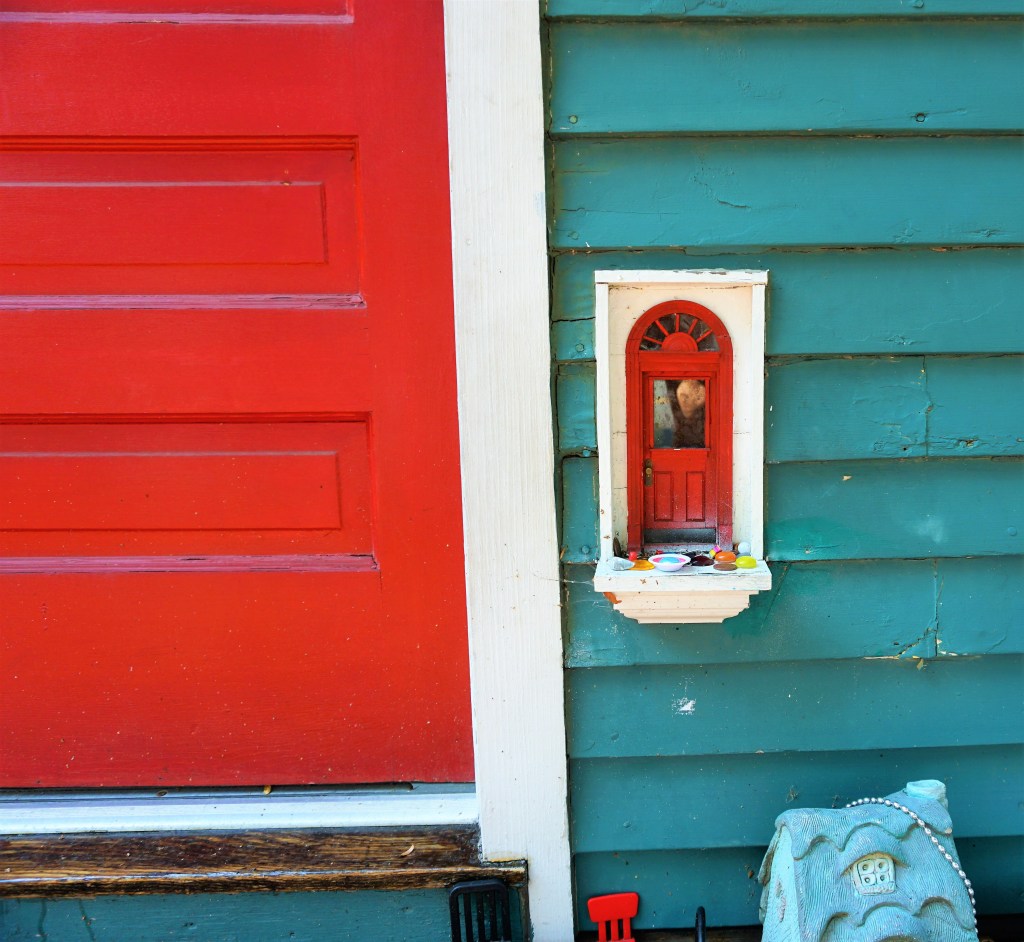
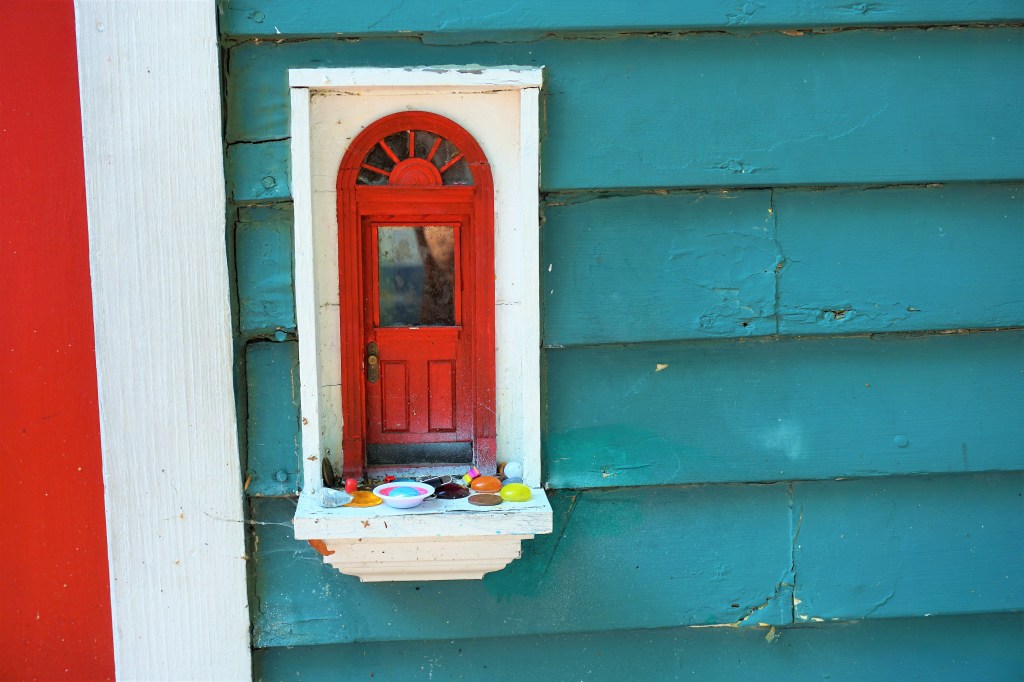
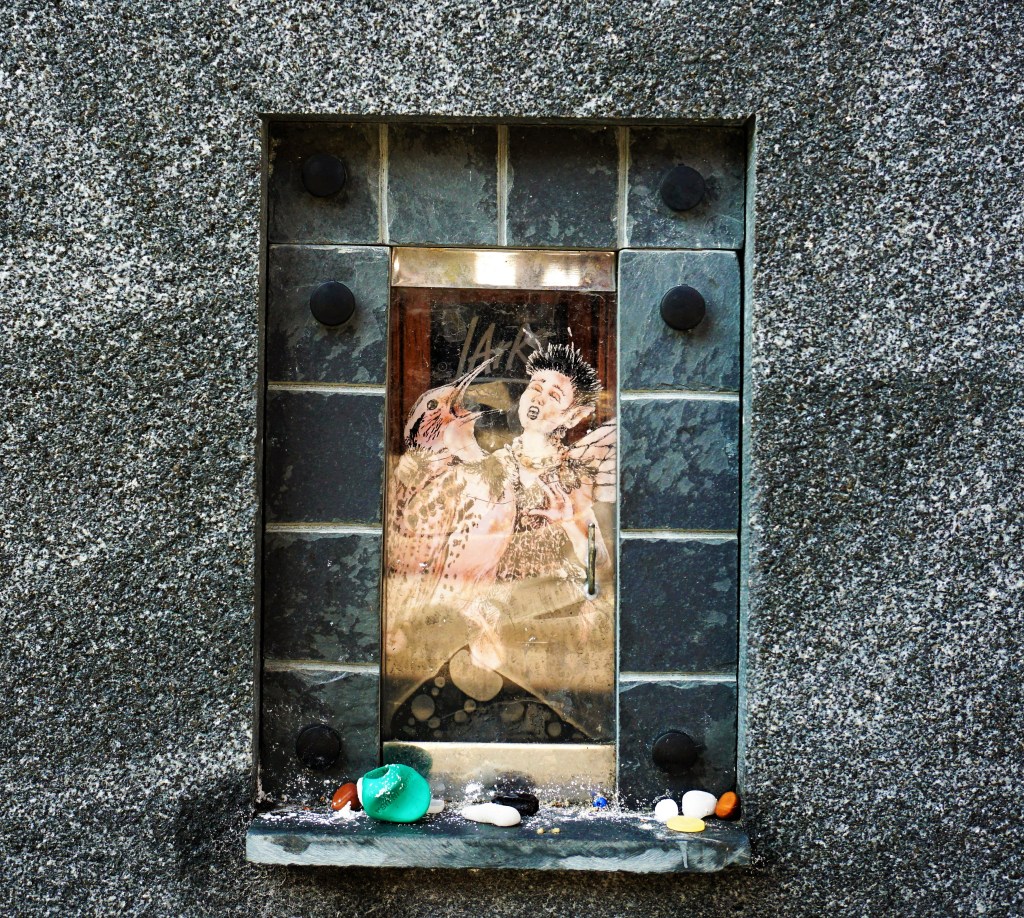
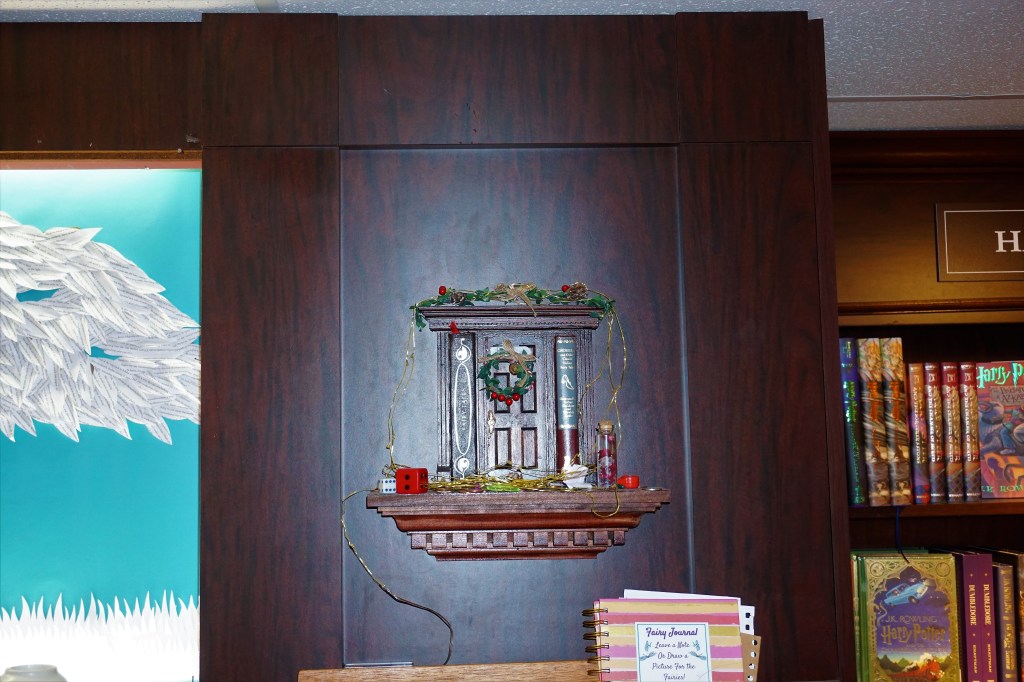
The Fairy Doors of Ann Arbor are a series of small doors throughout downtown and the neighboring community. As the story goes: “In 1993, while Jonathan and Kathleen Wright were renovating their century-old home, their young daughters discovered itty, bitty, six-inch doors scattered throughout the house. When opened, the doors revealed tiny railings inside that led to other miniature doors. There were even windows springing up, where lights inside would magically turn on and off. Subsequently, several other doors were discovered in the fireplace surround and two in the kitchen.”

On April 7, 2005, the first Fairy Door was seen in public, found on the exterior of Sweetwaters Coffee and Tea. Since then, ten (or more?) have shown up; seven of the original “public” doors still exist.

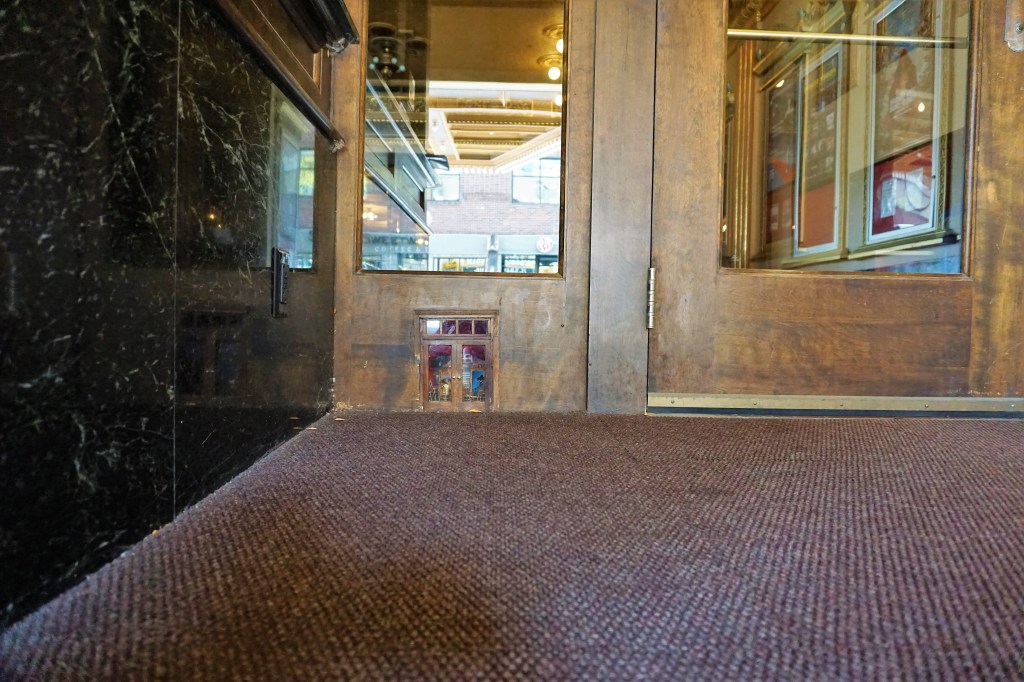
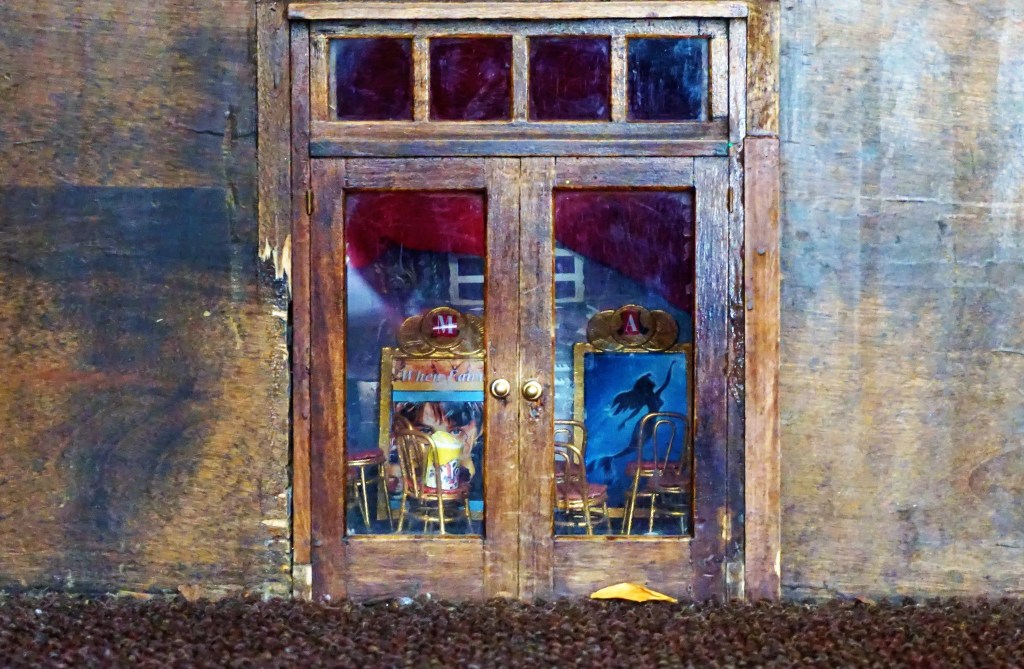
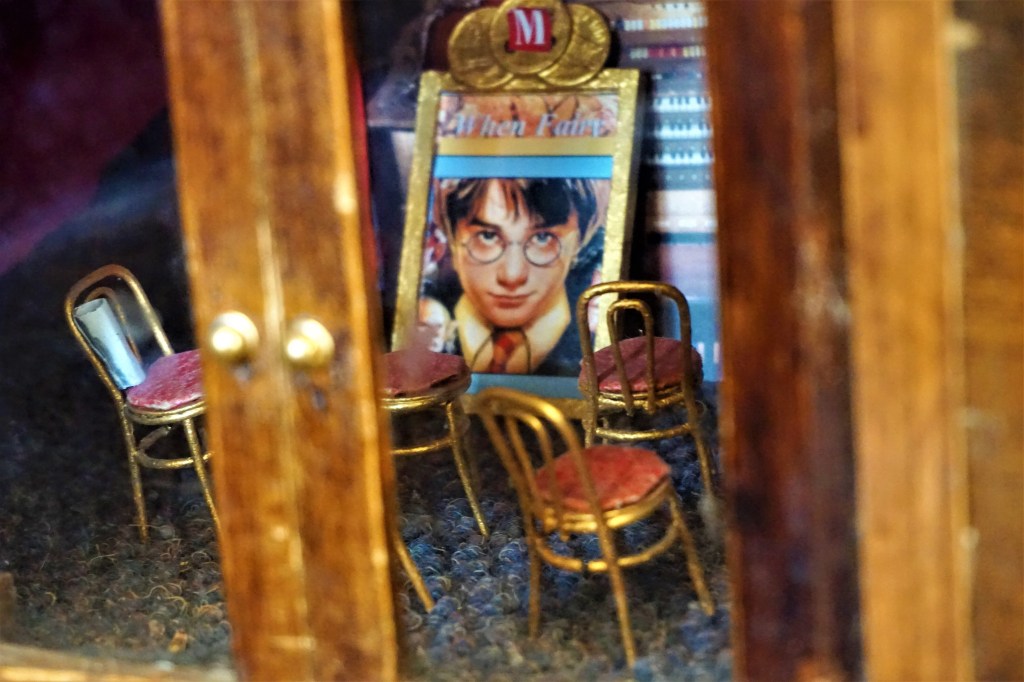
The first Fairy Door on our list was found in the effacement of the outdoor foyer of the Michigan Theater.

And no public library is complete without its own Fairy Door.

We’re not really sure if this homestead is a Fairy Door in the strictest sense.

Fairy Door located at the Red Shoes home decorating store – it is meant to be an exact replica of the front door.

The Ark – music venue Fairy Door.

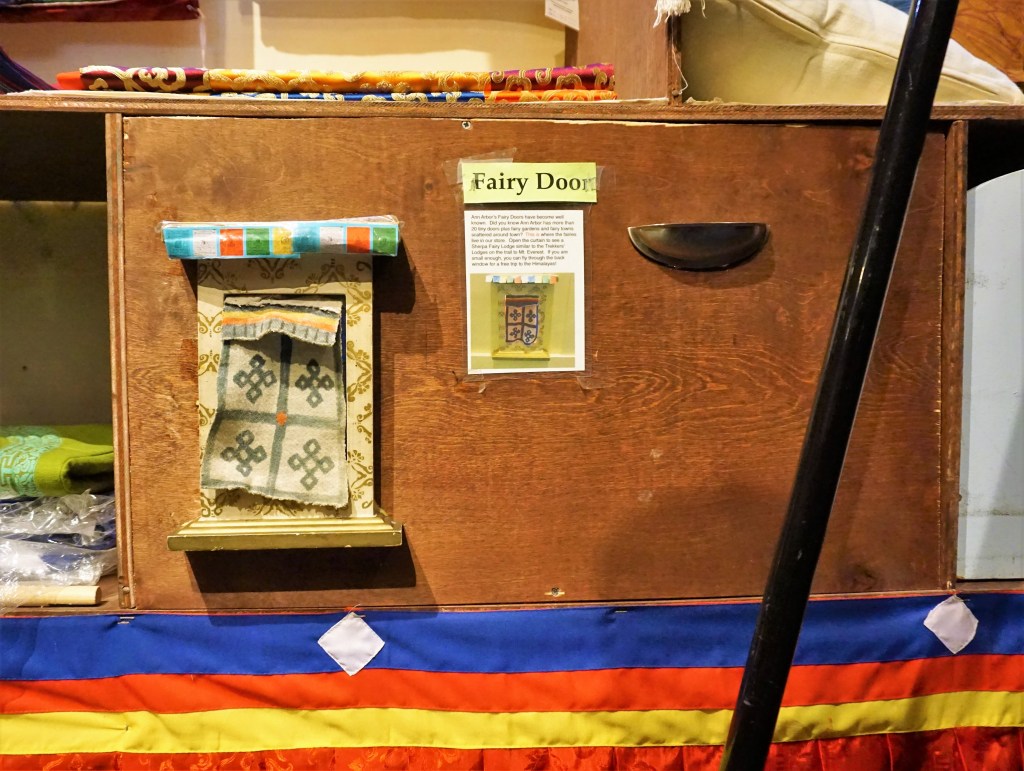
At the Himalayan Bazaar…

We were in pursuit of one of the original Fairy Doors located at Peaceable Kingdom, but due to covid restrictions the store was open only by appointment. However, we passed by another store in process of renovation, and we bumped across a window display that caught our eye. We started looking around outside in the hopes of finding a Fairy Door. The shop’s door opened, the store owner stepped out and asked if we wanted to take a look around inside. Turns out that his parents owned the retail store at this address, which closed as a victim of covid. He was renovating the space into what he hoped would be a uniquely themed bar and grill.

Our generous host provided 2 surprises for us. Jonathan Wright was a friend of his parents and he believed that this was one of the original Fairy Doors…

…and during renovation he discovered a hidden mural and sign describing the artwork.

Fairy Door at Sweetwater’s Coffee Shop. Check out the detail in this one, which includes a mini poster of the Ann Arbor Fairy Doors poster next to the door itself.

Tough door to capture in a picture as it’s in a corner of a window display at Shinola Store at Main and Liberty. The employee who showed us the display made sure we knew he believed!

Fairy Window at Found Gallery (across the street from Zingerman’s in Kerrytown). We were told that the fairies are home when the lights are on!

Found Gallery – fairy mailbox, tools and transportation device.

Fairy Door at Black Slate Creamery…Barbara thought the ice cream was very good.

Fairy Door at Nicola’s Bookstore.

We were unable to see the Fairy Door located at Mott’s Childrens Hospital because of covid restrictions.

Part of any adventure is what we believe to be a treasure hunt, and finding Fairy Doors in Ann Arbor was a blast. It gave us a chance to talk with any number of believers, and, when we would ask for help to find a Door, to see people’s faces light up in their own revelry about Fairies.

Atlas Obscura gave us three Ann Arbor additional oddities to find.

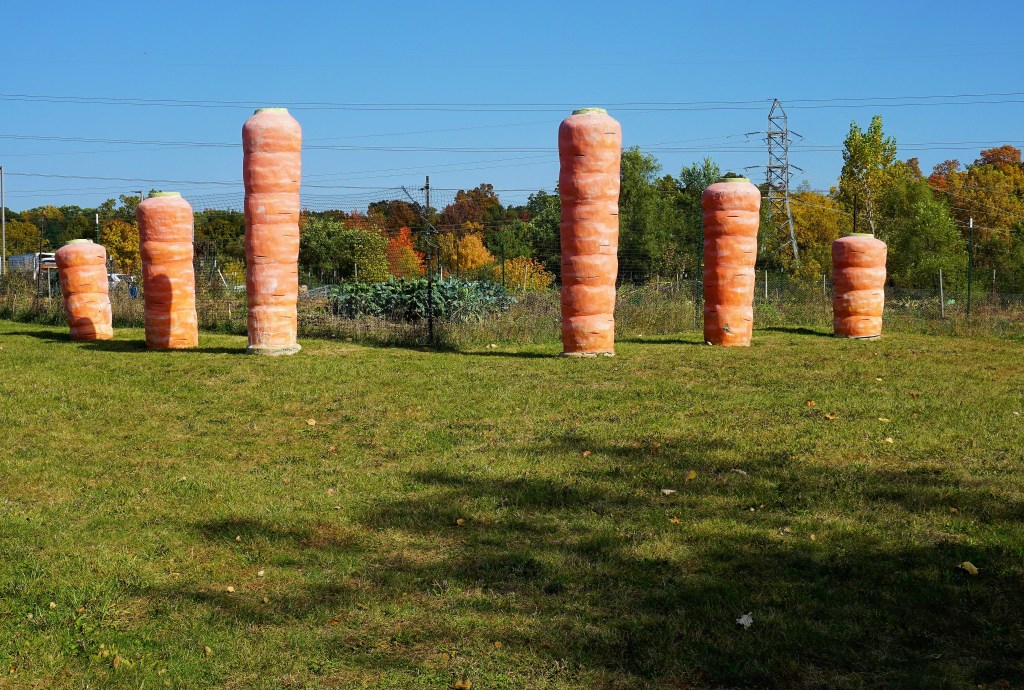
“Food Gatherers was Michigan’s first food rescue program and was founded by Zingerman’s Delicatessen in 1988. The organization rounds up perfectly good food from restaurants, food retailers, and food wholesalers that would otherwise go to waste. The food then goes to low-income adults and children who may not otherwise have access to nutritious meals or snacks. Food Gatherers also runs a food bank, serves food to those in need at its community kitchen, and works with local farmers.”

The carrot is the organization’s symbol.

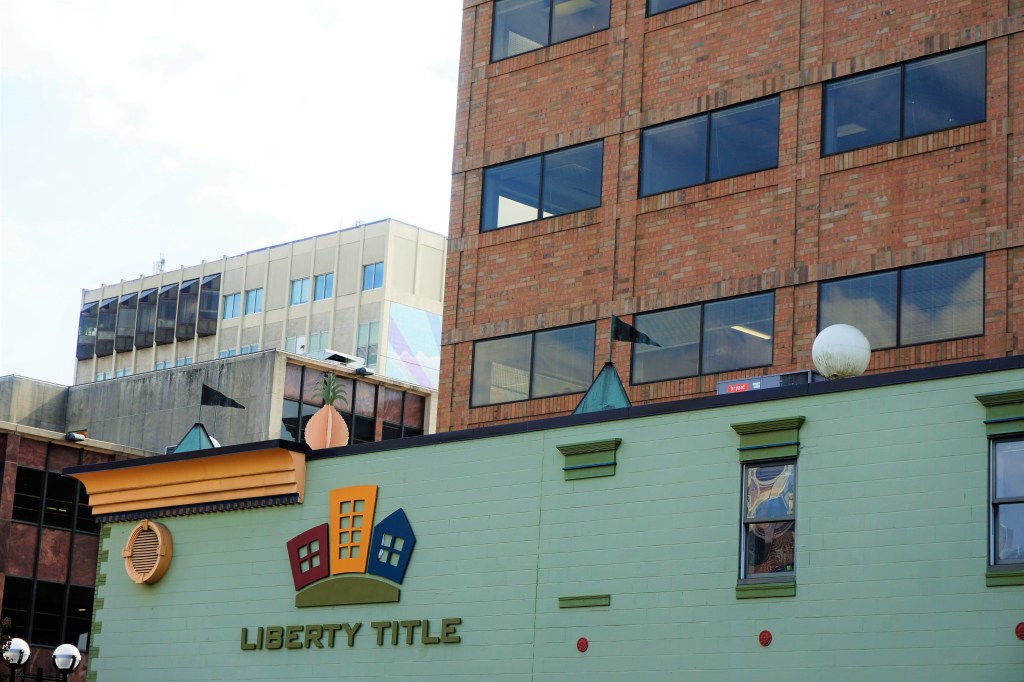
“Pineapples were a symbol of hospitality in early America.” The owners of the Liberty Title building have said they had this welcoming spirit in mind when they placed a metal pineapple on the roof of their building to welcome people to Ann Arbor.” Any reason for doubt? 

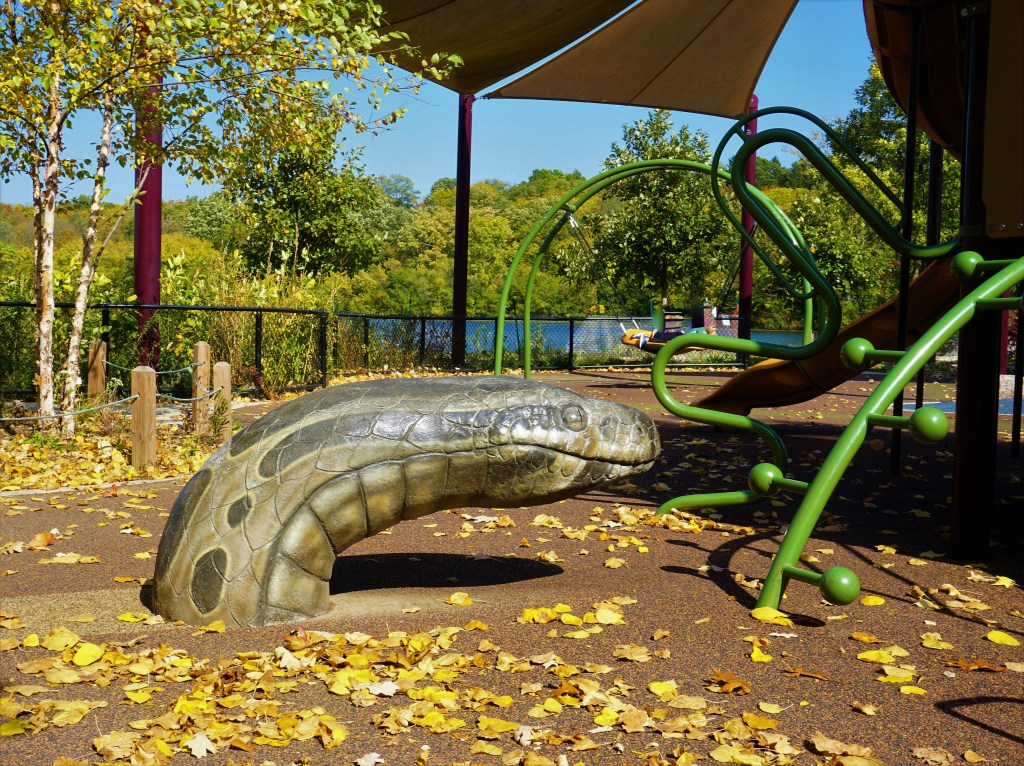
“Gallup Park is part of a network of parks known as the ‘green corridor’. These parks preserve the wetlands and other ecosystems along the banks of the Huron River. To encourage visitors’ curiosity and appreciation for the natural environment, oversized statues of local wildlife have been placed throughout the park. Many of the animal sculptures can be found around the main play area, while others have been placed at spots along the paved walking trails that run along both sides of the river.”

Makes for a superior scavenger hunt for youngsters and families!

Thoreau’s quote has been our guide throughout this adventure started so long ago: “It’s not what you look at that matters, it’s what you see.” And we find that if you slow down just a bit (or bunches for some of us) you see quite a lot more. Turning around after taking the photograph of the Liberty Title pineapple we found a pretty amazing mural.

After closing on our condo on June 15, 2022 we moved into our new home on July 22, 2022. There were some renovations needed, painting to suit our taste and the agony of, after at least 25 years, of buying furniture, a TV, lamps and lighting fixtures, and re-equipping a kitchen. There were the assorted other mundane things like change of address, updating our wills, and establishing accounts with electric and natural gas companies. And, add to all of that the delay in delivery of furniture due to supply chain and manufacturing issues. As of November 30 we’re happy to report that all of our furniture has finally been delivered.

We applied and were hired to be part of the University of Michigan Department of Athletics Event Staff Team. Brian was hired pretty early in the summer, but then Barbara wondered what she was going to do on the 8 football Saturdays on this year’s Wolverines’ home schedule. She applied, and the rest is history. Barbara had the honor (sic) of being assigned as a ticket taker for the student gate, and then served as an usher in the Big House. Brian started out as a ticket taker as well, but was asked if he’d like to become a shuttle cart driver taking fans from the parking areas to the stadium, and then after the game shuttling players and their family from the stadium to Schembechler Hall. And, oh, by the way, once the game started he was assigned to be on the field. A hard job, but someone had to do it. Working the football games requires 800 event staff that agree to work all of the home games. Other sports are by our choice only. In addition to football, we’ve worked a high school football jamboree at the Big House, a high school men’s and women’s wrestling meet, men’s soccer, ice hockey, and men’s and women’s basketball. There are stories to be told (just ask Barbara about her student gate football experiences!) – we’ve had an absolutely fabulous time and look forward to continuing enjoying our time as event staff team members. Go Blue!

Barbara and Brian

It’s not what you look at that matters, it’s what you see.“ – Henry David Thoreau

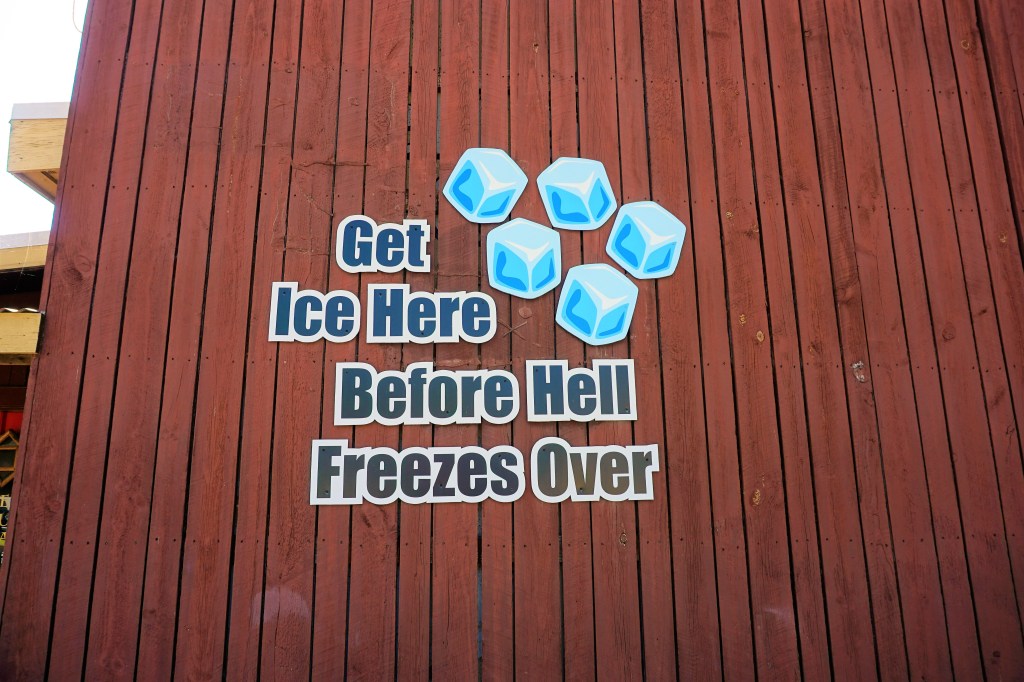
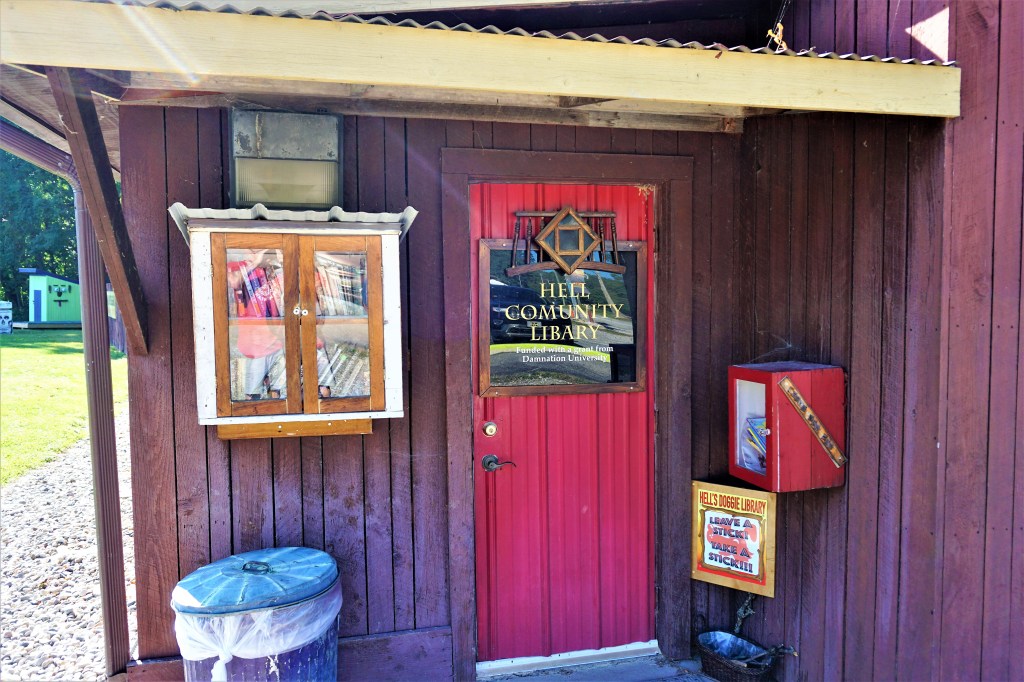
And as an added bonus…When in southeastern Michigan being told to go to hell may not be a bad thing. As a matter of fact, for $100 anyone can become the mayor for a day of this small tourist trap town. 72 souls strong, the town has no municipal building, no city hall or utilities building. It has a tchotchke/ice cream store and miniature golf course, a bar and grill…and little else.

Welcome To Hell!

That’s Ice Screams!

VISIT GRAND RAPIDS? YES!

May + August 2022

We’ve closed on a condo in an over-55 community in South Lyon, Michigan, and are actively pursuing our goals of being closer to family and working sporting events for the University of Michigan Athletic Department. We took ownership in June, but some renovations and painting as well as furniture purchasing (full-time RVers are without), and delivery pushed out our making this our home to July. In the meantime, Graham and family settled into their new home in East Grand Rapids, Michigan. On August 1, 2022 Porter James became our 13th grandchild. If you’re keeping count we have 7 granddaughters, 6 grandsons and 1 great grandson (rather than great granny, Barbara prefers to be called Granny the Great!). More than likely, they’ll be more great grandchildren – we doubt we’ll be blessed with any more grandchildren.

Graham and Leigh can work from home and chose to re-locate to be closer to family. East Grand Rapids is an upper middle-class community with excellent schools, toney down-town, lots of community activities for young families, easy access to the Lake Michigan shore and beach activities, and the beautiful forests just a short distance north.

But, what about Grand Rapids itself?

For thousands of years succeeding cultures of indigenous peoples, including the Hopewell culture, Ottawa River and Prairie Indians occupied the area now known as Grand Rapids. By the 16th century the Ottawa had formed thriving villages along the Grand River. At the beginning of the 19th century French fur trader trading posts along the river were flourishing, which then brought a flow of northern European immigration to the area. These settlers and eventually founders of Grand Rapids were mostly Scandinavian, Dutch and German – hard working and conservatively religious. By 1834 the county’s boundaries had been formally established, the City was incorporated in 1838, missionaries became pastors as churches were built, and the population was flourishing.

Today Grand Rapids is the second largest city in Michigan with a population, according to the 2020 census, of 198,900. It is known as the furniture city – home to major US companies manufacturing office furniture. Amway and Meijer, as well as Bissel and Hush Puppies have their corporate headquarters in Grand Rapids.

We found the city to be one of the most welcoming places we’ve encountered. There is a civic pride evident. The downtown is clean, feels safe, has wonderful restaurants, an active cultural scene, and wide variety of events for the public. There’s always plenty going!! While staying in Turkeyville, Monroe, Michigan 4-5 years ago we visited Meijer Gardens and enjoyed artists playing at JazzFest.

With help from our pal, Atlas Obscura, let’s see what we found this time around…

Standing in the middle of a field the former Steelcase Pyramid looks like something built by a robotic pharaoh from the future. Steelcase, a top manufacturer of high-design office furniture, built the unique building in 1989 to act as a research and development center. Above ground, the pyramid is seven stories tall of mostly office space, as well as a rumored fancy penthouse on the sixth floor. Beneath the above-ground pyramid are massive sub-levels built to accommodate workshops and testing labs, where new furniture and materials could be manufactured and stress-tested. The building was, supposedly, equipped with huge freezers to see how cold would affect their product, and sound-testing rooms with an adjustable ceiling that could alter the acoustics.

We’ll never know any realities for this odd structure since Steelcase had to move out in 2010. Switch.com has recently purchased the site, and as of today construction is underway to build the largest data center east of the Mississippi.

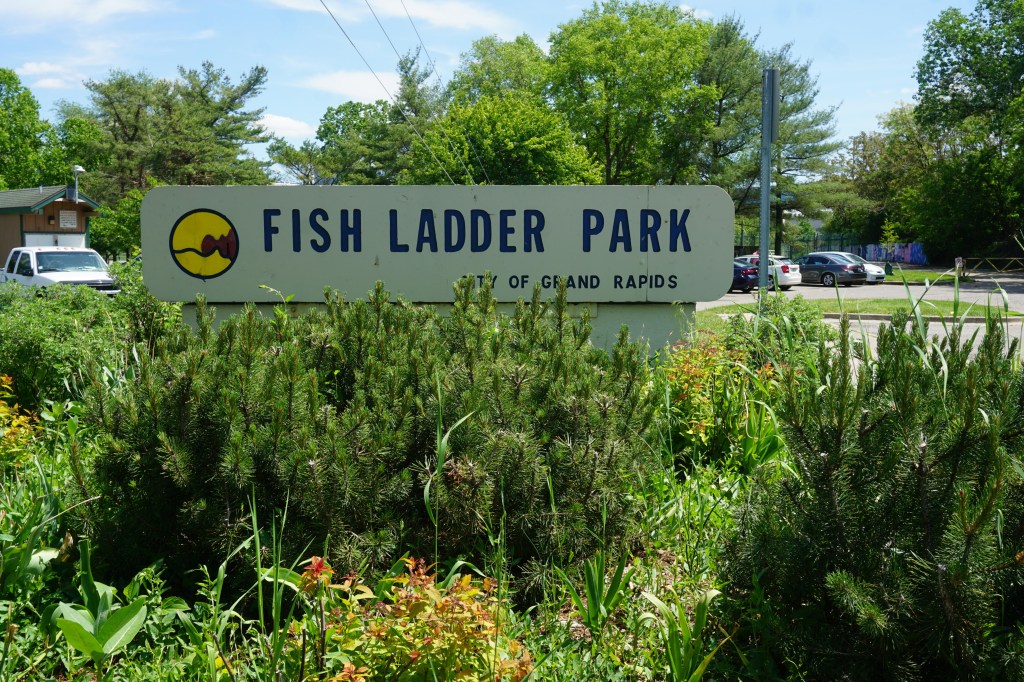
With the construction of the 6th Street dam on the Grand River the migratory population of salmon, steelhead, and even carp were suddenly unable to undertake their yearly upstream journey. The concrete fish ladder at Fish Ladder Park was created to give the swimmers a leg up and provides visitors with a chance to see the leaping fish in action.

No Leaping Fish Today

OK-let’s give everyone an intro to something a bit far-out and if interested there’s lots more to explore on google…

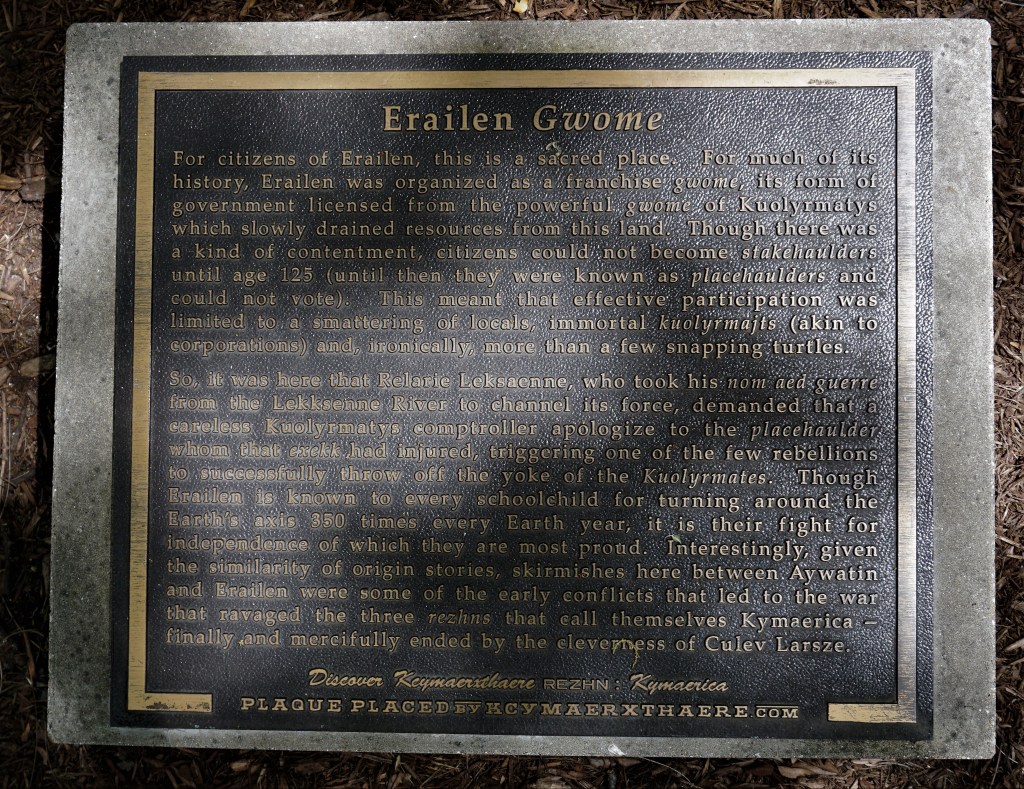
According to Atlas Obscura Kcymaerxthaere is a world-wide art project created by Eames Demetrios. It is a series of plaques and other markers honoring events that have taken place in a parallel universe that, according to Demetrios, “co-exists to some degree with ours.” Most of these installations are bronze or stone plaques inscribed with stories but some are larger, even entire buildings. As of 2021, there are more than 140 sites spread across six continents and 30 countries…a few of these installations are in Grand Rapids…

Like the plaque for Erailen Gwome…

…and waiting for the Grwost…

Walk along the banks of the Grand River and there are any number of wonderful statues.

Statute Honoring The Chief Of The Ottawa – The First True Settlers Of Grand Rapids

Or while wandering around downtown take in some wonderful murals, statues and street art…

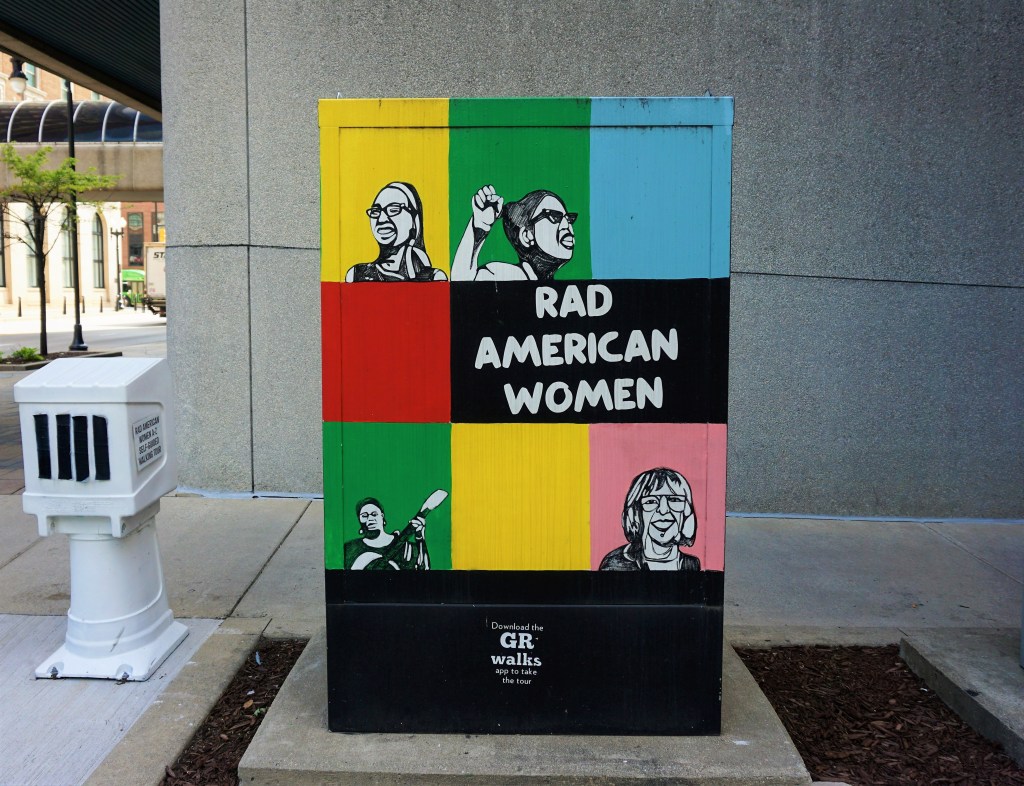
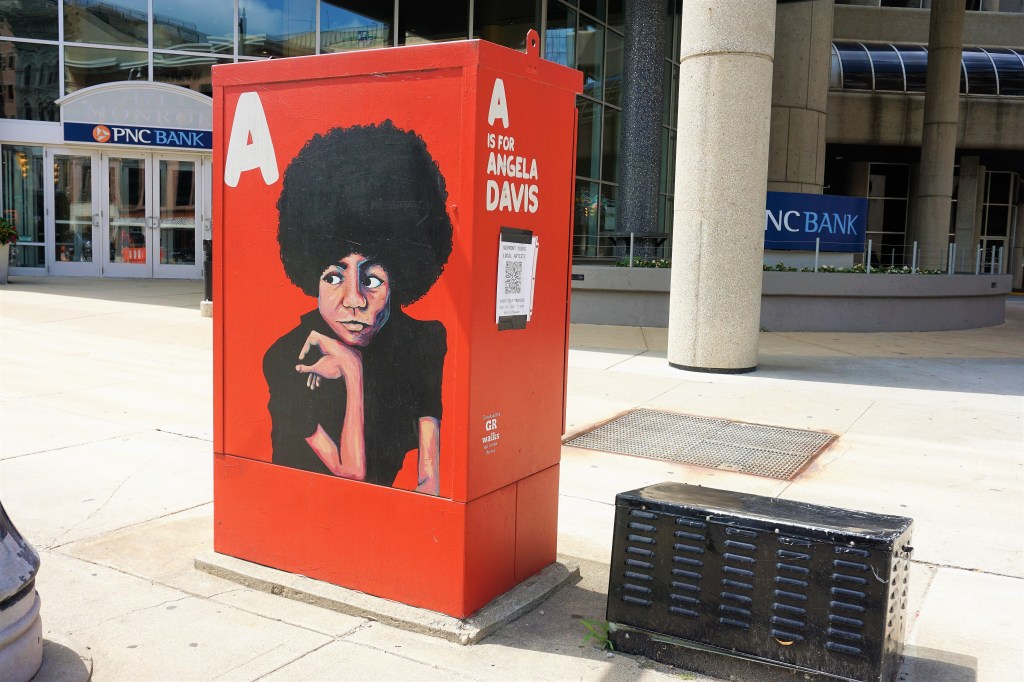
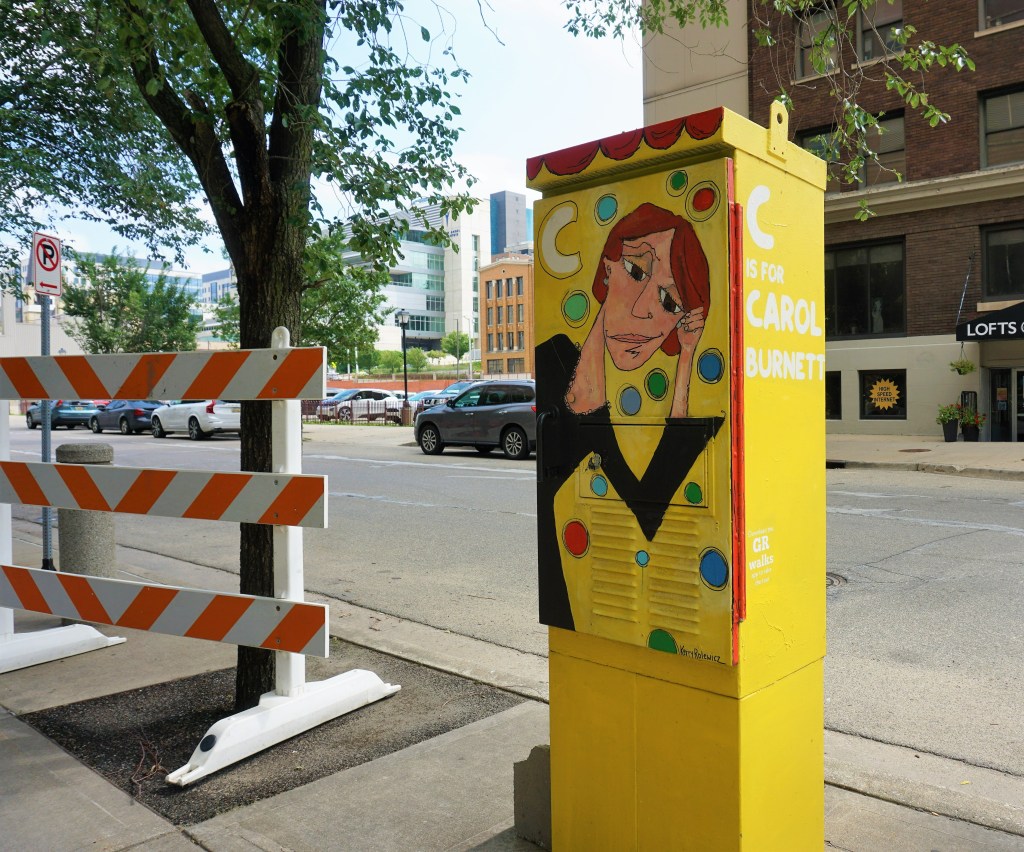
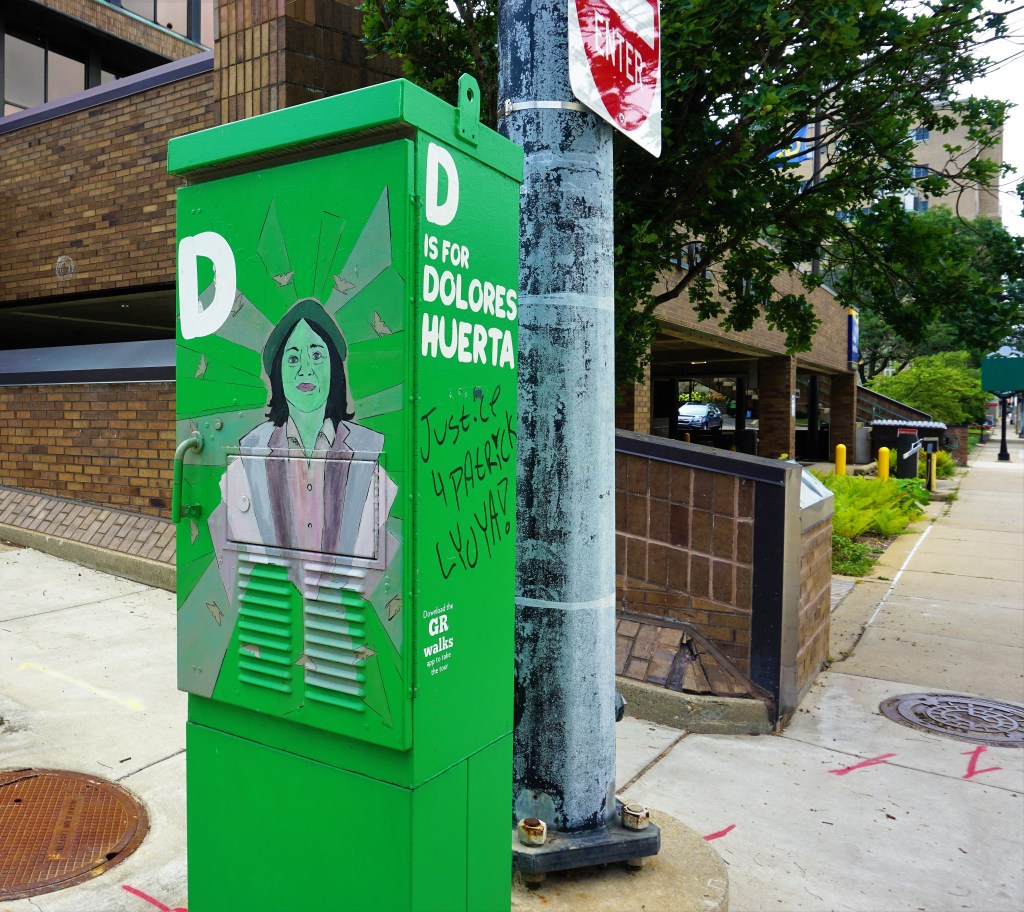
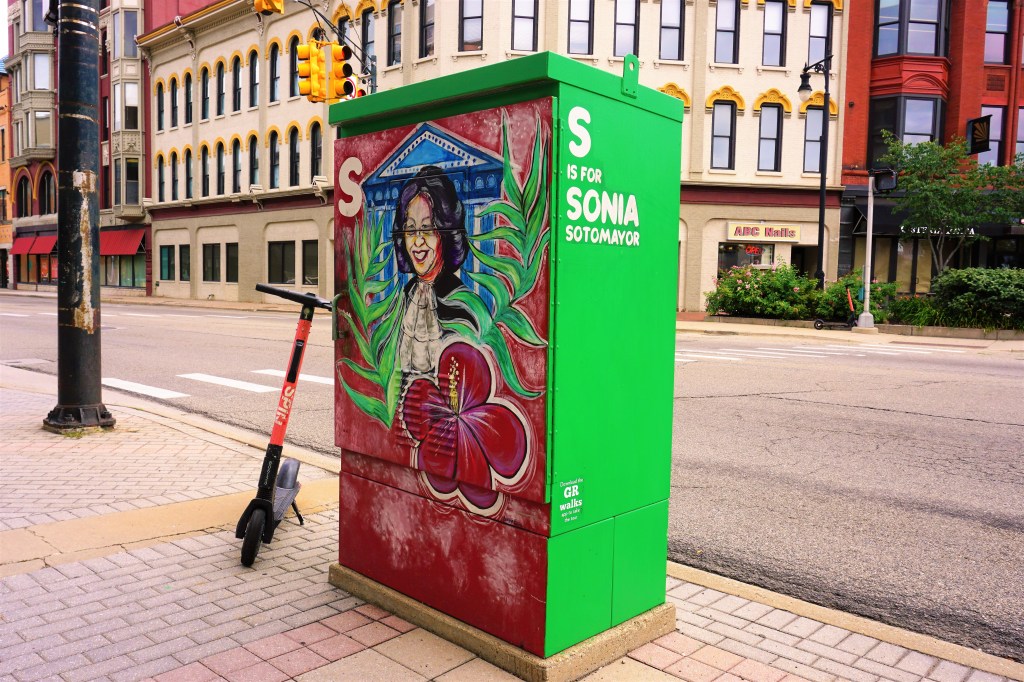
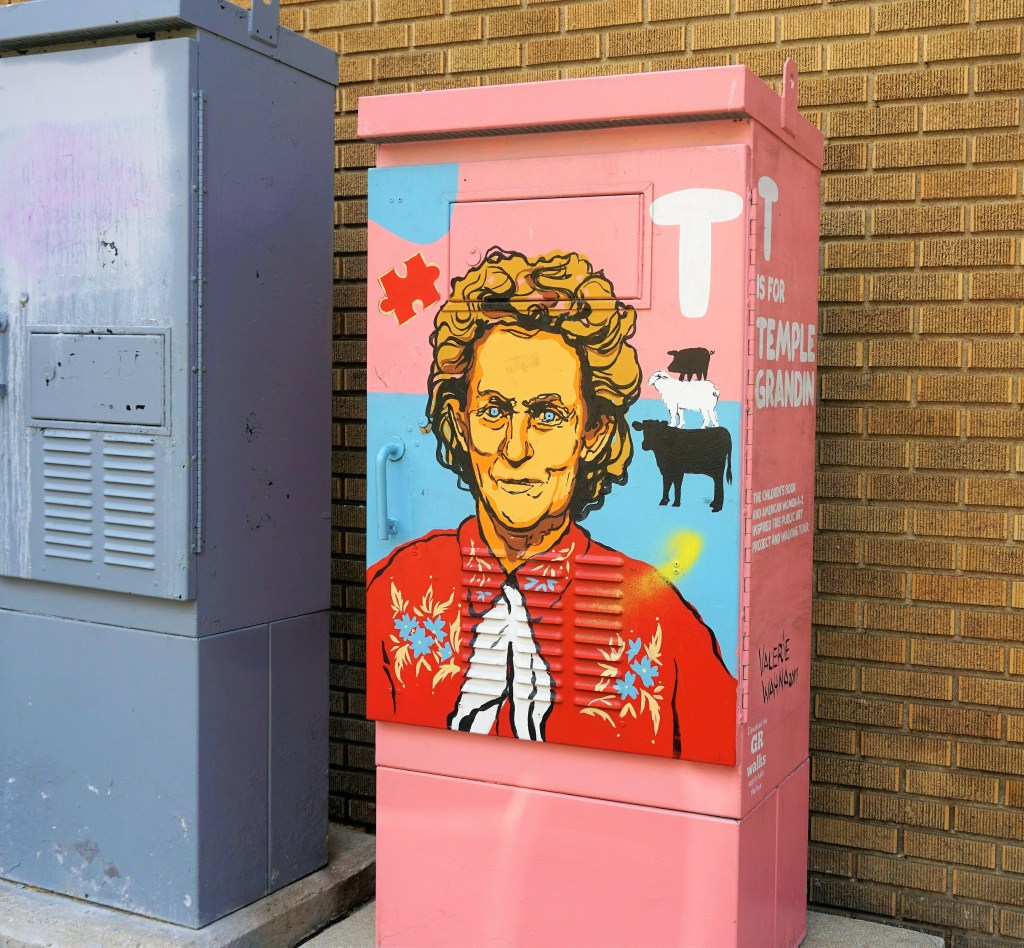
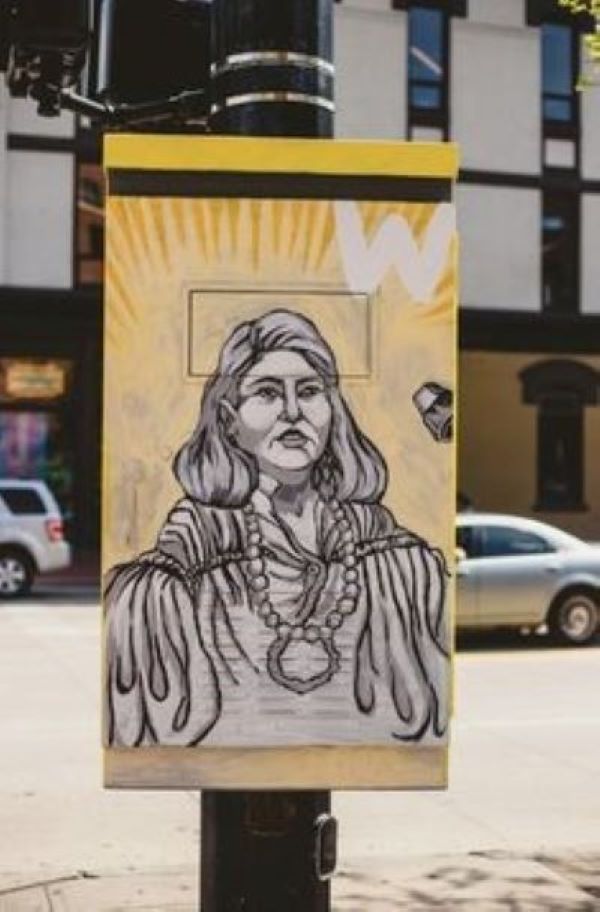
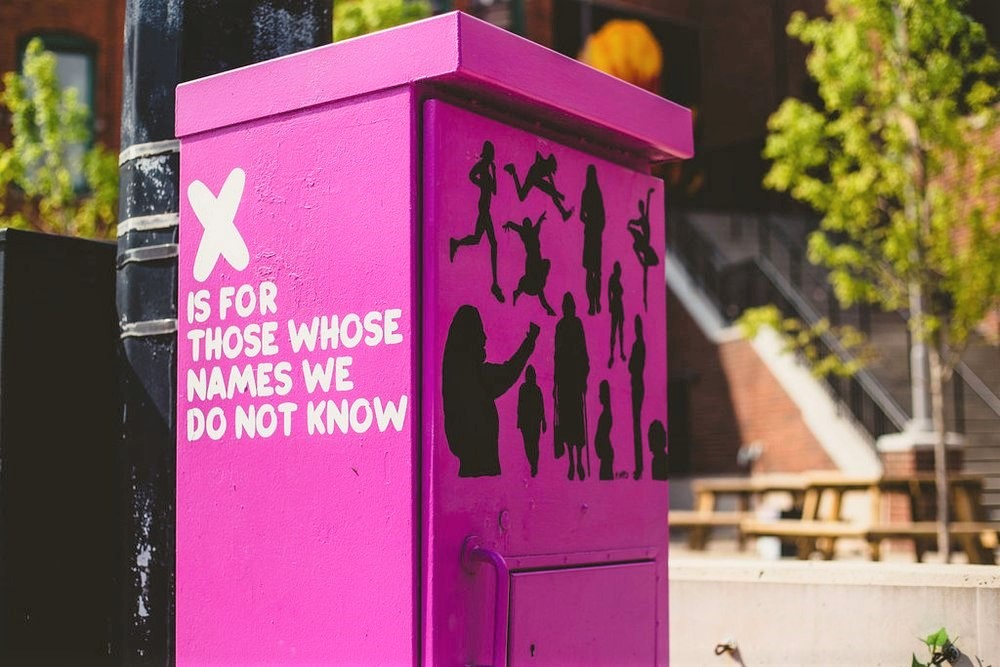
Downtown Grand Rapids Inc., Lions & Rabbits Art Gallery and MobileGR, commissioned 27 local female artists to paint electrical boxes throughout a section of downtown. Taken from the children’s book “Rad American Women A-Z,” by Kate Schatz, the “Rad Women’s Public Art Initiative” honors and commemorates the significant contribution of America women who “didn’t keep their heads or voices down.”

PS – We did find Y and Z
Political Activist, Philosopher, Academic, Scholar And Author – Imprisoned And Vilified For Being Black And Radical. Outspoken On Finding Peaceful Solutions On A Global Scale, Women’s Issues, Anti-Capitalism And Prison Reform
 Tennis Champion And Social Activist – Lived Her Life According To The Principles Of Equality, Empowerment And Access
Actress, Comedian, Singer And Writer – One Of The First Women To Host A TV Show
 Labor Leader And Civil Rights Activist – Co-Founder Of The National Farmworkers Association
Civil Rights And Human Rights Activist Involved In The Civil Rights Movement Of The 60’s – Believed In Grassroots Activism To Help The Oppressed Advocate For Themselves
Track And Field Athlete And Inspiration For A Generation Of Young Women
19th Century Activists, Abolitionists And Women’s Rights Advocates
An Outspoken Critic Of Racial Discrimination And Segregation Hazel Scott Was A Jazz And Classical Pianist And Singer
Dancer
Journalist, Teacher, Political Activist And Civil Rights Worker Who Championed The Cause of Mexican Americans And Mexican Immigrants
Author, Playwright, Performance Artist, Actor and Gender Theorist – One Of The Earliest Proponents Of Gender Non-Conformity
From The Late 19th And Into The Early 20th Century – Labor Organizer, Radical Socialist and Anarcho-Communist
Designer and Sculptor – Responsible For Designing The National Viet Nam Memorial
 Journalist, Industrialist, Inventor, And Charity Worker – As One Of The First Investigative Journalists She Worked Undercover to Expose Poor Conditions In Mental Institutions
Singer, Actress, Guitarist, Lyricist And A Civil And Human Rights Activist – Referred To As “The Voice Of The Civil Rights Movement”
Singer, Songwriter, Poet, Painter And Author – One Of The Founders Of The New York City Punk Rock Movement
Aviator – The First African-American Woman And First Native American To Earn A Pilot’s License. 
Marine Biologist, Writer And Conservationist Whose Work Influenced The Development Of The Global Environmental Movement
 First Woman Of Color, First Hispanic And First Latina To Serve As A Supreme Court Justice
Worked Past Her Diagnosis Of Autism To Become A Scientist, Academic And Animal Behaviorist. She Is A Foremost Expert In Livestock Behavior And A Prominent Proponent For The Humane Treatment Of Livestock For Slaughter 
Physician, Obstetrical Anesthesiologist And Medical Researcher – Inventor Of The Apgar Score
Wilma Mankiller – Native American Activist, Social Worker, Community Developer And The First Woman Elected To Serve As Principal Chief Of The Cherokee Nation.
Yuri Kockiyama – Civil Rights Activist Advocating For Black Separatism, The Anti-War Movement (Viet Man), Reparations For Japanese-American Internees And Rights Of Political Prisoners
Author, Anthropologist And Filmmaker – Focused On Racial Struggles In The Early-1900s American South And Published Research On Spiritual Practices, Traditions And Beliefs Which Were Created And Concealed From Slaveholders By Enslaved Africans in North America (Hoodoo)

We didn’t come close to knowing all of the women or their contribution to our society. How many do you know? More importantly think back across the dimension of your time on this earth and consider how different our lives would be without these women who wouldn’t “put their heads down or silence their voices.” Honor deserved…

Grand Rapids is worth a visit. We’d send anybody to Meijer Gardens, or on a walk in downtown or to any of the few restaurants we’ve enjoyed or to jazz fest or… As time passes we’ll have more and more opportunities to explore. But first on the list is to spoil our grandchildren.

Barbara and Brian

It’s not what you look at that matters, it’s what you see.“ – Henry David Thoreau

SECOND MOTLEY COLLECTION

November 2021, May 2022 and Summer/Fall 2022

Finishing up some odds and ends from our adventures…

So tired of saying “due to covid restrictions,” but we missed being in person for Maggie’s 9th birthday “due to….”.

Maggie picked “The hunger Games” as the theme for her special day, and through the magic of the internet along with family cooperation we held a virtual birthday. We dressed up in character costume, had sign boards to cheer on our favorite combatant (Katniss, of course!), and shared typical birthday party activities. Not quite the same as having family there, but then again we were there, and had a blast!

Between birthdays Maggie reminded us regularly that we had not been there in person for her 9th birthday party, and asked if we were certain that we’d show the next year? We promised and kept our promise…made it for her 10th and 11th birthday.

Maggie’s 11th Birthday Cake
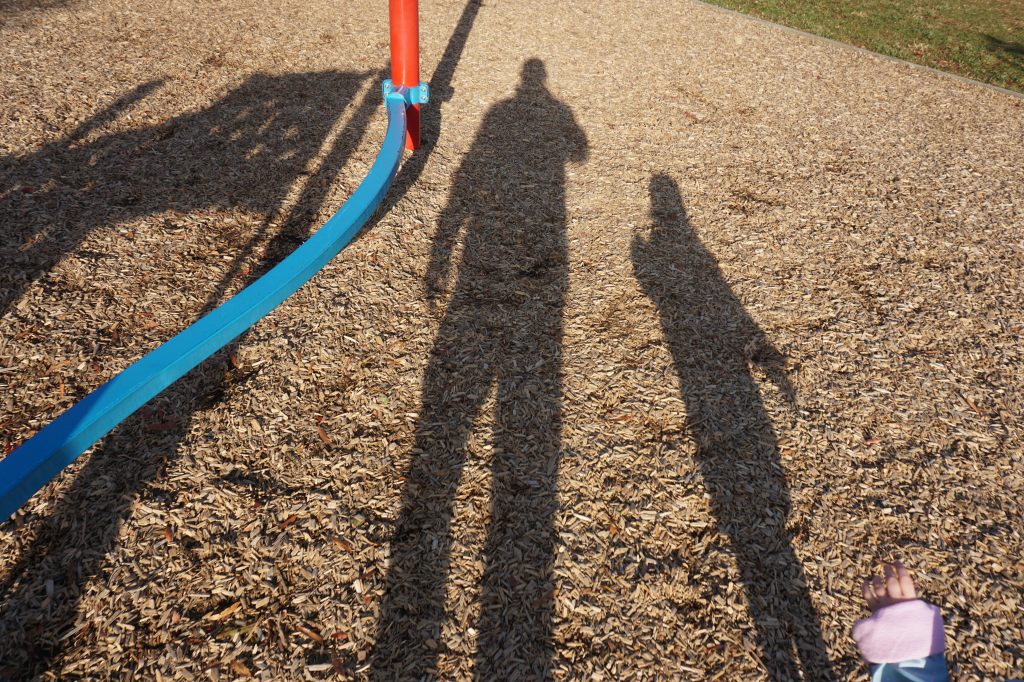
PopPop and Penny’s Shadows On A Cold, Cold November Day
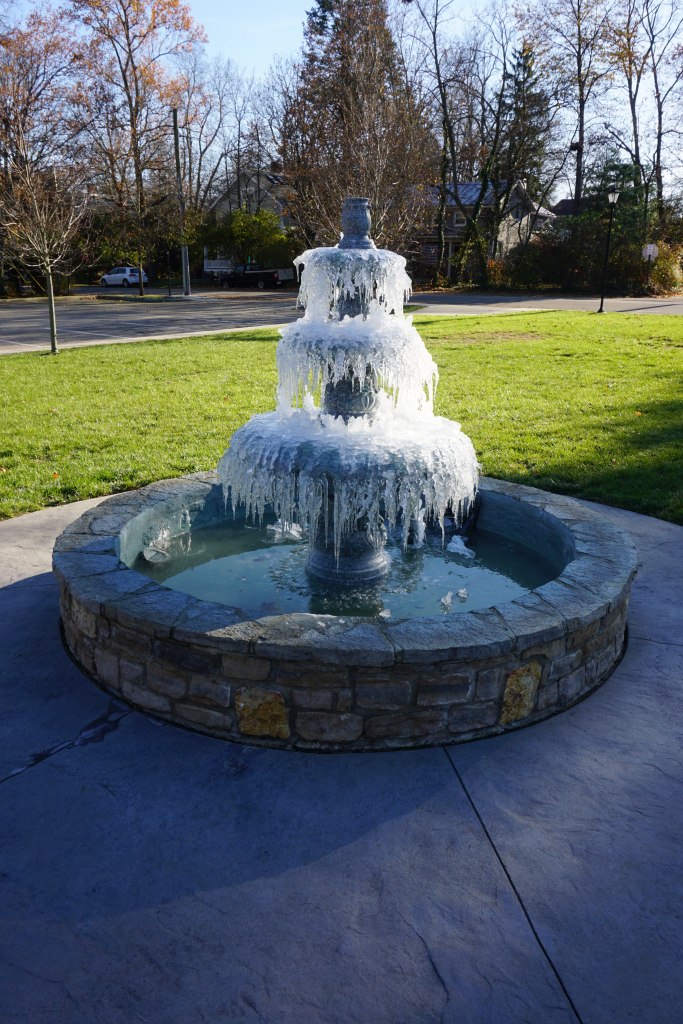
Fountain Behind The Mills Park Hotel, Yellow Springs, Ohio
So How Cold Was It? Photo By Maggie

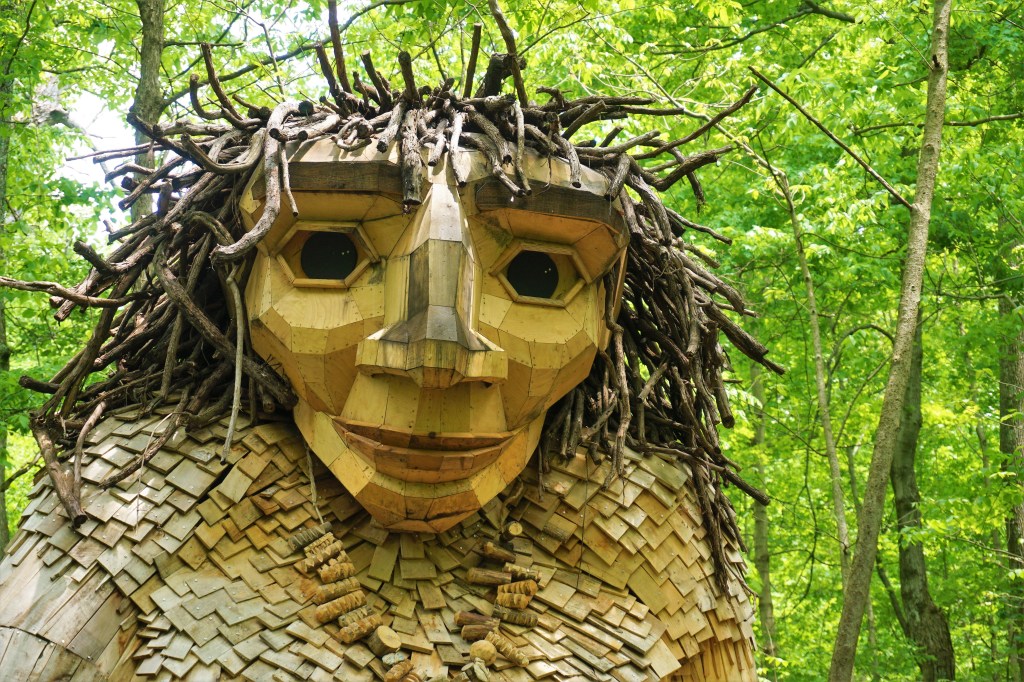
Elyssa turned us on to Aullwood Audubon Metro Park and The Trolls.

In 1957 Marie S. Aull generously donated 200 acres of woodlands to the Audubon Society which has become a wildlife sanctuary with more than 8 miles of walking trails, an educational nature discovery center, and a sustainable farm.

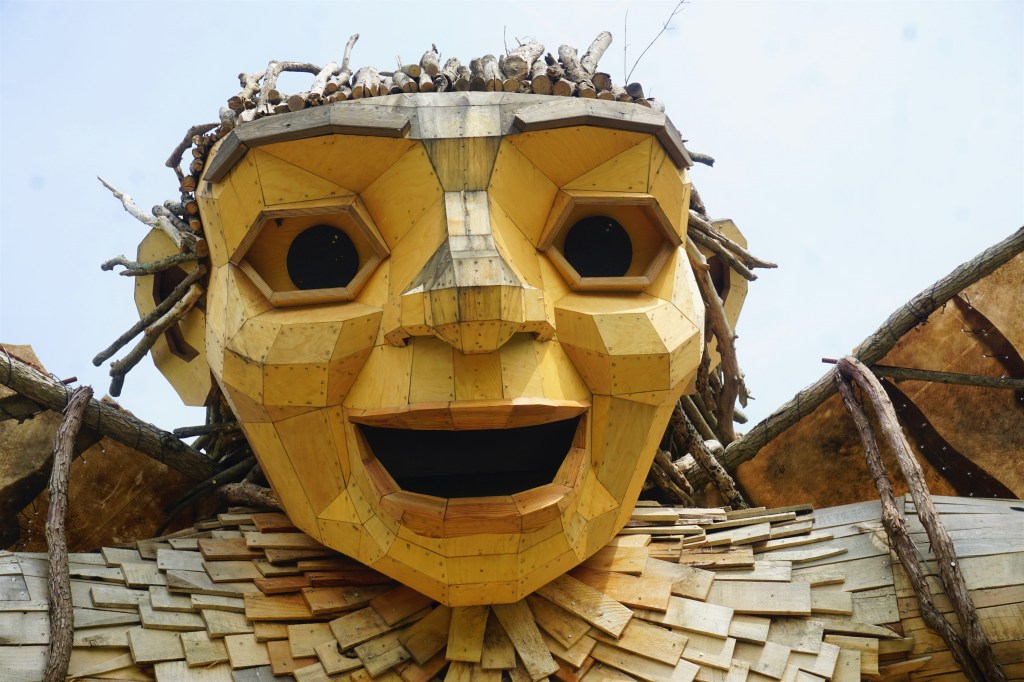
“The Troll That Hatched An Egg” is nine installations across the continental US and Puerto Rico by artist Thomas Dambo – Allwood is home to one of the installations. As we made our way along a hiking trail, we found 3 giant trolls and a troll’s nest. What’s really terrific is that Thomas Dambo only works with recycled materials.

Beautiful setting, lots of walking trails, farm animals to see, and giant trolls? Well worth the visit if in the area!

Longbract Spiderwort
Bibbi Troll
Approaching The Troll’s Nest
Inside The Nest – We Believe That The Propane Canisters Represent Troll Eggs
Six-Spotted Tiger Beetle
Bo Troll
Yellow Flag
Bodil Troll

Friends from our wintering in Mesa, Jim and Connie, live in Bridgman, Michigan which is about 3 hours or so from where we were hanging out in Grass Lake while our condo was being prepped for our moving in. Jim taught us to play pickleball, he and Brian played softball together for the past 3 years, and there were many, many times we celebrated happy hour together. Only small problem is that Connie is a die-hard Notre Dame fan, and that just doesn’t fly in this M Go Blue household – HA! We had a terrific time being hosted by them at their beautiful home.

While there they took us out to the western shores of Lake Michigan, we got to watch the captain of a huge freighter maneuver the channel while heading in-land…

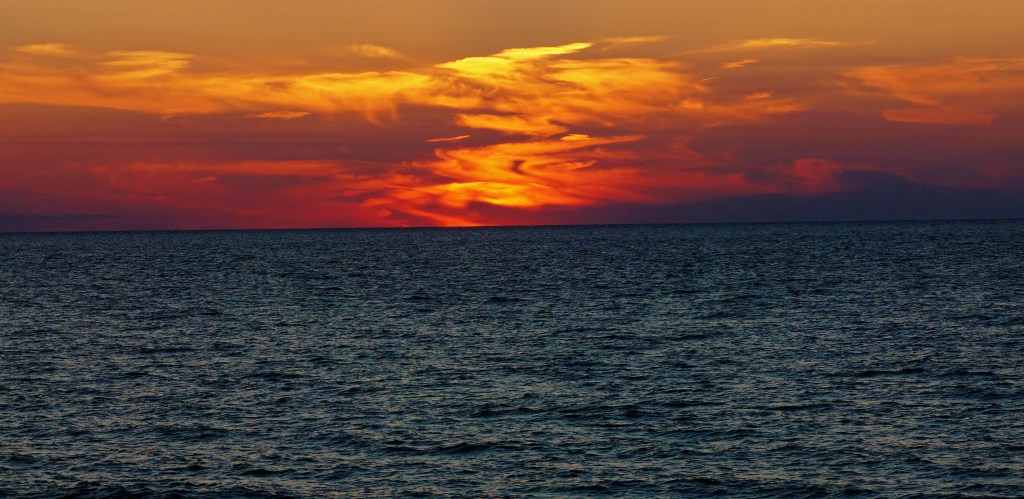
…and were moved by listening to the sounds of a bugler playing taps accompanied by the crashing of the surf on the shore as the sun set across the expansive waters…

Tom and Landa Mohr were workamping in Mancelona, central north mainland Michigan the summer of 2022. They broke camp in October and we took off traveling almost 3 hours west to South Haven to spend an afternoon just being friends together.

South Haven Pier and Lighthouses

Our full-time travels are at an end for perhaps a year. We fully expect to continue on this journey started so long ago, and have begun our list of next stops. For now, we need to settle into a somewhat sedentary life until late fall 2023, feel a new balance as condo owners, and reach our goals of more time with grandkids and working athletic events at the University of Michigan…but more about those later.

Barbara and Brian

It’s not what you look at that matters, it’s what you see.“ – Henry David Thoreau

MOTLEY COLLECTION THE FIRST

American Bittersweet

November 2021 and May 2022

There are just some events in life that are bittersweet – the juxtaposition of happy and sad, a reflection on that something of great meaning in your world that now has passed. Maybe it’s as mundane (?) as the end of a great vacation, or the excitement knowing that what just happened is a true once in a lifetime experience. Maybe it’s knowing at 18 or 21 or 40 or 70 years of age (finally!) that you can never go back to that childhood home again (damn growing up). Maybe it’s after your best friend has passed after a long, long time of illness and pain and exhaustion, and you get to give their eulogy. It’s saying goodbye to your old life as the new becomes all encompassing – you should never look back.

Barbara and I have made a bittersweet decision. We’ve been traveling the past 4+ years full time with our constant companion and home, Aimee Motorhome. We’ve made it to visit family only a couple of times a year – 2020 the exception due to Covid. We found that we missed our family terribly and longed to be closer geographically. But then again we loved our travels so very much, too – the places we’ve seen and the people we’ve met. Bittersweet…

We’re set to buy a summer condo somewhere near Ann Arbor, Michigan, sell Aimee, spoil our grandkids as often as we can be with them in person, settle down for a year and then find a way to keep traveling.

Bittersweet too because there may be only 2 blogs remaining of this generation of blogs.

There have been times with grandkids not officially recorded in previous pages, some pretty cool events we’ve attended, and just some beautiful places and sights never recorded in print. It’s time to right the wrong.

Let’s start with Gettysburg, Pennsylvania.

Daughter-in-law Jaimee has been more than obsessed with The Battle at Gettysburg for quite some time and had dreamed of becoming a National Park Service Ranger and forever working at the Park. Life takes some interesting turns, and, well, for the last 21 years or so she didn’t find herself able to pursue those dreams. As happens life took on another interesting turn in 2019 and enabled Jaimee, spousal unit Jordan and our granddaughter Helena to became residents of that historic city. As a matter of fact their house is less than a quarter of a mile from Robert E. Lee’s battlefield command post! Jordan can work at home, Helena does fine with the Gettysburg schools, and Jaimee is in line to become the Director of The Gettysburg Foundation’s Children’s Museum. We’re not sure that a week goes by that there’s not a special lecture, walking tour or reenactment relating to the Battle at Gettysburg or other local battles of the Civil War that doesn’t occupy their attention (well, we suppose that there are house things to do too?).

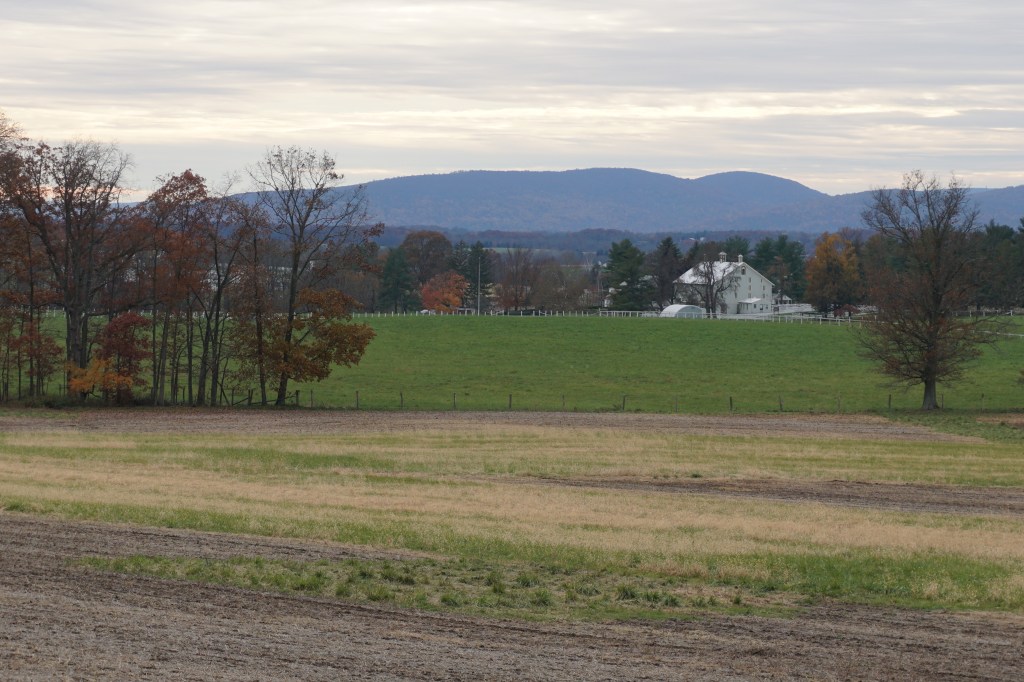
Helena’s birthday is in November, and once free from Covid’s restraints we made it a point to visit their new home. Celebrating her birthday was special. Being together was special. Having our own private 6-hour tour of the battlefield with the uber-knowledgeable Jaimee as our guide was overwhelmingly wonderful.

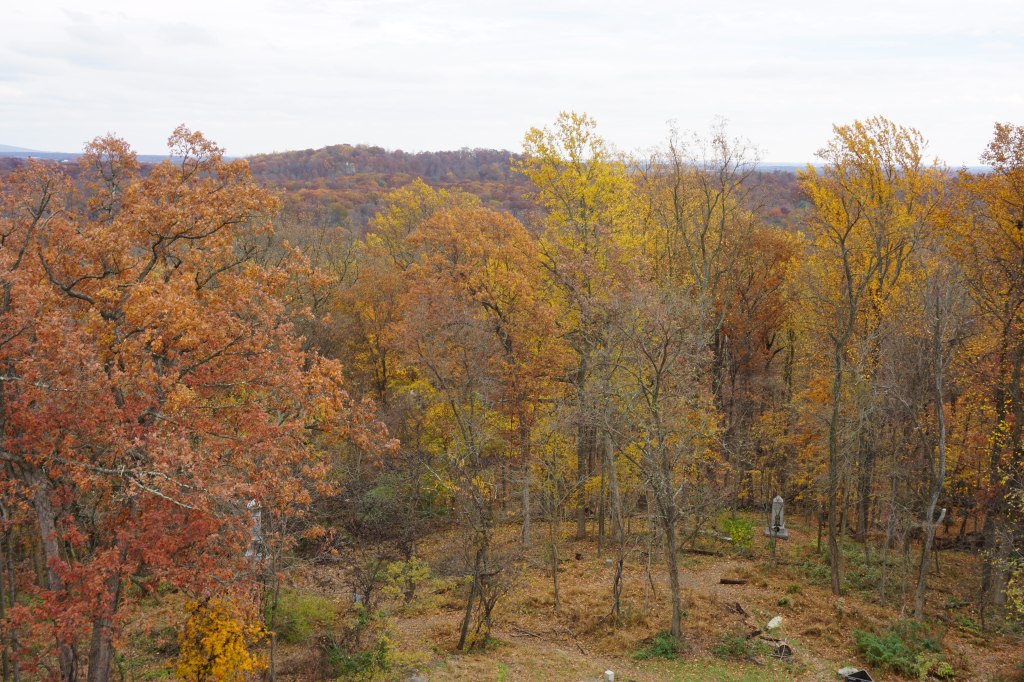
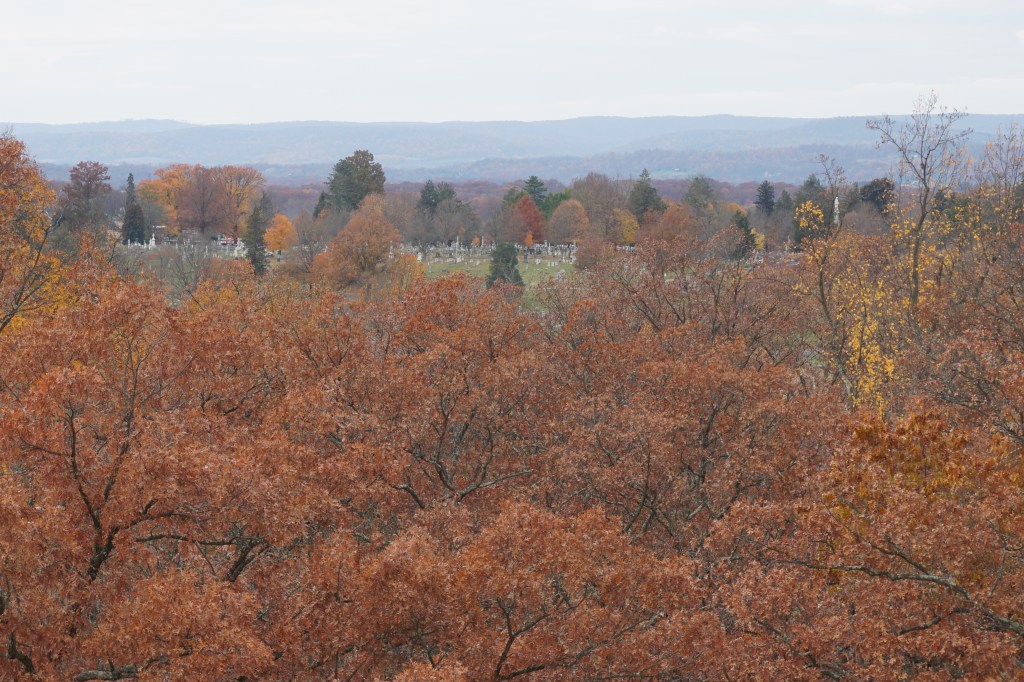
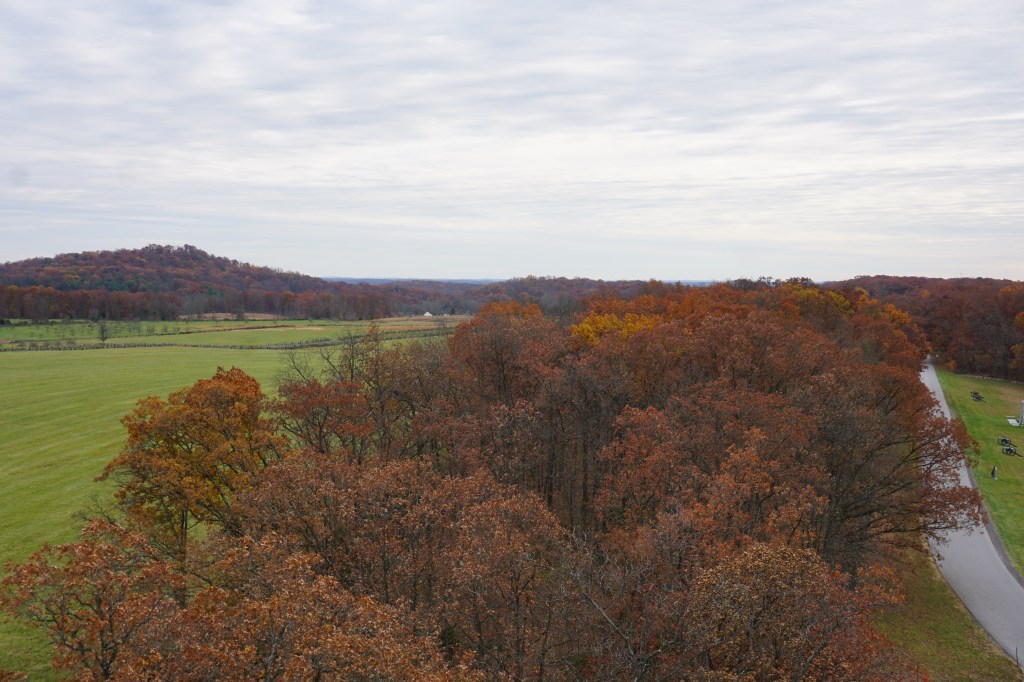
Fall In Gettysburg
Throughout The Battlefield There Are Monuments Commemorating State Militias, Regiments and Battalions, As Well As The Famous Generals Who Fought During The Battle At Gettysburg
Civil War Cemetery
Big Round Top
After Retirement From Public Service President Eisenhower Lived His Remaining Years At This Farm Just Adjacent To The Battlefield

Other cool sights and places to visit near Gettysburg…

Sometimes we bumped into places that should be noted in Atlas Obscura. Mr. Ed’s is one such place…

8 miles west of Gettysburg and built in 1914 the Historic Round Barn and Farm Market is one of “only a handful of truly round barns surviving today.” The architecture of round barns is the result of American creativity – it costs less to build and has a greater volume to surface ratio than rectangular barns (i.e., holds more stuff). Some historians speculate that there’s more to it than that, but worrying about designing a living environment that makes for happy livestock may be more myth than fact!

While at the round barn these little fellas made themselves known!

And there just happened to be farmyard animals around – this fella liked posing to have his picture taken -or- maybe he thought we had a treat?

While we were living in Pennsylvania Brian would often travel to Hanover, PA; Baltimore, MD; DC or Richmond, Virginia for business, and on occasion we would head down to Fairfax Station to spend some time with the Duckenfields. We preferred to stay as far away from Interstate 95 as possible, and to get from here to there State Route 15 south out of Harrisburg was a whole lot less stressful a trip. We’d pass by the Catoctin Wildlife Preserve and wonder what all the fuss was about. Jordan and Jamie bought a season’s pass to that very same Wildlife Preserve and this August we were treated to an afternoon at the zoo. This is a small well-tended, family-friendly attraction with a wide array of well-kept animals grateful that you stopped in to say hi!

How Rare Is A White Bison?
Love This Tortoise’s Face

Graham, Leigh and Rowan moved back to DC a couple of years ago. Last November we just happened to find ourselves on the “Mall.”

The Reflection Pool – From The Capitol To The Lincoln Memorial
Purple Beautyberry
Garden Dahlia
Garden Petunia

It’s May, 2022 and we found ourselves in Ohio, and Aimee found a home at a campground in Lebanon. Lebanon is a town of about 21,000 people with a terrific downtown – lots of quaint shops and eateries. However, the true find happens to be Ohio’s oldest operating Inn and Hotel, The Golden Lamb.

Lebanon is only 32 miles to Cincinnati, aka The Queen City of Ohio, aka The Paris of America, aka The Fountain city, aka Porkopolis, aka, The City of Seven Hills…

Our traveling companion, Atlas Obscura, listed a few jewels in the Queen City for us to check out. Let’s begin with the “Mushroom House,” which was the genius of architect Terry L. Brown who is memorialized by a plaque on the foundation of the building. It is privately owned and is indeed someone’s family home.

Every wonder about those chubby waving cat decorations frequently found in Chinese Restaurants? Us neither, but then again who would have thought that there’d be a museum honoring the Lucky Cat?

The Lucky Cat Museum Is found In Essex Studios – An Artists Combine

When Atlas Obscura lists a statue worthy of visiting, and gives the reason as “Mussolini gifted it to the City” we should have known it’d be a little off center. But in pursuit of “The Capitoline Wolf” we found another statue gifted to Cincinnati by Gifu, its sister city in Japan.

We guess the gift from Mussolini and the people of the City of Rome ought to be under the heading of “how thoughtful” rather than seeing how creepy it really is…

The Ohio River – Looking East
The Ohio River – Looking West
One Of The 4 Mascots For The Cincinnati Reds Baseball Team – We Give You Mr. Redlegs

There are only a few statues of a beardless Abe Lincoln around the Country. Commissioned by Ohio native President William Howard Taft the statue was meant to honor his fellow President. However, the statue was poorly received both here and abroad. President Taft wanted to gift England a copy which was summarily rejected, and Honest Abe’s son Robert Todd called the statue “a monstrous figure, grotesque as a likeness of President Lincoln, and defamatory as an effigy.” Somehow and in spite of all the criticism it has survived all these years.

Found Art

Opened in 1933 Union Station is an art deco building that was the hub for Cincinnati’s rail service to the rest of the Country as well as within the city itself. Time passed and as the railroads became less and less important many wonderful buildings such as Union Station were scheduled to meet the fate of a wrecking ball. However, and with foresight of the city fathers Union Station was resurrected as a home for several museums. It is a beautiful place to see.

Union Station

The lobby is home to historical murals…

From Union Station Looking Towards Downtown Cincinnati

It seems that everywhere we go, we find something interesting to see or do. Guess the old adage applies: “If you’re bored, it’s your own fault!”

We wonder whether we’re driven by curiosity or some need to absorb as much of the places we’ve been as might be possible? So many friends and acquaintances are amazed at what we’ve experienced, even when we describe their own backyard, neighborhood, city, region or state.

Who knows what can be lived if the time to “see” is taken?

Barbara and Brian

“It’s not what you look at that matters, it’s what you see.“ – Henry David Thoreau

BLOOMINGTON NORMAL?

The Rarest Of Rare Photograph

May, 2022

When heading east the spring of 2022 our route afforded a sojourn into the heartland of Illinois and a 3-day stop-over in Bloomington-Normal for a long overdue visit with sister Karen, niece Terri and family. Our visit was essential and epic and unassailable and mandatory and incontrovertible and, well, it just flat out had to happen!

But wait a minute…who names a town Normal? We’ve heard about Metropolis (Illinois, and yes, the local newspaper is called the Daily Planet), Two Egg (Florida), Soda Springs and Slickpoo (Idaho), No Name (Colorado), Fishkill (NY), Hell (Michigan), and the sister cities of Burnt, Bald, Long and Sheep Porcupine (Maine). Pennsylvanians have had to put up with Mars, Bird-In-Hand, Virginville, Blue Ball, Big Beaver, Intercourse and Climax. There’s a Springfield in every State, and NPR’s Robert Siegel does an entire show featuring e-mails from Texas towns with unusual names (is White Settlement really that unusual a town name for Texas?).

But Normal? We wish there was a sexier answer, but the name is taken from the French ecole normale translated as an “institution of higher learning.” In the 19th Century a normal university trained students to be teachers. Illinois State Normal University was in Bloomington, Illinois. Eventually Bloomington became Bloomington/Normal, which then split into respective independent municipalities around 1867. In any event, it’s still Bloomington Normal to the locals.

The Wonderful Wizard of Oz was written by L. Frank Baum, who named the beloved main character Dorothy in remembrance of his deceased 5-year-old niece. Infant Dorothy Gage is buried in Evergreen Cemetery, and in 2018 a likeness of Dorothy and Toto was carved into a dead oak tree.

In all fairness there are other well-crafted wood carvings throughout the cemetery.

Local Boy Charles “Old Hoss” Radbourne – Played 12 Years In The Bigs During The 19th Century
Carved In Memory Of The 1948 Fatal Plane Crash That Occurred At This Location

Who would have ever thought that there’d be a town in Illinois named Lincoln? Turns out that Lincoln practiced law there from 1847-1859, and the town is the only one that was named in honor of Honest Abe before he was president.

Lincoln is about 30 miles southwest of Bloomington, and is home to the Phone Booth on a Roof. While in town, and you know we couldn’t help ourselves, we found a few examples of what artists in the heartland can do…

Brian’s Favorite

…but we did pull into town to see the Phone Booth on a Roof…

A phone booth was placed on the roof of Lincoln City Hall around 1951/52 to expedite emergency communication when bad weather was approaching. By tradition the newest unmarried firefighter was sent to the roof as the look-out for bad weather and/or tornado activity. This practice discontinued into the early 1980s. How wonderful that the phone booth remains.

And we couldn’t leave Lincoln without visiting the World’s Largest Covered Wagon, which just happens to be piloted by, you guessed it, “Big” Lincoln! It’s known simply as the Railsplitter Covered Wagon, and the display sits along Old Route 66.

We Think That’s A Law Book In His Hand

On the way back to Bloomington, we stopped for a few minutes in Atlanta, Illinois. Atlanta is one of, and I’m guessing here, a thousand or so small towns that were part of Route 66 and still commemorate the Mother Road’s history.

If you find your way to Atlanta, be sure to stop and visit a spell in wonderment of a giant Paul Bunyon holding a hot dog! The statue is one of the iconic Route 66 “muffler men.” We’re not sure about why the name, but muffler men are large molded fiberglass sculptures that were placed as advertising icons, roadside attractions or for decorative purposes. In this case the hot dog was added as an advertisement for a local restaurant. BTW – it’s worth a google search to find out about Chicken Boy, the Gemini Giant and the family of muffler men.

What we were reminded of is that there are curious things everywhere…you just have to care enough to look.

About an hour and a half north of Bloomington is the small farming community of Peru. Barb and Dale Holloway are friends from Mesa, and since we were in the neighborhood we had to stop in – so we kidnapped Brian’s sister Karen and off we went. We had the chance to see their home, the campground home away from home 5th wheel, and have a pretty great meal at a local dive bar and grill – someday ask Brian about their giant chicken wings!

We don’t visit often enough with Terri and family, nor especially with Karen. It is easier to let geographical distance define the relationship. We all know too many families in which some slight, cross word, or poor action puts up a barrier that becomes a lifelong estrangement. Then a lifecycle event occurs and there are new pledges to be closer, which slips away as soon as everyone goes their separate way. But we’re talking about family…

It was truly touching to just hang with our family for a couple of days…made our hearts smile.

Barbara and Brian

“It’s not what you look at that matters, it’s what you see.“ – Henry David Thoreau
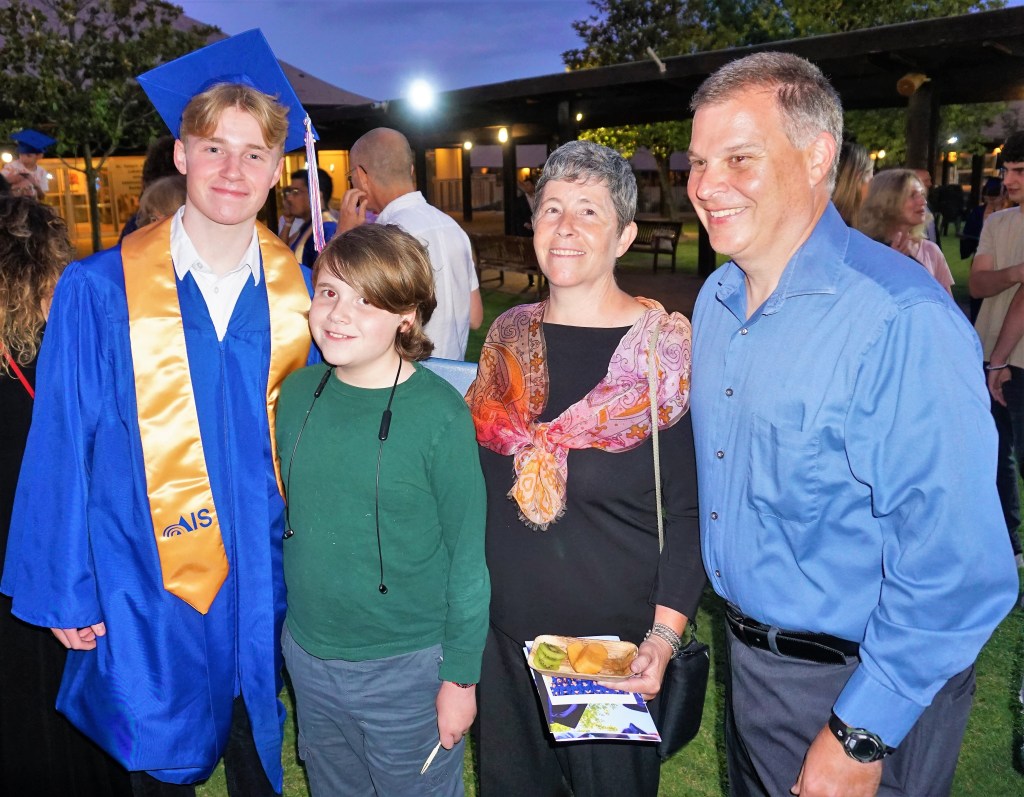
DON’T MISS SAINT LOUIS!

April – May, 2022

We dislike – no hate – breaking camp, traveling and then setting up in the rain or, even worse, thunderstorms. After 4+ years on the road we’ve become a bit smarter, realizing that there is little reason to cause us to rush anywhere save a grandchild’s birthday party or other special event, and we don’t mind staying put an extra day or 2 to avoid stuff we hate. Because of expected foul weather we ended up spending an extra day in OKC. It cut our time in Marshfield, MO to an overnight stay, but then it was on to…

The Lou, Gateway to the West, Mound City, Chess Capital of the World, Lion of the Valley, River City, Rome of the West, or There’s More Than Meets the Arch – nicknames for our next stop along this journey started so long ago. St Louis is a quintessential midwestern city, sitting on the western banks of the Mississippi River some 664 miles south of its headwaters at Lake Itasca, Minnesota, and just downriver from our Country’s longest river (by 139 miles give or take) – the Missouri.

St Louis is home to Gateway Arch National Park, was the embarkation point for Lewis and Clark’s expedition west, was the birthplace of Maya Angelou, T.S. Elliot, Josephine Baker, Jack Dorsey (Twitter), Miles Davis, Tina Turner, Jackie Joyner-Kersee and Eberhard Anheuser, tried the Dred Scott case, and gave the world Chuck Berry, Budweiser Beer and Michelob. Its culinary inventiveness boasts toasted ravioli, grilled rather than smoked bbq, gooey butter cake and pizza cut into squares or rectangles instead of wedges and prepared on a yeast-free cracker thin crust using provel cheese. It is the setting for a series of books about the supernatural – “Anita Blake, Vampire Hunter” – by Laurel K. Hamilton.

Our expectations for visiting St Louis weren’t very high – guess we felt like it was a place to stop on our way to someplace else. Kansas City, Nashville and Chicago are fairly close by and from experience are big cities that are uniquely exciting – places you’d want to visit, taking in the sights and enjoying all that the city has to offer – restaurants, nightlife, cultural events and more. However, there are over 300,000 people that live in St Louis proper, and an estimated 2,800,000 souls in the metro area. Something holds all of those people to the metro, and the population grows consistently at about 5% rate annually. Hmmm, perhaps we need to reconsider our uneducated judgement?

Reflection Of The Old Courthouse
The Old Courthouse – The Dred Scott Case Was Tried Here

Built as a monument to the westward expansion of the United States the stainless steel Gateway Arch has been standing guard over the city of St Louis since it opened in 1965. Built in the form of a weighted catenary arch it reaches 630 feet at its apex, and is considered to be the world’s tallest arch. The Gateway Arch became a National Park in 2018 after 53 years as a National Monument.

The National Park is not just The Gateway Arch and the Old Courthouse.

There’s a museum at the base of the Arch itself. Once inside, rooms depict a longitudinal story of St Louis’ founding and its early years, there’s a balcony that affords a bird’s eye view of an auditorium-sized map of the Lewis and Clark expedition, and a commemorative display honoring the politicians, architect and engineers whose vision created, funded and constructed The Gateway Arch. Development of The Gateway Arch began in 1945, and it took 20 years to go from concept to completion – not an easy feat!

Architect Eero Saarinen Is Central In This Commemorative Display

Tickets to ride to the top of The Gateway Arch are timed which permits crowd control in the viewing room. Traveling to the viewing room is an easy well-organized process. A numbering system assigned us to a car to enter for both directions of the trip. Entering that car requires anyone over 5 feet tall to watch their head, and the seats are not made for comfort. The tiny orb travels up/down on a rickety, angular tram system similar to that of a Ferris wheel and takes about 5 minutes. Easy to endure for the spectacular view.

From The Top Of The Arch – Looking Down On The Mississippi River
Looking East
From The Top Of The Arch Looking West At St Louis
Brian’s Favorite Photograph From The Viewing Room

If The Gateway Arch is solidly iconicly St Louis how about some unique, unusual and fun sights?

This is reportedly the world’s largest Amoco sign, and, since BP owns the Amoco trademark, it is likely that the sign will hold its place in perpetuity. A must see!

Local artist Bob Cassilly designed a playground simply made for young and old alike to climb upon and enjoy…we give you the Turtle Sculpture Garden…

PS – A warning – the 4th picture features a serpent.

From a life of poverty Chuck Berry became a beloved musician and the first person enshrined in the Rock and Roll Hall of Fame. From his website: “He emulated the smooth vocal clarity of his idol, Nat King Cole, while playing blues songs from bands like Muddy Waters. For his first stage performance, Berry chose to sing a Jay McShann song called ‘Confessin’ the Blues.’ It was at his high school’s student musical performance, when the blues was well-liked but not considered appropriate for such an event. He got a thunderous applause for his daring choice.” The rest…well you know…

His unique guitar playing and vocal styling gave him the title of the “Father of Rock and Roll.”

Chuck Berry’s Home Where He Grew-Up And Wrote Many Of His Hits

We went searching for all things Chuck Berry, and found our thrill and more along the Delmar Loop neighborhood – an 8-block hipster neighborhood of restaurants, bars, and a great bowling alley!

Wonder This Fella’s Name?

Blueberry Hill is a restaurant and music club across the street from Chuck Berry’s statue. It is a bunch of 10 mis-matched rooms that are filled with a “legendary” collection of offbeat pop culture memorabilia and pictures of a never-aging owner, Joe Edwards, with an innumerable number of rock groups, celebrities and sports figures spanning, oh, the last 50 years. Visitors are encouraged to stroll through and check out the displays in the Elvis, Duck, Pac-Man, St Louis, Piano, and Dart Rooms, the Old Bar, New Bar and Dining Rooms, and the Smoking Porch. As an FYI – it’s burgers are rated in the top 5 in St Louis by the locals year after year.

Great Luck Capturing This Photograph – The Sign Changes Every Couple Of Seconds
Barbara Liked The Mural – Felt It Represented St Louis Perfectly

Pin-Up Bowl is a cocktail bar offering up a limited menu of bar food that just happens to be disguised as a bowling alley. Up and down “The Loop” there were ads posted on the utility poles announcing that the Lady Balls were “bowling tonight” and inviting new participants to join in on the fun. Lady Balls? We’re in! We stopped to watch the bowlers, and just had to have a couple of cocktails, some toasted ravioli, and a pizza…

Just happened to run across this photo opportunity so Brian took the shot…Chicken Out’s wacked-out delivery vehicle!

The World Chess Hall of Fame serves as a museum, an education center, and a monument to great achievements in the classic, most cerebral of games. There are 19 chess masters inducted into the World Hall of Fame. In comparison 52 have been inducted into the U.S. Hall of Fame (which is also in the building). Rarefied air indeed! Experienced or not, there is something for everyone interested in chess. The WCHOF even offers free lessons for the beginner. Come on down!  

Recently returned to its home after needed repairs Steven Gregory’s 1988 sculpture of a human-size fish sporting a squiggly smile as it appears to pedal a bicycle across the surface of Lewis Park pond was reportedly inspired by a quote of unknown origin: “Man needs God like a fish needs a bicycle.”

Usually we know from whence our adventures originate; however, in this case we’re just not sure. Barbara gets all of the credit for finding Donut Drive-In. There are no car hops or even a drive-thru window and there’s no coffee served. We got out of our car and bought a baker’s dozen – immediately wolfing down our favorite donut. As we continued on our journey for the day Brian caught Barbara eating “a bite” out of 5 more, and, of course, donuts not finished become stale oh so very, very quickly. Guess we only brought 6 of those fried dough delights back to Amiee. They may have lasted a day or so?

We went to Union Station to find the whispering arch – a place where something said very quietly into the arch is heard clearly at a particular spot directly across the room. While we found the stained-glass arch that is said to be one side of the phenomenon, there have been so many changes in the building we couldn’t find the other spot on which to stand.

Whispering Arch

What we did find at Union Station was a magnificent building opened in 1890 as the City’s railroad depot that had been renovated and converted into a hotel, bar, restaurant, wedding venue and conference center.

We Suspect That The “Other Side” Of Whispering Arch Is Hidden Behind The Bar To The Right

Just west of St Louis in the small town of Florissant and with roots dating back to the late 18th Century is the oldest Catholic Church west of the Mississippi. Maintained by the Friends of Old Saint Ferdinand the Church, Rectory and Convent comprising Old Saint Ferdinand Shrine is recognized by the National Registry of Historic Places.

We were given a tour by a most excellent docent who has dedicated her post teaching career to the Shrine. We came to appreciate the clergy and parishioners’ dedication to mission in the not very sophisticated nor tolerant western reaches of the very young United States, and how the Church’s own Sister Rose Philippine Duchesne’s courage and perseverance held the parish together. Further, her commitment to teaching the Indigenous Peoples was without limit. The Shrine stands in honor of and commemorates Sister Duchesne’s life. Sister was canonized into sainthood by Pope John II in 1988.

But that’s not why we wanted to visit to Old Saint Ferdinand’s – the history was a very unexpected bonus. Rumor was that a likeness of Saint Valentine was entombed under the alter, and who wouldn’t be intrigued to see such a display?

Saint Valentine

We’ve been known to roam around a cemetery or 2 during our time on the road, sometimes for the statuary or a special display and at other times to see the graves of the famous who have passed on before us. However, 2 graves at Bellefontaine Cemetery have perhaps the strangest stories we’ve come across when exploring a graveyard.

The Lemp family were hard working German immigrants who made a fortune in America as beer brewers during the 19th century. The family bought a plot of land at the highest point in Bellefontaine Cemetery and constructed a large family tomb in which their deceased might rest in peace. Despite their success and all the privilege that comes with wealth “many” family members took their own lives or died under mysterious circumstances. The large mausoleum is less than half-full; however, according to paranormal enthusiasts there is still plenty of activity inside. It has been reported that Lemp family spirits have been observed walking around the tomb at dawn and dusk.

Unsettled Spirits Of The Dead?

The Girl in the Shadow Box is a beautiful marble sculpture encased in a stone chamber with a glass window. However, it does not depict a person buried in Bellefontaine Cemetery, but a girl for whom a local man longed. Herman Luyties, owner of the first proprietary drugstore in St. Louis and one of the pioneers of homeopathy in the area, visited Italy in the early 1900s. During this trip he fell for a beautiful girl who was modeling for the Genoese sculptor Giulio Monteverde. After she turned down his multiple proposals of marriage, the heartbroken Luyties commissioned Monteverde to create a 12-foot marble statue of her. For all time she’ll stand overlooking his grave.

There are many famous St Louisans buried in Bellefontaine Cemetery including brew master and founder of Anheuser-Busch, Adolphus Busch. But we believe William Clark of Lewis and Clark fame is deserving of notice for his accomplishments in service to the United States.

Enough of the unique, unusual and fun sights?

The sculpture Eros Bendato is described by Atlas Obscura as “a creepy sculpture of a decapitated head.” We added the sculpture to the bucket list so we could “see St Louis through Eros Bendato’s empty eyes.” We found the sculpture alright, but rather than one of those singularly unique, unusual and fun sights we found an urban art installation filled with outstanding sculpture. A terrific find…

Eros Bendato by Igor Mitoraj
Femmes au Perroquet by Fernand Leger
Kindly Geppetto by Tom Otterness
La Riviere by Maillol
Bird by Laura Ford
Love vs Money by Kai
Big Suit by Erwin Wurm
Zenit by Mimmo Paladino
Untitled by Tom Classen
Bruce and Sara Walking by Julian Opie
The Door of Return by Kan Yasuda
Aesop’s Fables by Mark di Suvero
Lifestyle by Johnathan Clark
Tai Chi Single Whip by Ju Ming
Big White Gloves, Big Four Wheels by Jim Dine

There are some physical places in this world that are the epitome – the very real definition of sanctuary. Those places evoke an internal sense of peace, a feeling that there is a force greater than mankind and bigger than any single individual and are a place that just seems to envelope those who venture into its confines with awe and warmth. St Patrick’s Cathedral and Temple Emanuel in NYC, and Touro Synagogue in Newport, Rhode Island are such places. From the ancient world The Pantheon in Rome felt to us to be another such place. The Cathedral Basilica of St Louis can be added to that list. How strange it is to read such comments from 2 Wandering Jews – a feeling of sanctuary within a Catholic House of God.

The Laumeier Sculpture Park is a 105-acre open-air museum and sculpture park which is home to over 60 outdoor sculptures and features a 1.4-mile walking trail. On a beautiful sunny day we figured that the Park would afford us the pleasure of our indulging in a couple of our favorite activities. What we didn’t realize until we were at the Park was that the 35th Annual Laumeier Art Fair was taking place – most of the sculptures and accesses to the walking path were unavailable. What we didn’t realize was that the foot traffic and the overnight rains the last couple of evenings had made dodging muddy grounds a tough chore. Undaunted we kept calm and sallied on to see what we could of the sculptures and grounds.

Ricardo Cat by Niki de Saint Phalle
Woodhenge by Gigi Scaria
Eye by Tony Tasset
La Libellule by Arman
Conundrum by Richard Hunt

Falling Man/Study (Wrapped Manscape Figure) by Ernest Trova
Aurelia Roma by Manuel Neri

While driving through the Science Center area within Forest Park we bumped into this figure who is obviously studying the stars, day or night!

Looking Up by Tom Friedman

Wherever we have stopped along this journey, and have had time we’ve made it a point to search out and photograph murals and other street art. In St Louis the place to find creatively decorated buildings is in The Grove…

We were on the way to the Cathedral Basilica of St Louis, and found ourselves in need of sustenance. Quickly checking with google for bbq we found an unassuming renovated gas station with a “maître d’/waiter/car hop carry-out only” service with a line of cars winding around the lot and almost backed up onto the street. So here’s the gig – the maître d’, etc. handed us a menu, comes back in a couple of minutes and while we’re surrounded by the sweet aroma of grills hard at work we made our order and paid the man. Unless otherwise stated every meal comes with potato salad and is smothered in the joint’s signature slightly sweet KC-style sauce. About 5-10 minutes later our order arrived and we drove off to find somewhere to eat. It was drizzly and so we simply took our rib tip and brisket lunches and pulled to the side of the road across the street and opened our styrofoam containers. The top was jammed with potato salad (just ok), the bottom held a piece of white bread soaking in the sauce and juices from the meat, and in-between the goodness of the pitmaster’s craft. The car has not smelled this good in a long while, and our bellies were happy indeed. By the way – this is a candidate for Diners, Drive-Ins and Dives!

The first settlers were of French origin who found that the Mississippi River and its deep harbor made St Louis a perfect port city and stop along the River’s 2,340 miles. But it was the old-world sturdiness and toughness of the “next-wave” German and Irish immigrants that made St Louis what it is today – a broad-shouldered metro that takes pride in its heritage and is ever moving into the future. The photographs Brian took did not do justice to the City’s history.

There were overcast and drizzly days, there were days with sunshine. We ate St Louis-style pizza, gooey butter cake, toasted ravioli and bbq. We did touristy things and off-the-beaten path things. We thoroughly enjoyed our time in this City with so many nicknames. St Louis is a recommended destination.

Whew – what a long blog!

Barbara and Brian

“It’s not what you look at that matters, it’s what you see.“ – Henry David Thoreau