ROOSTER COGBURN, RESCUED WILDLIFE, AND WILD HORSES

February – March, 2019

DSC05153

On a whim we stopped at the Rooster Cogburn Ostrich Ranch in Picacho, which bills itself as “The Darndest Place You’ll Ever Visit!”  It is a 3-generation family-owned and operated working ostrich ranch that opened to the public in 1999 as a novelty attraction, enabling visitors to feed the ostriches.  The ranch has been featured in TV shows such as “Larry the Cable Guy – Only in America”, “Extreme Roadside Attractions”, “Amazing Animals”, and “Arizona Highways.

DSC05061 (2)

DSC05065 (2)


DSC05074 (2)

DSC05060 (2)

DSC05081 (2)

DSC05082 (2)
Can An Ostrich Be Evil?

Nowadays Miniature Sicilian Donkeys, Nigerian Dwarf Goats, Fallow Deer, Peking Ducks, Boer Goats, Rabbits, Chickens, cownosed rays and the all-time favorite Rainbow Lorikeets can be fed during a visit.  There’s also a small enclosure for desert tortoise.

DSC05069 (2)

DSC05067 (2)

DSC05072 (2)

DSC05090
Desert Tortoise

DSC05091

As we made our way around the property we kept wishing that our younger grandkids would have been with us – what a grand time they would have had with so many of the animals eating right out of the palm of your hand (including the rays!).  The only aggressive anmals were the chickens…to those who wanted to feed them, as well as to each other!

DSC05062 (2)

Brian didn’t know that Barbara was afraid of birds until it was time to feed the Lorikeets.  You’re given 2 small covered cups of liquid bird food, told to hold the cup by the base and raise your hand.  The birds fly over, settle on your hand, take the cap off the cup and help themselves.  It’s an easy process – the feet don’t dig into your hand and the birds don’t weigh anything, really.  They’re not aggressive and stick to the business of getting fed.  You’re just a conduit and hopefully you don’t get pooped on!  However, if you’re afraid of birds you just might freak out when the first one lands on your hand or if 5 or so birds decide to land on you all at once.  Guess who got over her fear in a hurry!

DSC05087

DSC05085

DSC05089

DSC05086

We purposely traveled a long way down a dirt road in pursuit of the Southwest Wildlife Conservation Center.  As far out of Scottsdale as you could go and still be in Scottsdale, the Conservation Center rescues native wild animals that have lost their homes to development, or are found injured, orphaned, or abandoned.  When possible, the animals are rehabilitated and released — healthy and wild — back where they belong.

DSC05022 (2)

We parked in the empty lot, and started to walk around.  Finding a volunteer nearby we were told that the only way to visit was by booking a tour.  We noted that we hadn’t known that, and were told never mind – would we like to join the tour starting in an hour?  Well, yeah!  Turns out that volunteer was the docent of the next tour!

The docent did a wonderful job educating the group of 15 or so on the founding of the Conservation Center, and, because of her tenure, knew the animals by name and by their individual stories.  Some of the animals arrived at the Conservation Center after being found injured in the wild, but many others were dropped off by owners who realized that their cute young pet wasn’t so cute anymore.  Those pets may have become more aggressive as natural instincts took over, and some owners didn’t feed their pet properly and ended up with a sick wild animal on their hands.

It was amazing to see so many animals rehabbing and while in their cages, up close.

DSC05030 (2)
Now That’s A Sly Look!


DSC05039 (2)

DSC05041 (2)

DSC05042 (2)

DSC05046 (2)

The “mascot” of the Conservation Center is a 75 pound desert tortoise who had been orphaned, adopted, and now has the run of the place.

DSC05032 (2)

DSC05033 (2) We have two favorite remembrances of the Conservation Center.  The first leg of the tour had us observing 4 pairs of Mexican Grey Wolves, each pair sharing a pen.  As we left that area and were taking a look at some coyotes, the wolves started howling which started the coyotes yipping, the bobcats screaming, and the dogs barking.  What a delightful cacophony of sounds we had never heard before!  We were fortunate that we could hear the chorus 3 more times while on our visit.

Our other favorite remembrance was watching the docent call a black bear by name, and to have the bear respond by lumbering up to the cage fencing.  The docent then smeared the fencing with peanut butter to the delight of the black bear who would then get its treat!

DSC05050 (2)

DSC05055 (2)

DSC05056 (2)

Coming from Pennsylvania we were used to seeing warning signs along the roadway for deer crossing.  Traveling through the Canadian Maritimes and Newfoundland we got used to seeing road crossing signs for Moose and Caribou.  But travel in Arizona in an area between the Salt River Pima-Maricopa Reservation, Fort McDowell Yavapai Nation, and Tonto National Forest and there’s a good chance you’ll not only see warning signs for wild horse crossing, but you will encounter wild horses as well.

The internet gave us directions and, sure enough, we found the Salt River and lots of water fowl, but no wild horses.

DSC05006 (3)

DSC05011 (2)

DSC05012 (2)
Beautiful View Of The Salt River

We asked a fellow fishing the Salt River where we might find the wild horses, and he told us to travel south along Bush Highway and we’d see the herd.  Nope.  We read that we’d see the herd if we traveled north along Bush Highway just past Butcher Jones Recreation Area and Saguaro Lake.  Nope.  BUT, we did encounter 2 stallions along the banks of the Salt River across from Coon Bluff.

DSC05013 (2)
Looks Like These Trees Can Just Up And Walk Away

Brian walked around a bend and saw 2 stallions grazing on the river’s edge….amazing!  We were told by others that were observing the horses that these 2 stallions had probably been run-off of their birthing herd by the alpha male, were now on their own, and would have to start their own herd as they reached maturity.

DSC05016 (2)

DSC05019 (2)

DSC05030

DSC05020 (2)

DSC05034 (2)

DSC05033

As we were driving back and forth along Bush Highway looking for herds of wild horses, Brian noticed someone walking amongst the cactus, mesquite trees, wildflowers and scrub, and he hurriedly pull over.

DSC05040 (2)

DSC05039 (2)
California Poppy
DSC05037 (2)
California Poppy

The man who was tracking the group was looking to observe the birth of a foal.  He had been tracking a pregnant mare for a week, and he had had no luck yet today to find her.  But he had found another pregnant mare, her 1-year old foal and 4 other young horses.

We noticed that the jaw line of these wild horses was more “square” compared to the elongated jaw line of other horses we have seen, and that these Salt River Wild Horses have a beard.  The horses had no startle reaction as Brian came within 10 feet or so of them; they just went right on grazing and when finished, moseyed on to another tasty patch of grass.

What a great day!

DSC05042 (2)

DSC05043 (2)

DSC05045 (2)

DSC05046 (2)

DSC05049 (2)

DSC05053 (2)

Barbara and Brian


MESA: GETTING OUT AND ABOUT AND SEEING SOME SITES

February – March, 2019

DSC05004 (2)

No matter where we have been there have been curiosities; those things that probably had their origins in practicality that was/are known to the locals but remain a curiosity to visitors.  We have developed a belief that Arizonians like to identify their towns by painting names and/or letters on mountainsides.  In Tucson we saw the “A” mountain, and we were told it is so named for the University of Arizona whose students paint it the beginning of each Fall semester upon their return to campus.  We saw an “A” mountain in Tempe as well, and it sits on Hayden Butte rising above Arizona State University.  We saw the “Q” on the mountainside southwest of Quartzsite, and the “B” just south of the town of Bisbee.  And, of course, the Phoenix sign above is northwest of the city with an arrow apparently pointing to city center.

DSC05157 (2)
Hayden Butte “A” Rises Above Arizona State University

Mesa and the entire Phoenix metroplex is part of the Sonoran Desert.  Annual rainfall averages 4-8 inches, and the temperature can exceed 110 degrees Fahrenheit daily from late June through the entire month of August.

Phoenix and Tempe share Papago Park.  The park features many hiking and biking trails, fishing pools and picnic areas, a golf course, the Desert Botanical Garden and the Phoenix Zoo.  One of the natural geological formations within the park and a regional landmark is Hole in the Rock.

DSC05008 (2)

DSC05006 (3)

It’s an easy climb to experience the eponymous view.

DSC05009

DSC05011 (2)
Looking West From Papago Park
DSC05012 (2)
Anyone Spot The People On The Bluff?
DSC05013 (2)
Yup — That’s Snow On The Mountain In The Distance

Governor Hunt’s Pyramid Tomb is included as an Atlas Obscura top 10 oddity for the area, and the Tomb was right around the corner from Hole in the Rock in Papago Park. George Wylie Paul Hunt was the first governor of Arizona, serving a total of seven terms, and he presided over the convention that wrote Arizona’s constitution.  Hunt served in both houses of the Arizona Territorial Legislature, and he was posted as U.S. Minister to Siam.  His tomb is on the national registry of historical places.

DSC05020 (2)
Governor Hunt, His Wife and Daughter, and His Wife’s Family Are Buried Here

At the base of the Superstition Mountains is Apache Junction.  Apache Junction is well known by RVers because of the many great campgrounds in the area and by others for the legend of The Lost Dutchman Gold Mine.

DSC05085 (2)

According to legend, there is a rich gold mine generally believed to be in the Superstition Mountains that was named after German immigrant Jacob Waltz (1810–1891), aka “The Dutchman,” who purportedly discovered the mine in the 19th century and kept its location a secret.
DSC05086 (2)

There is a marked trail some believe heads in the direction of the mine.  We couldn’t resist trying to increase our fortune and walked a good potion of that trail.  Sadly we have to report that other than some beautiful vistas and desert flowers no other treasure was found.

DSC05087 (2)

DSC05014 (2)
Menzies Fiddleneck

DSC05089 (2)

DSC05090 (2)
Blue Dicks or Desert Hyacinth
DSC05091 (2)
Blue Dicks

DSC05092 (2)

The Crazy Tourist reported that it was worth the hike up the 15 degree grade of Hayden Butte Preserve because there were over 500 petroglyphs done by the Hohokam peoples to be seen.  So off we went on an 80-degree day with bright sunshine.

DSC05154

About 3/4 of the way up we bumped into 3 players from the AAF Arizona Rattlers who were doing all-out sprints up the last quarter of the Butte.  They took time to talk with us and let us know what University gave them their start.  Seeing that Brian was wearing Michigan gear he was asked whether or not he liked Jim Harbaugh!

We hiked to the top but we saw no petroglyphs. We did however see the movable grass field associated with the University of Phoenix’s football stadium.

DSC05161 (2)

DSC05158 (2)
View From Hayden Butte. Could The Sky Be Any Nicer?
DSC05159 (2)
From Hayden Butte

Tortilla Flat is nestled in the Superstition Mountain Range in the midst of the Tonto National Forest, and it is the last surviving stagecoach stop along the Apache Trail. Tortilla Flat is an authentic remnant of an Old West town, and it is Arizona’s smallest official “community” having a U.S. Post Office, voter’s precinct, and a population of 6.  The roadway from Mesa into town is one of those twisting, winding roads with a bunch of switchbacks – perfect for a motorcycle ride on a nice day, and the road out of town becomes dirt – a 4-wheeler’s dream.  On the drive you pass by Canyon Lake Vista – beautiful!

DSC05093 (2)

DSC05094 (2)

DSC05098 (2)
A Lone Cactus!

The town consists of 3 buildings; the general store (souvenir shop), ice cream and confectionary shop, and the Superstition Saloon (bar/restaurant) and outdoor music patio. The seats at the bar in the Saloon are saddles and are available on a first-come, first-served basis, and the walls are plastered with layer upon layer of dollar bills.  Patrons from who knows how far back sign their dollar, hand it in, and the Saloon staples it to the wall.  In talking with the waitstaff, there are buckets of dollars waiting to be added, and the estimate is that over $300,000 is already on the wall!  Everyone is welcome in Tortilla Flat.

DSC05100 (2)
Superstition Saloon
DSC05099 (2)
Confectionary
DSC05101 (2)
Saloon Bar Area

Just a few miles from our “resort” in Mesa is the Usery Mountain Regional Park, and the 3-mile Wind Cave Trail hike was calling our name.  The trail is rated moderate, but as we’ve come to understand in this part of Arizona that means scrambling over and around boulders, up and down steep inclines, loose dirt in spots and a fun 4-5 hours to complete the up and back hike.

DSC05206 (2)

DSC05210 (2)

DSC05208 (2)

DSC05209 (2)

DSC05207 (2)

The ASU Grady Grammage Memorial Auditorium is another of those “you should see it” places in Tempe from Atlas Obscura as well as the Crazy Tourist.  The Auditorium is a multipurpose performing arts center on the ASU campus.  The name commemorates a former President of Arizona State University; however, its novelty is being one of the last public commissions designed by Frank Lloyd Wright.

DSC05166 (2)

DSC05167 (2)

DSC05168 (2)

DSC05172 (2)

DSC05169 (2)

…and how do you know its spring in the American Southwest?  Well, the cactus start to bud!  Could desert flowers be far behind?

DSC05171 (2)

DSC05170 (2)

Barbara and Brian


YUMA, A QUICK INTRO TO MESA, AND VALLE DEL ORO

February – March, 2019

Pulling out of San Diego and sticking with our 250 miles or so travel day limit we reserved a campsite in Yuma, Arizona on our way to Mesa.  Driving on US Highway 8 should have made this an easy trip even with the two 4000+ foot peaks to cross before finding flatness in far southeastern California and far southwestern Arizona.  But, it rained off and on in San Diego for the 24 hours prior to our scheduled departure, and that converted to enough SNOW in the San Jacinto Mountain Range to actually close parts of US Highway 8.  We were not to be deterred though.

See the source image

Looking at the map for alternative routes we found California Highway 94.  It looked like the roadway should skirt south of the mountains and stay in the foothills until connecting with US Highway 8 on the eastern side of the highest peaks.  So good so far.  Brian figured that being a State Highway meant that California 94 would be a 4-lane joy on which to travel.  NOT SO!  California Highway 94 is a 2-lane up and down elevations with turn outs for slow vehicles to let others pass mountain roadway that has enough switchbacks to make a Le Man’s driver happy…beautiful for a motorcycle not; so much for a motorhome.  The road reminded us of the mountain roads in Colorado between Denver and Aspen.

See the source image

About 1/3 of the way there’s a big sign stating that vehicles over 40 feet in length are prohibited (wish we would have taken a picture).  A quick calculation…hmmm, let’s see…the motorhome is 34 1/2 feet long, the jeep is almost 16 feet in length and the hitch is about 6 foot…yeah, we’re well over 40 feet.  But there was no place to turn around, and no place to drop the jeep and to even try to turn around.  Barbara said go for it, and with ice and snow on the roadway the last 5 miles or so, and white knuckling it all the way, we avoided slamming into the mountainside and successfully made the journey. Lesson Learned?

DSC04998 (2)

Yuma is an interesting place.  We guessed that it got its start as a stagecoach way station, became famous for having the territory’s toughest prison (“3:10 To Yuma”), and our military has had installations there for 150 years.  The city today is a way station for the trucking industry and a good stopping point for RVers midway from here to there.  It is home to one of the country’s Marine Proving Grounds and is a Marine Corps Air Station providing pilot training.  Curiously the Jeep’s GPS just wouldn’t work in Yuma – it couldn’t figure our where we were.  Perhaps the frequency used by Jeep is way too close to the frequencies used by the Marine Corps and our signal was scrambled.

DSC04987 (2)

On July 1, 1876, the first seven inmates entered the Territorial Prison at Yuma and were locked into the new cells they had built themselves. Operating for only 33 years, from 1876 until 1909, the prison incarcerated 3,069 prisoners, including 29 women who had been convicted of crimes ranging from polygamy to murder.  The rock and adobe cells were barely 8 feet by 6 feet and housed 4 prisoners.  Punishment would result in doing hard time in one of the dark cells – a cage which would hold up to 8 inmates who only experienced any light for minutes a day, and only when food and water were delivered.

DSC04988 (2)
Looking At California From The Territorial Prison
DSC04992 (3)
Ocean To Ocean Bridge From Yuma To Imperial California
DSC04995 (2)
Gila Mountain Range

DSC05000 (2)

We enjoyed spending an afternoon walking Main Street during Yuma’s BBQ and Brew festival.

DSC05001 (2)

There were 10 or so pit masters vying for a grand championship.  There weren’t categories as you might find at other competitions; ribs, brisket, pulled pork or chicken were all being compared to each other.  We were more than glad to participate in voting for our favorite – hands down the ribs were top quality.

See the source image

We were fortunate that it was Sunday as we drove through Scottsdale, Phoenix, Chandler, Tempe, and Gilbert before turning into our campground in Mesa.  The Phoenix metro area, referred to as the Valley of the Sun, is home to over 4.5million people.  Being Sunday there was lots of traffic, but no rush hour!

Mesa is the 3rd most populous city in Arizona, and is in the foothills of the Superstition Mountains.

Valle del OroValle del Oro is not like any RV “resort” we have experienced.  The property identifies itself as an active 55+ community, and consists of park models and RVs.  Park models are individually owned stationary double-wide trailers (some with an additional “Arizona” room) of approximately 250-400 square feet with storage underneath and a portico cover for the driveway.  They are placed on a lot owned by the resort; the park model owner pays rent on the property.  Some of the owners rent out their park models for snowbirds.  January through March is prime time and we estimated that there were nearly 4000 people living in this self-contained community the month we were in residence.

Valle del Oro is a resort – period.  The community offers lighted pickleball (more on that later) and tennis courts; a well-groomed softball field with banks of lights, electric scoreboard, announcer, dug outs and warm up areas, snack bar (great burgers!) scheduled practices and games for 3 (yup 3!) leagues as well as games against other “active 55+ communities”; lapidary, woodworking, metal shop, ping pong, 9 bocce courts, 9 shuffleboard courts, ladder golf with a putting green; a club dedicated to radio controlled cars, a wonderful model railroad track (more on that later), a “float” pool, a lap pool, 2 hot tubs, concert/entertainment center that operates as a concierge for events at this resort as well as at other owned properties; US Post Office,  hiking club, biking club, sewing and quilting  room, canasta, euchre and bridge clubs, billiards and pool room, dance classes, leather-smith shop, pottery, stained glass and ceramics studios, dog parks, workout room, aerobics and yoga, and a superb computer center.  On Tuesday nights the community is opened up for bingo games that draw more than 500 people weekly.  There are 2 bars open around the pool area, which serve adult beverages 7 days a week and prepare short order sandwiches and wraps.  Half priced drinks are served from 4pm until either 6pm or 8pm daily.   There’s a full service kitchen; Mondays are steak or rib nights, there’s the Friday taco salad lunch and evening fish fry, and special meals prepared for events like St Patrick’s Day (with 25 cent green beers), etc., etc., etc.  Pretty much any time you’d like there’s something to do, and if you’re bored it’s your own fault!  We’re guessing too that if you’d like to introduce a new “something” you’d get a “go ahead and try” from the Activities Director (yeah-there’s a whole department to coordinate all the stuff going on).  It isn’t the most expensive place we’ve stayed, but it’s a close second.  With all of the amenities there’s nothing to complain about regarding the cost.

Trying to figure out something to do with a mostly unused badminton court 2 friends “invented” the game of pickleball in 1965 as a game for their children to play.  By 1984 the game had gained popularity with all ages, and tournaments were occurring often.  Seeking a need for oversight and uniformity a governing body became necessary, and the USA Pickleball Association (USAPA) was formed.  By 1990 the game was being played in all 50 states, and has become an international passion.  Barbara found out that one couple we met only stay at campgrounds with pickleball courts!

Pickleball is a paddle sport that combines elements of badminton, tennis, and table tennis.  Typically, four players use solid paddles made of wood or composite materials to hit a perforated polymer ball, similar to a Wiffle Ball, over a net. The sport shares features of other racquet sports, the dimensions and layout of a badminton court, and a net and rules somewhat similar to tennis, with several modifications.

The court size makes it manageable for those of us who have lost some speed and reaction time, as does playing with a partner rather than as a single.  The ball is a great equalizer too as it is subject to wind and spin, and even hit as hard as you can just doesn’t develop that high a velocity.  Serves are from below the waist, and you must stand at least 3 feet behind the net, which minimizes a power game.  And winners stay on to play, but are broken up so that during a 2-hour session you could possibly play with 8-10 different people.  Long story short – we fell in love with the game, and played 4-5 times weekly.

We also made some incredible friends while on the court, and with whom we went hiking, shared stories together, played bocce, had a drink or 3 with during happy hour, and enjoyed Funday Sunday together.  Funday Sunday is, of course, 2 hours of pickleball followed by potluck dinner.  We were the first to leave the campground, but with promises to stay in touch, and within the week, the gang had broken up and were heading back to their homes in Calgary, Minnesota, Missouri, Idaho, Nebraska, and Michigan.

Pickleball Crew (2)
Pickleball Gang

Don’t get us wrong.  We played bingo, used the computer center and workout room, watched some ping pong and softball games.  Barbara took a lapidary class, and we ate a couple of meals on property.  Every Tuesday morning there was a coffee and donuts general information meeting to attend (did we mention coffee and donuts?).  And, the garden railroad club ran trains after dark.

DSC05112
Valle del Oro Garden Railroad Club

DSC05113DSC05116 (2)DSC05118 (2)

Our time at Valle del Oro went far too quickly, and we’re more tan than we ever thought possible!

Brian and Barbara


SAN DIEGO FAREWELL

DSC04694 (3)
USS Theodore Roosevelt

January – February, 2019

There are just a few more adventures to share from our time in San Diego.

Coronado Island is not an island at all.  It’s really a peninsula – connected to the mainland by a thin strip of land.  We thoroughly enjoyed a bike ride heading out from the visitors center in downtown (a decent stop in its own right!) towards Coronado Island State Park.  We were glad that a fairly strong headwind greeted our ride out; it would have been a bear to ride tired into that wind on the way back in.

The Hotel Del Coronado is a 5-star resort looking out onto the Pacific Ocean with its own private beach.   Turns out that some scenes from the movie “Some Like It Hot” starring Marilyn Monroe, Jack Lemmon, and Tony Curtis were filmed there.  We could remember pictures of the hotel’s exterior, the beach and ocean, and of course the lobby and interior of this grand classic hotel.

DSC04695 (2)DSC04696 (2) DSC04698 (2)DSC04697 (2)

Our friends Tom and Kelley were in town, and a visit together to the USS Midway Museum was part of our agenda.  Midway is an aircraft carrier, decommissioned by the United States Navy in 1992 after operating for 47 years.  Commissioned a week after the end of World War II, Midway was the largest ship in the world until 1955, as well as the first U.S. aircraft carrier too big to transit the Panama Canal.   Retired Navy Veterans, many of whom served our Country aboard Midway, were docents and were able to share (declassified) stories of serving aboard.  They also let us now that a new enlarged flight deck had to be installed to accommodate Navy jets, but otherwise what we were seeing was intact from the date of her launching.   Midway saw action in the Vietnam War and served as the Persian Gulf flagship in 1991’s Operation Desert Storm.

DSC04807 (2)

DSC04810

DSC04811 (2)

DSC04812 (2)

DSC04814 (2)

DSC04815 (2)

DSC04821 (3)

DSC04827 (2)

Another San Diego harbor icon is just next to the Midway.  This is the statue entitled “Unconditional Surrender.”

DSC04825 (2)
From The Flight Deck Of The USS Midway Museum

Fort Rosecrans National Cemetery is very near the Cabrillo National Monument.  During our visit to the Monument with Graham and Leigh, we stopped to pay our respects to those Americans who made the ultimate sacrifice for our Country.  Internments date to the early years of California.

DSC04762 (2)

The cemetery is at once somber and beautiful, facing west from the roadway and looking out from the hillside onto the Pacific Ocean.

DSC04761 (3) We’ve mentioned our bike ride through Balboa Park and our time at the Japanese Friendship Garden in another blog.  The Park is a San Diego must, and be sure to set aside enough time to really appreciate all it has to offer.  Here are a few pictures of the wonderful architecture.

Balboa Park 1 (4)

Balboa Park 2 (3)

Balboa Park 3 (2)

Balboa Park 9 (2)

Balboa Park 5 (3)

Balboa Park 6 (2)

Balboa Park 7 (3)

We had the chance to see wheelchair basketball played close up, and if you haven’t had the privilege to do so it is highly recommended.  The style of play is “take no prisoners,” some deadeye shooters, and an agility that is truly amazing.  And if you talk to the players they are humble and appreciative that you recognize their ability.  The team Graham coaches, the San Diego Silverbacks, held a scrimmage with another team and we were able to watch.  Love the national logo.

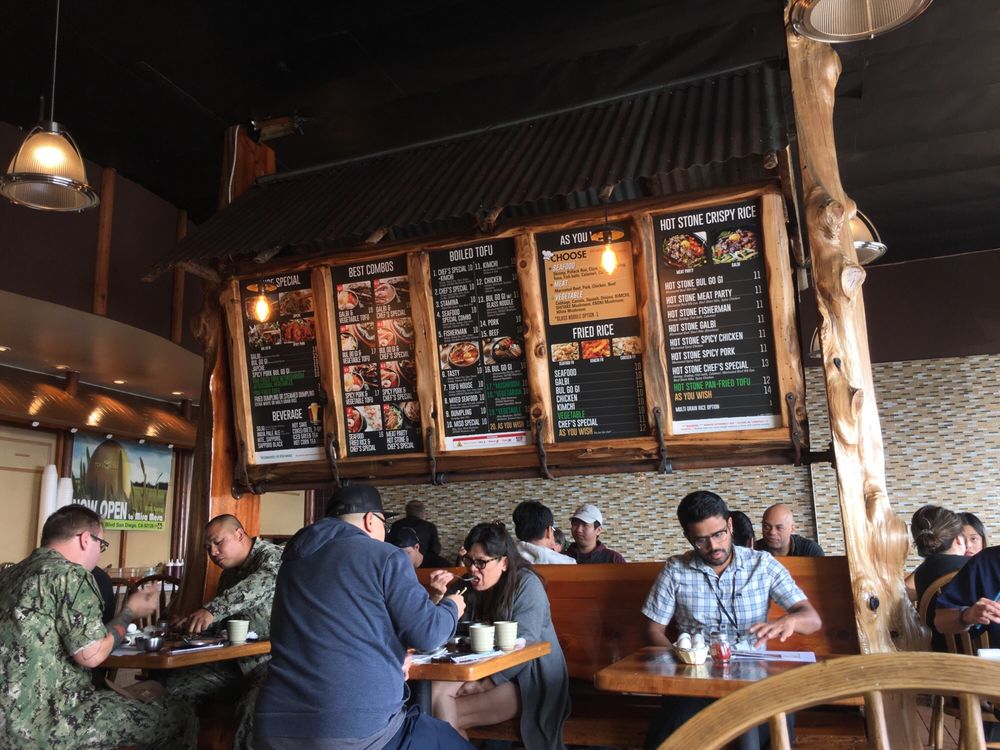
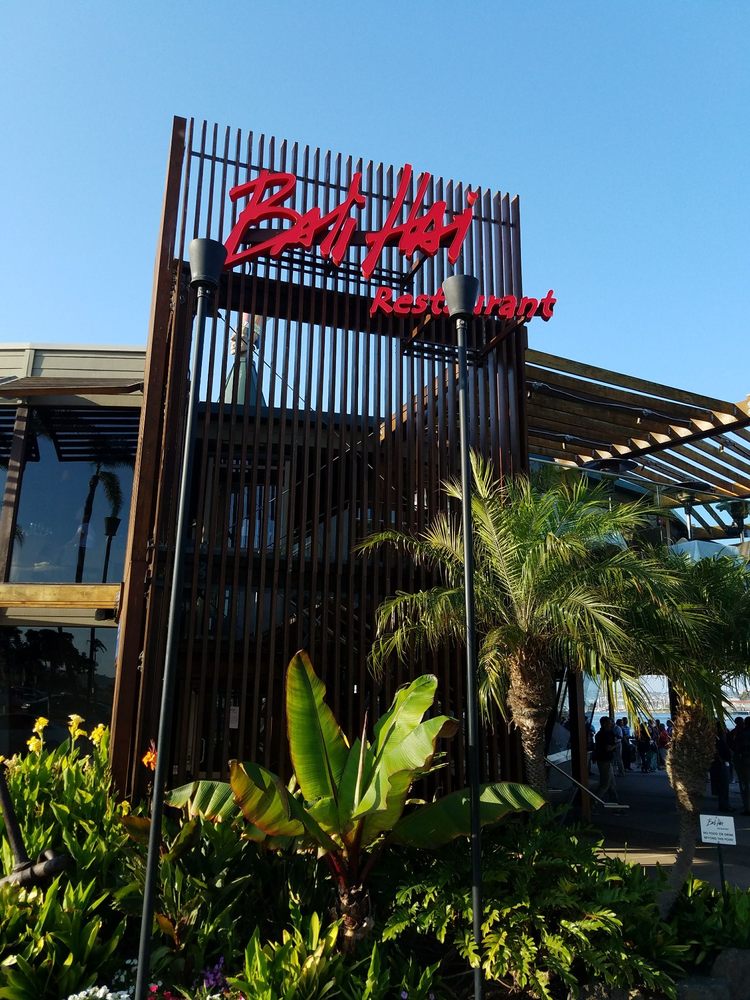
If you’re ever in San Diego be sure to have a meal at the Tofu House (any of the hot stone crispy rice dishes are highly recommended); eat fish tacos at Mitch’s on the bay at Point Loma, and drink a kick-ass mai tai (they even restrict you to 2!), and order the lightly fried 14-ounce black cod for dinner at Bali Hai on Shelter Island as the lights of San Diego come up.

Tofu House:

Photo of Bali Hai Restaurant - San Diego, CA, United States

One more word or 2 about Mitch’s.  The restaurant is owned by 3 families who have been fishing the waters off of San Diego for generations, and the fish you order has been caught by the families or other fishermen they know…and they believe that stewardship of the ocean is their guiding principle: only sustainably caught seafood is served, and they work with a number of groups to ensure a clean and vibrant future for our beaches and ocean.

We will miss radio station 88.3 – KSDS whose blend of classic, bebop, and modern jazz, and the skill of their DJ’s is unsurpassed in any metro market of which we have knowledge.

And lastly we will miss being so close to Graham and Leigh.

Onward through Yuma and into Phoenix.

Barbara and Brian


WE’RE TALKING SOUTH OF THE BORDER

DSC04943 (2)

February, 2019

We had wanted to spend some time in Baja California, either out in the desert or in the Baja wine country.  Time and what appears to have been the rainiest January-February in SoCal and The Baja had a way of keeping us away from an extended trip – or maybe it was all of the cautions about traveling unescorted in The Baja that kept us from an extended trip south of the border.  But a trip to Tijuana was not out of the question – and formally Tijuana is located in Baja California!  We could park on the US side, and with passports in hand walk across the border!

DSC04944 (3)

After cruising easily through customs and having our passports stamped we arrived in Mexico on a bright but chilly cloudy day.  There has been such controversary about citizens of Mexico and Central American countries illegally crossing into America, “throngs” of adults, children and families wanting to cross the border, internment camps, and “The Wall” that we weren’t sure what to expect or what we would see on the Mexican side of the border.  We didn’t see any throngs of people, there were no visible internment camps, and no one we talked to had any issue with what wall there was already in place.  What we did see was an orderly traffic jam and vehicle back-up of a “few miles” waiting to cross into the US.

See the source image

What we found were wonderfully warm and inviting Mexican people ready and willing to help these tourists in any way possible; no hassles from anyone as we walked almost 6 miles all around town through touristy areas, residential/business areas that looked like anything you might find in any major US cities, and smiles from vendors while window shopping in a glorious outdoor dry goods/grocery/food stall marketplace.  Come to find out that most of the daylight hours are slow times in this thriving city; nighttime and particularly when any part of the US Pacific Fleet is docked kicks things up substantially. Tijuana becomes a happening place.

Once crossing into Mexico we had the good insight to stop at a tourist information stand and had a terrific conversation with Leon, who gave us the low down on his philosophy of life as well as how to reach the Avenida Revolución (Revolution Avenue). Avenida Revolución is the tourist center, and the main thoroughfare of the historic downtown, officially called the Zona Centro, which forms part of the Delegación Centro or Central Borough of Tijuana.  “Walk about a mile, across 2 bridges, make a right, find the Arch and you’ll be there.”  We forgot the 2 bridges part, and after fumbling around for a few minutes shared a taxi with a delightful and pleasant local woman and her son to our destination.

DSC04946 (2)
The Monumental Arch

The Monumental Arch designates the beginning of the Avenida Revolución.  As we strolled down the Avenida the vendors were more than quick to comment on Brian’s University of Michigan windbreaker, calling us “Wolverines” over to their storefront, and trying to engage us to make a sale; one vendor hawked to us: “make my day and buy something!”  Brian enjoyed the masks representing Lucha Libre, Mexico’s equivalent of our WWE – world wresting entertainment.

DSC04945 (2)

As has happened in so many other cities we enjoyed the murals painted on storefronts and buildings.

DSC04947 (2)

DSC04949 (2)

DSC04950 (2)

DSC04951 (2)
Comic-Con Tijuana Style!

DSC04952 (3) DSC04953 (2)

DSC04954 (2)

DSC04956 (2)

We stopped along the Avenida Revolución at one of the pharmacies to check on the availability and cost of Barbara’s medication.  We showed the merchant her prescription, and to our delight he was aware of what the medication was for and what doses were available.  He pulled the medications off of the shelf and after we checked the expiration dates on what we were shown, we were able to make a purchase at about 1/3 the usual US cost – same medication, same manufacturer (hmmmm?).

We stopped and had a really wonderful lunch – Barbara ordered spicy shrimp tacos and a burrito for lunch; Brian breakfast.  Brian’s a fan of migas and chilaquiles, but had never tried machaca with egg before.  Machaca is beef jerky, which is softened, fried and then folded together with scrambled eggs for something wonderful and is served with beans, tortillas, and a  variety of toppings like radish, avocado and lettuce and sauces/salsa.  Our waiter spoke little English and our Spanish was lacking as well.  But no language barrier existed as we found a way to talk about soccer, boxing, Pennsylvania/Baja California, and where to find great tortillas.

Brian had forgotten that jai alai is big time in Mexico, and the very beautiful fronton, conference and concert center is right in the heart of  Tijuana. It’s the El Foro Antiguo Palacio Jai Alai – Centro De Espectaculos.

DSC04955 (2)

Mercado M Hidalgo is a traditional market located within downtown Tijuana.  You can pull your car into the marketplace and park in a central courtyard.  The merchants’ stalls are contiguous around the perimeter.  Here you can buy fruits, vegetables, cheese, herbs, spices, piñatas, prayer candles, and anything else you might desire.  Many merchants did try to engage us in order to make a sale, but politely smiled when they realized we spoke such little Spanish.

DSC04959 (2)

DSC04958 (2)
Fried Pig Skin – Yum!

We continued our walk around town finding two other “must sees” from the tourist guides.  The first is the Centro Cultural Tijuana; Tijuana Cultural Museum.

DSC04960 (2)

DSC04964 (2)

The other iconic tourist photo must is the Glorieta Independencia, a monument to Tijuana’s steel industry, commonly referred to as the scissors.

DSC04986 (2)…a couple of other street scenes we appreciated…

DSC04967 (2)

DSC04985 (2)

While walking through the Tijuana Cultural Center we found a sculpture and botanical garden dedicated to the native peoples of Mexico.

DSC04984 (2)

DSC04972 (2)

DSC04970 (2)

DSC04971 (2)

DSC04973 (2)

DSC04975 (2)

DSC04976 (2)

DSC04977 (2)

DSC04979 (2)

DSC04980 (2)

DSC04983 (2)

DSC04981 (2)Exhausted it was time to take a taxi back to the border crossing and call it a day.  Crossing back into the US took a little longer than our crossing into Mexico had been earlier in the day, but with passports in hand it was still an easy process helped along by Barbara cleverly following a woman who looked like she had gone through US customs many times and knew how to maneuver her way to the shortest and quickest line.

We left Mexico with a smile on our faces – what a great day we had.  We also found ourselves thinking it might be interesting to return in the evening for a Jai Alai or Lucha Libre match, to nightclub hop, or just check out the nightlife.

Barbara and Brian


LA AND SOME HIKING ABOUT

January – February, 2019

Shout out to The Meg!

DSC00854
The Meg

Barbara’s sister Margaret Elaine, aka The Meg (no resemblance to a fictional megalodon at all!), lives in the shadow of the great old time movie and TV studios in Culver City California…just outside of LA.  Our SoCal trip would not have been complete without a couple of days hanging out visiting with her.  We had a blast swapping stories and lies, heading out for a hike in Descanso Gardens, and making a pit stop in the City of Angels to get our Pink’s on.  Brian put on his handyman gear to plane down a sticky door and to give a diagnosis for a slow flowing faucet; Barbara and Meg reminisced and created some new sisterly memories.

We’d highly recommend a visit to Descanso Gardens during spring or summer, but the camellias were in bloom this winter and they were quite spectacular.

Descanso Gardens 1

Descanso Gardens 7

Descanso Gardens 3

Descanso Gardens 9

Descanso Gardens 4

Descanso Gardens 2

Descanso Gardens 10

The hot dog is a culinary treat.  Maybe you shouldn’t eat it too often because of the fat and nitrites.  But whether you like the junkiest dog possible (hey, Elyssa!) from a food cart outside the local Walmart, Home Depot or hometown store, or a gourmet dog made from exotic meats or a vegan dog in a glutton free bun, there’s a tube steak for you.  There are regional differences about toppings.

In New York it’s spicy brown mustard and sauerkraut.

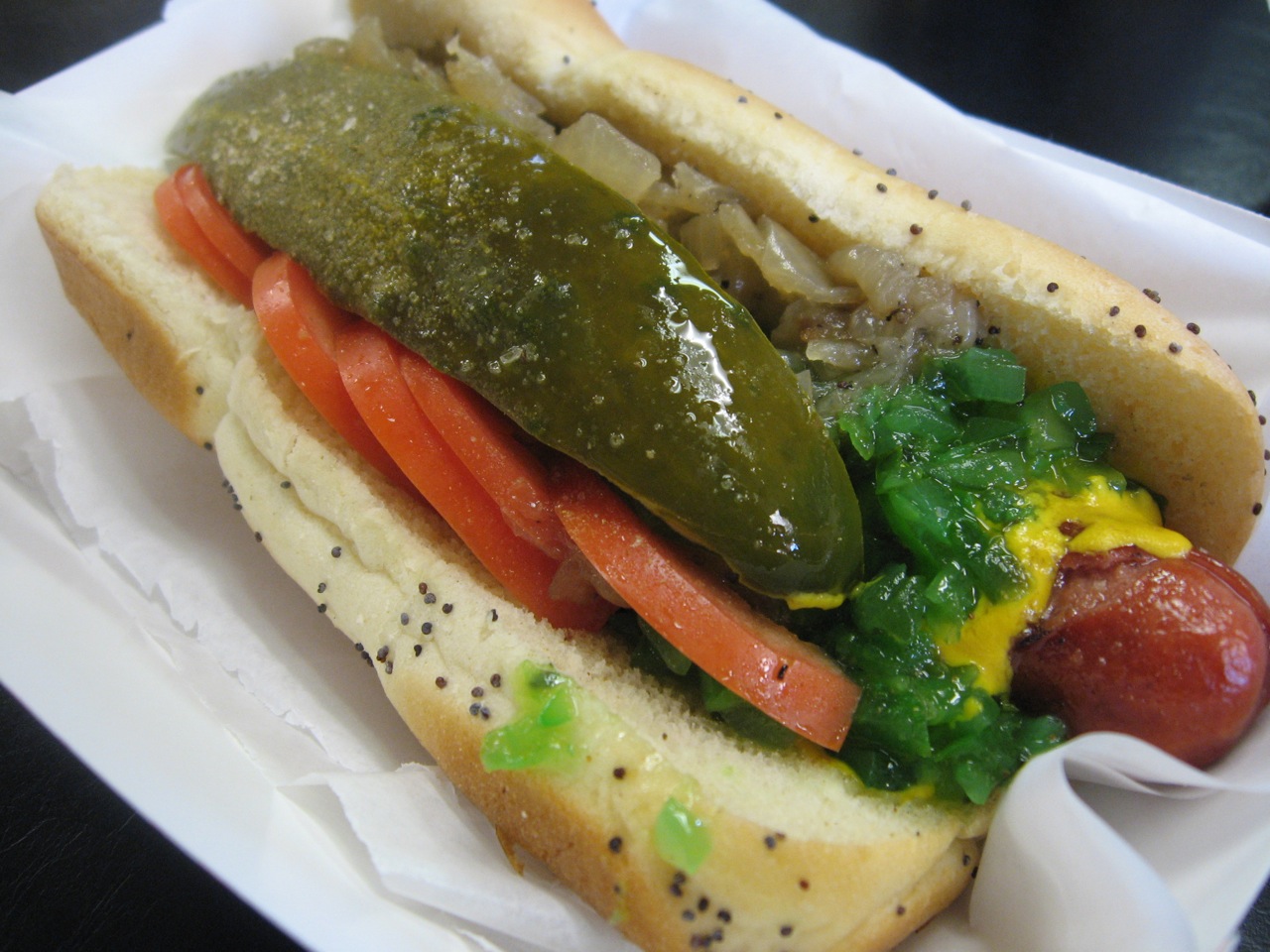
In Chicago it’s a garlicy all-beef dog in a steamed poppy seed bun, yellow mustard, emerald green pickle relish, chopped onions, tomato slices, pickle spear, a couple of spicy sport peppers, and a dash of celery salt.

In LA it’s the chili dog.

And there are iconic restaurants and places to get your dog on.  In New York it’s Nathan’s (preferably on Coney Island) or from a Sabrett’s food cart on a city street in Manhattan; in Chicago it’s Portillo’s or Superdawg, and in LA the dog stop is Pink’s.

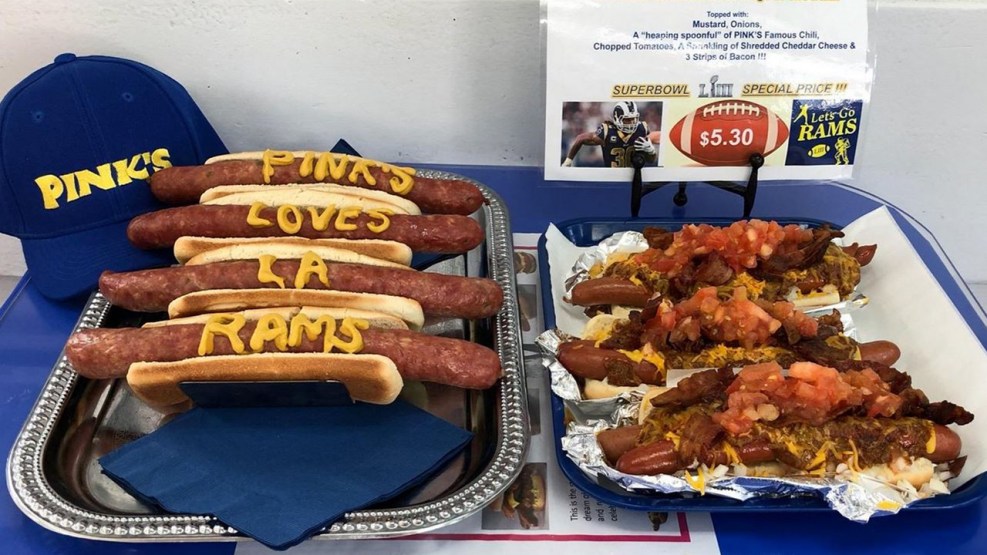
Pink’s began as a food cart in 1939 and has grown into a “it’s worth an hour or more wait” for locals, celebrities, and tourists alike.  Once you get your food you are more than likely going to share a table as well as a few napkins with your fellow dog lovers.  Whether you choose the classic chili dog, some kind of concoction named after a celebrity or the combination of the day/week/month, be sure to toss in some chili (cheese?) or regular fries, onion rings and a tasty beverage.  You will not leave hungry.  We were there just before Superbowl and the special was the LA Rams dog – a double  footlong dog with chili, cheese, mustard, tomato, onion and 3 strips of bacon (Brian finished the whole thing).  Barbara and The Meg opted for the classic.

Pink's


Back in San Diego Graham recommended a local park with established hiking rails for all comers that we ought to check out.  One day it was a fairly easy 2 mile or so hike past an old dam.  Another day was scheduled to be a 7-mile tortious uphill adventure which included getting caught in a rain storm about 5 miles up (did we mentioned it was really, really uphill?).

DSC04840 (2)
Love The Warnings About Potentially Finding Armaments AND Mountain Lion Crossings!

DSC04839 (2)

DSC04837 (2)

DSC04834 (2)
Don’t You Love The Clouds?

DSC04832 (2)

DSC04828 (2)

DSC04831 (2)
Loving The Reflection In The Water

You never know when a beautiful picture presents itself.  We’ve forgotten where these 2  were taken.

DSC04684
Sea Fig or Chilean Sea Fig
Descanso Gardens 12
Blue and White Daisybush

Balboa Park is an incredible place in San Diego.  It’s home to the world famous San Diego Zoo as well as 9 museums, outdoor playing fields and kids playgrounds; an IMAX and indoor gym, lots and lots of biking, walking and hiking trails, and the Japanese Friendship Garden.  We spent an entire day biking throughout the park — excellent!

DSC04942 (2)

DSC04936 (3)
African Senna or Popcorn Bush
DSC04937 (2)
Indian Hawthorne

DSC04938 (2)

DSC04939 (2)

DSC04941 (2)

Barbara and Brian


TIME FOR SOME SOCAL WILDLIFE!

DSC04901 (2)
View From The Cove, La Jolla

January – February, 2019

OK, we’ll admit it.  There’s no sense hiding such passion.  And as long as we lived on the East coast we didn’t even know we had it so bad.  Well, here goes!  We couldn’t get enough of the harbor seals and sea lions and pelicans that can be seen up close and personal at La Jolla’s Children’s Pool Beach and Cove.  It was cool enough to see the pelicans flying while we walked along Sunset Cliffs.

DSC04688 (2)

DSC04687 (3)

DSC04686 (2)

It was cool enough to visit the Children’s Pool Beach and unknowingly be there during pupping season; to stumble across about 40-50 or so harbor seals, sea lions and a fair number of pups.

DSC04706 (3)
Resting On The Beach During Pupping Season

DSC04707 (2)

DSC04710 (2)
Tough Day?
DSC04712 (2)
How Cute Is This Sea Lion?
DSC04715 (2)
Check Out The New Born!
DSC04722 (2)
Furry New Born Up Close
DSC04723
Furry New Born Up Close

DSC04718 (3)

DSC04727 (2)
Juvenile Pup
DSC04720 (2)
Juvenile Pups
DSC04721 (2)
Juvenile Pup

It was something else entirely to see a half dozen or so pelicans hanging out on a jetty.

DSC04912 (2)

DSC04908 (3)

DSC04910 (3)

DSC04913 (2)

DSC04914 (2)

…and it was something else entirely to walk on the rocks at the Cove and be within 3-6 feet of harbor seals and sea lions.

DSC04899 (2)

DSC04896 (2)

DSC04895 (2)


DSC04893 (2)

DSC04898 (2)

DSC04900 (2)

We also had encounters or 2 with young sea gulls, other sea birds, a rabbit camouflaged under some twiggs, some fresh water water fowl, a lizard (hey, Elyssa!), and a hummingbird.

DSC04679 (2)

DSC04678 (2)

DSC04907 (2)
Brandt’s Cormorant

DSC04799 (3)

DSC04806 (2)

DSC04842 (2)

DSC04843 (2)

DSC04844 (2)

DSC04845 (2)

DSC04846 (2)

DSC04847 (2)


Descanso Gardens Lizard (2)

DSC04917 (2)

DSC04915 (3)

We didn’t plan adventures to see wildlife.  We were so very fortunate, with the camera ever ready, to see our month in San Diego with eyes wide open, and to be able to share this experience and our passion for the mammals, reptiles and birds we encountered.

Barbara and Brian


JOSHUA TREE NATIONAL PARK, IMPERIAL SAND DUNES, SLAB CITY, AND THE SONNY BONO SALTON SEA NATIONAL WILDLIFE REFUGE

…but first Barbara’s “Newfoundland to Phoenix and All Points In Between” rock collection minus a big bag of big rocks from Quartzsite…

DSC05105 (2)

DSC05106 (2)

January, 2019

As we drove toward Joshua Tree National Park,two questions caused us some intrigue: “what is a joshua tree and how did it get its name?” and “why is this a national park?”  There are so many national parks and so many more national monuments that the differentiation between a National Park and National Monument is unclear.  For example why is White Sands a monument and the Guadalupe Mountains a park?  Honestly, we’d classify these the other way around.  Maybe it really doesn’t matter; is it all in the perception of the beholder?

After spending a day in Joshua Tree National Park the reason the Park deserves the protection and preservation afforded by the National Park Service is pretty clear.  Joshua Trees only exist in the Mojave Desert.  The Saguaro, Ocotillo and Cholla Cactus only exist in the Sonoran Desert.  The Mojave and Sonoran Desert ecosystems intersect within the 1,235 square miles of the Park, and nowhere else – hence a National Park!

DSC04848 (2)

To figure out what a Joshua Tree is, imagine a twisted, spiky tree straight out of Dr. Seuss!  Easy right?   However, the name Joshua Tree was given by a group of Mormon settlers who crossed the Mojave Desert in the mid-19th century.  The unique shape reminded them of a Biblical story in which Joshua reaches his hands up to the sky in prayer.

DSC04850 (2)
Joshua Tree

The Joshua Tree, Yucca Brevifolia, is a member of the Agave family, a subgroup of flowering plants that also includes grasses and orchids.   (Agave?  don’t they make tequila out of agave?).

DSC04853 (2)
Yup – It’s A Joshua Tree

Years ago the Joshua Tree was recognized by American Indians for its useful properties: tough leaves were worked into baskets and sandals, and flower buds and raw or roasted seeds made a healthy addition to the diet.

Joshua Tree National Park is not just about the trees or yucca.  It’s about rock formations to climb and in which to see different “faces,” and it’s about great hiking up, around and through those rock formations, and to a pristine lake.

DSC04851 (2)
Is That A Cool View Or What?

DSC04852 (2)

DSC04854 (2)
Joshua Trees? Must Be The Mojave Desert!!

DSC04857 (2)

DSC04858
Joshua Tree Blossom

DSC04860 (2)

DSC04866 (2)
Loving The Rock Formation
DSC04867 (2)
The (Grumpy?) Old Married Couple Of Joshua Tree National Park?
DSC04868 (2)
See The Face In The Rock?

DSC04869 (2)

DSC04871 (2)

DSC04872 (2)

DSC04874 (2)

DSC04879 (2)
Sometimes You Get Lucky With A Picture – Check Out The Reflection In The Water
DSC04881 (2)
Reflection In The Water
DSC04883 (2)
Dying Joshua Tree Reminded Me Of The Grim Reaper
DSC04884
Skull Rock
DSC04886
Skull Rock
DSC04892 (2)
Cholla Cactus – Must Be The Sonoran Desert!
DSC04890 (2)
Cholla Garden – Joshua Tree National Park

DSC04882 (2)

As we traveled from Quartzsite to San Diego we unexpectedly passed sand dunes and promised ourselves we would return.  The Imperial Sand Dunes Recreation Area is located from the very southeast corner of California and stretches almost to Yuma, Arizona.

DSC04764 (3)
The Imperial Sand Dunes are the largest mass of sand dunes in the state, and they were formed by windblown sands of ancient Lake Cahuilla.  The dune system extends for more than 40 miles in a band averaging 5 miles wide. Dunes often reach heights of 300 feet above the desert floor, providing a favorite place for off-highway vehicle (OHV) enthusiasts.  The dunes also offer fabulous scenery, opportunities for solitude, and a home to rare plants and animals.

We found the Dunes to be amazingly beautiful, loved seeing the OHVs motoring their ups and downs, and enjoyed our hiking in this otherworldly environment.

DSC04779 (2)

DSC04768 (3)

DSC04767 (3)

DSC04771 (3)

DSC04772 (2)

DSC04774 (2)

DSC04776 (3)

DSC04777 (2)

DSC04783 (3)

DSC04784 (2)

DSC04785 (2)

Slab City is a free campsite and alternative living community located near an active bombing range in the desert city of Niland, California.  Previously an old WWII base, Marine barracks Camp Dunlap, the campsite earns its name for the concrete slabs that remained long after the military base had been bulldozed and abandoned.

DSC04793 (2)

The permanent residents, also known as “slabbers,” most often end up here for the feeling of freedom that comes with living in an uncontrolled, off-the-grid area in the middle of the desert.  There is no incorporation, government, taxes or laws.  With no electricity, fresh water, or sewage treatment, residents are forced to rely on solar panels and their own waste system.  The residents share one communal shower, a concrete cistern that is fed by a hot spring 100 yards away.  The whole concept of Slab City gave Barbara the creeps!

DSC04787 (2)

DSC04788 (2)

DSC04794 (2)

DSC04795 (2)

DSC04797 (2)

Perhaps the community’s most popular slabber was Leonard Knight, the creator of Salvation Mountain.  For over twenty years, Knight lived out of his truck and worked continually on his colorful art “mountain,” which marks the entrance to Slab City.

DSC04786 (2)

DSC04789 (2)

DSC04790 (2)

DSC04791 (2)

DSC04792 (2)

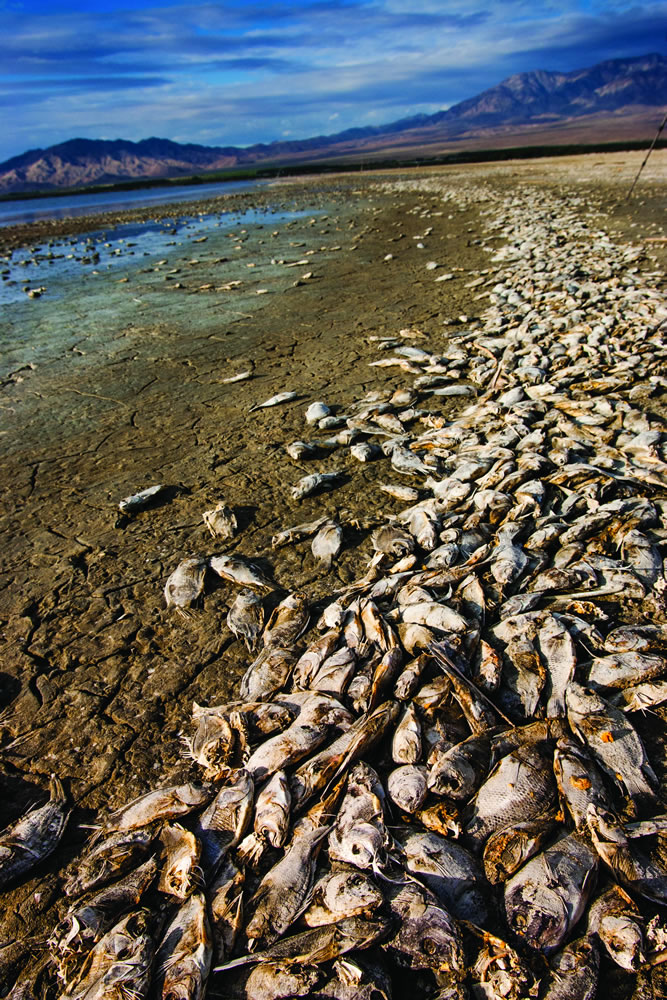
The Salton Sea is a shallow, saline, endorheic rift lake* located directly on the San Andreas Fault, covering 350 square miles predominantly in California’s Imperial and Coachella Valleys.  Its water is twice as salty as the Pacific Ocean (!), and its surface is 236 feet below sea level; the deepest point of the sea is only 5 feet higher than the lowest point of Death Valley (!). The Sea was a productive fishery during the 40s, and with post-war wealth became a popular tourist spot in the 50s with resorts, beach-front homes, and water skiing, seeing the likes of regulars like Sonny Bono and the Beach Boys.  But the incredible salinity of the lake and the heavy agriculture of Southern California slowly destroyed the ecosystem.  Runoff from farms polluted the sea, and most of the fish species could not survive; migratory birds were poisoned with botulism and other lethal bacteria. Currently the banks of the Salton Sea are vivid, surreal empty landscapes littered with dead fish and other detritus of human habitation.  This is just weird enough to make us wish we could have explored another half day.

See the source image


See the source image

The Sonny Bono Salton Sea National Wildlife Refuge is located in the southeast corner of the Salton Sea and just a brief distance from Slab City.   The Refuge is located within the Pacific Flyway, an important resting and wintering place along the migration route for birds.

DSC04798 (2)

DSC04800 (2)
Salt Deposits Caused By Evaporation Of Water From The Salton Sea
DSC04801 (2)
Salton Sea Shoreline And Adjacent Salt Flat
DSC04802 (2)
Salt Deposits Caused By Evaporation Of Water From The Salton Sea
DSC04804 (2)
The Salton Sea Looking Just Like Any Other Inland Lake!
DSC04805 (2)
Sunset On The Salton Sea

Barbara and Brian


* An endorheic rift lake “is a limited drainage basin that normally retains water and allows no outflow to other external bodies of water, such as rivers or oceans, but converges instead into lakes or swamps, permanent or seasonal, that equilibrate through evaporation.”

LOOK MA – WE MADE IT TO SAN DIEGO


See the source image

January – February, 2019

Wintering in Southern California should be a warm and inviting experience.  Wintering in San Diego should at least be all that is expected of SoCal.  It’s 15 miles from the Mexican border (more on that later).  It’s 128 miles to Hollywood.  It’s 163 miles to Joshua Tree National Park and the Salton Sea and Slab City (more on that later).  It’s the secondary base for the United States Pacific Fleet.  It is home to one of the world’s finest zoos and safari parks.  It claims to have the greatest fish tacos in the U.S.  And it’s Graham’s and Leigh’s present home.  Wintering in SoCal should be 70 degrees fahrenheit, shorts and t-shirts.

Wintering in San Diego should not be in the 50s during the day and the high 30s – low 40s overnight, with 1 day of rain (driving downpour!) for every 2 days of sunshine.  But this is 2019, and what should not be, well, is. 

DSC04934 (3)

DSC04933 (3)

Being troopers though we made the best of the worst and had a grand time, even getting caught in the rain a time or 2 along the way.  We had great adventures with Graham and Leigh, and we babysat their cats while they were in Chile on vacation.  We had a swell visit with Barbara’s sister, The Meg, who happens to live in the shadow of the great old time movie and TV studios in Culver City (more on that later).  Barbara reconnected with Kithie, a friend from the 70s, and they spent a wonderful couple of hours reminiscing and catching-up.  Kelley and Tom, friends from PA and crazy Michigan fans, were in town for business and we got to stay connected with a tour of the USS Midway (more on that later) and a fantastic dinner in the Gaslamp District.

See the source image

Coming into San Diego was an interesting trip.  We left Quartzsite and did a little zig zag generally in a southwest direction across the flat of southeastern California, crossed through the unexpected and impressive Imperial Sand Dunes (more on that later), and eventually ended up westbound on US Highway 8.  Brian figured that it would be a gradual downhill ride into San Diego (elevation 11 – no kidding!), but he didn’t realize that the San Jacinto Mountain Range had to be crossed first!  The San Jacintos rise from  foothills a few hundred feet above sea level to two peaks, some distance apart, of over 4000 feet, before a 6 degree downhill slope into the city.  What’s another quarter tank of gas?

DSC04693 (3)

DSC04692 (2)

DSC04694 (2)

We’ve both been here before.  Brian’s Aunt Paula and her husband lived here post WWII, and a visit or 2 took place along the way.  Brian had been to San Diego for a mid-winter meeting and then the annual conference for a social service trade association of which he had been elected to the Board.  Representing her employer Barbara had attended a conference in the last couple of years.  And Brian and Graham had been to the City on their west coast baseball tour a bunch of years ago.  The typical touristy places had been done.

We loved the Pacific Ocean.  Shorelines were beautiful and busy everyday with walkers, runners, skateboarders, bicyclists, and tourists.   The first “what should we do” was lunch with Graham, and THEN a walk along Sunset Cliffs at Point Loma.

DSC04675 (2)

DSC04676 (2)

DSC04677 (2)

With Graham and Leigh we hiked along the bluffs “bayside” as well as “oceanside” at the Cabrillo Monument, saw the battlements set-up to protect the City during WWII and, oh yeah, watched a nuclear submarine come into port.

DSC04742 (2)

DSC04747 (2)

DSC04745 (2)

DSC04749 (2)


DSC04755 (2)

DSC04757 (2)

DSC04754 (3)

We rode our bikes on the Mission Bay boardwalk, and along the silver strand on Coronado Island.

DSC04921 (2)

DSC04920 (2)

DSC04918 (2)

We hiked along the La Jolla seaside sidewalks from the Children’s Pool to the Cove and sojourned with seal lions and harbor seals (more on that later).

DSC04699 (3)

DSC04700 (4)

DSC04701 (3)

DSC04702 (2)

DSC04704 (2)

DSC04916 (2)

…and checked out the beauty of tide pools…

DSC04729 (2)

DSC04730 (2)

DSC04731 (2)

DSC04929 (2)

DSC04734 (2)

DSC04735 (2)

DSC04737 (2)

DSC04739 (2)


We spent a glorious day walking along the rocky shore in Torrey Pines State Preserve.

DSC04931 (2)

DSC04922 (2)

DSC04927 (2)

DSC04923 (2)


DSC04930 (2)

DSC04924 (2)

We were treated to a wonderful dinner looking across the bay at the brightly illuminated City.


But it’s all about the Pacific Ocean, and Barbara was mesmerized  by it’s power, vastness and the unrelenting crash of the waves against the shore.

The Pacific Ocean is simply the bomb!  Add our time with Kithie, The Meg, Tom and Kelly, and most of all Graham and Leigh and this was a great place to spend a month this winter.

Barbara and Brian


QUARTZSITE


DSC04547 (2)
Camels? Really?

January, 2019

Our original travel plans had us leaving Tucson, stopping briefly in Yuma as a way point before pulling into San Diego for a month.  But as with so many things in life, flexibility is good.  Barbara’s oldest friend and her husband have been RV owners and enthusiasts for far longer than us, and they were heading to Quartzsite at the end of January for the Big Show.  From talking together over the years we knew them to be rockhounds, and at least half of the Big Show is about rocks!

We made a quick change of plans, and to sweeten the deal, BFFs from Pennsylvania, Tom and Landa, who started out full-timing about 3 months before we hit the road told us they would be right pleased to hang with us in this desert mecca for RV’ers.  We hadn’t seen Tom and Landa for almost a year, and really, really looked forward to reconnecting in person.  Unfortunately as it turned out Barbara’s childhood friend and her husband were unable to join us.

Quartzsite is a town in southwest Arizona, 36.3 square miles and 3,700 souls about halfway between Yuma and Lake Havasu City, and 18 miles east of the California border.  From 1863 to the 1880s the site was little more than a waterhole that turned into a stagecoach stop – Tyson’s Wells.  Tyson’s Wells soon became a western boomtown as minerals and gems could literally be picked up from the surface of the ground and with a little work rich veins were found in abundance.  It was a miner’s dream.  The mines have all since been run dry and closed.

Quartzsite is a mecca to visitors and exhibitors for rocks, gems, mineral specimens and fossils during the town’s famous two-month-long gem show and swap meet every January and February.  Thousands of acres surrounding the town are governed by the US Bureau of Land Management (BLM), and they are open to campers.  Stop in town to obtain a 2-week camping permit, pick a spot, and set up your boondocking (dry camping) campsite on BLM land.  For the 2 months of the show the population of Quartzsite can swell to over 100,000, and it becomes the boondocking capital of the world.  The bars, restaurants and small grocery stores in town are crazy busy, but the most sought after products are propane and potable water, and the most needed service is a dumping station; RVs are lined up along the roadway awaiting their turn to fill-up and empty!  For those of us not ready to boondock, the RV Parks are able to charge a premium.

The “swap meet” is a gigantic flea market.  Everything you need, think you need or ever might consider needing (including dental picks!) can be found.  Himalayan Salt Lamps, ladders, camp chairs, hitches, solar panels, hats, sewer hoses, clothes, tools and hardware, prepared foods, snack foods and food trucks, jewelry, etc. are there for the choosing.

While we have been travelling Barbara has been picking up rocks from here and there, placing them carefully in a baggie and labeling the bag with the where and when of her find.  Somehow I hadn’t figured out that she was becoming or had always been (?) a rockhound.  A secret no more; Quartzsite offered her (and the thousands of other rockhounds as well) a chance to wander miles and miles from vendor to vendor, from site to site, and to drool over gems and minerals and rocks, from rough hewn to polished, from pebble to too big to handle, from costing pennies to multiple thousands of dollars.  And wander miles and miles from vendor to vendor from site to site we did.  The absolutely best shop, and the recommended stop, is T-Rocks.  All to the better the owner is a native of Michigan’s Upper Peninsula and a U of M grad.  Many new additions were made to the Garrison rock collection!

The Big Show is also a chance to wander through the latest models of travel trailers, fifth wheels and motorhomes, and to walk around under the Big Tent.  The Big Tent is an accessory fans heaven with RV supplies, camping supplies, gizmos and gadgets, vacation campsite companies, RV Clubs, and travel clubs all represented.  And, of course the requisite food trucks with long lines of hungry visitors.  Overwhelming – you bet!

Quartzsite is a wonderful place in the country to get off paved roads and enjoy the things you can only see from the seat of an ATV or UTV.  Miles and miles of rough dirt paths are just waiting for exploration so put on your warm clothing, helmet and some kind of barrier over your nose and mouth to keep out the dust, and hit the path!  Shame on us for not knowing; we could have made arrangements for renting an ATV or UTV.

There were a few unique things not to miss in Quartzsite.

Let’s start with the naked bookseller and his book store/honky tonk.  Yup – the owner has been selling books for more than 25 years at the sprawling Reader’s Oasis bookshop wearing only a g-string.  Paul Winer or Sweet Pie is the naked bookseller; however, he started life as a touring musician, who on a whim started performing in a G-string (although if you ask him he’d admit to sometimes being totally naked).  In the 60s and early 70s he won 68 court cases involving his public nudity! In recent years Paul has been struck with serious illness, and his time at the bookstore has waned; he reports selling off 30,000 books to make room for a concert hall.  From a temporary stage (for now!) he and the band perform on Fridays and Saturdays the honky-tonk style of music that once was his avocation and obvious love.  We  had the good fortune to be able to hear one of their concerts.

DSC04626 (2)

The strange, true tale of the naked bookseller

DSC04627 (3)

DSC04631 (2)
Paul Winer – Ever So Gracious Even Today!

Paul and his family moved to Quartzsite to be closer to his parents. Unfortunately his only child died at age 8 of a viral heart condition, and he and his wife created Celia’s Rainbow Garden to honor her.  The garden serves as a memorial to Celia as well as the burial grounds of other local citizens.

DSC04628 (2)

While the naked bookseller may be Quartzsite’s most famous citizen, the grave and monument to Hi Jolly commemorates another famous citizen of the town.   The Hi Jolly Cemetery is operated and maintained by the Town of Quartzsite for the purposes of providing a cemetery, historic site and park.  The cemetery is dedicated to Quartzsite’s pioneer families, many of whom have been laid to rest here.

As Paul Harvey* would say…Page Two!  Born in Syria as Philip Tedro to a set of Greek parents, Jolly would not get his Americanized name for many years. As an adult Jolly converted to Islam and made the pilgrimage to Mecca, taking the name Hadji Ali. It was after this conversion that the U.S. Calvary forces contracted Jolly to become one of their first riders in the experimental Army Camel Corps. Upon coming to the states his name was butchered by the soldiers, and became “Hi Jolly,” the name by which he would forever be remembered.

During the mid-1800s when much of the southwest of America was still uninhabited desert, the government decided they would deal with the terrain like the desert dwellers of the Middle East and hire camel drivers, such as Hi Jolly, to carry their goods across the arid terrain.

DSC04543 (2)

DSC04544 (3)
Hi Jolly Grave and Monument

We got to visit a tree that is reportedly 1019 years-old.

DSC04549 (3)

DSC04548 (2)

The most unusually fascinating display in town is Jo’s gum gallery.  Jo’s sister began the collection during WWII, and she handed it off to Jo in the late 40s.  Jo has made the collection her passion, and she continues to add to the displays mostly through donations.  The gum is still in their original wrappers, and very nicely displayed in chronological order in a small pink building behind her home.  She has arranged them, for the most part, by year, which makes these little time capsules much more interesting.

DSC04633 (2)

DSC04652 (2)

DSC04651 (2)

DSC04639 (2)

DSC04638 (2)

DSC04659 (2)

DSC04658 (2)

And a few things pretty cool in the region to see.

…We took a hair-raising ride through part of the Kofa Wildlife Refuge.

DSC04602 (2)

DSC04603 (3)

DSC04605 (2)

DSC04606 (2)

DSC04610 (2)

DSC04613 (2)

DSC04613

DSC04624 (2)

…and hiked through Palm Canyon.  The question is why did these palm trees grow here, and only exist in the crease in the rocks?

DSC04625 (2)

DSC04609 (3)
Path Into Palm Canyon

DSC04619 (2)

DSC04623 (2)

See the source image

DSC04622 (2)

…we kicked around the Bill Williams River National Wildlife Area and got up close with a blue heron or 2.

DSC04584 (2)

DSC04566 (2)
Anyone Know What This Water Bird Will Grow Up To Be?


DSC04561 (3)

DSC04562 (2)

DSC04583 (2)
Learned That This Is The Seedpod Of The Twisted Mesquite Tree. Looks More Like An Insect, No?

DSC04567 (2)

DSC04578 (2)

DSC04580 (2)

DSC04579

…drove over Parker Dam

DSC04551 (2)

DSC04550 (2)

DSC04552 (2)
View To The North From The Dam
DSC04555 (2)
View To The South From The Dam

…walked over the London Bridge in Havasu City.  In 1967, the Common Council of the City of London began to look for potential buyers for the London Bridge. Lake Havasu City founder and entrepreneur Robert P. McCulloch placed the winning bid.  Each block was meticulously numbered before the bridge was disassembled.  The blocks were then shipped overseas through the Panama Canal to California and trucked from Long Beach to Arizona.  Following reconstruction of the London Bridge, Lake Havasu City rededicated it in a ceremony on October 10, 1971.  Since then, it has consistently remained a favorite among Arizona attractions, drawing in visitors from around the globe.

DSC04598 (2)

DSC04586 (2)

DSC04590 (2)

DSC04600 (2)
Who Would Be Prohibited From Jumping?
DSC04599 (2)
View From London Bridge Into Lake Havasu

…and braved gale force winds (no, really!) to see the Blythe Intaglios (geoglyphs). The Blythe Intaglios are a group of gigantic figures incised on the ground near Blythe, California in the Colorado Desert. The ground drawings or geoglyphs were created by humans for an, as of yet, unknown reason. The Colorado Desert contains the only known desert intaglios in North America, and the Blythe Intaglios are the most well-known of the over 200 intaglios in the Colorado Desert.

DSC04663 (2)

DSC04664 (2)

DSC04665 (2)

DSC04666 (2)

DSC04668 (2)


DSC04670 (3)

DSC04671 (2)

DSC04672 (2)

DSC04673 (2)

DSC04674 (2)

Quartzsite may not be a place we ever visit again, but the 10 days passed quickly.   We made new friends, Jackie and Gary, a couple of wonderful crazy Okies Tom and Landa happened to meet at the Havasu Balloon Festival.  The best though was our time, dinners and playing canasta with Tom and Landa.

Onward to San Diego!

Barbara and Brian


*5 cents to anyone who remembers Paul Harvey!