Posts

SPRINTING WEST

June, 2021

Leaving from International Falls, Minnesota we would have 1381 miles to travel before we reached our destination arriving in Coeur de Alene, Idaho. Our route took us southwest to the border of Minnesota and North Dakota and then across North Dakota and Montana, following westward on Interstate 94 which becomes Interstate 90 in Billings, Montana (why?). We’d get to know the Northern Plains intimately while on our journey.

We thought we had been to the attractions in North Dakota, and had exhausted exploring the cities and stuff to do along the Interstate 90 corridor in Montana during our trip to and from Glacier National Park a couple of summer’s ago. So we planned on a sprint until we reached Coeur de Alene…our goal to complete the trip in a week – much less than half of our usual time frame to cover such distance.

Brian thought it would be pretty cool to stop in Fargo – someplace we had never been – but in the planning phase of the the trip we found that the campground reviews near or in Fargo didn’t impress. Detroit Lakes, Minnesota is 50 miles to the east and had several highly rated places for our stop over.

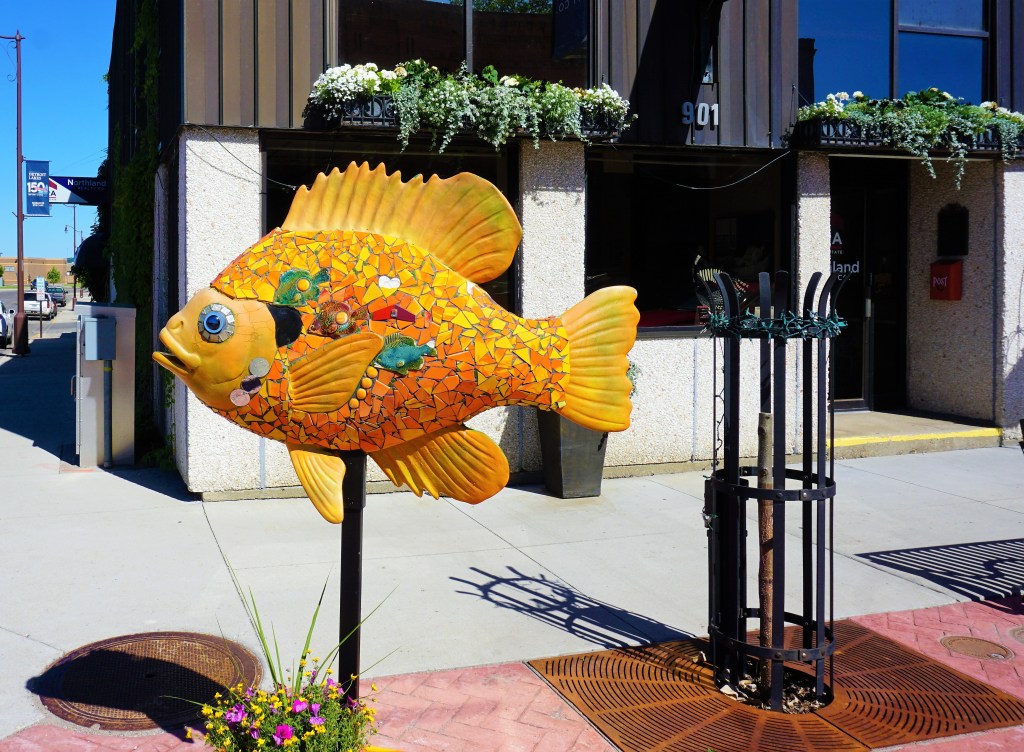
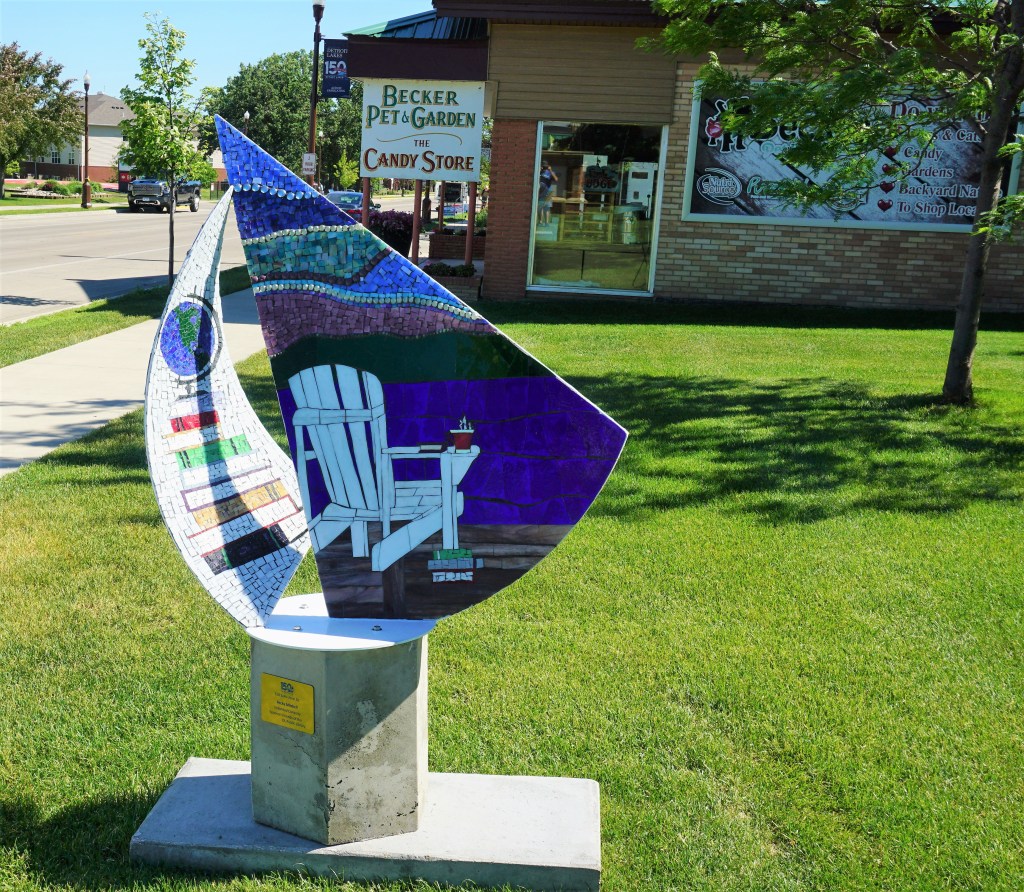
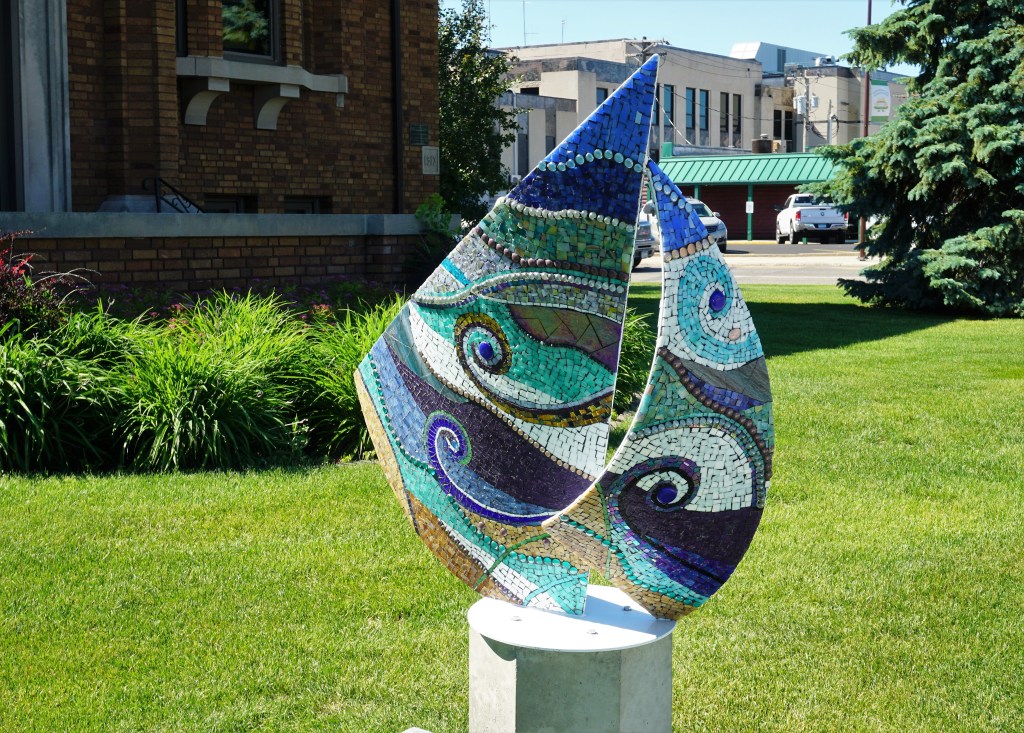
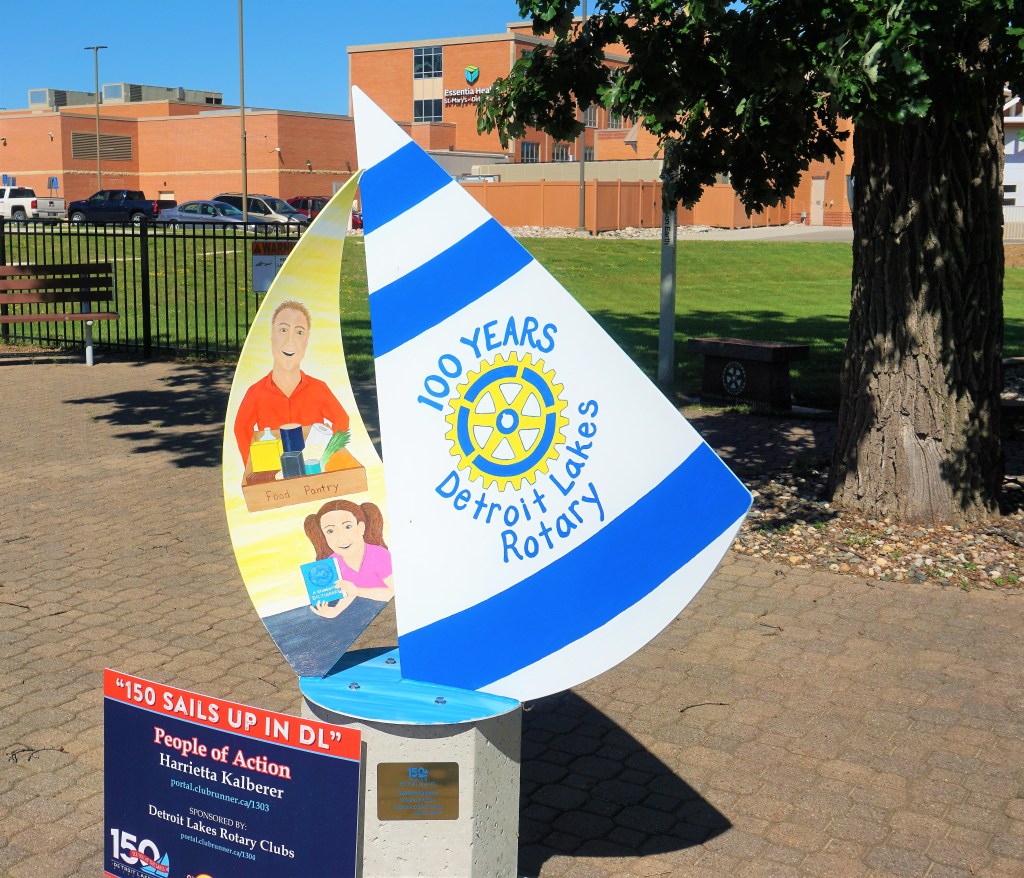
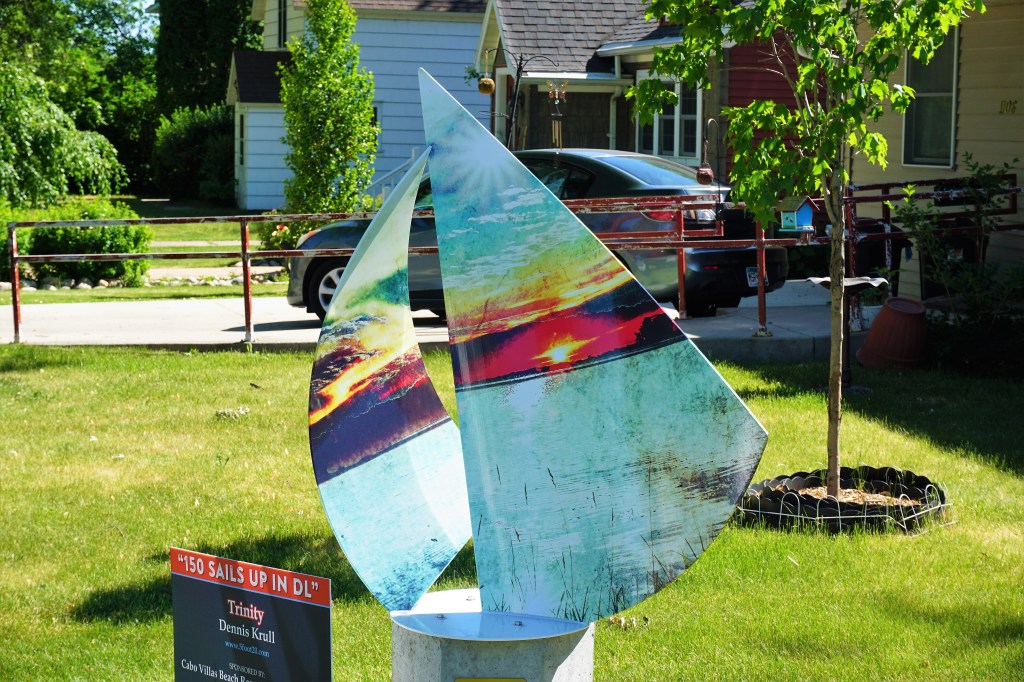
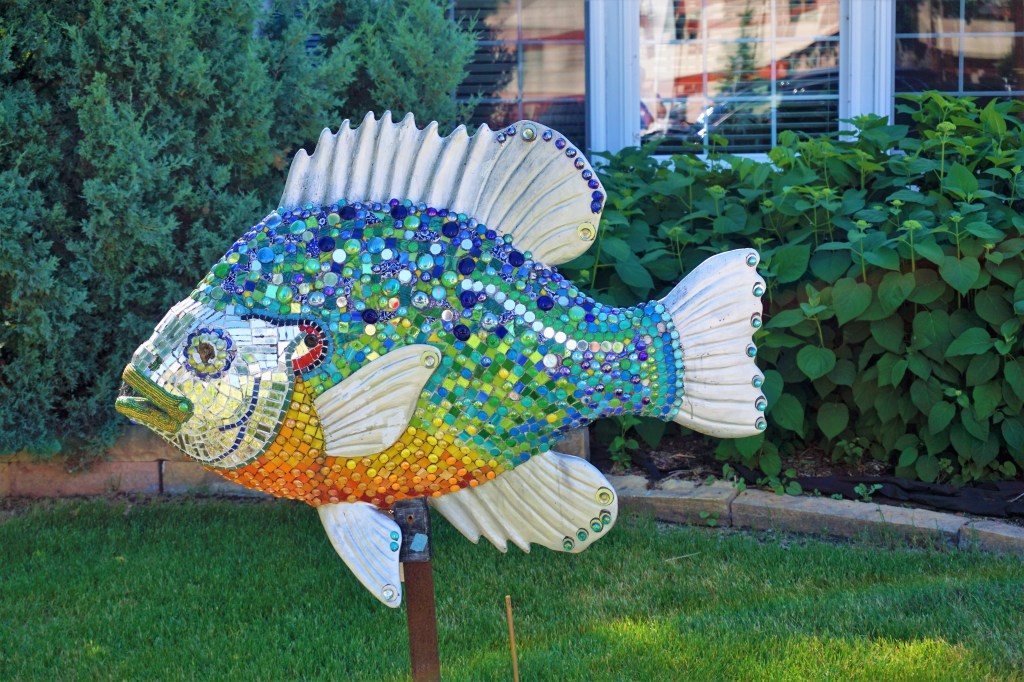
Finding our campground and getting set-up was a breeze. We went off to explore the area and were wonderfully surprised. This is small town America at its best – civic pride on display! To begin with, the 9,300 residents have a terrific summer vacation spot – beautiful lakes, waterfront hotels/motels, restaurants, bars and nightlife. But as much as summertime may bring to the city and merchants a majority of its annual revenue, and it would be easy to only cater to the vacationers and their families and not put much effort into the community at large, we found the downtown thriving, businesses active, a schedule of city-wide events posted at the ball field, and a charming shopping district. In honor of its 2021 sesquicentennial Detroit Lakes had undertaken a public art project called “150 Sails Up in Detroit Lakes.” All over town150, one-of-a-kind sailboat sculptures adorned with artwork from almost 100 regional artists have been installed. Add in 50 sunfish sculptures (also placed all over town) commissioned for a 2003 “Sunny in Detroit Lakes” event, and this is a pretty cool place. We spent an hour or so driving through town looking for sailboats and sunfish sculptures, heard loon calls at sundown, and found ourselves wishing we had taken more time to hang-out in Detroit Lakes.  
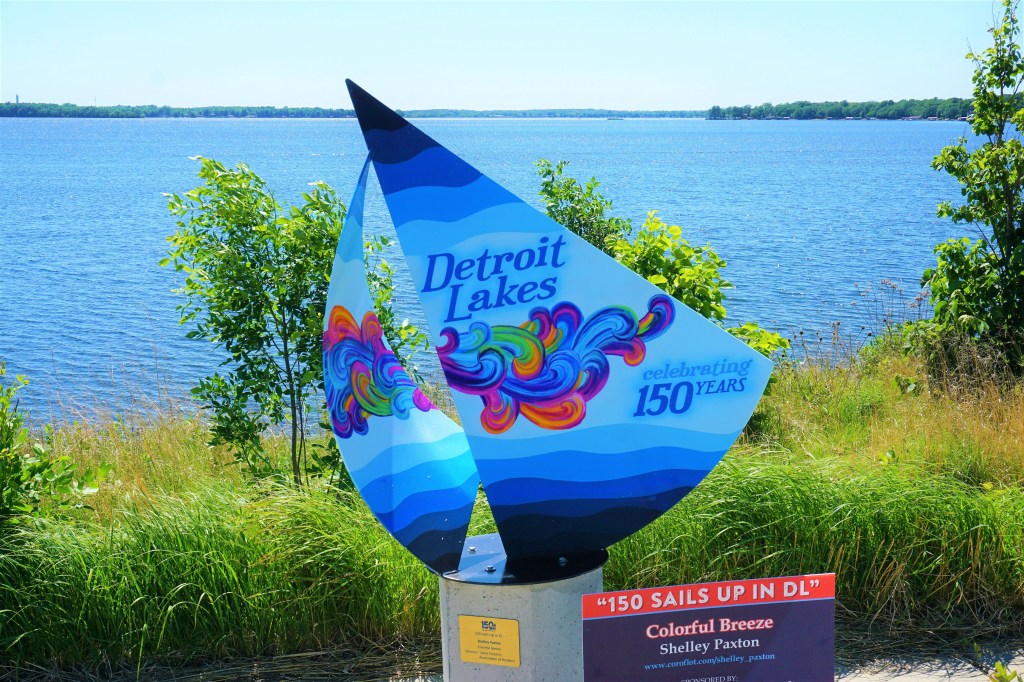
Big Detroit Lake In The Background
Big Detroit Lake
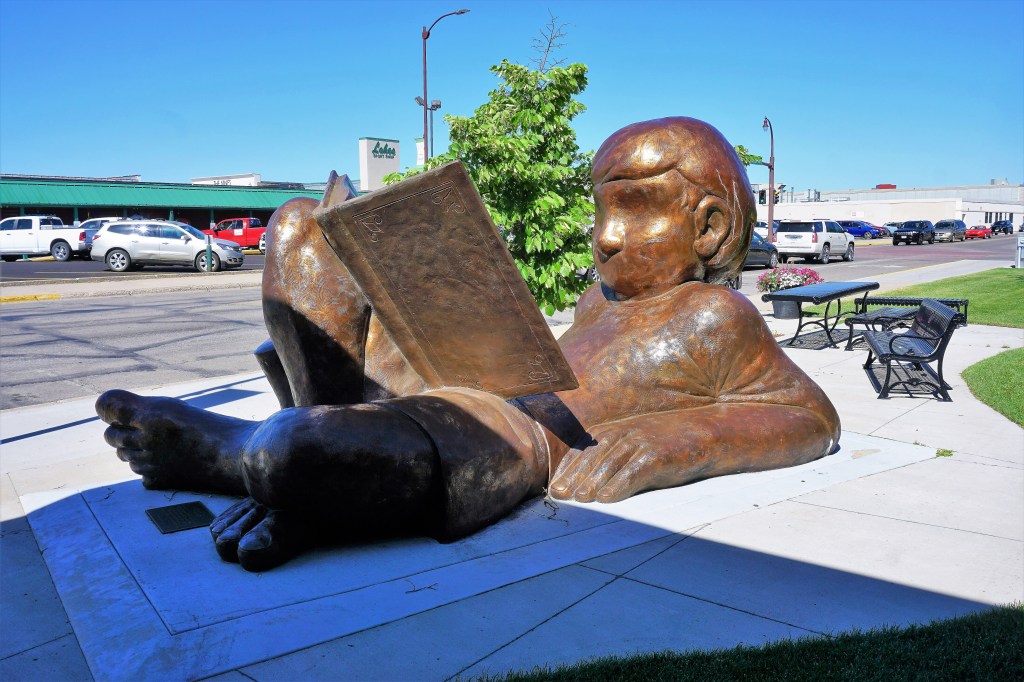
Statue Outside The Detroit Lakes Public Library!! How Cool Is That?

Next stop just outside of Bismarck in Menoken, North Dakota. If this were the Old West instead of the Great Plains we’d call Menoken a one-horse town. The campground was not much to look at – just off of the Interstate, self check-in, camper hosts but no office, no trees and flat. BUT, the sites were level, the bathhouse brand new and the campground had the best Wi-fi of ANY park we had encountered in a long, long time. We felt safe, didn’t unhook our Jeep, and in the morning we were off to our next stop.

See the source image

The winds are a constant companion on the Great Plains, and high winds are not uncommon. As we passed by Bismarck on our way due west the winds suddenly whipped into a frenzy. Barbara became very fearful of the wind tipping Aimee onto her side!

RVknowhow.com states that headwinds or tailwinds may be tolerated, but angled or straight line broadside winds sustained at more than 30 miles per hour or gusts of 50 miles per hour or more may put an RV at severe risk and dangerous to drive. Our choice was to find a place to hole-up until things calmed down or persevere and take our chances. So, about 125 miles later we pulled into the parking lot of Theodore Roosevelt National Park…safely.

Miles City, Montana is another delightful, beautiful small town America place to live. 8,900 folks call this gem home. Not a place for families to vacation it doesn’t have the wealth of Detroit Lakes, but does have the same sense of civic pride, neighbors taking care of neighbors, and a great place to raise kids vibe that came across to us as we rode our bikes around town. Favorite scene? Kids and families having a blast enjoying the local swimming hole that is deep enough to have a high dive and roped off from the other 2/3 of the pond in which 2 broods of 16 ducklings were swimming about. In hindsight Miles City was another place we might have wanted to spend more than an overnight.
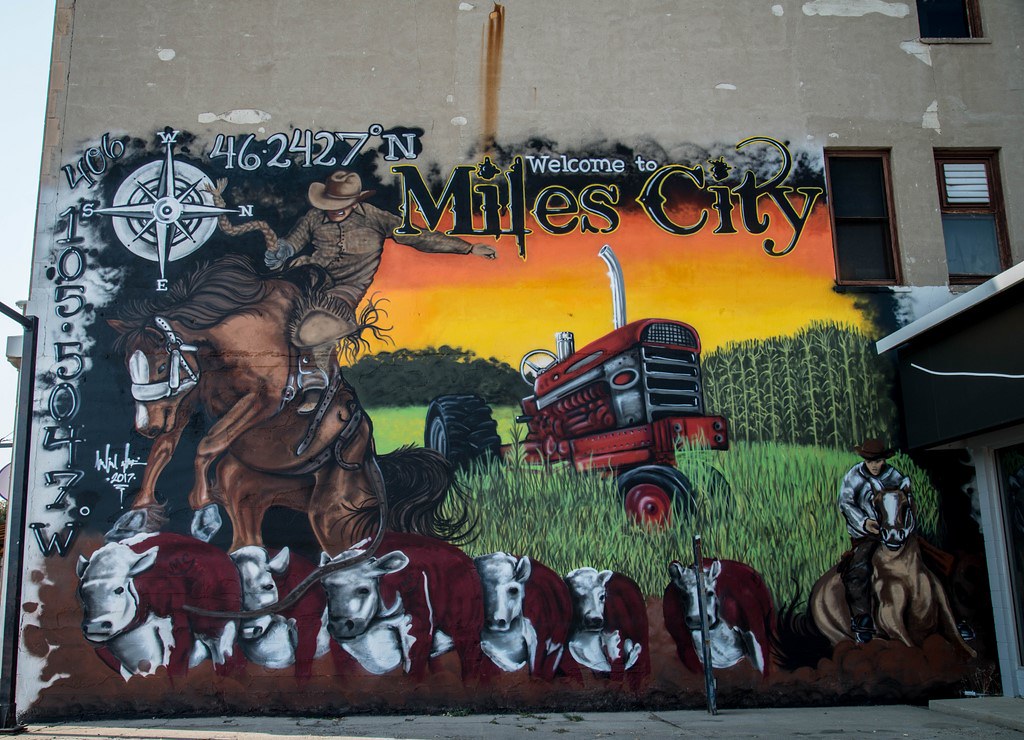
See the source image

800 miles and 3 days into our westward journey we pulled into Bozeman, Montana, a city we had spent time in a couple of years ago. What was new to do this time around? How about a day trip westbound for a hike and to sound the ringing rocks…

The directions to ringing rocks took us 64 miles west on Interstate 90 and then along 7 miles of unpaved unimproved, and unnamed road somewhere near the town of Whitehall, Montana that required 4-wheel drive and high clearance. We chickened out, oh about, a steep mile or so from the rocks and hiked the rest of the way. The vistas made the hike well worth our energies.

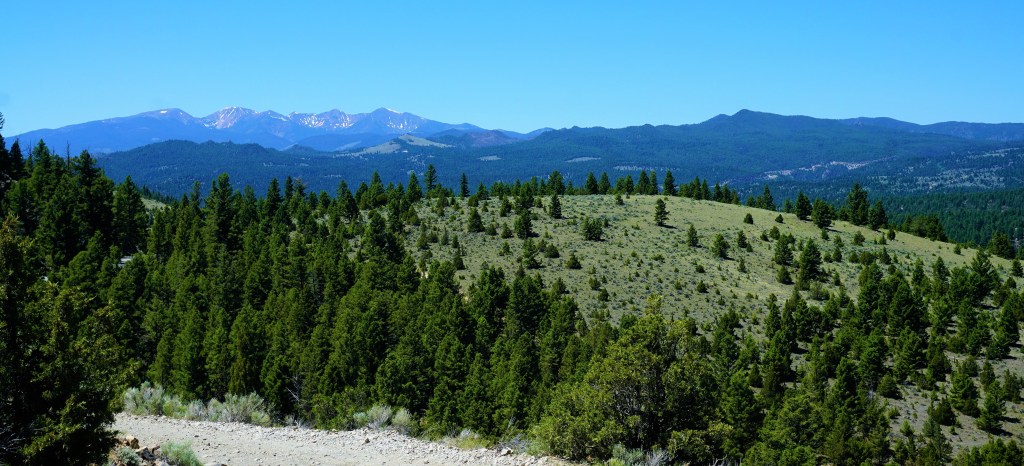
When humans find stones that can make music, they tend to take note (with apologies to the pun police)! The rocks in this unique geologic formation chime melodically when tapped lightly with a crescent wrench or mallet. It is believed that the ringing is a combination of the composition of the rock and the way the joining patterns have developed as the rocks have eroded away, though ultimately a concrete scientific explanation has yet to be arrived at. Curiously, if a boulder is removed from the pile, it no longer rings. Slightly different pitches and timbres emanate from thousands of rocks in the formation. Grab your striker and spontaneously intone the next great symphony!

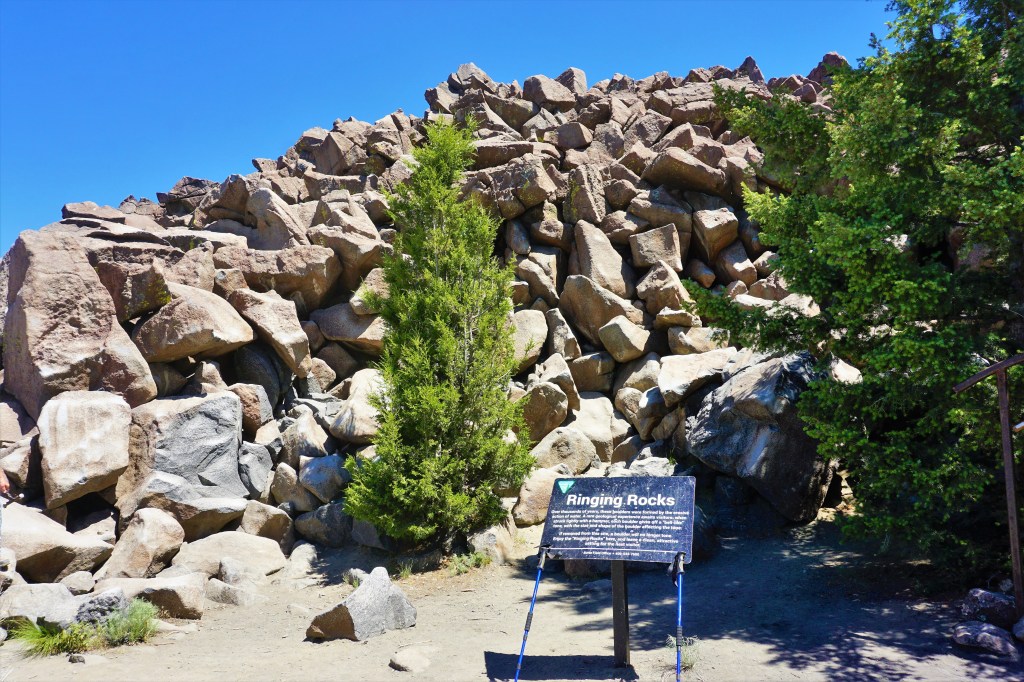
Strikers

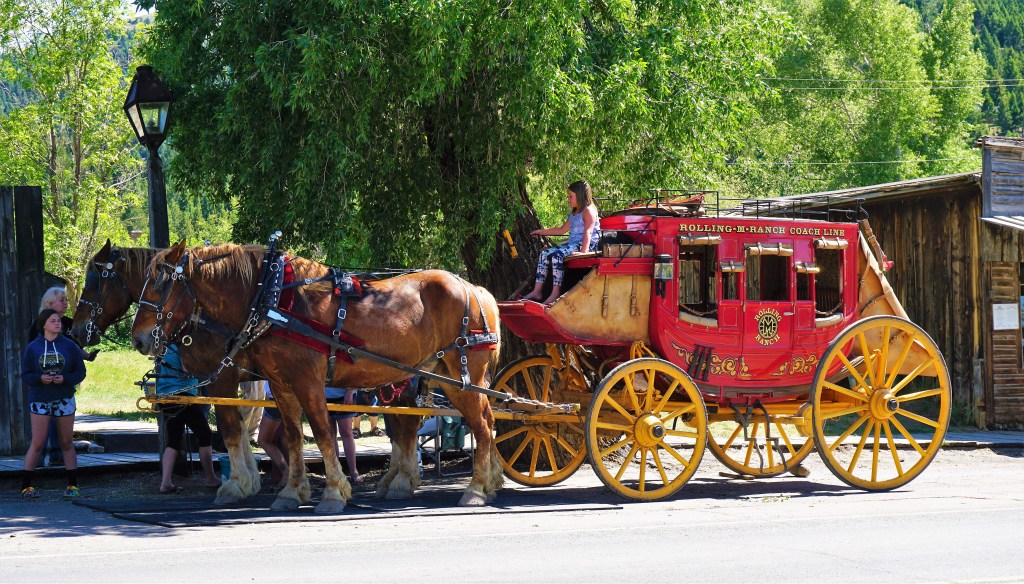
Virginia City, Montana is notable as a mid-19th century gold boom town, and as Montana’s first territorial capitol. The discovery of gold brought over 10,000 prospectors to the area, and the town developed to supply the needs of those seeking their fortune scrabbling in the dirt. When the gold ran out 10 years later the town was quickly abandoned and left to ruin. Lovingly restored the town was recreated to commemorate the excitement of the era. There is a sign on each building describing its original purpose, and, should there be any legend associated with a particular building (check out the hanging beam), it is described as well. Add in stagecoach rides, restaurants, a playhouse, and, of course, a rough neck saloon makes for an enjoyable day trip and a chance to learn more about city life in the old west.
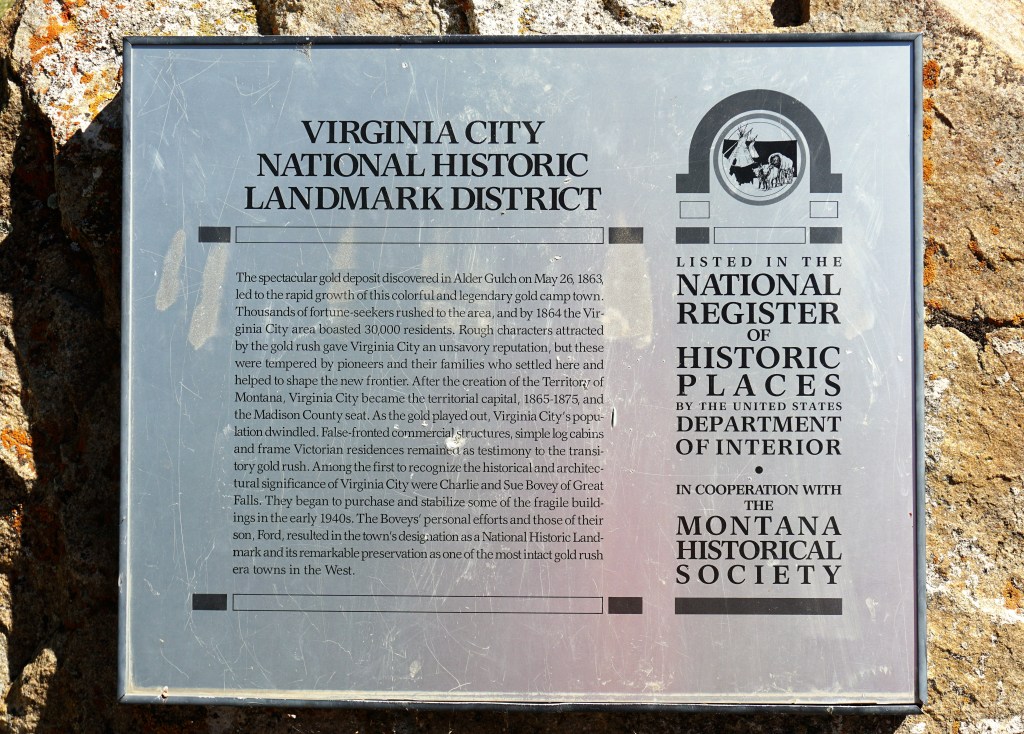
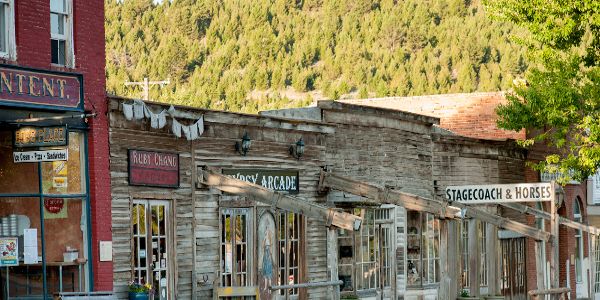
Virginia City
See the source image
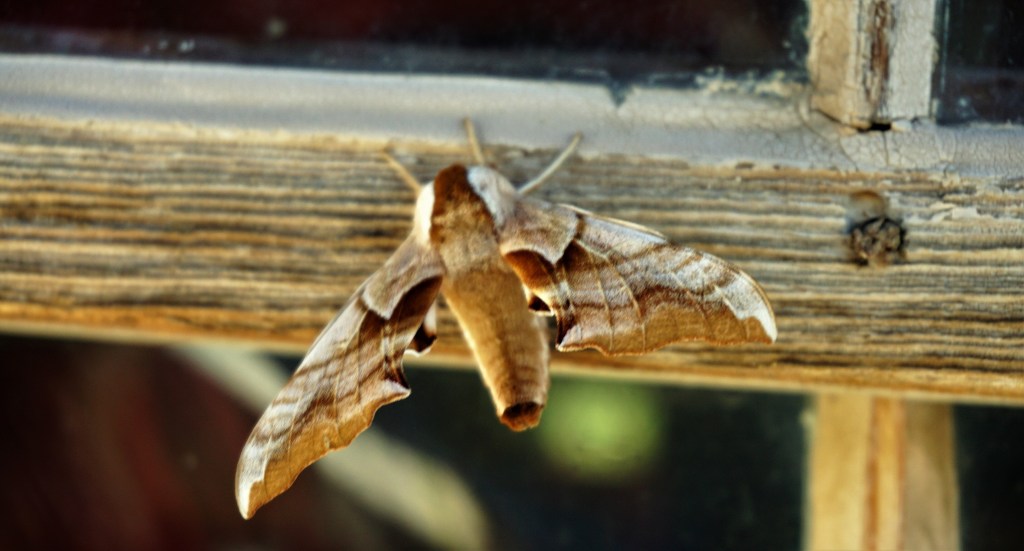
Eyed Hawkmoth

Missoula, Montana is our last stop on this sprint, and is just 164 miles east of Coeur d’ Alene.

When we got back to Aimee from our visit to Virginia City we did our usual night before preparation…remove and store the tire covers, check the tire pressure, check the oil level, and be sure that the wipers were solidly attached and not stuck to the windshield. With short stays we also hook up the Jeep to Aimee’s tow bar (sometimes we never even unhook) and disconnect the transfer case in our “towed”. We’ll check to see that the turn signals, brake lights, emergency lights, and lights for nighttime running are in working order in the morning…just as we’ll bring in the slides and raise the stabilizing jacks before leaving. Whether or not we dump the gray and black tanks depends on how long we’ve been in camp…3 days or less and we’ll probably not bother.

Imagine our surprise that the Jeep would not just not start, and was 100% dead the next morning. So, did we want to extend time in our Bozeman campground or head out to Missoula and deal with the Jeep there? Curiously the lights, turn signals and emergency flashers were working…we supposed the electrical charge from Aimee was just enough current. So we took the chance and motored our selves into the larger city of Missoula.

Long story short? We called for a jump, which did not get the Jeep started…the young man worked for a solid hour to figure out what to do with no success. So we worried whether a bigger, more expensive repair would be required? We had the Jeep towed into the local dealership, and with a shout out to Lithia Chrysler, Jeep, Dodge for accommodating these travelers the battery was replaced (a bad cell in the battery was the problem all along) and we were back in business. By the way, if looking for the battery compartment in a Jeep, it’s under the passenger front seat!

As with Bozeman and a previous visit in Missoula on that same trip 2 years ago the question is what other mischief could we get into?
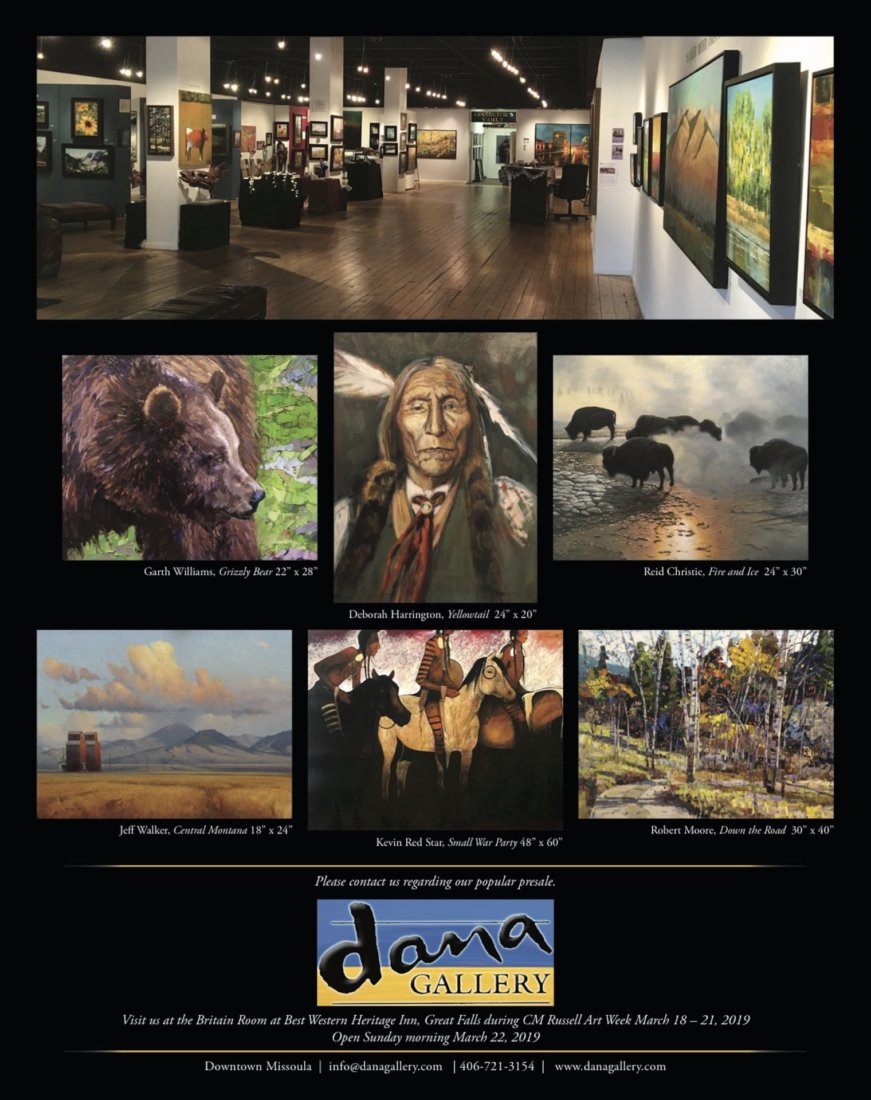
The Dana Gallery in downtown Missoula is dedicated to local artists, and is astounding and astonishing for a couple of reasons, The variety of art and artists’ choice of medium was diverse, the topics ranged from straightforward landscapes and wood carvings to abstract drawing, painting and use of multi-media, and the owners are a knowledgeable, welcoming and warm couple. Dudley and Candace Dana, who on a whim in 1996 opened the galley, in spite of their banker’s advice, as a place specializing in photography. Over the past 25 years the gallery has expanded to its present eclectic collection that has won numerous awards including being named as one of the “Top 25 Galleries in the US” by American Art Award.

On a more personal note Dr. and Dr. Dana are psychologists that teach at the University of Montana, and Dudley’s practice is involved in working with youth – right up Brian’s alley. If other customers had not come in to visit the gallery we’re sure Dudley would have been pigeonholed by Brian for a long, long time.

Out of respect for the artists and their work no photographs were taken in the gallery.

Another day and we were off on a bicycle ride. As luck would have it we bumped into a street artist who was just finishing her latest work. Not being the shy types we engaged her in a dialogue about artistic freedom, the places she had spent time and our favorite places for street art.

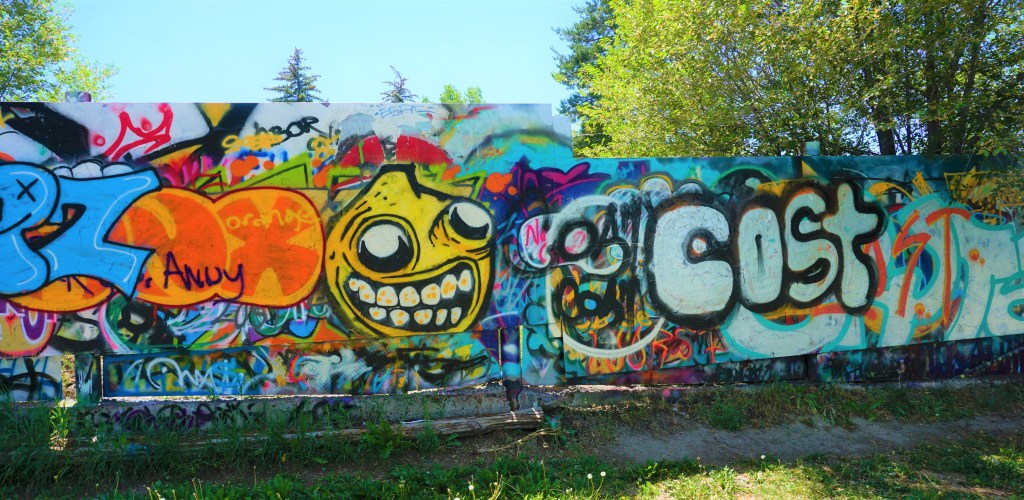
That Latest Work
Contributions By Other Artists

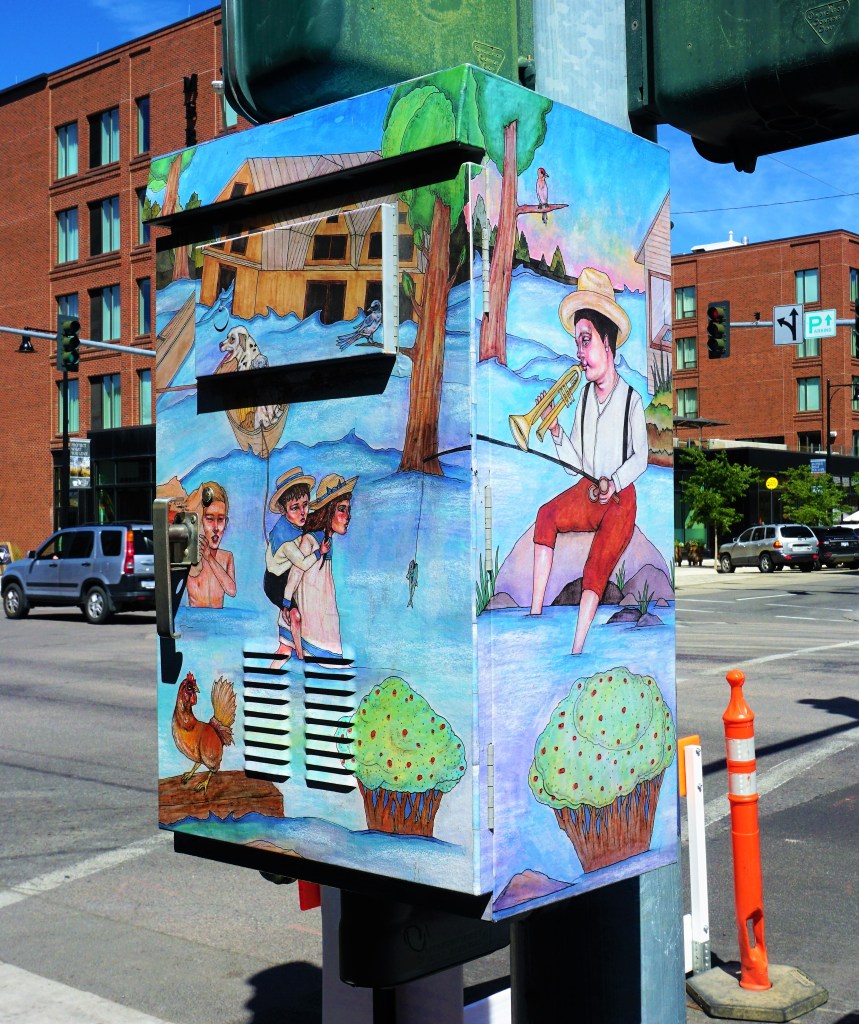
…and while not unusual we found nicely painted electrical traffic light control boxes a delight. Well done Missoula…
When in Williams, Arizona the summer of 2020 we fell in love with playing disc golf, and had a favorite 18-hole course we played frequently in Flagstaff. So with a little time on our hands we found a Missoula course that started out from the parking lot up a 30-degree incline to the first tee.
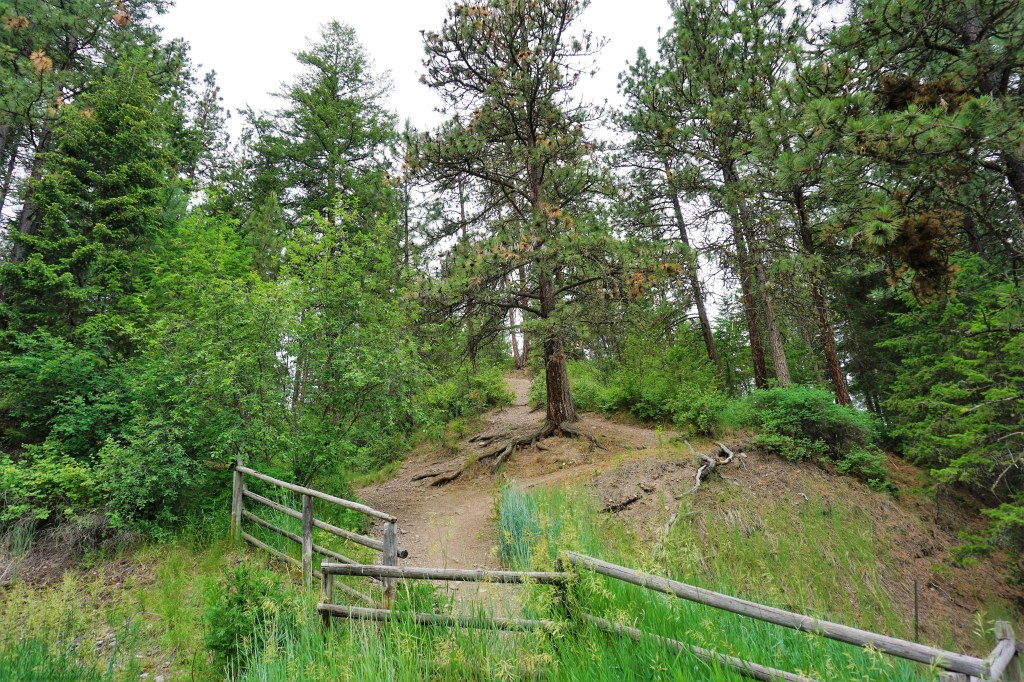
The course was an up and down, doglegs over tree lines, up from and down into valleys, through narrow tree alleys better suited for a goat’s adventure. We didn’t lose a disc and were sorta not exhausted after 12 holes…a successful day indeed.

Across from the parking lot we found a river access trail, and decided to take a walk down to the water. We were determined to see the river, but so were the entire Montana armed mosquito squadron looking for their next chow. We did a national lampoon vacation at the river bank, and beat feet out of there asap!

On the way to Virginia City we stopped for lunch at a bar and grill we found along the way. Our waitress recommended we try a “Cold Smoke” – a beer brewed in Missoula and sold only in Montana. When we discovered that Thrillst named Missoula one of the top U.S. destinations that are secretly hiding an incredible beer scene, we felt a brewery tour would be well worth our time. Missoula is home to no less than 10 high-quality craft breweries…

We treasured our case of “Cold Smoke” for as long as it would last.

Bayern Brewery – Missoula

There’s an iconic hike in Missoula. The “M” Trail is a “moderately rated 1.2-mile heavily-trafficked, out-and-back trail that offers scenic views.” Looks pretty cool, right?

See the source image

The problem is finding the trailhead. One set of directions took us into a residential neighborhood, the second was even more confusing. Not sure how it’s a heavily-trafficked hike!

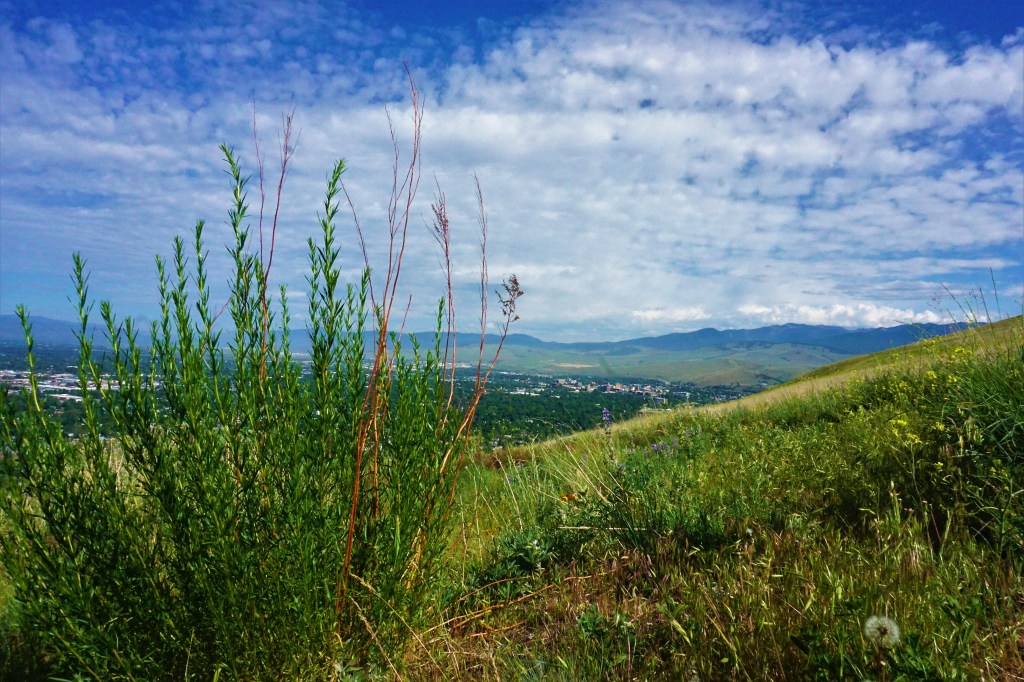
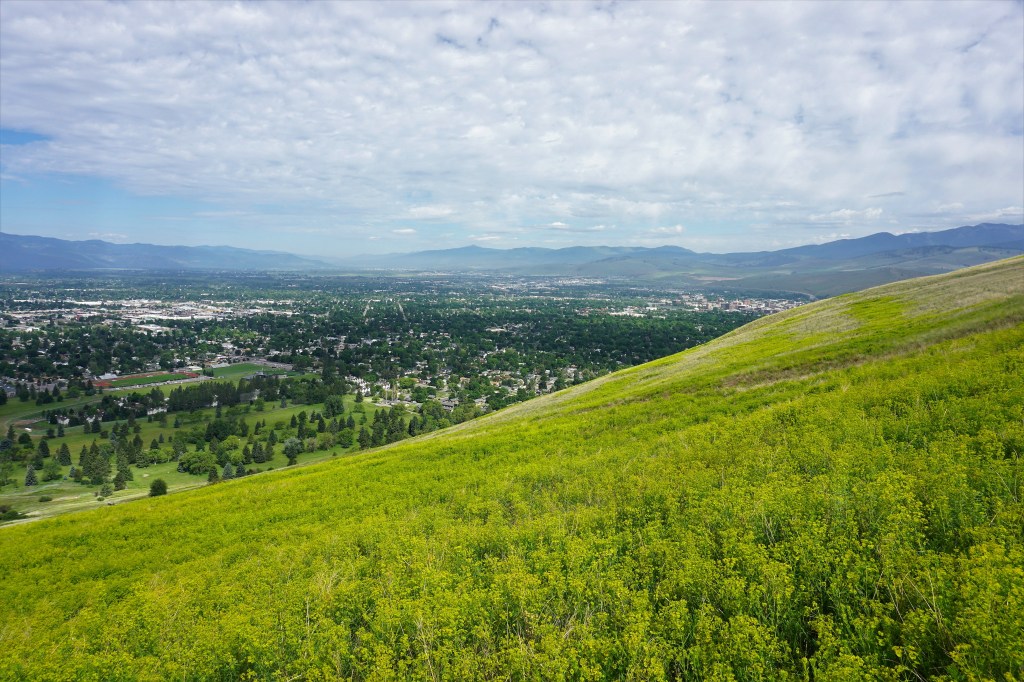
But, what we did find was the lovely Sentinel Mountain trail, a 2-mile hike with a 777-foot elevation and rated a moderate hike. What was really cool about this trail was that there were multiple tributaries running off the main trail that would give the hiker (or runner) an endless variety of hikes and an endless variety of scenic views.

Pinkfairies
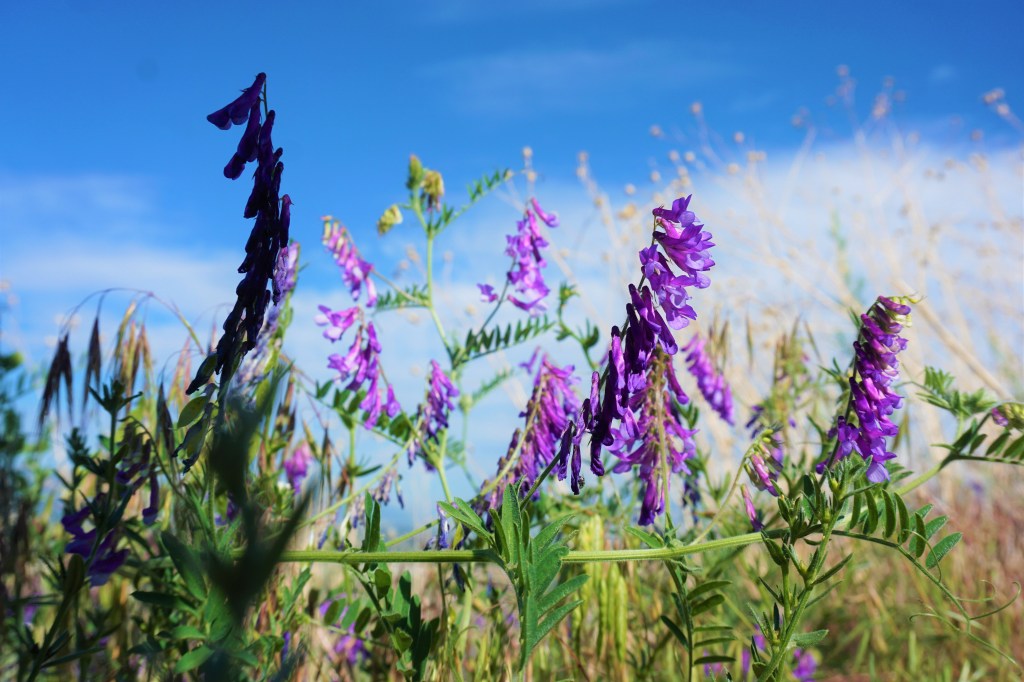
Fodder Vetch
Euphorbia Seguieriana Neck
Carolina False Dandelion
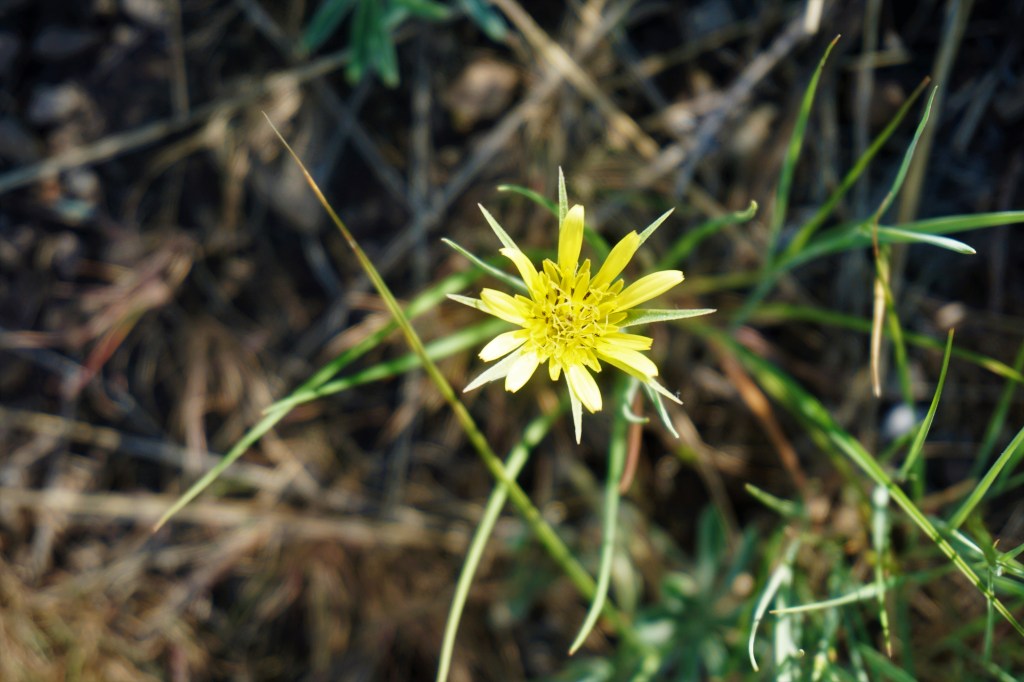
Yellow Salsify
Great Blanket or Indian Blanket Flower
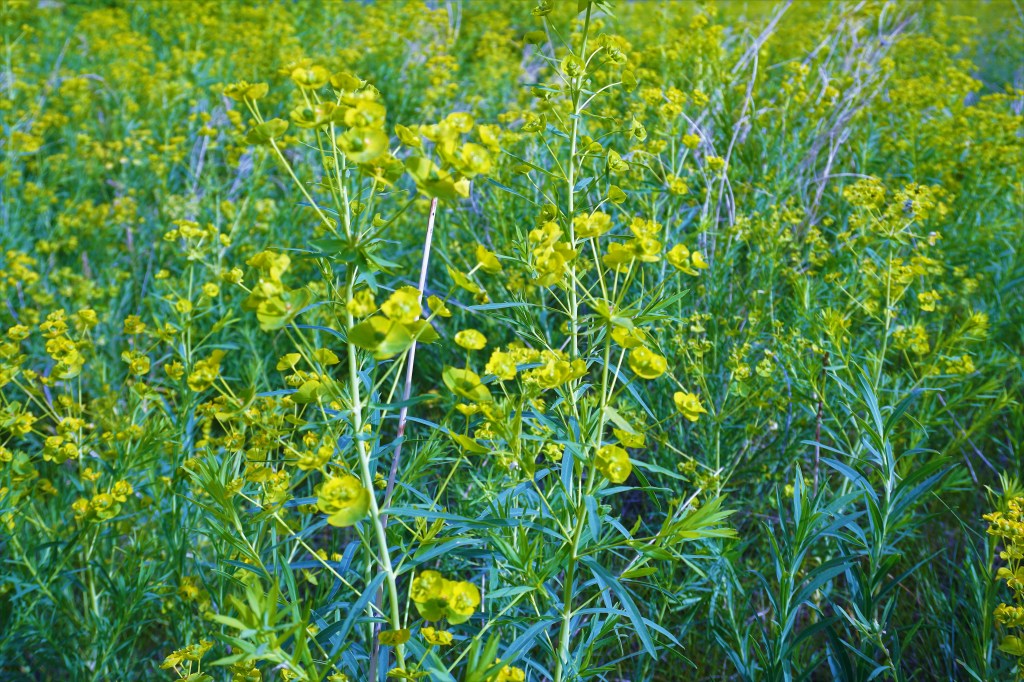
Leafy Spurge

We are so fortunate to be able to see so much of America with an open-mindedness to adventure and variety and finding an opportunity on a daily basis to practice life with eyes wide-open. Beauty or that thing that’ll make you “go hmmm” may be waiting just around the corner…and it’s worth every second in pursuit.

Our sprint finished we looked forward to pulling into Coeur d’ Alene, Idaho and spending a week before heading into the Olympic Peninsula.

Barbara and Brian

“It’s not what you look at that matters, it’s what you see.“ – Henry David Thoreau

VOYAGEURS NATIONAL PARK

June, 2021

Quick….Name as many National Parks as you can! Yeah, yeah…there’s Yellowstone, Yosemite, The Grand Canyon, The Great Smoky Mountains, Rocky Mountain, and Zion National Parks, right? Some might even mention Bryce Canyon, Arches, Olympic, Glacier, The Grand Tetons or Acadia. These Parks are not just the most well-known, but year after year these, as well as perhaps a select few others are the most visited National Parks. However, if other Parks, like Denali and the eight (!) other National Parks in Alaska or the two National Parks in Hawaii along with the Pearl Harbor Memorial and 4 other national historical sites or Isle Royale or American Samoa National Park weren’t quite so far out of the way for the average family (or retirees like us) to reach the list might just be a little different. Voyageurs National Park is like that.

The ride north northwest from Duluth to International Falls is easy – no twists or turns, no confusion about which road to take (’cause in a motorhome there’s only 1 road from here to there!), and no major elevation to pull. Along the way it is a fair distance from small town to small town, but the spring scenery of tall pine trees, small lakes, and rolling hills captivated our attention.

International Falls, Minnesota is a blue collar community of 5,900 right on the Canadian border. The economy is primarily supported, as it has been for over 100 years, by the Boise Papermill, and secondarily by the tourism industry. It’s an area of the Country known for its hunting and fishing, tour services and guiding, boating adventures and summers spent out on the lakes and in the forests, and exploring Voyageurs National Park.

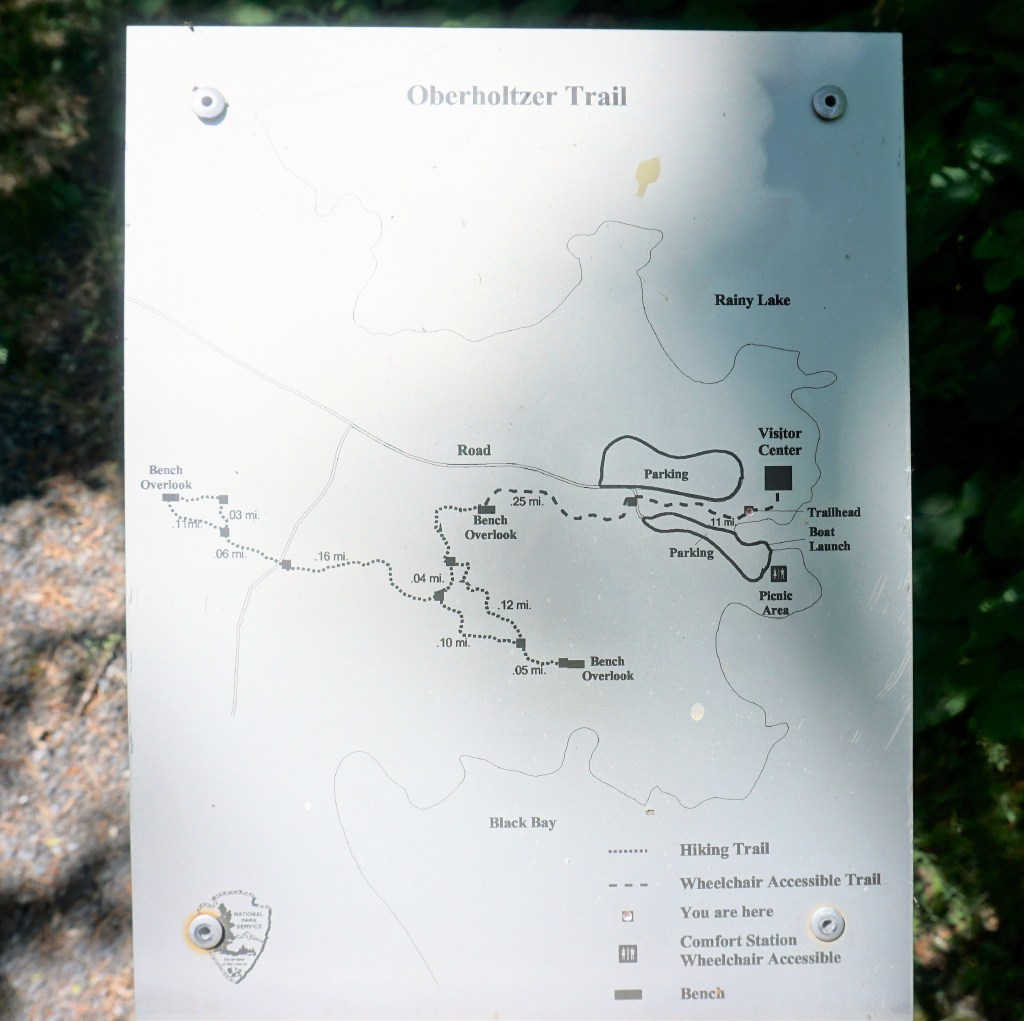
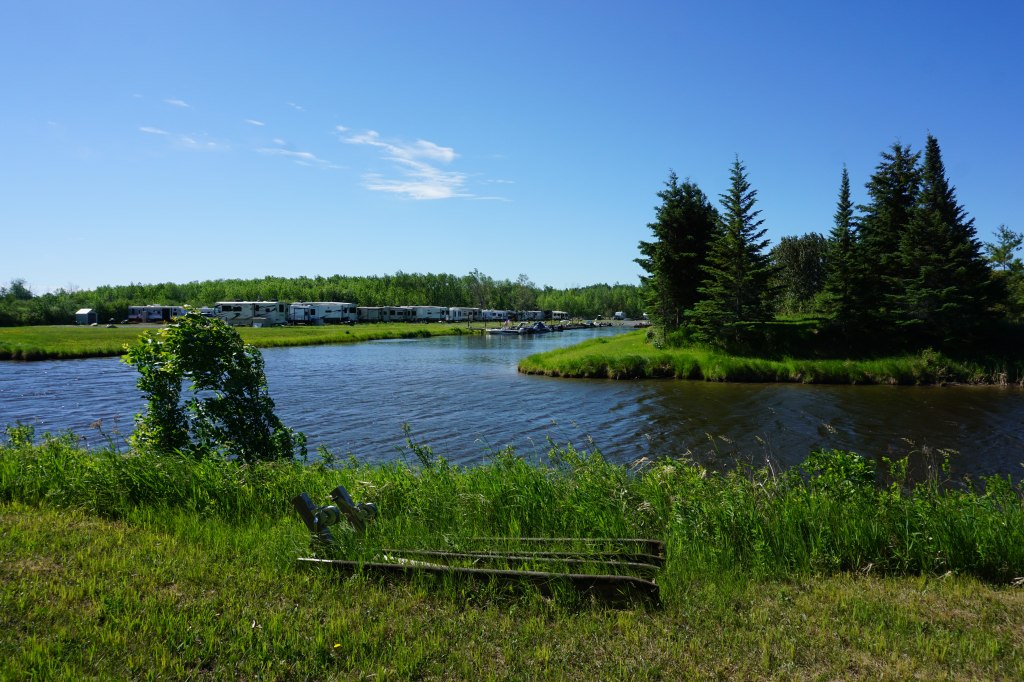
We pulled into our campground just a few miles east of International Falls, and were delighted to find ourselves on a spit of land extending out onto the shores of Rainy Lake – boats docked at the Campground’s pier were owned by campers who were taking advantage of all the Lake had to offer.

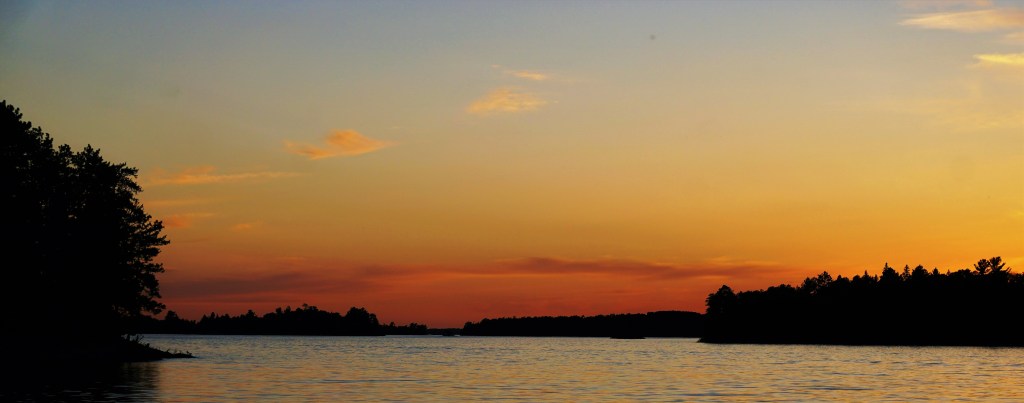
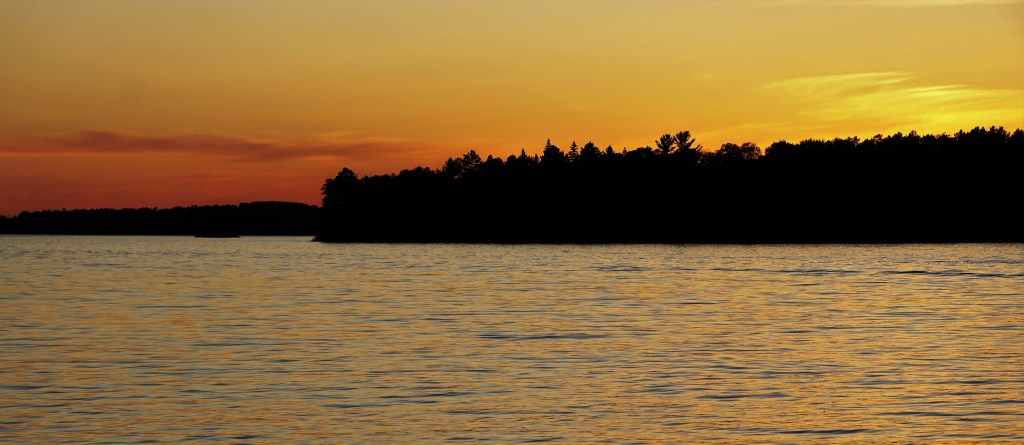
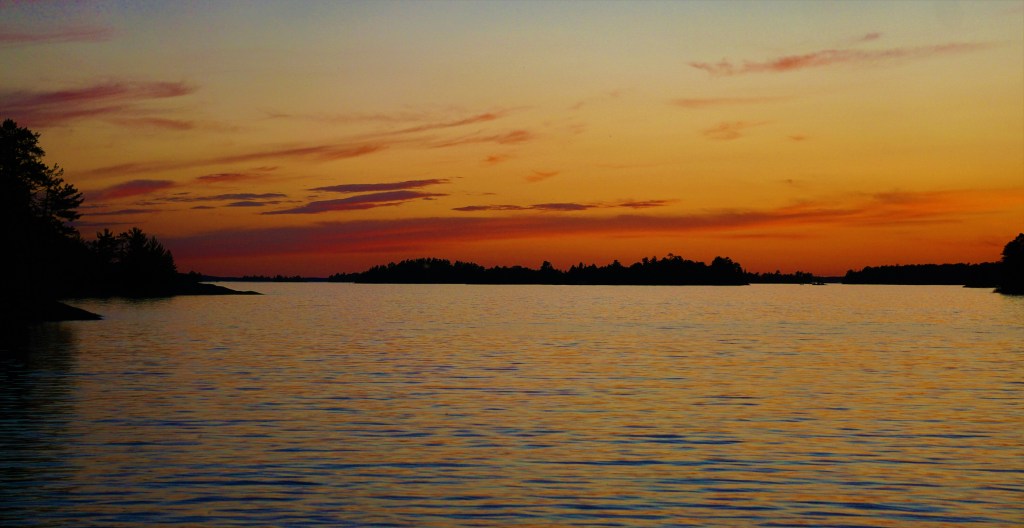
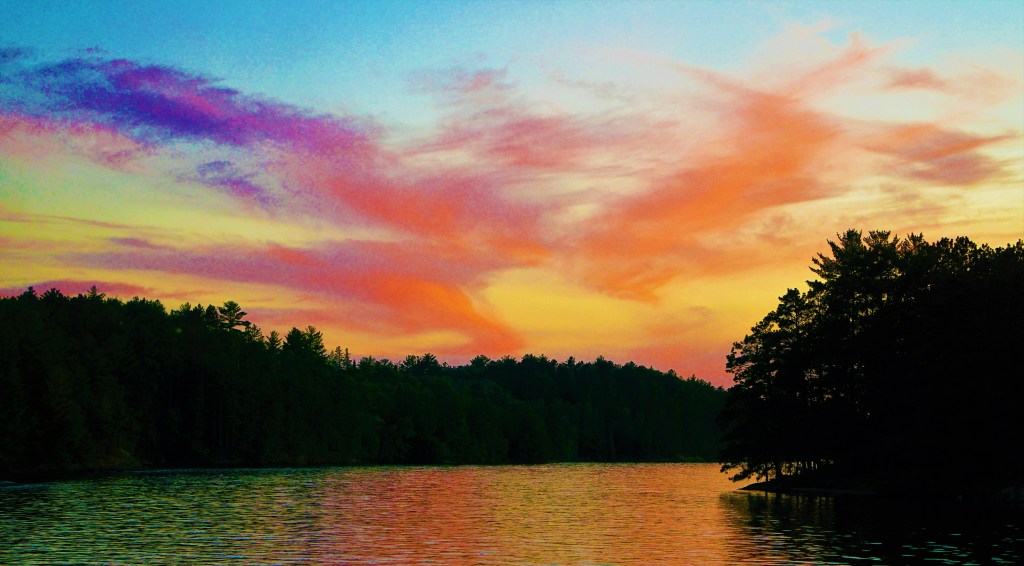
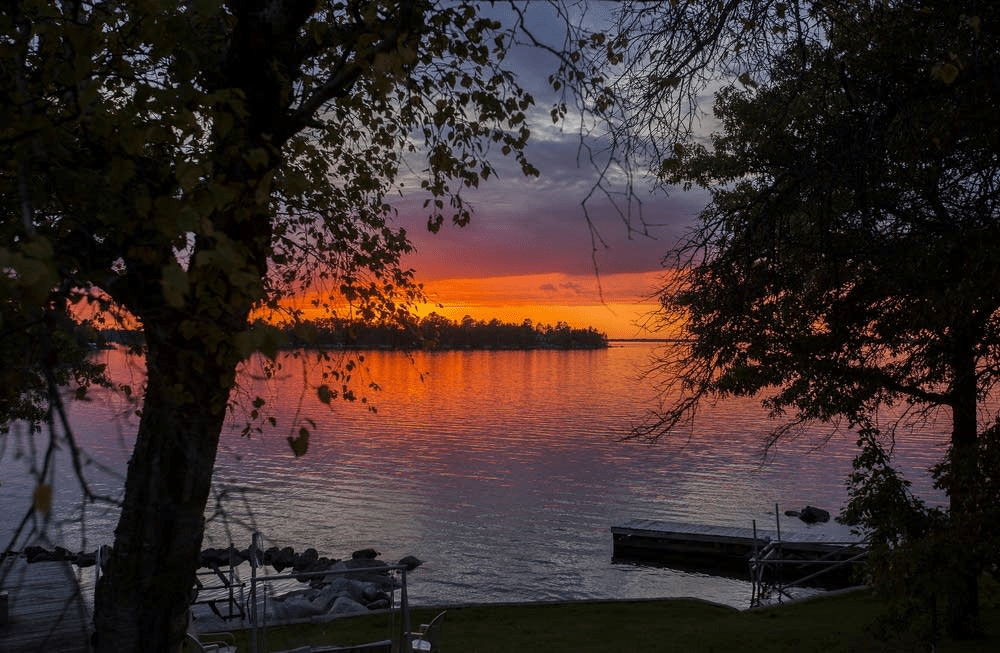
Beautiful setting…and sunset the first night was breathtaking.

It’s interesting being quite so far north for a couple of reasons. First, what season is it? The locals told us they were never sure when the spring thaw or first snowfall would happen, when the first below zero night would occur and signify that winter was really upon the region, when the lakes would freeze, when the first ice fishing cabins would appear and snowmobiles would become the primary mode of transportation, how many days of winter weather would shut-down the city, and when their 6-12 weeks of summer might truly begin. Doesn’t sound much different from many places we’ve lived; however, while Barbara and I no longer appreciate winter; the local residents of International Falls look forward to seasonal uncertainty, adapt and thrive.

Secondly, day and night is screwy. We hadn’t given the cycle of day and night a second thought – guess we figured it would be the same whether we were in Arizona or Ohio or here in the northern most part of Minnesota. Wrong! We were encamped June 7-14 and just before the summer solstice. The time of first light was around 4:40am, sunrise around 5:30, sunset at approximately 9:15pm, last light occurring around 10pm, and total darkness close to midnight. Almost 18 hours of light! No wonder our circadian rhythms were off.

Now onto Voyageurs National Park…

As far back as 1891 the Minnesota Legislature lobbied for this area to become a National Park. There’s a 10,000 year history of inhabitation, geological significance abounds, and without fur trading the Northwest Territories might still be, well, territories…

Over 220 pre-contact (official phrase for “before Europeans came to the region”) archeological sites have been documented within the Park, some dating back 10,000 years, and many of the sites are now listed on the National Register of Historic Places. The oldest peoples were hunters and gatherers, who followed the great herds from place to place, and the last indigenous peoples to settle the region, who remain in the region to this day are the Ojibwe. In between the peoples who lived here planted and harvested crops, harvested wild rice, and became adept at fishing.

Voyageurs National Park is one of the few places in North America where you can see and touch rocks half the age of the Earth; rocks that are more than 2 billion years old. Exposed rock is the southern edge of the volcanic bedrock that forms the core of the continent and dates from the birth of North America. It is the exposed roots of ancient mountains – granite, migmatite, and biotite schist. Receding glaciers created torrents of melted water, which filled low-lying areas, creating the lakes and bogs of today’s landscape.

In the 1890s prospectors examining metamorphosed basic igneous rock (basalt) found gold embedded in quartz veins which resulted in a brief gold rush – veins were quickly emptied and mines vacated. French-Canadian fur traders were the first European settlers to use the waterways as a primary means of travel. Their historic route from Grand Portage, Minnesota to Lake Athabasca, Saskatchewan, Canada passed through what is now Voyageurs National Park. Once the lakes thawed fur traders carried trade goods as they headed west from Grand Portage. The fur traders used long, wide and heavy “north” canoes built by the indigenous Ojibwe using birch bark, cedar, spruce resin, and watap or spruce roots. These 3-man canoes weighed around 300 pounds, were about 25-feet long and four-feet wide. Some of the trade goods carried were used in trade with the Ojibwe to resupply for the arduous journey; however trading goods for beaver pelts, various other hides and pelts of muskrat, deer, moose, and bear was the main purpose of their voyage. A typical “north” canoe crew consisted of three men and two alternates, who not only paddled their canoes, but had to portage their cargo – the tasks demanded a particularly hardy breed of man. In French a traveler is known as a voyageur. It’s in tribute to these French-Canadian Voyageurs that the Park has been named.

Honoring The Voyageurs

And, oh yeah, the US/Canadian border between Minnesota and the far western boundary of Ontario Province/eastern boundary of Manitoba Province was established by the route the Voyageurs followed on their journey from Grand Portage to Lake Athabasca.

Voyageurs National Park was dedicated in 1975, and covers approximately 218,055 acres, 40% of which is water, and encompasses 4 major lakes – Rainy, Kabetogama, Namakan, and Sand Point. The Kabetogama Peninsula, which lies entirely within the park and makes up most of its land area, is accessible only by boat.  Voyageurs National Park includes over 500 islands and has 655 miles of shoreline.  This is a place of transition between land and aquatic ecosystems, between southern boreal (full of deciduous trees and conifers, and is also an important carbon sink), and northern deciduous forests.

Let’s see…the largest land mass in Voyageurs National Park is accessible only by boat, the Park is 40% water, it’s named after French-Canadian fur traders who used the lakes as their trade route, and there is enough shoreline and islands to keep even the most ardent explorer happy for a lifetime. While we could have taken in the beauty of the Park by following the coastline for miles and miles, it would have only given a us long-distance view, and we didn’t come all this way to not be up close and personal. And, while we learned an amazing amount of information about the Park from the Rainy Lake and/or the Kabetogama Lake and/or Ash River Visitors Center(s) it would have only given us somebody else’s recorded view of the Park. We had to see for ourselves, and get out onto the water!

During season the National Park Service offers boat tours of the Park, but unfortunately season started June 22; a week after we’d be gone. However, the Park Service publishes a list of available guides and services offered, and there were 2 possible tour guides for the up-close-and-personal boat tour of the Park we desired. Luck of the draw, we choose Border Guide Services with the owner and 60-year spring/summertime resident of the Park, Captain Bill, as our guide. More good luck would have it that we received a call a couple of hours after booking our rain-or-shine tour of Voyageurs National Park informing us that we had been upgraded to an all-day boat tour of the 5 Lakes within the Park, along with a stop at the Park’s 3 “on dry land” attractions; Ellsworth Rock Garden, I.W. Stevens Island and Kettle Falls Lodge!

Barbara is constantly telling Brian to stop with the jibber-jabber and to get on with it…soooooo…

We met Captain Bill at the Kabetogama Lake Visitors Center…

The Park Rangers told us that yesterday they had seen otter and beaver in the small channel next to the Visitors Center; however and a day later all we found was a beaver dam with a few turtles catching some rays.

A Cool Beaver Dam Nevertheless!

…And were soon out on the waters in Voyageurs National Park!

Our Tour Boat – Captain Bill On-Board Talking With A Park Ranger
Say Hello To First Mate Irish
Arrowhead Lodge Has Been Receiving Guests and Feeding Pelicans Since The 1920s
Wonder What Attacked This Guy?
Bald Eagle’s Nest
Standing Guard

Ellsworth Rock Garden is one of the 3 “on dry land” attractions in the Park, and has been called the “Showplace of Lake Kabetogama” since its completion in the early 1940s. Jack Ellsworth, the garden’s creator and a self-taught artist used natural elements of the native northern Minnesota landscape as his artistic medium, creating a unique exhibition on the north shore of Kabetogama Lake. The garden must have been spectacular and a true labor of love; however the elements have worn away the face and identity of many of the sculptures.

Welcome To Ellsworth Rock Garden
Back On The Waters Of Voyageurs National Park
A Second Eagle’s Nest To The Left

In 1931, Ingvald Walter Stevens purchased an island from the Virginia & Rainy Lake Logging Company and began building cabins by hand. Within a few years he was hosting guests at his “Pine Cove” on Namakan Lake, and would operate his one-man resort until it closed in 1959. He continued to live alone on the island until his death at age 94 – another 20 years. In his honor Voyageurs National Park has preserved his home, and the Island will, in perpetuity, be known as I.W. Stevens Island.

I.W. Stevens’ Home

Captain Bill Claimed There Were Petroglyphs Carved Into The Rocks?

The Kettle Falls Hotel opened in 1913, and is at the confluence of Namakan and Rainy Lakes. Today it is the only (full service) lodging operating inside the Park, and is only accessible by water. When visiting the Hotel and standing at the water’s edge looking SOUTH we were actually looking at Canada! Possibly the farthest northern point in the US?

A truly wonderful day on the waters of Voyageurs National Park thanks to Captain Bill and First Mate Irish!

We did a fair amount of exploring from the mainland-side as well. From either the Rainy Lake or Ash River Visitors Centers there were trails to follow that wound in through forest and along the shores of the Park.

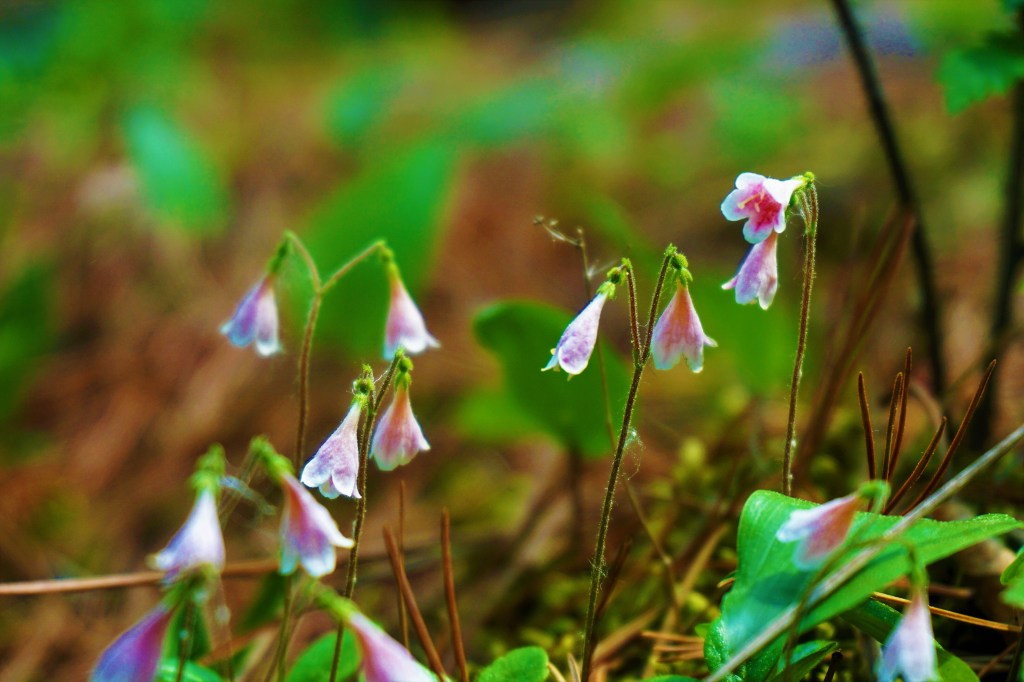
Twinflower

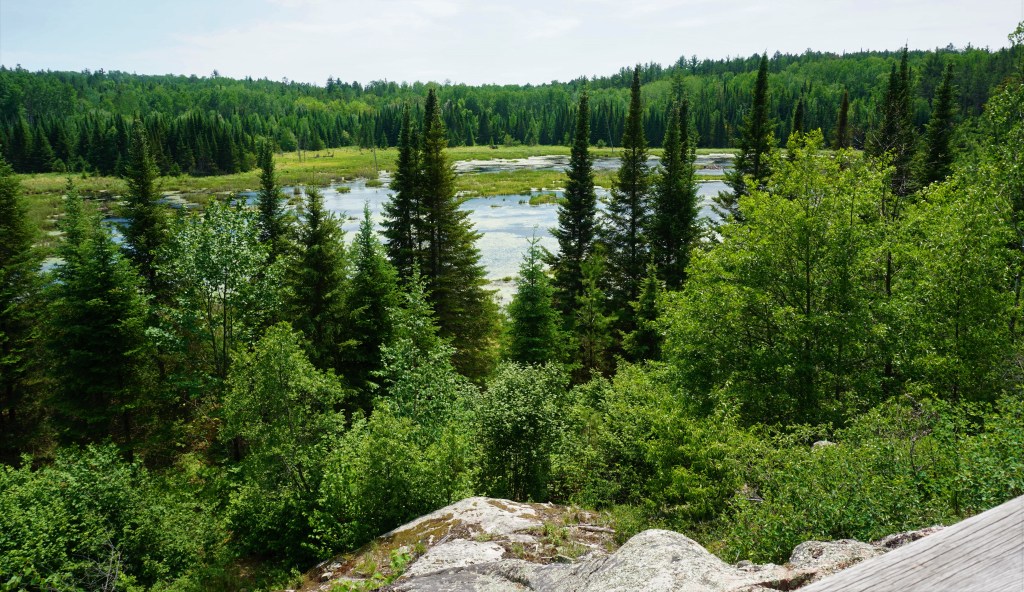
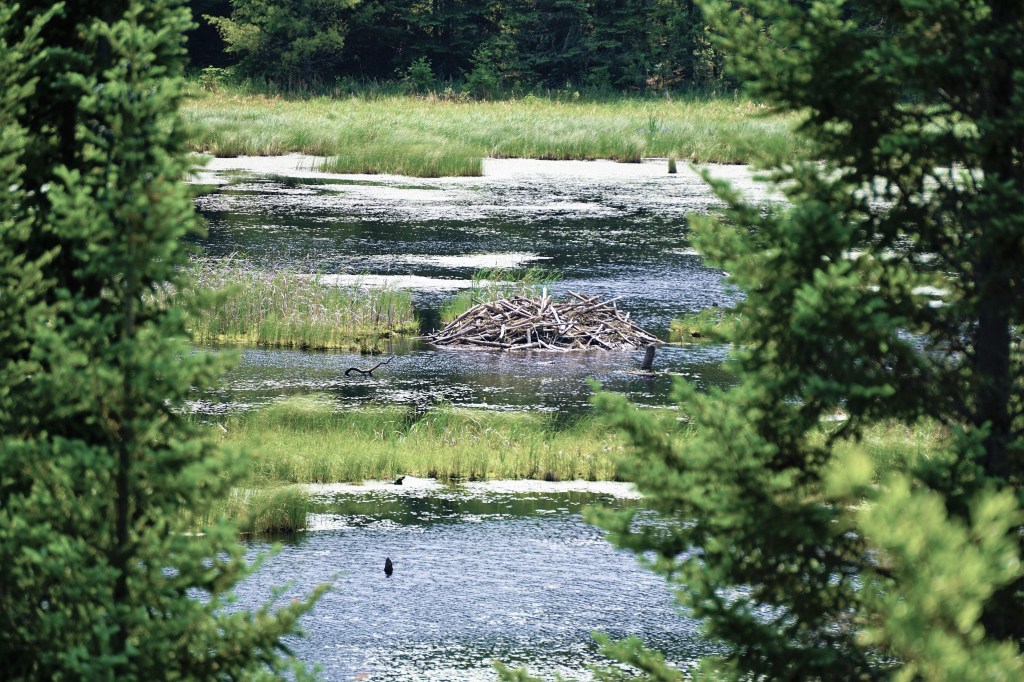
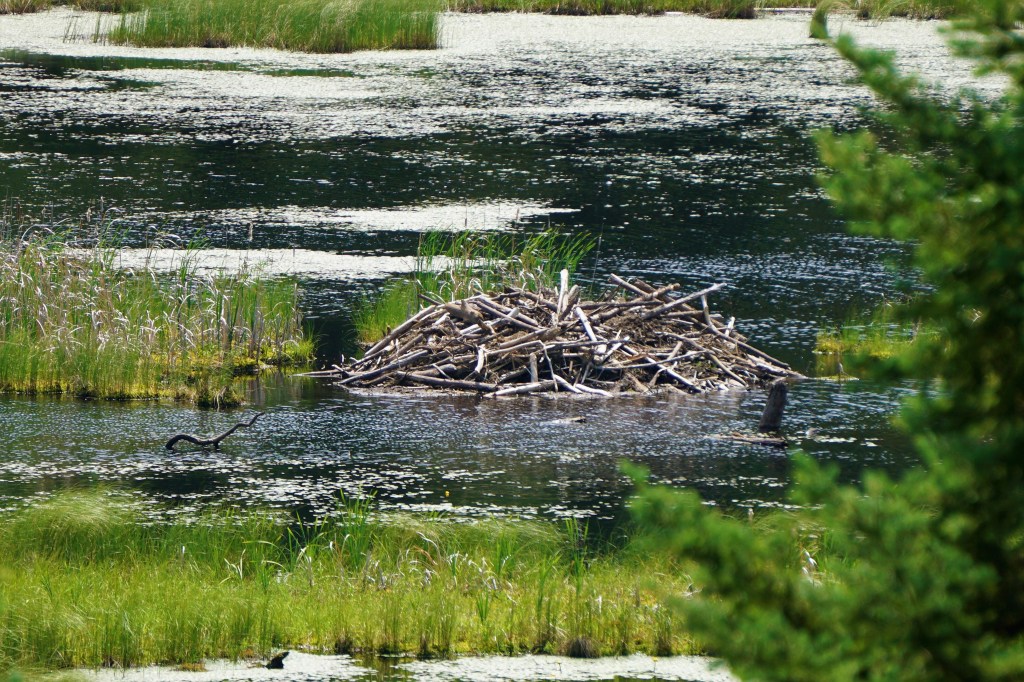
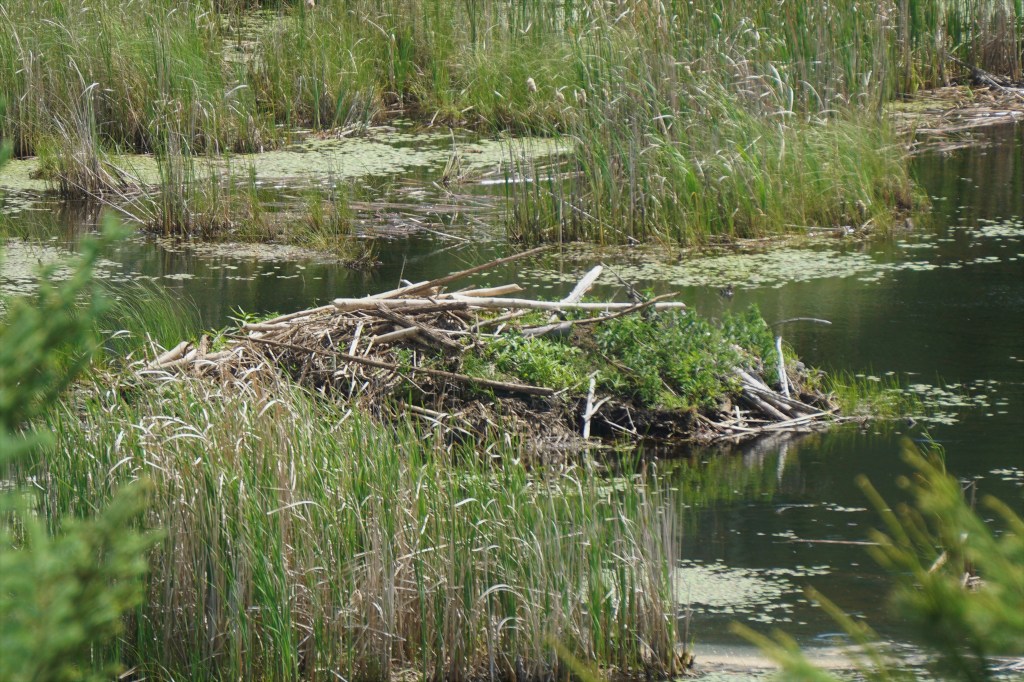
Approximately 3.5 miles from the Ash River Visitors Center we found a Beaver Pond…several beaver dams were on display, but on a very warm day we didn’t expect any animal sightings.

Beaver Pond
Beaver Dam

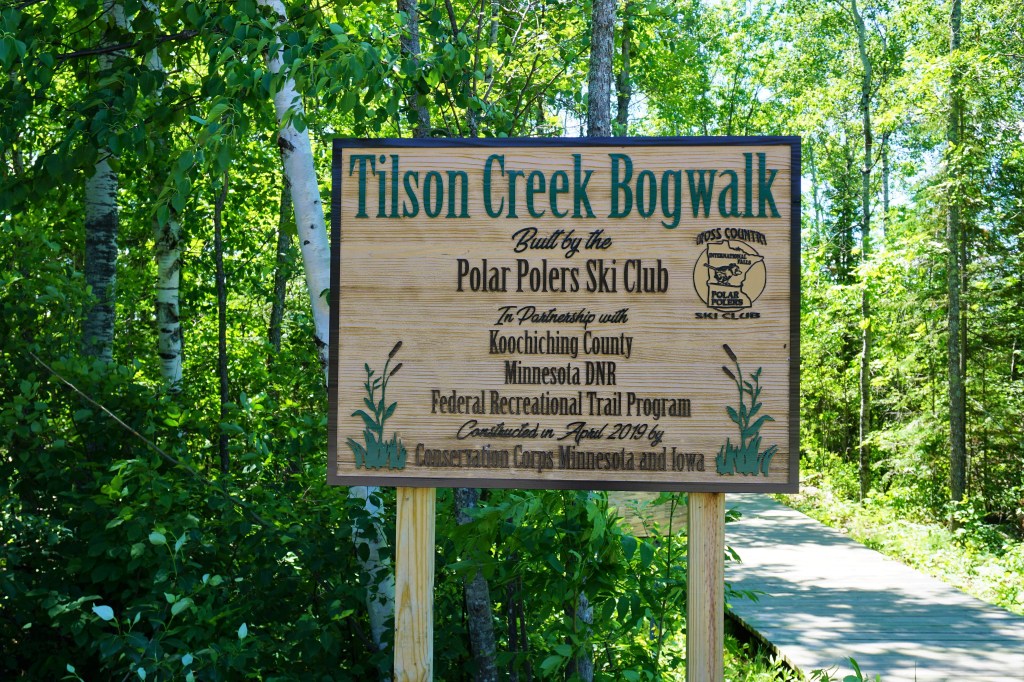
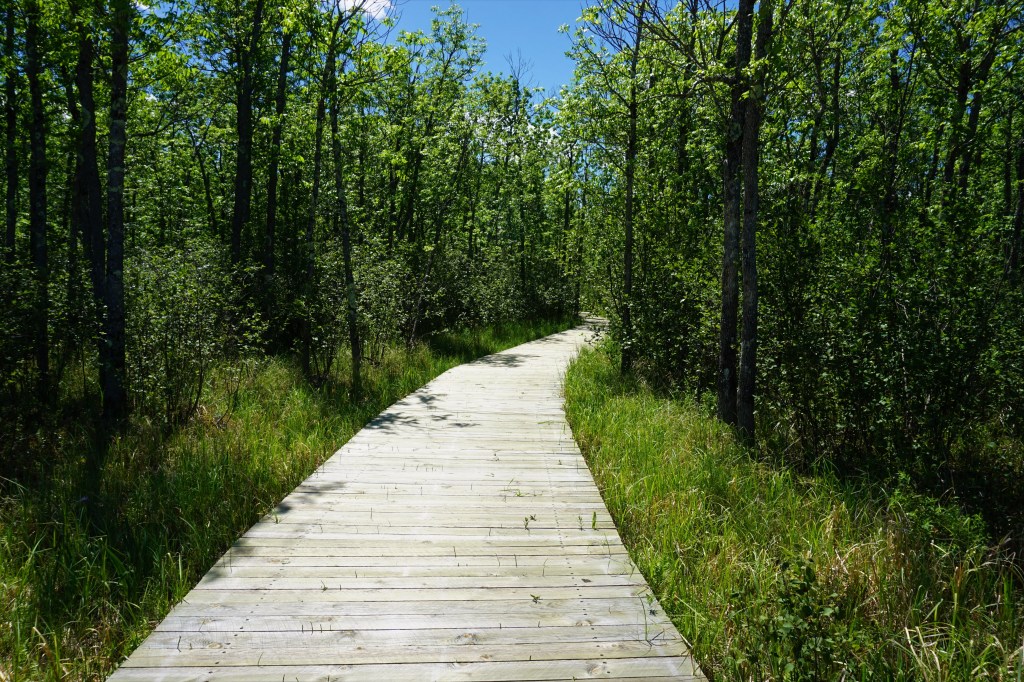
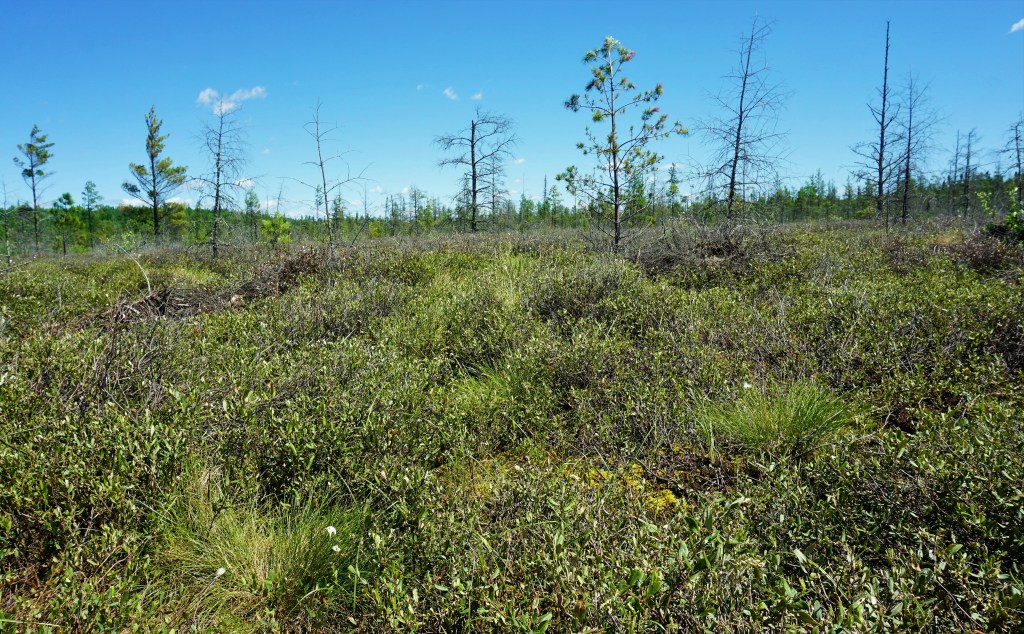
The owners of the campground suggested we take a short walk along the boardwalk of Tilson Creek Bog. In the winter time the bog becomes a “trailhead” for cross country ski trails, but after the spring thaw the biosphere of Tamarack and Larch Trees, soggy soil and insect eating plants is an interesting contrast to the waterways of Voyageurs National Park.

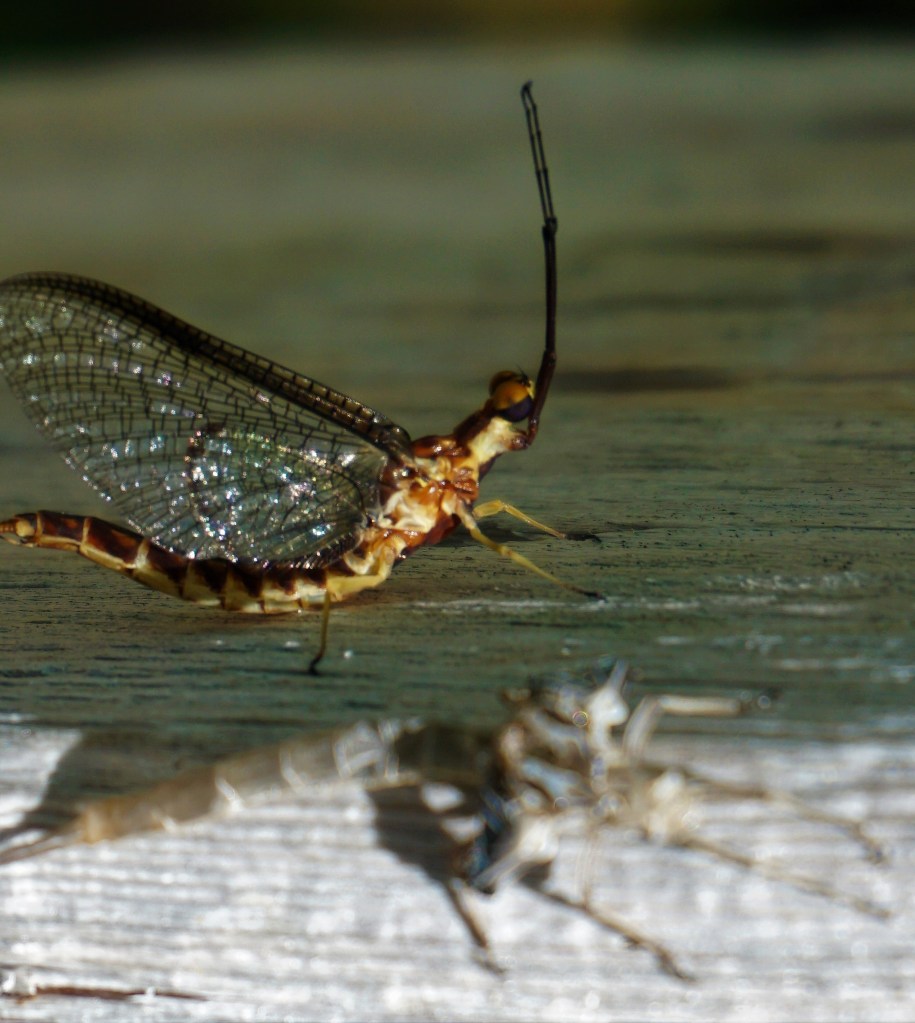
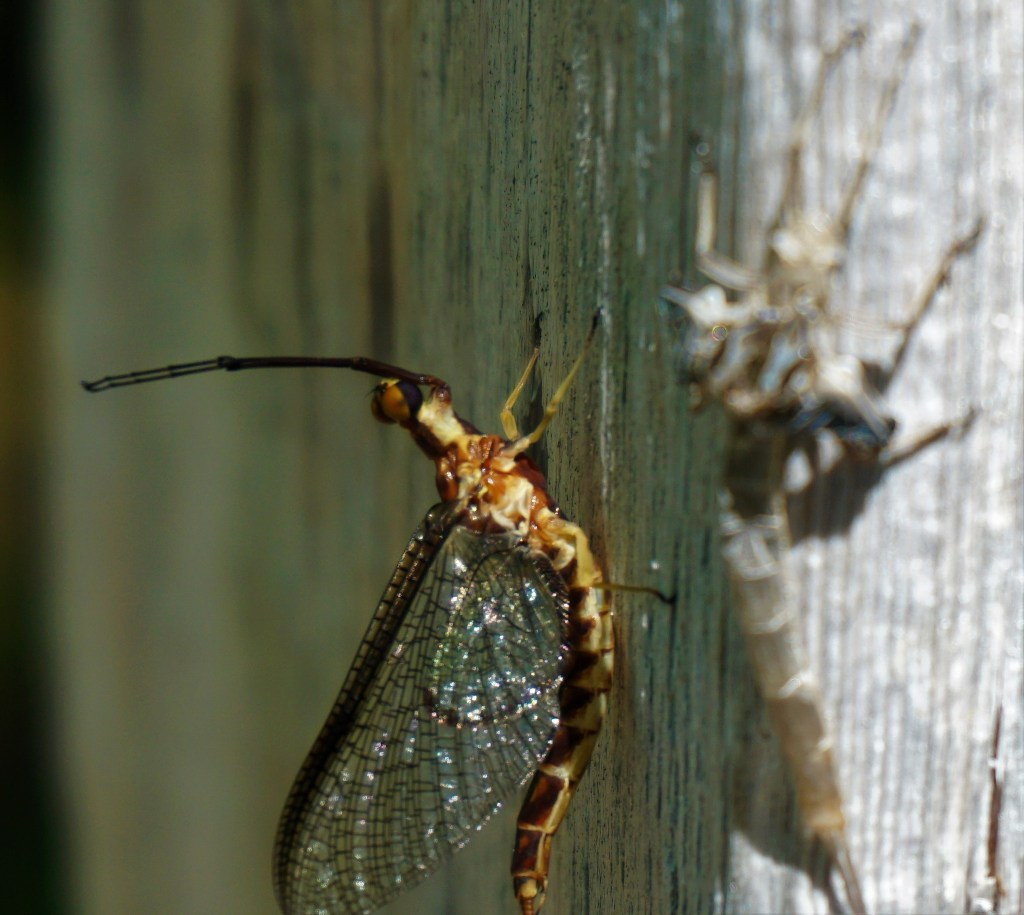
Mayfly
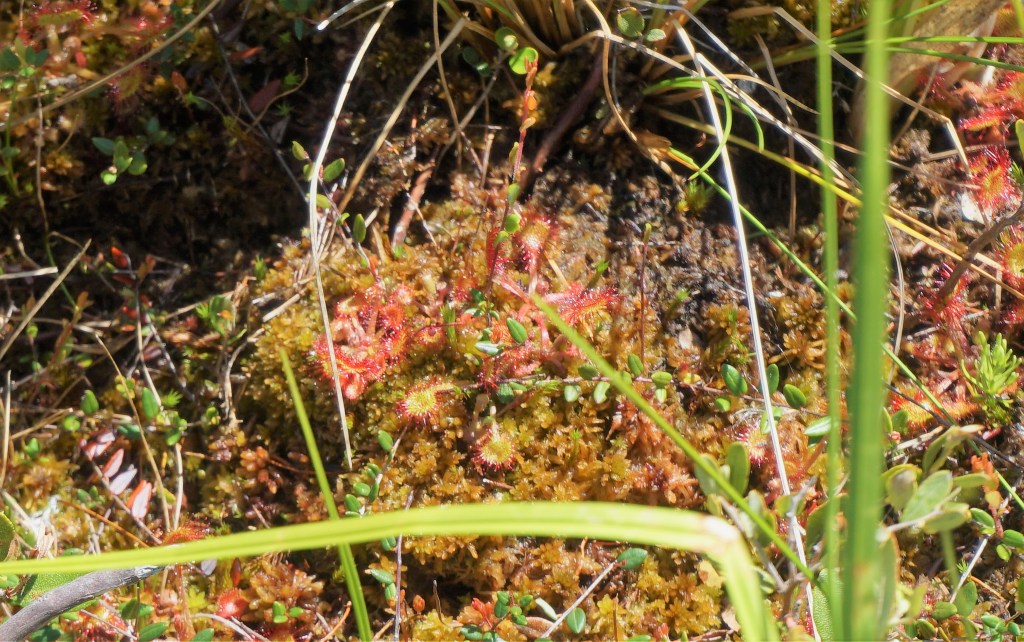
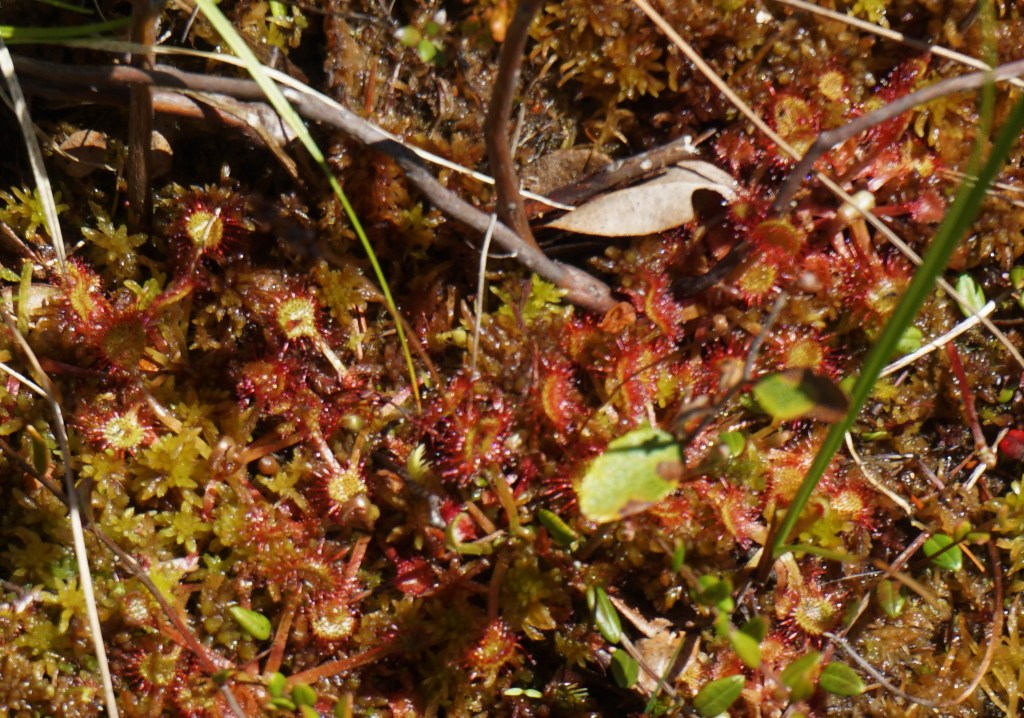
Sundew – A Carnivorous Insect Eating Plant!

Although total darkness doesn’t occur until well after midnight, we asked Park Rangers at the Rainy Lake and Ash River Visitor Centers where the best unobstructed sunsets and night sky might, weather permitting, be seen. For sunset the recommendation was the point right behind the Ash River Visitors Center, and it was recommended that we stop just up the road at the Voyageurs Forest parking lot for viewing the night sky.

Loved Capturing The Crescent Moon For This Picture

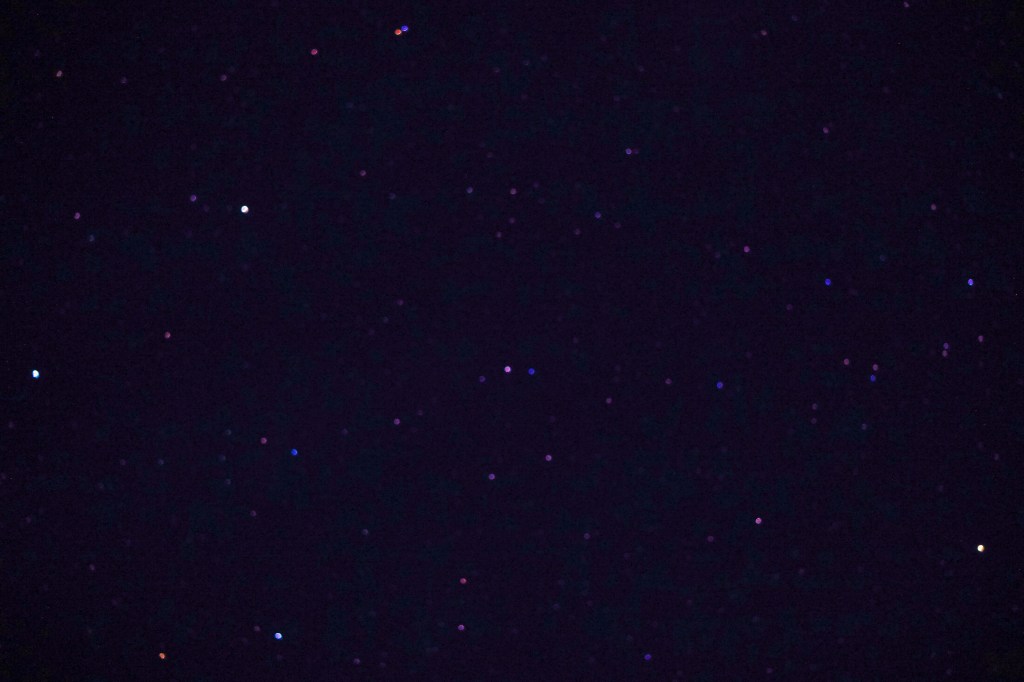
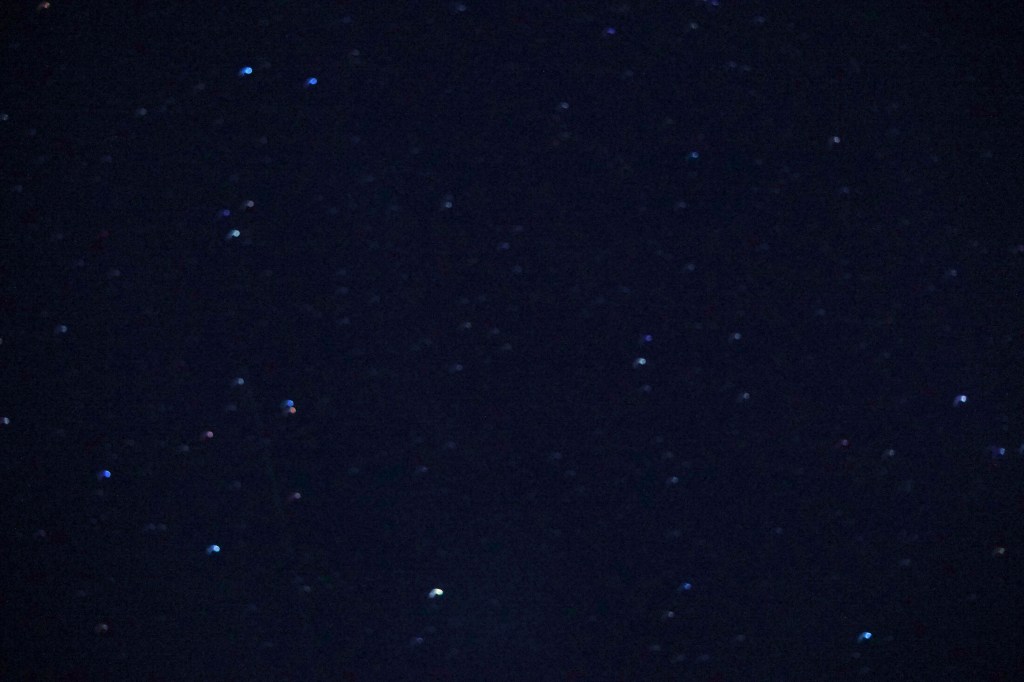
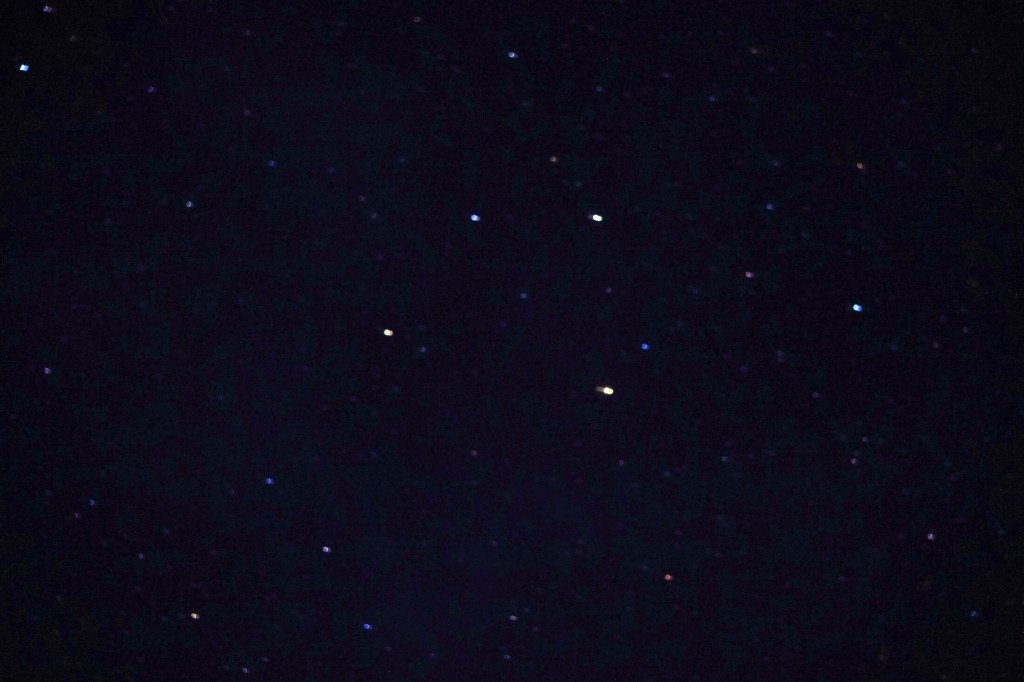
It never did get dark enough to fully appreciate the night sky, but nevertheless Brian had to try to capture the stars we could see…

1/2000th Capable Shutter Speed Is Too Slow! – The Colored Dots Are Stars That Move During Exposure

Voyageurs National Park is not as popular as many of the “bucket list to visit” Parks. It is perhaps not as beautiful as other “more popular” Parks, does not have miles and miles of hiking trails or magnificent overlooks or glaciers or volcanos or wildlife. What it does have is a history as old as the North American Continent, the opportunity for visitors to imagine a life dependent on using these lakes and waterways for survival, and an unending peaceful beauty.

We’d love to come back to Voyageurs National Park, and rent a houseboat for week or so, float about, and do some serious exploring on our own throughout the Park.

Barbara and Brian

“It’s not what you look at that matters, it’s what you see.“ – Henry David Thoreau
THE TWIN CITIES AND BEYOND

May – June, 2021

The trip from Baraboo, Wisconsin to our campground in Cannon Falls, Minnesota took us through some of the nicest scenery we’ve seen along a major Interstate in the past 3 years – rolling hills, dense forests, green fields, grazing dairy herds, and occasional small towns. While motoring from place to place we find ourselves frequently wondering whether or not we could live in such and such a place. While West Texas generates an answer of absolutely no, our answer based this journey through central/west central Wisconsin and into southern Minnesota in late May was a hesitant yeah…we wondered though what it would be like in wintertime. Needless to say this was one of our most enjoyable rides.

Waterways have divided cities throughout the world. The Danube River separated the Romanian cities of Buda and Pest for centuries before the incorporation of the two into modern day Budapest. Istanbul is unique in that the Bosphorous Straight splits the City – half of the city is in Europe and the other half in Asia (talk about continental divide!). The Mississippi River separates the cities of Minneapolis and Saint Paul as it has since encampments became villages became cities became present day metropolitan areas. However, the two are thought of as one – 3.6 million citizens call the Twin Cities home – the metro area is commonly written with a hyphen: Minneapolis-Saint Paul, and even the baseball team’s logo stands for Twin Cities. Saint Paul is the State Capitol, and Minneapolis is home to the University of Minnesota Golden Gophers.

Cannon Falls is a lovely small town of a little more than 4,000 that is approximately 45 miles from either Rochester (Tom and Karen Williamson) or The Twin Cities (Roesner Mob). The weekend of Memorial Day is normally the official start of camping season and most campgrounds throughout the Country are busy. Covid-related restrictions have been relaxed and we soon realized that, as it was the day before Memorial Day, our campground was completely full – we might have reserved the last site. Settling into our site was a bit of a challenge in two unrelated ways; the roads were narrow and we needed neighbors across the street to move their vehicles so we could swing properly into our site, and the site sloped so radically front to back in order to become level we had to place all of our leveling blocks under the rear jacks. We’re old hands at the process, and while it took a bit more effort we were able to settle in with minimal stress.

The campground had lots and lots of activities throughout the holiday weekend including bingo in the early evening. $3 each got us a bingo card good for the night’s 10 games. We both had the good fortune to win a “single winner” game and cashed in on a $156 return for our $6 investment.

Memorial Day itself was special since Tom and Karen came up from Rochester to spend the day. We hadn’t seen them in a year and a half…so a steak fry, good bourbon, and a wonderful time to catch up were the order of the day!

Cannon Falls Falls

We had been looking forward to spending time with the Roseners since we broke camp in Mesa at the beginning of April. We had become close with Angie 2 years ago, when we also spent some time getting to know the ‘rents Don and Carol, as well as hanging out a bit with Mark and Lisa. Last winter we all became very close friends. We met at Mark and Lisa’s home on Prior Lake, and were greeted with open arms, unbelievable warmth, graciousness, and beautiful surroundings. We were truly spoiled during the 2 afternoons we spent together, and there are not words enough to express appreciation to our terrific hosts…

Looking Out Mark and Lisa’s Back Window Onto Prior Lake

Those afternoons were spent on the Lake seated in The Rosener’s pontoon boat traveling in style and sipping adult beverages. Lots to see, including a Lakeside hello from other Mesa friends John and Cheryl…

…and seeing some Testudines reptiles working on their tans…

…but what really struck Brian was “bird island.” Mark and Lisa didn’t know why so many birds found this particular island on Prior Lake their nesting place night after night.

The setting sun painted its glorious colors on the canvas of the sky over Prior Lake.

The Minneapolis Sculpture Garden showcases works from the Walker Art Center’s renowned collections of modern and contemporary sculpture in an urban park setting. A stunning collection of 40 works of art are thoughtfully arranged within the 11-acre park. This is truly a jewel, and well worth a stroll whenever we’re in Minneapolis.

The centerpiece of the Garden is Oldenburg’s Spoonbridge and Cherry.

Judith Shea’s Without Words
Mark Mander’s September Room
 Matthew Monahan’s “Hephaestus” 
Tony Cragg’s “Level Head”
Jenny Holzer’s “Trusims” – One Of Several Benches Carved With A Message. Brian’s Favorite…  
Debra Butterfield – Untitled
Allium or Black Garlic
Barry Flanagan’s Hare on Bell on Portland Stone Piers 
Renovation Of Katharina Fritsch’s “Heroic Rooster” Underwraps…Note The Basilica Of Saint Mary In The Background
Barbara Loved The Skyline “Footprint” Of The Basilica Of Saint Mary

We refused to avoid seeking obscurities in the Twin Cities…so here’s our sampling of places in loyalty to keeping Minneapolis-Saint Paul weird.

The “infamous” Elf Door at Demmings Height Park is a mysterious little handmade door set at the base of an old tree. Rumor has it that the magical elf who lives inside the tree leaves treasures and twinkly trinkets inside the door for local children to find.

Local sculptor Allen Christian established the House of Balls in Minneapolis’ Warehouse District almost 36 years ago as a physical incarnation of his idea that “we all possess the creative impulse and we owe ourselves the balls to express it.”

Allen Christian earned the reputation as “the Willy Wonka of Twin Cities art” through his belief and practice of bringing a “tangible life force to inanimate objects when they come into contact with living beings.” Roesner Mob consigliere Angie joined us on our exploration of this eclectic display.

The front door was locked and posted, a sign stating that the House of Balls was open at midnight weekdays, noon on weekends, and by appointment or whenever the owner felt like being there. However a “push this button” notice stated that we could leave a message (my apologies for not having a picture). Being a weekday we were disappointed to not be able to view the indoor exhibition, but we thoroughly enjoyed the outdoor gallery. Oh yeah, we did take advantage of leaving a message.

This collection featured Allen Christian’s amazing ability to use an acetylene torch in order to create some pretty cool metal sculptures…

Check Out The Cut-Outs From The Webber Grill Lids

Then again there were a few other displays as well..

This Bear’s Head Is Hinged And Is In Perpetual Motion
Bowling Ball Garden

From our list and in search of other interesting places in the Twin Cities, we bumped into Sheridan Veterans Memorial Park. Located on the banks of the Mississippi River, the sculpture is the main feature in this City Park and stands in honor of Minnesotans who served in domestic and foreign wars,

Zoran’s Sculpture Garden – Artist Zoran Mojsilov, a Belgrade-born sculptor and illustrator has made the park his pet project over the years, placing his minimal yet strong stone sculpture works, held together with delicate steel rods in the off-the-beaten-path lot. The park is perpetually under construction.

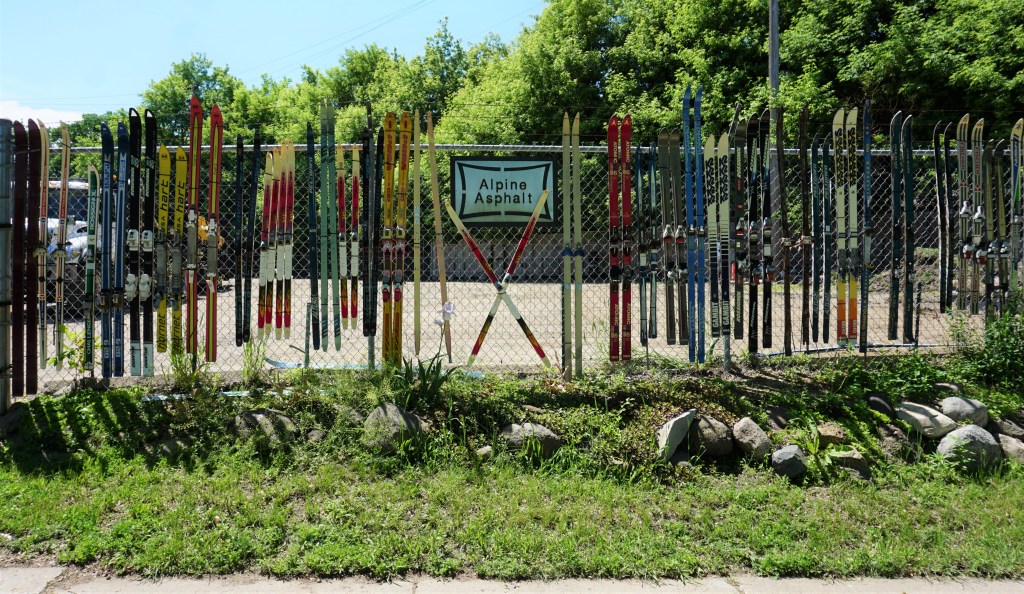
The Alpine Asphalt Paving Company has built a makeshift fence constructed completely out of colorful old skis…and the company’s name is Aspen Asphalt. Why we asked? Well, the brothers that own the company are avid skiers…’nuff said!

Without enough time to really do the street art/murals of the Twin Cities justice we had to pick and choose what we’d like to see. The internet told us that the best mural is something entitled Broken Crow and Over Under, which we found partially covered up by the outdoor seating of a bar. Pretty detailed even with only what we were able to see…

…and with apologies to Hubert Humphrey and Paul Wellstone how could anyone not pay tribute to the two most famous sons of the Twin cities.

First Avenue Bar Plays Tribute To Famous Musicians And Musical Acts Who Have Performed At The Venue By Painting A Star In Their Honor On An Exterior Wall Of Fame

A nice sampling of Twin Cities weird–no? Well, there was one other venue that years and years ago Barbara and I had the good fortune to visit, that has since been incorporated into the Science Museum of Minnesota . The Museum of Questionable Medical Devices pays homage to the time of “snake oil” hustlers, phrenology, trephination, and leeches. The owner and docent tours visitors through the fascinating world of cure-all “medicine” made for, as P.T. Barnum might say, “that sucker born every minute.” Remarkably when Brian sat in the phrenology machine its read of his personality was pretty darn close! Hmmm…wonder if animal de-worming pills or bleach or hydroxychloroquine for the treatment of Covid will be a future display in the Museum?

A few more stops along the way…

Completed in 1883 the Stone Arch Bridge was built at Saint Anthony Falls for use by the railroad to cross the Mississippi River. Now used by pedestrians and bicyclists it is the only arched bridge made of stone on the entire Mississippi River – quite a historic landmark.

Barbara and I have quietly altered our diet to include several plant-based protein meals a week. Being carnivores more than omnivores most of our life we feel that there are some plant-based recipes we’ve made that miss the texture of animal protein; however, many others are more than excellent without. That being said Minneapolis is home to one of the best vegan “butchers” in the Country, and given our new diet a must stop. Founded by a sister-brother duo, The Herbivorous Butcher is passionate (and successful) about creating meat-free meats and cheese-free cheeses that taste “like no other vegan product on the market.” Brian was especially excited to talk at length with the owners, sample product, and make purchases to help with our at-home menu. Alas and Alack the best laid plans can be waylaid by stuff like Covid – the company has taken to an order ahead and pick-up your order at a specific pre-arranged time; the store isn’t open to the public operation. Shame of Brian for not double checking. We suspect we missed out on something special. Guess we could always order on-line?

We could not in good conscience leave the Twin Cities without paying our respects to George Floyd, who was murdered by a Minneapolis policeman. The intersection near his place of death has been turned into an impromptu memorial, not just to George Floyd, but to many Black Americans that have been murdered by law enforcement or who have died while trying to find a way for justice to prevail for all in our Country. The local store owners would love for the neighborhood to return to as close to normal as possible, but the City has not, to date, acted in good faith to find a peaceful solution to the complaints of the many who are there in protest. We sincerely hope that no more heavy-handed methods based on prejudice and fear are employed by authorities, no more unnecessary deaths occur, and that peace can return to the Community.

See the source image

Using our campground in Cannon Falls as a home base we had a spectacular time in this part of Minnesota! Great friends, and many, many great memories of our visit.

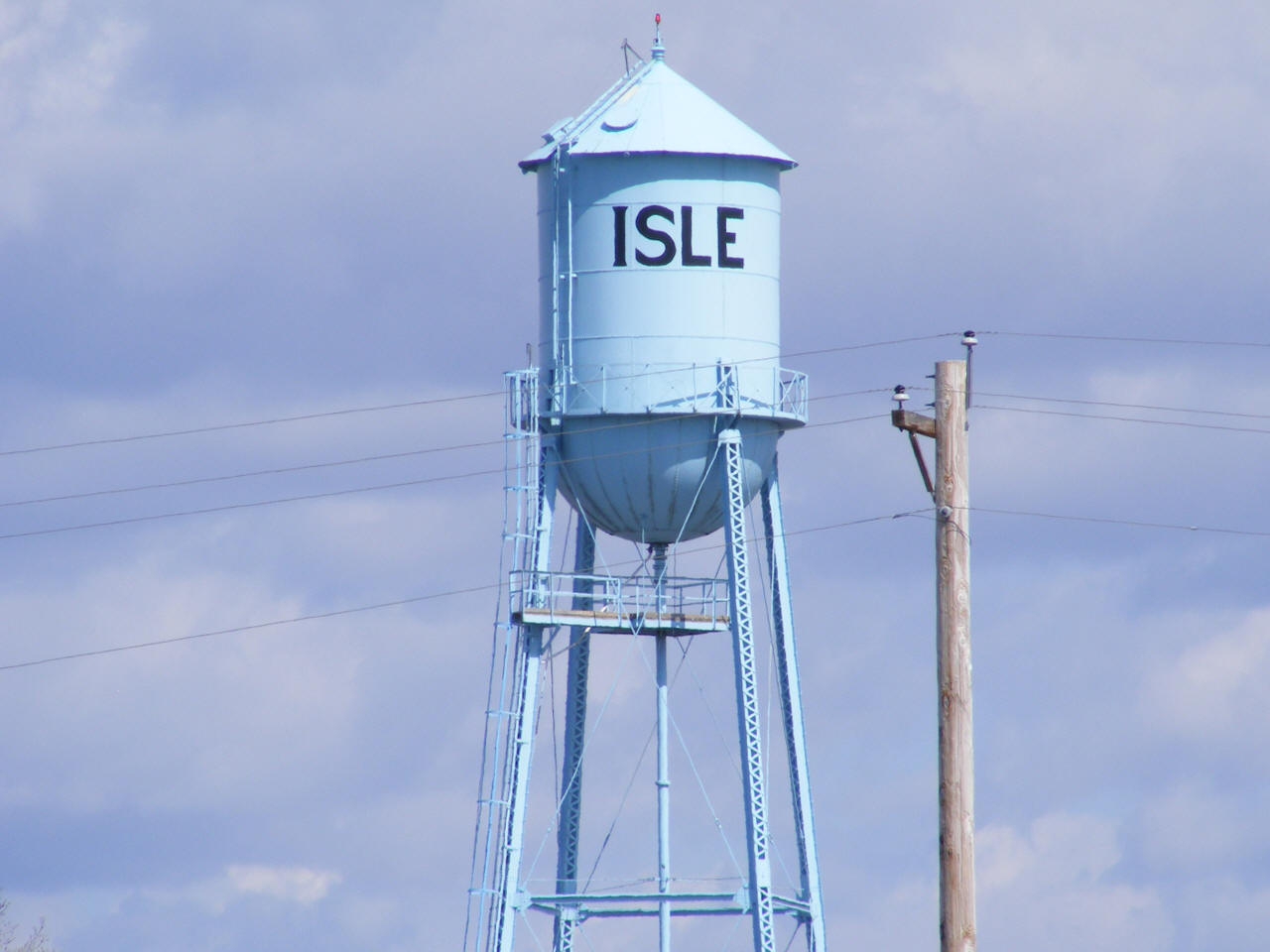
Voyageurs National Park is 325 miles pretty much due north through rural Minnesota from the Twin Cities. We could have managed the trip alright, but we had made plans to spend some time with old, old friends from Pennsylvania who were workcamping in Isle, Minnesota. A detour northeast instead of heading true north was in order. Duluth is easily in reach of Isle, on the shores of beautiful Lake Superior, and someplace we had never been together.

Our campground was about 10 miles from downtown Duluth and was bordered by a small lake. Barbara was enthralled with her first loon sighting as well as its echoing call!

The waters along the shores of Duluth are exceptionally deep and fairly free of hazards, which matched well with a needed shipping port on Lake Superior for shipping iron ore from the nearby mines in Minnesota’s iron range to the steel manufacturing ports along the Great Lakes (I’m looking at you, Gary, Indiana!) and a bit further inland (I’m looking at you, Pittsburgh, PA). The ore boats still use the harbor, however with far less frequency sailing through the channel under the Aerial Lift Bridge and past the original docks to moor at silos on the far side of an islet bay.

Lake Superior is daunting with its far horizons and, we were sure, kept its secrets – tales of many a sailor who lost their lives battling the seas throughout the years.

A walk through Canal Park and out onto the pier at the waterfront afforded some nice views…

We did head out to visit our friends Tom and Landa at their campground in Isle, and it turned out that they had a 3-day break from their workcamping gig, and were coming up to Duluth the next day. We had a terrific long visit.

See the source image

The Duluth Aerial Lift Bridge is one of the City’s landmarks. Completed in 1905 and spanning the Duluth shipping channel, the bridge connects the Mainland with Minnesota Point, a five-mile long sandbar on which recreational facilities, hotels, apartment buildings and single-family homes, and supportive businesses such as food stores, restaurants, etc. have been built. Originally the bridge had a high clearance to let boats pass, and a cable car was attached to the underside of the top truss to carry passengers, wagons, and automobiles across the bridge. Demand exceeded ability, and a flat deck across the 386 foot span was added in 1929. Because the deck was to be lifted to allow boats to pass, the top span was made to be raised so that the big ore boats could still use the canal. When the span is completely raised it It has a clearance of 180 feet.

Traffic Waiting To Cross The Aerial Lift Bridge
Canal Pork?

The Legend of Grandma – A true Duluth icon. Years ago a colleague and good friend who was managing the psychiatric program for the University of Minnesota Health Services Duluth asked me to come to Duluth to consult on their failing program in Grand Rapids, Minnesota. During our time together he told me of the legend of Grandma. She was a “feisty Italian immigrant” named Rosa Brochi who opened her first “boarding house” to the lonely sailors in the Great Lakes Port of Duluth in 1869. Grandma took very special care of her patrons, making sure they were always comfortable and satisfied…if you know what that means. Grandma was also a very shrewd business woman, not just opening several other “boarding houses,” but buying up as much of Duluth’s lakeshore in the harbor district as possible.

See the source image

There is so much more to do in and around Duluth than we had time to experience and explore. The North Shore Scenic Drive is said to be filled with spectacular views, a visit to Split Rock Lighthouse, seeking out waterfalls and a day in Gooseberry State Park are musts if you have the time, and a fun afternoon in the summer can be spent on the “Point” across the Aerial Lift Bridge at Brighton Beach Park…

Spending time with Tom and Landa, the chance to watch an ore boat go through the channel (not ready with my camera?), walking around Canal Park, and viewing the Aerial Lift Bridge made for a wonderful stay. But it’s time to get our National Park on – Voyageurs here we come!

Barbara and Brian

“It’s not what you look at that matters, it’s what you see.“ – Henry David Thoreau
TIME TO HEAD NORTH

See the source image

May 2021

Heading out of Ohio we’re on our way to International Falls, Minnesota, on the next leg of our journey started so long ago. Along the way we’ll visit National Parks and Monuments, State and City Parks, friends, cool places, the usual and the unusual and weird. However, it was more than tough realizing that it’d be awhile before we’d be together with our children and grandchildren again – Thanksgiving seems so very far away.

It was pretty easy to decide which way to go travelling from Mid-Ohio to the very northern tip of Minnesota. With Lake Huron and Lake Michigan sorta kinda in the way of a direct northern path, we had to go west far enough to go north – along the way we’d mosey through Northwest Indiana, cut through Chicagoland and Northwest Illinois, into Wisconsin and then into Minnesota.

Coming through Indiana Brian would have preferred avoiding the mishegas of maneuvering Aimee the last 20 miles or so of I-65 and I-94 in Northwest Indiana, and the southern suburbs of Chicago, but that just couldn’t be avoided. Then there was the question of going through Chicago itself. Should using the costly but efficient I-90 Skyway and then battling it out on the I-94 roadways (the Dan Ryan and Kennedy or Eisenhower or Edens Expressways) -or- just staying on I-94 for the long loop around Lake Michigan and then north through Chicago be a better way to travel? We couldn’t go east and then north to head west – the Canadian border is still covid closed, and that direction would add about 1,000 miles to our journey. And going further west would involve some pretty serious backtracking. Oh well…

Keeping to our preferred 250 miles give or take between stops, we finalized the plan. It was obvious, unfortunate and unavoidable to travel through (!) the Windy City to a stop in Baraboo, Wisconsin then northwest to a campground in Cannon Falls, Minnesota, then halfway to International Falls camping in Duluth (and a visit with old, old friends from Pennsylvania, Tom and Landa who were workcamping in Isle, MN) before pulling into International Falls for our exploration of Voyageurs National Park.

Why Cannon Falls? Well, part of our journey North would be to stop and visit Mesa friends and Rochester, Minnesota natives Tom and Karen, and then a stop to hang-out with Minneapolis/St. Paul natives, Mesa friends and Roesner Mob Members Mark, Lisa, Angie, Don and Carol, affiliate gangsters Russ and Lisa and maybe Jay and Kathy. Cannon Falls was pretty much halfway between Rochester and Minneapolis/St. Paul.

But along the way…

Brian’s known Paul since the early 1980’s. They both shared an affection for developing and administering community-based group programs that were alternatives to inpatient care for the mentally ill; Paul working more with adults, Brian with children and adolescents. They served on State and National Trade Association Boards together, frequently roomed together, and became steadfast friends. Barbara and Paul have also become friends over the years. Paul and the love of his life Michelle live in Indianapolis, and when in the neighborhood we enjoy spending some great time together. It was a short, but delightful detour to pull into Indianapolis and have brunch with Paul and Michelle. They knocked themselves out as the ultimate and gracious hosts…brunch was restaurant quality!

Guess Which One Is Paul?

Brian has known Steve since the 2 of them moved their families to Michigan City, Indiana in 1979. They both served as Board Members of the local synagogue for a lot of years, watched each others’ children grow-up, suffered tragedies and celebrated successes, provided each other emotional support, and were inseparable through life’s ups and downs…brothers neither of them ever had. Steve’s had rough go of it the last 10 years or so, but a heart condition and cancer has never altered his upbeat positive attitude, having a good word for everyone, and his love of life. Steve has for years given so much to the Jewish Community, and has always, always been a shoulder to lean on for friends. He’s the definition of a mensch.

On the way to Minnesota our first overnight stop was in Rensselaer, Indiana – a short trip from there into Michigan City and a good long visit with Steve.

Imagine One Of These Men At His Heaviest Weighed 240 Pounds

Did we mention that Brian was dreading the drive through Chicago? Having learned to drive there in the 60s he knew his way around IN A CAR and still does, but driving Aimee through the City would be another thing all together. After much agonizing Brian decided using the I-90 Skyway would be easier and save 25-30 miles of city traffic; so the first question of the route was solved – hop onto I-65 out of Rensselaer, and follow the roadway until I-65 dead-ends onto the Indiana tollway, which connects to the Skyway ($35 toll!), to the I-94 Dan Ryan Expressway south of The Chicago Loop which turns into the Kennedy Expressway north of The Chicago Loop and finally northwest using the I-90 Jane Adams Memorial Illinois tollway before turning north into Wisconsin. While the traffic was heavy driving into and through the City, and the ubiquitous road construction slowed everybody down, there were few, if any, white knuckle times getting Aimee through Chicago. Whew!

Next stop Baraboo, Wisconsin. The Wisconsin Dells is a family summer vacation mecca; merchants earn the majority of their living from Memorial Day through Labor Day when Baraboo and surrounding communities are jam-packed with vacationers. In mid-to-late May the weather in the Midwest can range from snow and cold to a sunny 70 degrees. Weekends in Baraboo in May can be busy depending on the weather. We arrived the week before Memorial Day, pulled into our campground and had a couple of days to explore before the weekend crowd arrived – yeah-the weekend weather was perfect.

It was 1884 when the 7 Ringling Brothers and natives of Baraboo turned a small touring troop of entertainers and their acts into a coordinated performing circus. 35 years later, in 1919, the Ringling Brothers Circus merged with the Barnum and Baily Circus to form “The Greatest Show On Earth.” For those of us whose fathers introduced them to THE CIRCUS it was a sad day in 2017 when the doors shut for good. Brian remembers attending his first Ringling Brothers, Barnum and Bailey Circus at Madison Square Garden in NYC – the sideshow was in the lower level of the Garden, the 3-ring circus on the main stage. Barbara remembers seeing the performance with her dad in Colorado Springs at The City Auditorium, and loving the artistry of the trapeze acrobats.

Ever wonder what can be done with cast aside scrap metal, various other metal objects and factory parts and cast-off parts from electrical generating plants, some welding equipment and a “bizarrely and slightly dementedly” creative mind? It’s not easy finding Dr. Evermore’s Sculpture Garden, but we found it well worth the time and effort.

Walking into Dr. Evermore’s Sculpture Garden begins with viewing the Forevertron® machine – in our minds a true Rube Goldberg gadget. The Forevertron® is the largest scrap metal sculpture in the world, standing 50 ft. high and 120 ft. wide and weighing 300 tons. It was designed and then constructed to launch Dr. Evermore “into the heavens on a magnetic lightning force beam”. Not sure if the gadget was up to the task; unfortunately Dr. Evermore died before the launch.

The Forevertron!

There’s lots more to see in the Garden including Barbara’s favorites…

…an orchestra and conductor…

Let’s Get Tuned Up!

…and other assorted sculptures…

Man Mound is a National Historic Landmark located just east of Baraboo. It is a “prehistoric humanoid earthwork constructed during the Late Woodland period (AD 900 until 1650). The mound is the only surviving anthropomorphic effigy mound in North America, depicting a horned humanoid figure, and may have held religious or ceremonial significance to its builders.” We could make out both ankles and feet across the road from the overgrown mound that prohibited viewing of the upper leg, torso, and head.

Upper Leg, Torso, And Horned Head?
The Area Needed A Viewing Stand And The Overgrowth Cut Back In Order To Have Seen This Design In The Earth
Legs And Ankles

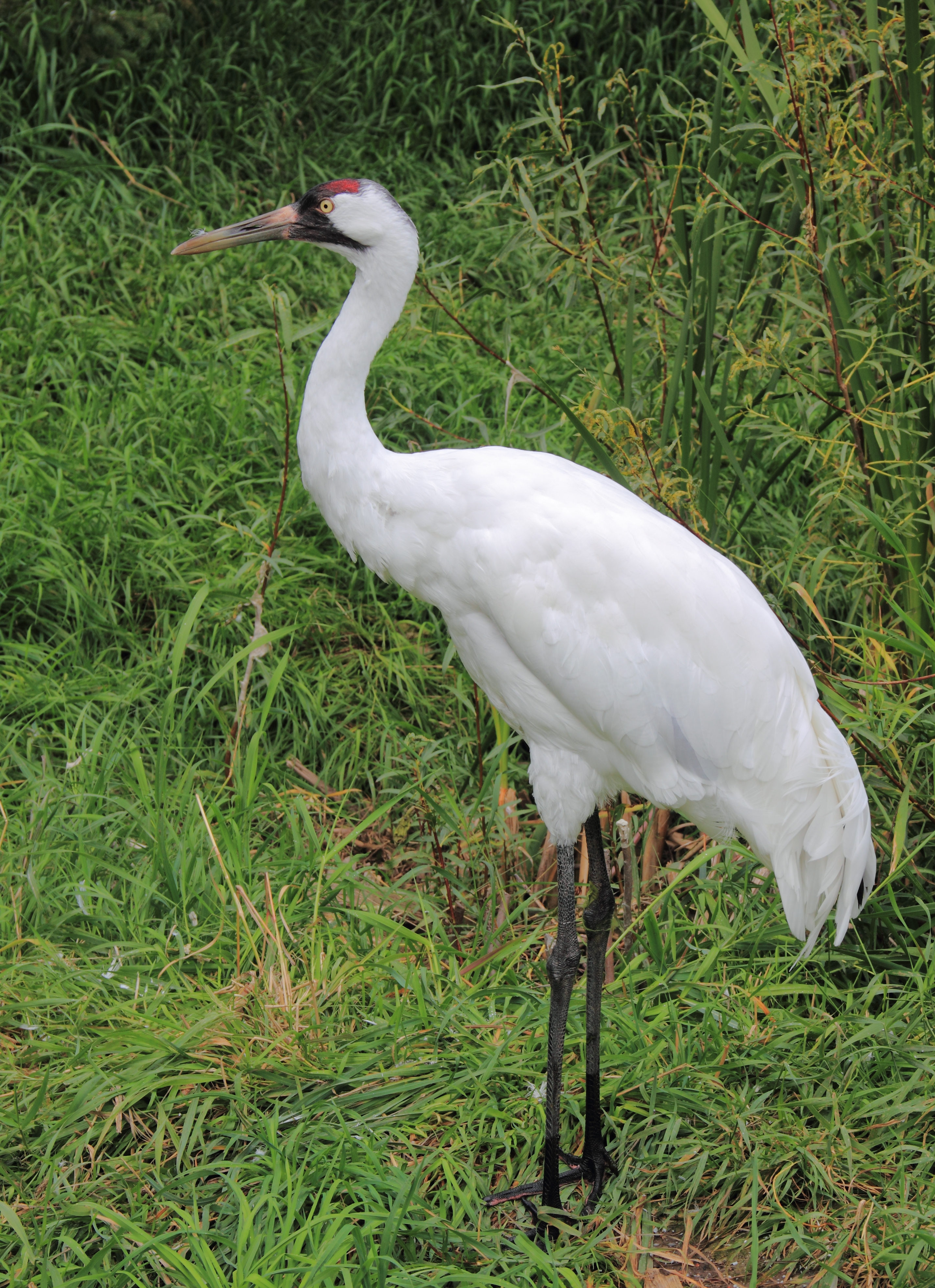
World-wide there are 15 crane species and The International Crane Foundation was established and actively works around the world to “conserve cranes and the ecosystems, watersheds, and flyways on which they depend.” The 300-acre global headquarters in Baraboo hosts a captive flock of approximately 100 cranes, including the only complete collection of all 15 species in the world. What a treat!

Sandhill Crane
White-Naped Crane
Blue Crane – I Promise You This Is Not A Picture Of A Picture. These Were Alive!!
Black Crowned Crane
Demoiselle Crane
Wattled Crane
Grey Crowned Crane
Sarus Crane
Hooded Crane
Red-Crowned Crane
Siberian Crane

Whopping Crane

Our last adventure in Baraboo found us at Devil’s Lake, one of the area’s iconic recreational venues. We easily found the East Bluff Trail Trailhead – our goal was to follow the Trail to reach Balanced Rock and a beautiful overlook. The hike follows along the east rim of the Lake at times ducking into the forest, and is a moderately difficult 1.7 mile loop.

Most of the trail is paved, and handicapped accessible. It was nice to see families, oldsters like us, and young couples in love holding hands and walking along the trail. There is a more challenging and difficult unpaved 3.8 mile trail that dips down from the East Bluff Trail to the water’s edge and rambles along eventually demanding a substantial uphill test in order to find Balanced Rock, but that adventure was not part of our dance card.

Devil’s Lake
Branched St. Bernard’s-lily or Spider Plant

Once at Balanced Rock Brian sent a text to his friend Neil to see if he might be able to guess where we were. The two of them have played this “where in the world” game for quite awhile now. Brian knew that Neil had grown up near Milwaukee, but figured he had been long enough away that this would be a stumper. Not a minute passed before Neil nailed it!

Balanced Rock

Can’t count the number of great views on the way back…

We had the great fortune to find and visit some incredible activities and sights during our brief stay in Baraboo. If we hadn’t been into our plan and heading up north into Minnesota we might have just rambled around in Wisconsin for a couple of weeks or longer. Brian had spent time previously in Milwaukee, Madison and Oconomowoc but not as a tourist…and this was Barbara’s first trip into America’s Dairyland.

Barbara and Brian

REWIND V – ARE WE THERE YET?

April/May, 2021

Our rewind journey is nearly complete. Apologies for the repeat, but it’s 270 miles from Nashville to son Spencer’s home in Indiana, 150 miles or so from there to daughter Elyssa’s in Ohio, and then 470 miles to visit with son Graham and family in Virginia .

What was that goal in the first place? To spend time in person with family, hug grandchildren, and fill up a void sorely depleted by estrangement for 18 months. And here we were within a brief time to fulfill that desire we so longingly pursued.

How excited we were to set-up camp in Indiana, and spend some time with granddaughter Kyra Grace, son Spencer, and daughter-in-law Evangeline. We had a joyous reunion and our week together hanging out and, well, just being family literally flew by in a heartbeat.

Think Kyra was excited?

There are not many decent campground choices in or near their home city, but we found a Jellystone Park close enough for Kyra to spend a lot of time with us in the park.

Jellystone Parks are set-up for kids and families, and use the Hanna Barbera cartoon characters Yogi Bear, his pal Boo-Boo and girlfriend Cindy Bear to create a theme inside the campground.

Spencer
Too Much Fun For 1 Day
And You Thought You’d Have To Use Orange Slices!
Who Doesn’t Love To Jump On A Bouncy Thing?

There’s more than corn in Indiana!

After a week it was time to mosey on into Ohio for some quality time with Elyssa, Ben, Maggie and Penny.

Maggie
Penny
Penny Insisted Barbara Wear This Particular Headband

LOL’s, playing table games, making art, trips to the playground, watching skating, eating Bootleg Bagels, having lunch with Elyssa at work, reading at bedtime, riding bikes and taking walks in the neighborhood, Maggie sleeping over and chocolate chip pancakes, playing (and winning) candy bar bingo, and making egg crate animals. Time passing far too quickly.

Penelope Rose…

On The Ice With Elyssa

Maggie Elizabeth…

Sisters…

Last year we were so very disappointed to not be with Maggie to celebrate her 9th birthday – it was the first time we were not there when she blew out her candles. Making the best out of a bad situation we held a “zoom party” with her choice, The Hunger Games, as a theme. Everyone dressed up, birthday girl Maggie as Katniss of course, and we did our best to make the day special. Maggie made sure to remind us a couple of times during the past year that we were not in Ohio for her 9th birthday. It was a priority for us to be there this year.

And make it we did…mindcraft posters, streamers and banners hung, and what seemed like a hundred blown-up balloons later the party was on! We had a blast playing with her water propelled rocket and skateboard! Her new camera would add to her creative artistic side, but her first iPhone was the gift she was hoping for all year.

Here’s What Maggie Saw As She Left For School
Ben’s Fabulous Cheesecake Birthday Cake

As one of her birthday wishes, Maggie wanted all of us to go to the Columbus Zoo, which was developed by Jack Hanna. It got a little warm as the day wore on, but we had a terrific time seeing newborns as well as some of the more popular animals throughout the zoo. Penny especially loved the giraffes.

Maggie Took This Photo

Wonder what Atlas Obscura might have for us while hanging out with Maggie and Penny? The Hartman Rock Garden didn’t let us down one iota. The display was completed between 1932 and 1944, and is located in the backyard of a private residence. Following Ben Hartman’s death in 1944, his wife maintained the garden as long as she was alive – eventually the property fell into disrepair. Friends of The Hartman Rock Garden was formed to repair, renovate, and restore Ben’s vision. The Garden reopened in 2010, and it is open to the public.

“If you’re going to build a rock garden — and Hartman Rock Garden contains over 100,000 rocks — then you need to get the rocks from somewhere. Fortunately for Harry George “Ben” Hartman (1883-1944) his home was only a few hundred yards from an apparently inexhaustible supply, in a shallow creek bed with everything from wall-worthy slabs to water rounded pebbles.” 

Plumbago
Garden Vervain
Giant Salvinia
Maggie Took This Photo

We felt it was a short 6-7 hours traveling from Ohio to Virginia, after all we’d get a chance to spend time with granddaughter Rowan Maeve!

Ro was maybe 3 months old when we were last together having helped move Graham and Leigh from San Diego into their new home in Virginia. The baby is now a very active toddler. We were able to take a nice hike in the woods, a couple of walks around the neighborhood, and just become reacquainted as only grandparents and grandchildren can…we even convinced Graham and Leigh to let us babysit and for them to have their first date night since Ro was born!

With Dad. Hmmm…Wonder What Caught Their Attention?
The Only Way To Travel!
Yup-That’s A Snake Taking A Swim
Calico-bush
Barbara and Ro…One Of Brian’s Favorite Photos

As our visits with each family came to a close we realized what a toll the time apart had taken on each of us. There is nothing quite as renewing to one’s soul as hugging your grandchildren and children, and making new memories as a family. To be denied that togetherness is to be denied great joy – we felt so very incomplete during the estrangement caused by covid-19.

Our children are adults with families, careers, and households of their own. Our past visits have not been all that close together, but we could have some spontaneity (Brian would just happen to be in the neighborhood on business!) in addition to the usual birthdays and holidays gatherings. There’s a balance between overstaying one’s welcome and the joy of togetherness.

Arriving brought happy tears to our eyes. Leaving was bittersweet knowing that for awhile, yet again, facetime, skype and messenger would keep us “face-to-face,” with whenever phone calls/texts/e-mail to keep us close.

We did not despair – we had the best time, and it was everything we could have ever wanted.

So to answer the question we posed (what 4 or 5 posts ago?) regarding how far this rewind took us…miles and days never really mattered, time behind the wheel and places we stopped (Austin being the exception) really didn’t matter, and, for the most part, while the sites and sights were exceptional the distance really never mattered. Family really, really was all that mattered!

As we are always with them in their hearts and souls they are always with us.

Barbara and Brian

“It’s not what you look at that matters, it’s what you see.“ – Henry David Thoreau

Sunset, Near Elyssa and Ben’s In Ohio

NASHVILLE – SPECIAL EDITION

April/May, 2021

Brian and I took the opportunity to visit a small “pop up” museum featuring the works of contemporary artists while we were in Nashville.  The curators chose an unoccupied retail store and worked with local artists to create a space for a show titled “Traveling Museum Project One:  ‘Radical’ Thoughts”.  Some of the funding for the exhibition came from the Museum of Contemporary Art Nashville (MOCAN). 

We don’t know about you, but when we recall our visits to Nashville, we remember scenes of drunken bachelors and/or bachelorettes being driven through the streets of the city on a party wagon, swilling alcohol, waving at strangers and singing along to loud obnoxious music.  Walking downtown Nashville you will hear the sounds of country star wannabes belting out country tunes day and night from the hundreds of jam-packed honkytonks.  The downtown is a bit of a hot mess, frankly, but in many ways, it has a seductive appeal to a certain crowd who loves to party and drink.  Nashville has a mystique and an allure to budding song writers who abandon everything to live and work in Nashville, hoping to write and perform THE song that will change their lives and get them to the Grand Old Opry. Perhaps a parallel experience awaits those who follow their acting dreams and move to New York or Los Angeles.

So imagine our surprise to find this tiny gallery tucked away in a little up-and-coming neighborhood in Nashville.  The idea behind the Traveling Museum Project is to “engage with the community, build awareness, and demonstrate the market need for a permanent contemporary art museum.”  The belief is that a community can change the world, and that “radical care and radical equality are things we all should want to be a part of.”

With this in mind, we entered the space.  To say the art we experienced was thought-provoking is an understatement. 

Veronica Leto: Popular
Marlos E’van: Foot-Washing B4 Tha Last Suppa!
Vivian Liddell: Whispering Pines
This Is The Actual Bathroom For Patrons and Employees

We have prefaced all of this to tell you how unprepared we were to watch a video of a trans woman who allowed us to go with her on her journey as she made the decision to have the life-altering surgery that would change her forever.  With tears running down her face, Barbara listened as the artist performed a spoken word piece describing in uncensored detail the procedure she went through.  She was unemotional as she let us into her world and allowed us to go with her on this most remarkable journey.  She was playful and laughing at times – she seemed genuinely joyful about her choice.  On a pedestal in a jar next to the video that looped over and over were her testicles. 

Suzy Seth Slykin: Tysm

Barbara is still reeling at the courage it took for this amazing young artist to be so intimate and so open with her audience, fully aware, we are sure, that not everyone who chooses to engage with her and this remarkable piece will fully appreciate the depth and the honesty of her video.  We are grateful to have had the opportunity to be a part of this “radical” exhibit.  There were many other incredible pieces, but this one has had the most long-lasting and profound effect on both of us.

Barbara and Brian

“It’s not what you look at that matters, it’s what you see.“ – Henry David Thoreau
REWIND IV: ALMOST THERE?

April/May, 2021

To finish up our time in Memphis we decided to explore recommendations suggested by Atlas Obscura. Afterwards it would be 210 miles and a few days at a campground in Nashville before that final leg into Bloomington, Indiana and that first indescribably wonderful hug from one of our grandkids.

We enjoyed our time visiting The Crossroads, the honor paid to blues greats along the small section of the Blues Trail we followed, our visits to B.B King’s museum and Elvis’ birthplace. There were a couple of days left to our stay on the banks of the Mississippi, and we found enough to keep our interest.

Memorial Park Cemetery is home to The Crystal Shrine Grotto, which Atlas Obscura describes as a “head-spinningly bizarre Depression-era art cave that is wall-to-wall quartz and Jesus.” What’s not to love?

The grotto and the cave it leads to (technically known as The Cave of Machpelah) were the work of artist Dionicio Rodríguez who had been tasked with beautifying the cemetery grounds. To this end he dug a cave almost 60 feet into a hill, and decorated the interior with faux crags made of cement and quartz crystals. All of the stonework surrounds a series of biblical tableaus which were later added on to with little two-dimensional figures that just increased the strange feel. By the way – no one is buried in the Grotto.

Heading Toward The Cave Of Machpelah
Kind Of A Novelty To Walk Through – It’s Concrete Though
Harry Potter’s Sorting Hat?

Memorial Park Cemetery is also the burial site of “Black Moses.” Elected as a member to the songwriters hall of fame and the rock and roll hall of fame, Isaac Hayes was an American singer (Theme from Shaft), songwriter (Soul Man), actor (‘Three Tough Guys,’ ‘Posse,’ ‘It Could Happen to You,’ ‘Uncle Sam,’ ‘Reindeer Games,’ ‘Hustle & Flow,’ ‘The Rockford Files,’ ‘Miami Vice,’ ‘Tales from the Crypt,’ ‘The Hughleys,’ and ‘That ’70s Show’) and producer. He was the voice of “Chef” on ‘South Park!’ Hayes was one of the creative forces behind the Southern soul music label Stax Records, where he served both as an in-house songwriter and as a session musician and record producer.

Brian found a feline adoption agency in Memphis that doubled as a place for cat lovers to hang out and get some lovin’. He wanted to surprise Barbara with an opportunity to spend an hour or so nurturing and being nurtured. Unfortunately The House of Mews was closed due to continuing Covid concerns. However, the ability to have some limited interaction with the cats sunning themselves in the storefront window brought such a smile to Barbara’s face…

House of Mews

In 1852, fifty Memphis gentlemen committed $500 each to purchase land and establish a new cemetery 2.5 miles from town center. Since then Elmwood Cemetery has become the final resting place for veterans of the Civil War, mayors, governors, madams, blues singers, suffragists, martyrs, generals, civil rights leaders, holy men and women, outlaws and millionaires. It is a classic example of a garden cemetery with a park-like setting, sweeping vistas, shady knolls, large stands of ancient trees, and magnificent monuments. Elmwood Cemetery is the final resting place of those who created Memphis history, and has been recognized by being entered on the National Registry of Historic Places.

So why did we visit?…Well, during the Victorian Era, death became romanticized, and was heralded by symbols including angels, bas-relief images and life-sized figures of the deceased. We thought this was pretty creepy.

Pulling into Nashville, we paused just a moment to remember brother-in-law Elliot, who passed away just about a year ago. The last time we had the chance to be together was here in The Music City. May he be of blessed memory.

No trip to Nashville is complete without spending some time soaking up history at the Ryman Auditorium, touring and/or attending a show at the new home of The Grand Old Opry, and for us foodies gorging on hot chicken.

We had enjoyed hot chicken at Hattie B’s on the way west…it made perfect sense to eat at Prince’s on the way east – after all it was James Thornton Prince’s womanizing that gave rise to this amazing dish (look it up – we can’t put everything in the blog!).

Since it had been more than 2 years since we had eaten at Hattie B’s it was hard to compare the 2 restaurants. Suffice it to be said that both know how to fry chicken! An absolutely delicious mild chicken breast, fries, and greens, and a hot half chicken (bet you can’t guess which order was whose) later we were able to waddle on our way.

Listed in the National Registry of Historic Places and as a National Landmark, The Ryman Auditorium was built in1892 by Nashville businessman Thomas G. Ryman as the Union Gospel Tabernacle Church. Yup – the word of God was heard there long before Minnie Pearl ever uttered her first Howdy! After his death in 1904, the Church’s name was changed to Ryman Auditorium in his honor.

But then in the 1920s, promoter Lula C. Naff rented the building and started booking talent creating the showplace it remains to this day. Talent? Well, how about musicians across the spectrum of genres from classical, opera, gospel, to country, jazz, blues and rock. Politicians gave speeches, authors read from their works, comedians, scholars and religious icons entertained…you pick a decade and its stars and they probably played at the Ryman! Neff’s philosophy, which ran contrary to that of this southern city, was to book talent regardless of race or gender, and that regardless of race or gender all were welcome. Not only was the talent top notch, but all of Nashville could enjoy the performances in the same building at the same time. Imagine that in 1920’s America!

Captain Ryman
Minnie Pearl and Roy Acuff Of Grand Old Opry Fame

The Grand Old Opry called The Ryman Auditorium home from 1943 until 1974, when it moved to its new location. We loved our backstage tour of the venue considered to be the home of Country Music. Brian must have been in awe as there just aren’t many pictures of the dressing rooms, the wall listing opry members, or pictures of pictures of stars throughout the years…

Opry TV Test Screen

Centennial Park is directly across the street from Vanderbilt University in downtown Nashville, and was developed for the 1897 Tennessee Centennial and International Exposition. The Exposition’s buildings, of which there were over a hundred, included those devoted to agriculture, commerce, education, fine arts, history, machinery, minerals and forestry, and transportation, as well as those in which the special exhibits pertaining to children, African Americans, the United States Government, and women were shown. Most of those buildings are now long gone, but the space has been developed into one of Nashville’s best parks. In 1905 the City of Nashville built a replica of The Parthenon right in the center of Centennial Park, and to this day stands as the primary attraction for the now 132-acre park, which includes a one-mile walking trail, Lake Watauga, the Centennial Art Center, historical monuments, and green space for outdoor activities.

We spent a delightful couple of hours enjoying our time at Centennial Park, walking around the Lake, checking out the reliefs carved into the facades of The Parthenon, and…

Magnolia Blossom

…visiting with Lizzy The Dragon who sits about 100 yards from the north entrance of The Parthenon.

Lizzy The Dragon

For us seeking out unusual public artwork and other stuff is normal…

In 2003 local Nashville artists created fifty-one catfish statues in support of an effort to raise awareness of the poor water quality in the Cumberland River and to raise funds to clean-up the waterway (which is now quite clean!) The statues were all auctioned off later in the year, and most of the statues ended-up in private residences…a few remained on public display.

Boy Scout Catfish
Located On The Grounds Of The Vanderbilt University Children’s Hospital
Honestly The Steeple Did Lean That Much!
Built Into The Stonework Around Reba McEntire’s Starstruck Entertainment Is The “Hidden Heart Of Music Row”
Purple Queen, Purpleheart, Wandering Jew

Just down the street from The Heart of Music Row is RCA Studio B…the recording studio that put down tracks for so many in the early years of rock and country music.

We just find ’em, but sometimes can’t explain ’em! Human-Play polar bear statues guarding the entrance to a retirement home, frozen in the middle of a snowball fight!

Last on our list of places and things to visit on Nashville’s unusual list may not be that unusual after all – it is the central attraction in Fannie Mae Park. “Sea Serpent” was built during 1980‐81 and is a ceramic tile sculpture set in reinforced concrete designed and constructed by New York artist Pedro Silva. It measures 12 x 36 x 61 feet, and takes the form of a huge sea serpent which appears to be partially submerged beneath the surface of the playground. The “Sea Serpent” is covered in ceramic swimming pool tiles of bright turquoise and primary colors. The individual images are of sea creatures, clowns, popular personalities, animals, etc. It was so wonderful to see families having such a good time with the sculpture. Very, very cool!

We really did have a great time making our way back east – there really is so much to see and do no matter where you may be, and we’ve really only scratched the surface no matter where we have been. BUT, enough already…it’s time for grandkids!

Barbara and Brian

“It’s not what you look at that matters, it’s what you see.“ – Henry David Thoreau

REWIND III: STILL IN REVERSE

April/May, 2021

Time for us to skedaddle our way from Austin and surrounds, 370 miles or so to and after a short stop through Texarkana on our way 275 miles to Memphis. A lot is planned once we get there…

Texarkana my seem like an unexciting place, but what could be bad about a town that belongs to 2 states – that’s right, you’re in Texas when on the west side of town and in Arkansas when east.

See the source image

And here’s a great fact about Texarkana… It is the home of Pulitzer Prize winning American composer Scott Joplin…yeah the guy who is considered the father of ragtime music and composer of “The Entertainer.”

See the source image

Texarkana turned out to be a decent place to take a needed rest stop on our adventure, and allowed us to have respite to take care of those necessary humdrum things like laundry and food shopping.

We’re not sure what we expected with our plans for staying at the Tom Sawyer RV Park in West Memphis, Arkansas. Our campsite was maybe 50 yards to the west bank of the Mississippi River, and we were able to watch the tugboats pushing barges up and down river, the occasional paddlewheel go by, and the sun rise over the River. We had wondered why the RV Park’s website contained a disclaimer denying refunds if we had to evacuate due to flooding. Being so close we could just imagine how quickly a heavy lasting rain upriver would raise the water level high enough to spill over the banks and flood the entire area!

Setting up we both started sweating and wondering why since it wasn’t any more strenuous that any other time we had set-up in more than 3 years. Oh yeah – we had been staying in the dry arid drought of Arizona and had forgotten what humidity was all about! Welcome back to the middle of the Country.

During our last visit we were deeply moved by the Civil Rights Museum and the site of Dr. Martin Luther King’s assassination, enjoyed thoroughly the History of Blues Museum and Biel Street, and found Central BBQ to be Lockhart, Texas east. Brian had wanted to head south into Mississippi and follow some of the Blues Trail, but a stop for BBQ was mandatory.

Try The Oversized Pulled Pork Nachos!

For the initiated, the Mississippi Blues Trail tells the tale of the origins, the people and the places associated with the genre of music known as The Blues. The Oxford Dictionary defines The Blues as: “melancholic music of black American folk origin, typically in a twelve-bar sequence, developed in the rural southern US toward the end of the 19th century.” And then further adds: “As Black Americans migrated to the cities urban blues gave rise to rhythm and blues and rock and roll.” What a legacy! The Mississippi Delta became known as the birthplace of the blues, and produced a majority of the artists and performers whose names we know.

Clarksdale, Mississippi is the center of the Mississippi Delta and our first destination on this journey. Out of Memphis it’s a short 70 miles or so south on Highway 61 to Clarksdale. (Highway 61? Oh – solved a question Brian’s had for perhaps 50 years. Bob Dylan was paying respect). Along the we passed the Highway 61 Blues Museum and had to stop at this facsimile juke joint.

Just for the record a juke joint is slang for a place that features music, dancing, gambling, and drinking. It’s origins belong to the southeastern US Black American culture.

Myth has it that Robert Johnson sold his soul to the devil and the blues were born. The Crossroads are at the junction of Highways 61 and 49 in Clarksdale and commemorate that bargain.

;djacent to The Crossroads and founded in 1924 is Abe’s BBQ. While Robert Johnson’s bargain with the devil may be a myth, the restaurant boasts as fact that its founder, Abraham Davis, did indeed surrender his soul for the recipe to the “famous” come back sauce. A small bbq pork sandwich, bbq beef plate and tamale plate (!!) later we were ready for further adventures…our meal was excellent and inexpensive, but bring cash; no credit cards are accepted.

Swine Dining?

Less than a mile from The Crossroads is The Delta Blues Museum. The history of Delta Blues was laid out before us with exhibits giving in-depth information about contributors, artists, and growth of the blues within a historical timeline (sorry-no Jake and Elwood). Jammed-packed with memorabilia including musical instruments, performers’ costumes, and musical scores, and the recordings of landmark tunes heightened our enjoyment of the museum.

Outdoor Performance Stage

Photos were discouraged, but Brian couldn’t help himself…

John Lee Hooker
Mural Across The Street From The Museum

he 469 miles of the Blues Trail is broken up into 5 regions, and there are more than 200 stops. We chose to spend our time in the Delta, and “wisely” chose which of the 100 stops to put on our list. We had such fun hunting ’em down.

Plaque Commemorating The Birthplace And Home Of Muddy Waters

About 60 miles south of Clarksdale is Indianola, the burial site of and museum commemorating the life of B.B. King. Riley B. King was born in 1925 near the town of Itta Bena, Mississippi. He was shuttled between his mother’s home and his grandmother’s residence as a child, his father having left the family when he was very young. The youth put in long days working as a sharecropper and devoutly sang the Lord’s praises at church before moving to Indianola in 1943. Discharged honorably from service in World War II he settled in Memphis, Tennessee. Working as a disc jockey he was dubbed “the Beale Street Blues Boy;” the nickname was shortened to “B.B.” B.B. King cut his first record in 1949, and he spent the next several decades recording and touring, playing more than 300 shows a year, and setting a record of 74 recordings on the Billboard charts. According to biography.com, “…he introduced a sophisticated style of solo guitar playing, mixing in fluid string bending, shimmering vibrato and staccato picking that influenced many later blues electric guitar players.”

We had the good fortune to be joined by our daughter Elyssa and son-in-law Ben in 2005 to hear an 80-year young B.B. King play at Musikfest in Bethlehem, Pennsylvania.  

So the blues gave rise to rhythm and blues which gave rise to rock and roll? Wonder if there’s anyone else who might have been born in Mississippi that influenced the world of entertainment as much, if not more, than B.B. King? Well, a 100-mile trip southeast from Memphis down Highway 22 would bring us into the heart of Tupelo. That’s right – the birthplace of Elvis Aaron Presley.

We were able to visit the museum that described his early life, and then take guided tours through the house where Elvis was born and lived as a youngster and teen, and through the Assembly of God Church where Elvis would go with his family to worship and where, through gospel music, his singing in public began.

Two-Room House Built By His Father, Grandfather And Uncle
Assembly Of God Church

Elvis, B.B. King, and the others whose plaques we enjoyed finding and documenting in this blog experienced poverty and discrimination to some degree throughout their lives. Barbara and I would be remiss to not comment on the continuing issue of poverty faced by people of color in Mississippi. In our travels we did observe the “have not” side of life, which was almost 100% inhabited by people of color.

From Scott Joplin to Elvis and B.B. King…so much of our time was spent exploring the roots of one of the genres of music we love, and paying homage to and expressing an appreciation for the entertainers, artists and performers, poets, producers, and dreamers of what might be. Thanks…

Barbara and Brian

“It’s not what you look at that matters, it’s what you see.“ – Henry David Thoreau
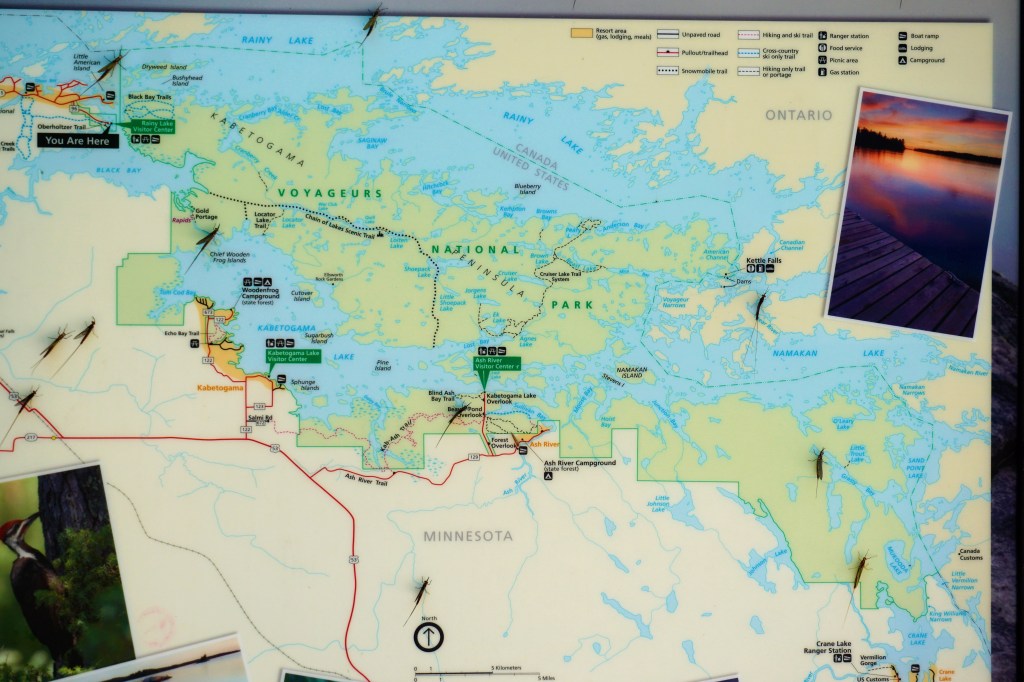
REWIND II: FUN BACKTRACKING

April/May, 2021

So we’re on a mission to make our way from our wintering home in Mesa, Arizona driving a whole bunch of miles in order to hug a fair share of our grandkids after a year and a half of covid restricted estrangement. We’re having fun discovering that, for some things or places visiting once is not enough and, goodness knows, there’s stuff we missed the first time around that is calling our name in the here and now.

Lockhart is one of those places for which one visit is not enough, and although there’s really, really good (if not the best in the US) BBQ in Austin, for us a pilgrimage to the Capitol of Central Texas BBQ is mandatory. Since we were traveling to rather than from the Block kids we asked them if we ought to risk buying, freezing and transporting smoked meat across state lines? Surprisingly only Graham and Leigh took us up on the offer, and into the freezer went 10 pounds of Kreutz’s smoked sausage and, from Black’s, a 1.5 pound beef rib…oh yeah, the primary carnivore of the Texas Lundbom clan ended up with 5 pounds of sausage, too.

Rather than repeating our 2018 gorge fest and 48 hours of meat sweats by trying to consume BBQ from all of the restaurants in town we kept ourselves to meals at Black’s featuring brisket and chicken. Couldn’t be finer!

We reported on our visit to the grave of the victims of the Webster Massacre and to Dead Man’s Hole in the last blog. How about a macabre site just north of Llano – Baby Head Cemetery?

Sometime between the 1850s and 1870s, a group of Native Americans kidnapped a young girl from a local family in an effort to scare off the encroaching settlers. The girl was killed, and, according to legend, her head was placed on a stake at the foot of the local mountain resulting in the grim title that both the mountain and the town took on.  It’s the only thing remaining in the area that marks where a flourishing 19th-century town once stood.

We were just about back in our car and off to find our next unusual spot when Brian spied 2 armadillos. We’ve seen plenty of these creatures “sleeping” belly-up by the side of the road, but not alive and waiting for their picture to be taken!

Ready For My Close-Up Mr. DeMille

Unlike Brian, Barbara’s not much of a fan of horror movies, but when you’re near the creepy gas station used in the movie “The Texas Chainsaw Massacre” you just have to stop, no? Turns out the movie plot is not from a true story. BUT, the character Leatherface is based on the convicted serial killer, Edward Gein, who did indeed enjoy making articles of clothing from the skin of his victims.

The location is in Balstrop, and is now a BBQ joint rightly named “We Slaughter BBQ.”

That Last Line Is: “Where BBQ Is Still Slaughtered”
Take A Close Look At The Restaurant’s Name Under The Coca Cola Logo

Something a little less grisly, lurid and morbid. From the UMLAUF Sculpture Garden…

Brian had stopped at Buc-ee’s with Graham on their long drive transporting his family’s belongings from San Diego to their new home in Arlington, Virginia. It is an amazing place – 104 gas pumps and a 50,000 square foot mega-convenience store that includes stations for BBQ, jerky and meat sticks, fresh baked goods and fruit, a sandwich bar, burgers/dogs/hot sandwiches, and home-style meals in addition to the usual snack foods and drinks found in most other convenience stores. Gas prices are good – the food and convenience items may be a bit pricey, but the quality is top notch. Worth a stop!

Schulenburg, Texas is the “Official Home of the Painted Churches.”

In the 1840s, Catholic German and Czech immigrants, fleeing from religious persecution, began to arrive and settle in a 100-mile radius around Austin. The settlers endeavored to preserve their heritage, food and values, and formed civic societies to maintain their language and customs. It did not matter whether the population of the town was a few hundred or a few thousand – it was theirs, and they could worship without oppression.

The settlers sacrificed, saved and provided their own labor to build places of worship that reminded them of the churches of their homeland. They decorated the interior in the sumptuous colors and designs of what they had left behind in the “old country.” It did not matter that paint was used to achieve the effect of carvings, marble, and gold—the churches were theirs, and they were beautiful. The exterior might be unassuming, but once inside these “painted churches” were something to behold. Fortunately they have also been preserved.

First View Of St. Mary’s – Praha
St. Mary’s – High Hill
Saints Cyril and Methodious Church – Dubina
St. John The Baptist Church – St. John, Texas

These little rascals graced the outside of the churches – by the thousands!

The next question we asked ourselves, since we were close by anyhow, was whether or not San Antonio might just have anything of interest? Well, yeah!

Try on the world’s largest cowboy boots…

…or visit Frank’s giant hog sculpture – nobody’s quite sure why it was built or what use it served…

…or wander about the Quadrangle at Fort Sam Houston.

The Fort is an active military base and presently civilians were not permitted on grounds; however the following was confirmed by the enlisted man posted at the entrance to the instillation: “The Quadrangle was the original Fort at Sam Houston, and was designed without windows to better withstand attacks. We’re not sure why, but In 1886 deer, rabbits, peacocks, and other birds were introduced into the Quadrangle and since that day future generations of the animals continue walk freely in the grass and under the trees.”…

As we walked along the fencing we could hear the peacocks screams.

…But then again you never know what you’ll see or find by just taking your time and with your eyes wide open. As we were pulling away Barbara happened to notice a beautiful event venue (think weddings) with chandeliers hanging from the trees…
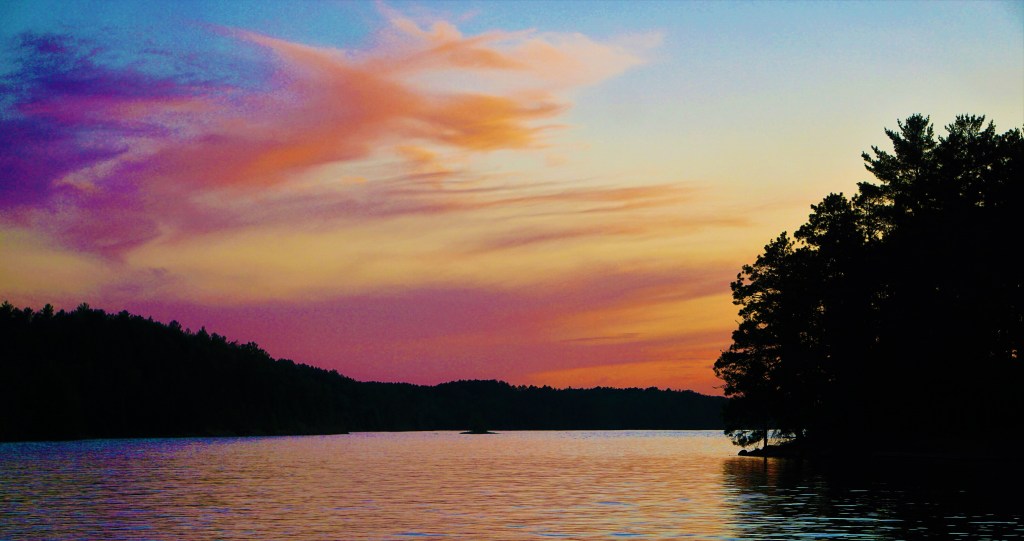
…And then there is Mission San Jose y San Miguel de Aguayo.

The Mission is the southern most of 4 encampments, each approximately 2.5 miles from the other. The northern most mission is the Alamo.

The Church and outbuildings are constructed of limestone, and the architecture of the Church itself, as is true of all 4 missions, is described as “extraordinary Spanish colonial Baroque.” The grounds were home to Franciscans as well as 350 Native Americans – the Franciscans’ quest for converts driving life within the Mission walls…

Barbara Loved This Tree

…Can’t leave out HemisFair Park and the Berlin Bear. HemisFair Park was built in1968 in honor of San Antonio’s 250th anniversary. It also served as the anchor for the 1968 World’s Fair, which was also held in the City.

The park is now a child’s dream with a water garden and splashpad, and a kid-designed wood and sand playground (which includes a castle and space tunnel). The highlight is the looming 750-foot tall Tower of the Americas.

The Berlin Bear is a bronze sculpture – the heraldic symbol of the city of Berlin – that was a gift from West Berlin to San Antonio for the World’s Fair. According to the website finding the bear would be an easy task, but we think we might have walked past it, around it and over it before actually having the chance to view the sculpture…

…We wanted to spend an afternoon wandering The McNutt Sculpture Garden at The Briscoe Western Art Museum, and be surrounded by bronze sculptures depicting iconic figures of the American West. However, the Sculpture Garden was closed for a private party. Not to be totally shut out we did get a chance to enjoy sculptures on display in front of the Briscoe Museum…

…And last, but not least, we ambled through the Alamo courtyard, in order to find the graves of – are you sitting down? – 2 cats! Yup, not defenders Jim Bowie or Davey Crockett, not Commandant Travis or any of the others who defended the Mission, but 2 cats. We were wondering if these felines died during the Battle of the Alamo, but nooooooooooooooooo…

Alas, our time in Austin had to end. Our adventures were varied – from live music and seeing Jon perform, to spending time with family, to good eats and a freezer full for the road, to sipping wine, to exploring the macabre and learning a new bit of history, to discovering that German and Czech immigrants took pride in their workmanship to build houses of worship that dazzle with their beauty to this day. We explored the unusual and commonplace – what a fine time!

Barbara and Brian

REWIND I

April/May, 2021

Let’s be clear, Brian has not physically hugged anyone but Barbara since October, 2019. That includes friends, family, children and especially grandchildren. Our family has, rightfully so, been separated since…well, this crazy corona virus began its nasty, insidious world-wide domination. We’ve stayed away because of common sense.

It’s a little better for Barbara who had a chance to hang out with one of our granddaughters last November (Happy Birthday, Helena!).

Sure, we’ve stayed in touch. Thankfully facetime and messenger and skype, texting and e-mail as well as plain old-fashioned phone calls, grandchildren’s art work mailed to far away places and occasional letters have kept the connection to family as alive as it can be during the time of a pandemic. But it’s not the same as telling a granddaughter to give a final hug before you part company, or seeing little hands wave goodbye through the front room window.

Fast-forward more than a year later…As of March 23, 2021 we’ve had our 2 vaccinations (Pfizer) and passed the “2 weeks to best immunity threshold.” On faith that vaccinations would be available to our age group, we began planning our 2021 spring/summer travels in December, 2020. We certainly wanted to reinvigorate the Pacific Northwest National Parks, Olympic Peninsula, Oregon, and Redwoods trip originally planned for last summer. Exciting right? HOWEVER, to get to the Northwest a slight 4,700 mile detour east northeast would be essential, mandatory, and had to be accomplished without fail. Title this one GRANDKIDS!

So A REWIND since our heading out to the west in 2019 became the first goal for spring/summer 2021 – heading back from Mesa, through Austin (hello Jon and family) through Bloomington (hello Kyra, Spencer, and Vange) through Yellow Springs (hello Maggie, Penny, Elyssa and Ben; hello Rowan, Graham and Leigh). That being accomplished, and thinking about how to then get west we decided to travel north northwest to International Falls, MN and Voyageurs National Park dropping down through Fargo then west through Coeur d’Alene to the Pacific Northwest.

Other blogs documented our 2019 trip west as we passed through cities including Nashville, Memphis, Hot Springs, Dallas, Austin, Fort Stockton and Las Cruces…add on stops in Yuma, Tucson and San Diego, too. Some were just cool cities in which to hang-out. Other stops were good locations in order to visit National and/or State Parks. Wherever we were we made sure to see whatever sights were within reach using our favorite websites for the traditional and unusual to guide our adventures when we weren’t exploring, hiking and being amazed by our National Parks, Monuments and Forests.

So who knows what we’ll find as we REWIND from Mesa in 2021 on our obsessive pursuit to actually hug grandchildren?

For this trip we agreed that if needed we’d extend our usual daily 250 miles or so in order to reach more accommodating campgrounds along the way. So, when we broke camp in Mesa on April 1 our first stop, after 388 miles, would be Las Cruces, New Mexico. Oh yeah, there’s another oddity in this adventure – it’ll be the first time since September, 2019 that Aimee would be out of Arizona not to return until approximately 8,000 miles traveled and 6 months has gone by.

Coming west we spent time in Tucson before moving on to San Diego and became very familiar with US Interstate 10 out of Texas and Interstate 8 from Arizona into California. However, going eastbound from Mesa to Las Cruces our GPS instructed us that the best route would be 2-lane State Highway 70 (not the US Interstate), which would take us over and through the Peloncillo Mountain Range – a much more scenic route than Interstate 10, and the distance was not really a big deal except for battling 40-50 mile-an-hour winds that made the trip seem longer, take more time than anticipated, and be more exhausting.

Las Cruces is a thriving city of a little more than 100,000 people, and is home to New Mexico State University (Go Aggies!). While we didn’t spend any time in Las Cruces proper during our stay we did enjoy a re-visit to Mesilla, a small village of about 2,200 immediately adjacent to Las Cruces. We came into town the evening of Maundy Thursday, and the town square was packed with people heading into the Basilica of San Albino in observance of this Holy Time in the Catholic faith. We enjoyed walking around town a bit, found a little wine bar down a side street and sat listening to the “open mike” performances for a while.

Basilica of San Albino
From The Wine Bar Courtyard

Twenty-three miles east of Las Cruces is the US Army Garrison White Sands Missile Testing Range and just about thirty miles further is the entrance to White Sands National Park. We had visited both the Army Garrison and, what at the time was, the White Sands National Monument on our way west; however, we felt like a nice hike about in the National Park would help us shake off the long ride and wind-blown stress of traveling the day before.

Visitors Come For A Day Of Exploration, Hiking And Sand Sledding

The last time we were in the neighborhood we didn’t follow Atlas Obscura’s call for us to seek out the “world’s largest” pistachio nut sculpture located at Pistachio Land in Alamogordo…couldn’t resist this time around.

There are several pistachio nut farms in the area as soil, weather and other necessary growing conditions are perfect for growing this tree nut. Pistachio Land is a very commercialized operation offering tours of their pistachio groves, sampling, an ice cream parlor, a play area for young ones, and, since the region is also perfect for growing varietal grapes and producing wine, wine tasting (!). We visited Pistachio Land, saw the sculpture, took the tour, sampled the nuts and drank some wine, then moseyed along and visited the more sedate Heart of the Desert Pistachio and Wine Company. After chowing down on salty and spicy flavored pistachios followed with wine tasting, it was no wonder Barbara and I bought a bottle of wine at our second stop.

It’s 285 miles from Las Cruces, New Mexico to Fort Stockton, Texas. The trip is along the Interstate 10 corridor, and although West Texas is so, so desolate it’s a pretty easy trip. Texas requires a cursory annual safety inspection of all motorized vehicles ($7 anywhere in the State for any vehicle), and this was an important agenda item for our stop in Fort Stockton (fyi: both the Jeep and Aimee passed the inspection). Forgot to get a picture of Fort Stockton’s “mascot,” and the world’s largest roadrunner sculpture, Paisano Pete, the last time we were in Fort Stockton…

It’s a short trip from Fort Stockton to Big Bend National Park. The morning was overcast and threatening, but the local weather report promised a clear and warm afternoon – time for us to get our hike on, and the Grapevine Hill Balanced Rock trail was calling our name. As we were driving and getting close to Big Bend we had to stop and enjoy the Yucca in bloom as well as some other desert flowers hidden amongst the scrub.

Coming into the Park we stopped at the Visitors Center to refresh, and noticed the clouds over the mountains…

…but we had come to the Park for a hike…

Grapevine Hills Trailhead: View Away From The Trail – Check Out The Vastness Of The Park
Along The Trail – Budding Prickly Pear Cactus
Along The Trail – Budding Yucca
The Vastness Of The Park Is Amazing
At The Trail End – The Eponymous Balanced Rock

Onward 336 miles to Austin. Once again an easy ride along Interstate 10 for 268 miles. Then the trip gets interesting once reaching the Fredericksburg exit and exiting the highway. As we then headed east on a twisty rolling 2-lane road for 78 miles we came to truly appreciate why this is called Hill Country. We took our time, and found a delightful campground waiting our arrival. Time for family!

Nephew Jon
Lucy and Bennett
8-Year-Old Lily

After more than a year it was so wonderful to be able to visit with Jon and family. We had a couple of weeks in Austin, and while we didn’t spend every evening together everyone came to realize just how important family is to our overall well-being (and how important little treasures are in this world – thanks Lily and Benny for our artwork. We’re missing you, too.)

So, what else did we do this time around in Austin?

Well, we spent a day walking the streets of Fredericksburg, and while enjoying a glass of wine became engaged in conversation with new friends who were in town on a bus tour of the area.

Amazingly, there are more than 50 vineyards scattered throughout the Hill Country. We had lots already planned, but next time we’re in the neighborhood a wine tour is definitely on the agenda.

As is our custom we had to review Atlas Obscura and The Crazy Tourist listings to see what we had missed during our visit 2 years ago. The first stop on our tour to the unusual was the Austin suburb of Round Rock and the “The Flamingo House.” The owners of a fairly typical middle class single family home in a middle class neighborhood invites all who come this way to walk on their front lawn and amongst their ever-changing display of a flamboyance of plastic flamingos. The owners started the display in March, 2020 intending to provide the neighborhood a light-hearted diversion during the pandemic.

Davis Cemetery in Leander, Texas is the final resting place for many of Leander’s founding families and their successive generations. Amongst the gravesites we found a mass grave for the victims of the Webster Massacre – commemorating the death at the hands of Comanches some of the town’s original settlers.

Marble Falls Township is the location of “Dead Man’s Hole.” The depth of the hole is estimated to be 150 feet or more, and was used by Confederate States’ collaborators and soldiers during the Civil War as a burial site for executed Union Army sympathizers. Rumor has it that there had been the limb of a hanging tree over the hole.

Along I-35 near Austin, Texas we found the Mueller SunFlowers, a set of 15 innovative solar panels (!) disguised as flowers sprouting from the edge of an otherwise mundane retail shopping center.

Now every so often you get more than you bargained for…on a positive note. While taking in the sunflowers and considering the amount of electricity they can generate in a place that gets 228 days of sunshine a year Barbara heard a cacophony of some sort of bird. Imagine our surprise when we discovered a pair of large parrots hanging out in a tree just over our shoulders.

We couldn’t imagine for the life of us what the Larry Monroe Forever Bridge might be. Perhaps a loving tribute to someone’s significant other? Or maybe some kind of link between here and there, but a long way apart? Just where is the emphasis in the phrase Larry Monroe Forever Bridge? Turns out that Larry Monroe was a beloved musical broadcaster and scholar who spent 30 years on the Austin airwaves. When he died family and friends refused to let the “music or his memory die” and created a memorial in his honor. Artist Stefanie Disefano designed the “bridge” so that the walls on either side of the road are decorated with sculpted mosaic tiles relating to Monroe and the music that he played. Get it? It’s Larry Monroe Forever!

Last winter Austin was shut down for a good couple of weeks, after being hit with a cataclysmic blizzard followed by artic temperatures. The City’s infrastructure (snow plows?) was unable to respond. There were downed electric lines prohibiting the power company’s ability to keep citizens on the grid. It’s hard to realize the longer term effect of such a disaster, but one of the consequences identified by Barbara while we were driving to our campground was that the palm trees and cactus that could be seen along the route were dead or dying. Near our campsite a magnificent, old prickly pear cactus was a victim of the storm, and had become home to an escargatoire of snails.

The Turkey Creek Hike in Emma Long Metropolitan Park is a nice meander through the woods and along the shores of Lake Austin. It’s a great place to see wild flowers and some turtles as well – a perfect outing for families and us old folks.

Which Way Did They Go?
Bambi Came By To Wish Us A Fond Farewell

The Contemporary Austin, originally known as the Austin Museum of Art, is an art museum, consisting of two locations and an art school. The Jones Center is their downtown location and is home to ever-changing exhibitions, and Laguna Gloria, a sculpture garden along the banks of Lake Austin.  

The Jones Center – Exterior
Carol Bove – From The Sun to Zurich And Err On The Side Of Gnosis
Nichole Eisenman – Man At The Center Of Men
Udo Rondinone – The True
Ryan Gander – The Day To Day Accumulation Of Hope, Failure And Ecstasy
Ryan Gander – The Day To Day Accumulation Of Hope, Failure And Ecstasy; A Bright Spark In A Dim World
Ryan Gander – The Day To Day Accumulation Of Hope, Failure And Ecstasy; An Institutional Maze
Ryan Gander – The Day To Day Accumulation Of Hope, Failure And Ecstasy; The Zenith Of Your Career
Tom Sachs – Miffy Fountain
Paul McCarthy – White Snow #3
Tom Friedman – Looking Up

While walking in downtown Austin we found a couple of things of interest…

…Last but not least and remembering incredible deliciousness we were drawn to, compelled, and compulsively driven to share a Gourdough’s Naughty And Nice fresh-made as big as your head donut rolled in cinnamon sugar and served with honey butter…a must stop for us when we’re in Austin.

As we think about it now perhaps we minimized the effect of being in Arizona for the year of covid isolation more than we were willing to admit. We missed being on the road, seeing what there was to see, and blogging about our adventures.

That’s enough for Rewind Part I – there’s more to come from our adventures within an arm’s reach of Austin and continuing on our trip to hug Grandkids…stay tuned for Rewind Part II.